
Tagged: WWII
Operation Dynamo: The Miracle of Dunkirk
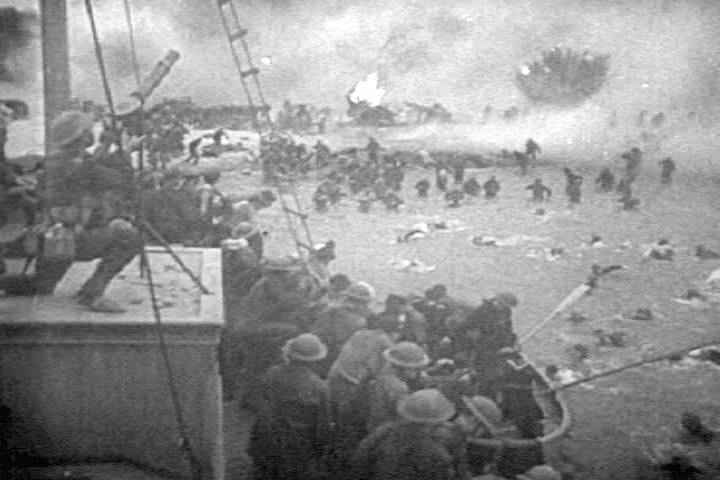 In late May 1940, German panzers unexpectedly broke through, and even though the British and French armies gave a good account of themselves when they had the opportunity to fight, they were cut off in Belgium and northern France. When the Germans reached the channel coast, Allied command and control had completely broken down and widespread panic infected every command echelon above division. Reacting to French chaotic political leadership, the new British Prime Minister Winston Churchill ordered the British Expeditionary Force to fall back to the port of Dunkirk, even though only about 40% had actually come into contact with the Germans. The British withdrawal completely unhinged what was left of the Allied line and would force the surrender of the Belgian Army to the north (something the Belgians still haven’t forgiven them for). The troops were needed to defend against any German invasion of the British Isles.
After their lightning quick advance across France, the German panzers needed time to resupply and reorganize, so Hitler stopped them and turned the destruction of the BEF at Dunkirk over to the Luftwaffe. This fateful decision gave the British and French much needed time to organize a defense of the port by sixteen British infantry battalions, which they defended with a tenacity and aggressiveness they had not exhibited so far in the campaign. Furthermore, this time allowed them to coordinate doomed last stands by outliers, such as the defenders at Calais and the French First Army at Lille, that could buy the Royal Navy time to evacuate the 400,000 troops that packed the area around Dunkirk. The British, French, and Belgian soldiers maintained their discipline for the most part. They calmly, if resignedly, sat in formation on the beach waiting for The Word on whether they would be rescued or ordered to surrender. Though there was a cloud of about 35,000 stragglers, mostly in the town where fires raged out of control. Nonetheless, that many troops in so small an area with little food, water, or medical care made the sandy Dunkirk beaches on the 25 and 26th of May crowded and chaotic. Additionally, a choking pall of smoke blanketed the area from a nearby burning oil refinery. This made life uncomfortable, but helped with the daylight air attacks on the exposed men on the beaches. However, it did not prevent them. Most disconcertingly though, the port was wrecked from Luftwaffe bombing and its docks and quays in shambles. Churchill ordered the men evacuated, but the Royal Navy estimated they would only be able to get 40,000 off the beaches, just 10% of the troops waiting at Dunkirk.
On 26 May, 1940, the Royal Navy and Air Force launched Operation DYNAMO to evacuate as many troops as possible from the port and off the beaches around Dunkirk. That afternoon, Capt. Bill Tennant landed with 16 officers and 160 sailors to organize the evacuation on the beach. To do this they had to coordinate the troops on the shore with over 150 ships packed into the harbor. However, the drafts of most of the ships were too deep to get close to the beach. To mitigate this, the Royal Navy confiscated or requisitioned every small boat on the Thames and on the southeast coast of England. The 700 “Little Ships of Dunkirk” were yachts, fishing boats, lifeboats (British for coast guard cutters), trawlers, tugboats, ferries, paddle steamers, and shipping steamers, and mostly crewed by naval personnel but many by civilian owners and their crews. The smallest was the Tamzine, a 15 ft fishing boat that brought off over 100 soldiers (it’s in the Imperial War Museum in London). Over nine days the Little Ships brought the soldiers off the beach and ferried them to the larger ships off shore, while the bigger ships rotated past the East Mole.
To Tennant’s surprise, he discovered the East Mole still intact later that night. The East Mole was a breakwater for the harbor, and extended nearly a mile into the Channel. It should say something about the state of confusion on the beach that it took him nearly seven hours to discover a mile long breakwater that could be used as dock. Nevertheless, with the East Mole available, ships could be loaded directly. There was a glimmer of hope for remainder that the Royal Navy didn’t plan to evacuate.
Under constant air attack, about 250 of the 900 ships that took part in “The Miracle at Dunkirk” were sunk. Furthermore, German shore batteries up the coast forced the remaining ships and boats to take a much longer bypass that circumvented the fire. Despite these obstacles, between 27 May and 3 June 1940, the Royal Navy rescued 330,000 much needed troops so they could fight again another day.
After the horrible news of the last three weeks, the British population was jubilant at the unexpected success of the evacuation. “The Spirit of Dunkirk” still refers to the idea of British courage, solidarity, and triumph in the face of overwhelming odds and adversity.
But amidst all of the celebration, Winston Churchill, ever the pragmatist, would remind the country, “We must be very careful not to assign to this deliverance the attributes of a victory. Wars are not won by evacuations.”
Maroubra Force
The Battle of the Coral Sea temporarily checked a direct seaborne invasion of Port Moresby on the southeastern coast of Papua. The Battle of Midway, whose magnitude of defeat the Japanese Imperial General Staff only publicly acknowledged in the beginning of July, made any seaborne threat to Port Moresby highly unlikely. With no air cover from the remaining Japanese carriers (the Zuikaku and Shokaku were still in port until mid-July, 1942), any invasion force would be at the mercy of land based bombers. Moreover, it was obvious MacArthur would attempt to build airfields on the north coast of Papua to extend their reach (He would. However, the never fully realized Operation Providence didn’t get out of the reconnaissance and security phase). For Lieut Gen Harukichi Hyakutake (we will hear his name again) the commander of the Japanese 17th Army in Rabaul, New Guinea and Papua needed to be secured by any means possible.
The Japanese decided to assess the feasibility of seizing Port Moresby by land. A Japanese reconnaissance pilot detected what he thought was a road connecting Port Moresby in the south with Buna on the north coast of Papua. However, the Kokoda Track was nothing but a slippery and sodden 60 mile trail that turned into a morass of deep mud whenever it rained, which was often. To complicate matters further, the Kokoda Track snaked over the Owen Stanley Range. The Owen Stanley Range is some of the harshest and most forbidding terrain on the planet: steep and tall mountains with jagged cliffs covered in dense jungle and moss covered upland swamps. Furthermore, he reported the Track as much wider than the overblown hiking trail it was. The staff of the Japanese 17th Army in Rabaul was skeptical of its the actual size, but there were no other options: the Japanese needed to secure Port Moresby as part of their outer perimeter. So Hyakutake requested the Japanese 4th Fleet land troops on northeastern Papua at Buna and Gona to secure a beachhead and recce the “road”.The defense of Port Moresby was the only reason preventing a Japanese invasion of northern Australia. And that the Kokoda Track was the only remaining way to get there was not lost on the Australians. This made Buna the next obvious Japanese target.
On 25 June 1942, the newly formed Australian New Guinea Force launched Operation Maroubra (named after a Sydney suburb) to defend Buna, and prevent the Japanese from seizing the village of Kokoda and its airfield in the northern foothills of the Owen Stanley Range.
On 12 July, the Australian 39th Battalion of the 30th Brigade, a militia unit formed just after Pearl Harbor that so far spent the war as Port Moresby’s garrison, arrived in Kokoda after a grueling, if uncontested, two week march on the trail. With the Papuan Infantry Battalion at Buna, another militia unit with native Papuans and Australian officers, the 39th Battalion was referred to as the ad hoc “Maroubra Force” to distinguish them from other 30th Brigade units on the southern side of the Owen Stanley Range. They arrived none too soon.
On 21 July 1942, the Japanese launched Operation Ri, and landed the South Seas Force at Buna. The South Seas Force was a brigade sized naval landing force consisting of an infantry battalion, elite marine company, and an independent engineer regiment with native laborers from Rabaul. The Japanese commander, a well-connected lieutenant colonel, appropriated the engineers to act as infantry. Together, they quickly overwhelmed the reinforced Papuan battalion at Buna, and on the 25th broke through the 39th‘s defenses at the entrance to the Kokoda Track. Despite their men being used as infantry, the engineer officers surmised that it would take six porters to supply every soldier on the track. This was a ludicrous requirement even by the shoestring standards of Japanese logistics.in response, the aggressive and proud commander just had the engineers augment the native porters, and attacked south, determined to take Port Moresby.
With the loss of Buna and Kokoda, the Maroubra Force was not off to an auspicious start. But they came into their own in their dogged delaying actions and fierce counterattacks at bayonet point back down the Kokoda Track. The diggers made the Japanese pay dearly for every ridge and every blood soaked meter of trail. On 8 August, the 39th actually retook Kokoda briefly, and even buried their commander, who had been killed there the week before. When the Japanese landed, the rest of 30th Brigade began the march up the track and reinforced the 39th and the remaining Papuans. But the casualties were heavy, and the supplies over the track only came in trickles. The brigade commander was killed and the Maroubra Force fought on under the newly arrived but indomitable commander of the 39th, LieutCol Ralph Honner, with the other battalion also under their own junior officers. For over a month, the Japanese continually smashed into them with successive banzai charges, slowly pushing the Australians back. But the Japanese were suffering horrendous casualties, and in order to save face, Hyakutake was required to continually feed troops into the Kokoda Track. These troops were much needed on Guadalcanal where American Marines had landed on 7 August.
About the time the Marines were hanging on to Henderson Field by their fingernails, the Australian 21st Brigade of the veteran 7th Division arrived and its commander, Brigadier Arnold Potts, assumed command of the Maroubra Force and the remnants of 30th Brigade. The 21st was a regular formation with extensive experience in the Western Desert and fighting in Syria and Lebanon. They had no jungle training or experience, but they quickly learned from the 30th Brigade troops – grizzled veterans after a month on the Track.
In punishing conditions that Allied medical professionals would study to determine how long a human being can survive on the line in the jungle before they’re permanently broken (three months), Potts and the Maroubra Force slowly fell back and bled the Japanese. For another month, the Japanese threw troops down the Kokoda Trail in an ever lengthening supply line and sledgehammered the Australian positions. However, as Japanese strength grew, these banzai charges were just fixing attacks that supported flanking columns which attempted to “trail block” the Australians until they withdrew. (The same technique worked very well against the British in Burma). But the Japanese focus on getting combat troops into the fight on the Kokoda Track meant there was little throughput for logistics. For example, the Japanese engineers were thrown into the fight as infantry before they could actually do what they were meant to do, turn Buna and Gona into a proper port and improve the Track. Many Japanese units were unsupported and withering away.
The Japanese were literally sacrificing the lives of their soldiers by assaulting the Australian positions before they starved to death. The problem for Brigadier Potts was it was actually working.
Maroubra Force was in close contact with the Japanese for all of August and most of September. At no point in time were the nearest Japanese farther than 30 meters from the Potts’ main line of resistance. There was at least a platoon passage of lines to the rear under heavy pressure every day. To exasperate the Japanese supply situation, Potts’ established “Chaforce” and “ Honnerforce”, both about 400 man ad hoc task forces, to raid the Kokoda Track to the north. Nonetheless, the Japanese still came on.
MacArthur and some armchair strategists in Australia were concerned with the Japanese advance, and several Australian officers were sacked, fueled by wild tales of panicked abandon of positions. But they failed to grasp the extreme conditions on the Kokoda Trail: the heat, humidity, the thickness of the vegetation, disease, even the cold at the higher elevations. Furthermore, they failed to even acknowledge the lengths the Japanese were willing to go to maintain an overwhelming superiority in numbers, which never dropped below four to one.
While the Japanese advance continued, the Australian buildup at Port Moresby was slowly gaining momentum. The rest of the Australian 7th Division arrived, and on 7 September the indefatigable 39th Battalion was withdrawn from the line. Of the 800 men that started up the trail two months before, just 30 remained.
But what cannot continue indefinitely, eventually will not. Just as the fighting on the Kokoda Track relieved pressure on the US Marines on Guadalcanal, the reverse was true in September: The losses suffered by the Japanese in the Solomon’s forced Hyakutake to suspend operations on New Guinea until “the Guadalcanal matter was resolved”.
Maroubra Force held, despite the Japanese within sight of Port Moresby.
In mid-September, Potts turned over the Maroubra Force to the commander of the recently arrived 25th Brigade, who withdrew to Imita Ridge, the last effective natural barrier before Port Moresby. Despite Hyakutake’s orders, the Japanese tried one last push before they moved into defensive positions. They failed.
After a brief respite, it was time to do it all over again, but this time in reverse. In late September, after it was obvious the Japanese suspended the offensive, the Australians began attacking back up the Kokoda Track. For the first time in the Pacific War, the Japanese were on the operational defensive.
The Japanese would prove as tenacious in the defense, as they were aggressive and courageous on the attack.
The First Battle of El Alamein
At the end of June, 1942, Mussolini flew to Libya to personally plan his triumphal march into Cairo. Rommel was driving hard across North Africa and it looked as if he would make it to the Suez as long as he was properly supported. To that end, the Italian High Command (Rommel’s nominal superiors, though he reported directly to Hitler and the OKW, annoying the Italians) began siphoning men, material, and equipment from Operation Herkules, the invasion of Malta set for mid-July, to Libya and Egypt. Herkules was fully supported by Rommel, who previously even offered troops for the operation as he understood the necessity for taking Malta in order to secure North Africa. But while chasing the British Eighth Army into Egypt, Malta took a back seat and the invasion was postponed due to lack of supplies. Despite horrific bombing that by July 1942 brought the island to its knees, the Germans wouldn’t take Malta for the rest of the war.
Gen Ritchie, the commander of the Eighth Army who lost both the Battle of Gazala and Tobruk, wanted to defend the heights at Mersa Matrah, 150 miles inside Egypt, in a glorious face saving last stand against the Germans. The realistic and practical Gen Auchlineck, his superior and Commander in Chief of the Middle East, quickly noted that Mersa Matrah was indefensible against Rommel and just as quickly fired him. Auchlineck took personal command of the Eighth Army and withdrew them east under heavy pressure, all the way back to El Alamein, just 60 miles from Alexandria and the Nile. El Alamein was a bottleneck between the Mediterranean Sea to the north and the impassable Qattara Depression of the Sahara desert to the south, through which Rommel must pass to reach Cairo and the Suez Canal. Rommel was so feared by the British headquarters that the hasty evacuation of Cairo during this time would be forever known in British military history as “The Flap.” Throughout the month of July, Gen Auchlineck’s Eighth Army and Rommel’s PanzerArmee Afrika would duke it out in a brutal battle of attrition for the passes and hills of El Alamein. However, Rommel’s extended supply line all the way back to Tobruk and Tripoli couldn’t keep pace with Auckineck’s shorter supply line to Alexandria and the Germans were halted. The battle turned when New Zealand troops overran Rommel’s all important radio interception company on 9 July, thus depriving him of his most useful and timely intelligence, upon which he depended.
Rommel would go no further.
Japan First
In late spring and early summer of 1942, there was an inter-service food fight in the American military: who first, Japan or Germany? It was supposedly settled by Roosevelt and Churchill at the ARCADIA conference in DC in Dec 1941: Germany would be the initial focus of the Allies because of the threat to Great Britain and the USSR, and Japan would be contained with what was left.
However, the Fall of Tobruk, the news of which was given to Churchill as he was meeting with President Roosevelt at the Second Washington Conference, greatly changed the focus in Europe. GEN Marshal, the US Army Chief of Staff, was pushing for an invasion of France for various reasons in 1942. With Churchill visibly shaken with the news of Tobruk, the two leaders began wargaming worst case scenarios, specifically a German-Japanese link up in India. In late June 1942, this wasn’t as farfetched as it sounds today: Japan was chasing British troops out of Burma and into India, India itself was on the brink of revolt, German formations were driving hard on the Caucuses, and Rommel seemed poised to seize the Suez and move on to Kuwait. Roosevelt offered Churchill all the help he wanted and purposely diverted convoys of material, specifically tanks, from the US to Egypt, at the expense of the troop buildup GEN Marshall wanted in England.
This diversion of resources made an invasion of France unfeasible in 1942 (if it ever was). It was obvious that the British, whose full support was absolutely necessary for a cross channel invasion of France, would not focus on France as long as the British Eighth Army was fighting in Egypt. As a consolation, General Marshall threw his support behind Operation Torch, the invasion of Vichy French North Africa in November. Roosevelt disapproved the plan, saying it wouldn’t help the Soviet Union, and told Marshal to keep working on a second front to assist Stalin.
But ADM Ernest King, the Chief of Staff of the US Navy, was concerned about the Japanese advances in the South Pacific and their threat to Australia. In particular he was worried about the recently discovered Operation FS, the proposed Japanese invasion Samoa, Fiji and New Caledonia, and the large airfield being built for it on the island of Guadalcanal. The airfield and Operation FS would cut Australia, New Zealand and New Guinea’s lifeline with the US. (Additionally, it was the Japanese who bombed Pearl Harbor, not the Germans…)
In an epic showdown with GEN Marshall and President Roosevelt, ADM King eventually persuaded the President to support his plan to stop the Japanese under the condition that the Navy and Marine Corps would do it themselves with no Army help outside of assistance from MacArthur’s troops fighting in New Guinea. The US Army would concentrate on an invasion of Europe and/or reinforcing the British in North Africa.
Immediately after the meeting, Admiral King cabled Admiral Nimitz, the Commander in Chief of the Pacific the news. And on 8 July 1942, Admiral Nimitz issued his orders to Marine Major General Paul Vandegrifft and the 1st Marine Division, then staged in New Zealand, to proceed with Operation Watchtower: the invasion of the islands of Tulagi and Guadalcanal in the Solomon Islands, set to begin in early August, 1942
The Destruction of PQ-17

For the first six months in 1942, German U boats savaged Allied merchantmen along the American coast and in the Caribbean Sea, in what was known to the German Navy as “Die Glueckliche Zeit” or “The Happy Time”. Generally, the exceptions were the Allied Arctic convoys to the Soviet Union. The dangerous American and British Arctic convoys that delivered much needed war material to the Soviet Union assembled and departed from Iceland (P) for the Soviet ports above the Arctic Circle at Murmansk and Archangelsk (Q). 16 previous convoys had reached the Soviets with varying degrees of success, but the largest and most successful by far was PQ-16 at the end of May, 1942. With Fall Blau (the German operation against the Caucuses’ oil fields) on the immediate horizon, Hitler decreed that the German military increase operations against the next such convoy. PQ-17 departed Hvalfjörður, Iceland on 23 June, 1942.
The British knew of the German intentions from Enigma decrypts and prepared well. The 34 merchantmen of the convoy would have close-in protection from six destroyers, and twelve other corvettes, support ships and anti-submarine and anti-aircraft trawlers. Furthermore, a close cruiser squadron shadowed the convoy to protect and against small surface raiders. To protect against the German battleship Tirpitz, which was in Norway to prevent an Allied invasion of Scandinavia, the British Home Fleet would sortie from Scapa Flow. Finally, after the successful joint operations with the US Navy to supply Malta with fighters in June, the British Admiralty asked for American assistance, and the reluctant Admiral King agreed to provide the battleship, USS Washington, and the carrier, USS Wasp, and their escorts. PQ-17 was the most heavily defended convoy in the North Atlantic so far in the war.
German signals intelligence picked up the departure of the convoy and PQ-17 was spotted by a U-Boat and tracked very quickly. For nearly a week, the convoy endured incessant Luftwaffe attacks from airfields in Norway, and was swarmed by an increasingly larger wolfpack as U boats closed on the area. Nonetheless, the convoy only suffered three ships lost, two of whom were to ice damage, and not from the Germans. Barring any unforeseen circumstances, PQ-17 looked to be another success.
Unfortunately, that “unforeseen circumstance” turned out to be the British First Sea Lord, the elderly Admiral Dudley Pound. Normally, as First Sea Lord, Pound would not concern himself with day to day operations of the Royal Navy, but because of the Americans’ involvement and his personal request to King, he tracked the progress of PQ-17 meticulously.
On the morning 4 July, 1942, an RAF reconnaissance plane failed to spot the Tirpitz in the Trondheim fjord in Norway, and this sent a panic in the Admiralty, mostly because of Pound’s involvement and his inevitable demands that the Tirpitz be found. The Tirpitz sortied regularly but Hitler or the head of the German Kriegsmarine Adm Raeder would lose their nerve, and order the valuable and irreplaceable ship back to port. This looked to be the same. (The Tirpitz hadn’t actually left port yet. It wouldn’t do so until the next day and almost immediately turn around for obvious reasons.) But Pound demanded, in conclusive terms, that the Tirpitz was not threatening PQ-17. British naval intelligence was sure this was the case, but had no definitive evidence. The British had come to rely on the Enigma intercepts but those for that morning would not be decrypted until that afternoon. Additionally the overly stressed Pound mistook the analysis of the U boat threat to the convoy as the analysis of the surface threat, which was dire if the convoy scattered as they would have to if the Tirpitz attacked. (Despite the extensive precautions, Pound had little confidence that the British and American battleships would intercept the Tirpitz before it reached the convoy.) When the Enigma decrypts did come in late that afternoon, they only provided circumstantial evidence that the Tirpitz was in port or heading back to port. The British Naval Intelligence couldn’t say with 100% certainty where the Tirpitz was, but also refused to say that the Tirpitz was not a threat to PQ-17, which was what they believed (at least according to the investigation afterwards).
Pound assumed the worst case despite the evidence, and that night issued three orders directly to the convoy between 2111 and 2133 on the evening 4 July 1942. The first stripped the convoy of its cruisers and destroyers, who proceeded to rendezvous with the battleships for the expected fight with Tirpitz. The second ordered the convoy to disperse its formation, a precaution against surface attack. The third, and fatal, order was to actually scatter the convoy, and for the merchantmen make their way to Archangelsk independently. This order was almost always given by a convoy commander after the escorts were overwhelmed by continuous attack, and never by a commander not on the scene. On 4 July, the Luftwaffe and U boat contacts were numerous, but were handled well, and no enemy surface ships were sighted, much less the Tirpitz. The order to scatter made the individual merchant ships easy prey for bombers and U boats. The order to scatter issued by Pound was a death sentence for PQ-17.
In the perpetual sunlight of the Arctic summer, unbelieving U boat captains and bomber pilots watched with unimaginable glee as the convoy broke apart before their very eyes. There was no possible way for the escorts to protect the isolated and vulnerable merchantmen. Ten merchantmen were sunk the next day, five by torpedoes and five by bombs. Five more were sunk the day after. Destroyer captains shamefully listened to the death cries of their burning and sinking charges, as they uselessly prowled the seas looking for the Tirpitz. In defiance of Pound’s order, several junior captains of minesweepers and corvettes herded merchantmen together for protection, but it was not enough and the convoy still had 600 miles to sail to reach the Soviet port. Several ship crews got creative and painted themselves white with paint intended for Soviet tank camouflage and hid among the ice. One captain loaded the Sherman tanks on his deck with ammunition from another ship and turned his ship into a massive anti-aircraft platform.
For the next week, eleven U boats and three squadrons of Luftwaffe bombers savaged the isolated merchantmen in the freezing waters of the Arctic Ocean. It would be another week after that for the remainder to reach port, after notification from British intelligence that it was safe to leave hiding. Only eleven merchantmen of the original 34 made it to Archangelsk, at the cost of just five German planes. There was such confusion in the North Atlantic that it would take the Admiralty another week just to ascertain the final results.
In all, PQ-17 lost over 110,000 tons of shipping, more than the Admiralty expected to lose if the Tirpitz did attack. This loss included 210 aircraft, 430 tanks, and 3,325 jeeps and trucks; that’s the equivalent of an entire tank division and an entire Soviet air army. Stalin was furious and accused the Americans and British of lying about the number of merchantmen. Admiral King was equally furious and pulled the Washington and Wasp from the Atlantic. He sent them to the Pacific in support of the recently approved Operation Watchtower, the invasion of Tulagi and Guadalcanal in the Solomon Islands. The inevitable British investigation found Pound’s orders to scatter the convoy solely responsible for its destruction. But he was not charged as he was the senior Royal Navy officer in the government. He quietly retired for health reasons the next year.
The jubilant and victorious U boat crews returned to France to bands, parades, and awards ceremonies. The destruction of PQ-17 was the happiest moment of the Kriegsmarine’s Happy Time.
Fall Blau
By early 1942, Germany had used up its oil reserves and was suffering significant oil shortages. Despite extensive interwar investment into synthetic oil plants, 75% of Germany’s oil was supplied by the Ploesti oil fields in Romania. In March of 1942, Romania ministers informed Hitler that they could not meet Germany’s planned oil needs for 1942. On 4 April 1942, Hitler signed Fuehrer Directive 41 which made seizing the Caucasus oil fields a priority. This would also have the added benefit of denying the oil to the Soviets, and was desperately needed by the German economy.
Despite being at war for almost three years, and engaged in hostilities with Great Britain, the Soviet Union and now America, the German economy was still not on a war footing. Furthermore, the larger amount of territory that needed defended combined with the losses of men and material in the past year, especially during the nearly incessant Soviet winter counterattacks, reduced the capacity of Germany military to conduct offensive operations. Unlike Operation Barbarossa the year before, the Wehrmacht could no longer launch a general offensive in the East on three axes. Therefore, Fall Blau (Case Blue in German), the German offensive in 1942 would focus on Army Group South at the expense of the center and north. Army Group North would continue its limited attacks on Leningrad, while Army Group Center stood fast in front of Moscow.
Due to extensive German deception operations, Stalin had expected the Germans to continue on towards Moscow and was taken completely by surprise by the German advance south east across the Ukrainian and Russian Steppe. After defeating several wasteful Russian spoiling attacks, on 28 June 1942, Fall Blau launched 1.3 million German, Romanian, Italian, and Hungarian troops towards the Caucasus Mountains and the Volga River. Four armies supported by eleven panzer divisions of Army Group South assaulted southeast with the final objective of seizing the oil fields at Maykop, Grozny, and Baku in the Caucasus Mountains and around the Caspian Sea. They did so with three axes of advance. The first was clearing the Crimean peninsula and capturing Sevastopol which had been under siege for many months. The second and main effort would be the strike towards the Caucasus for the oil fields. And the third axis was an advance on the Volga River in a supporting effort to protect the flank of the Caucuses.
The initial advance was wildly successful, especially so in areas supported by the Luftwaffe.
The Most Useful Invention Ever
As the United States began planning the upcoming amphibious campaigns against the Japanese, and to a lesser extent the Germans and Italians in Europe, a need was identified for something to seal ammunition cases to keep water out. The company Revolite, a subsidiary of Johnson and Johnson, developed a roll of rubber based adhesive on canvas cloth backing. In the textile industry, canvas is referred to as “duck cloth” and on 24 June 1942, the US Army received its very first roll of Duck Tape (As in “Duck” with a “k”, not a “t”. Quack, quack). It was an instant hit, and like today, it was used for everything.
The Fall of Tobruk
During the night of 19-20 June 1942 Rommel discontinued his feigned pursuit of the retreating British and masterfully turned around his four best divisions, the veterans of the old Deutches Afrika Korps: the 90th Light, 15th and 21st Panzer, and the Italian armored division Ariete. That night they moved from an all-out pursuit and prepared to assault Tobruk. At 5:30 am 20 June, every Luftwaffe bomber in the Eastern Mediterranean struck the south east corner of Tobruk perimeter and the defending unit, the 11th Indian Brigade, broke under the combined arms assault by Italian infantry and artillery with German tanks and planes. Confusion in the British headquarters would not allow the numerically superior South Africans to reposition forces from uselessly defending against an amphibious assault, or from the south and west to counter the threat. By nightfall on the 20th, the Germans secured the port.
The next day, the British surrendered. 30,000 Commonwealth troops marched into captivity and it was the second largest surrender in British history after the fall of Singapore some months earlier. In the last six months, the Japanese captured Malaya and Singapore despite being significantly outnumbered, and ignobly ran the British out of Burma with barely better odds. Operation Crusader had six months of dedicated support and priority within the entire British Empire and Rommel erased those painstaking gains in a matter of weeks: first in January, and then in June. The Australians and Poles held Tobruk against all odds for nearly nine months; The British Army gave it away in two days. Any reputation for competence and fighting prowess held by the British Army was gone.
Rommel would tell the captured officers, “Gentlemen, you have fought like lions and been led by donkeys.” He was promoted to Field Marshal shortly thereafter; Rommel was a lieutenant colonel just four years before.
Winston Churchill, in Washington DC meeting with President Roosevelt, called the Fall of Tobruk “a shattering and grievous loss”. He would say to Roosevelt that “I am the most miserable Englishman in America since Burgoyne” (the British general who surrendered at Saratoga during the American Revolution).
Churchill commented in his memoirs that 21 June 1942 was the worst day of World War II.
The Battle of Gazala: Black Saturday
The failure to capture the Free French defensive “box” at Bit Hacheim greatly delayed and disrupted Gen. Erwin Rommel’s Gazala offensive. The Germans and Italians broke though the British lines above Bir Hacheim but couldn’t exploit the breach. Rommel’s forces formed what became known as “The Cauldron” while they waited for the Free French position to be reduced which would allow the Axis mechanized and motorized forces to proceed east without a worry to their flank and rear.
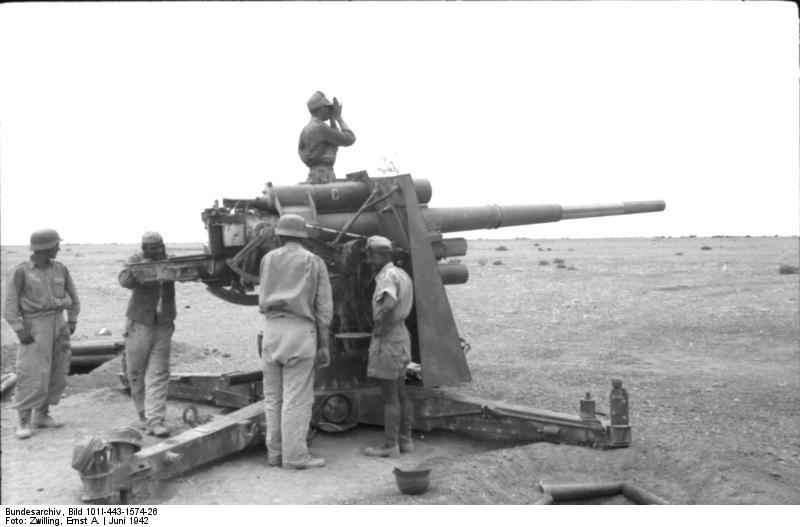
The British Eighth Army launched their armoured brigades at the Cauldron according to their commander, Lieut Gen Neil Ritchie’s plan, Operation Aberdeen, but the Germans cut them to pieces when they neared the screen of 88mm anti tank guns. As the British approached, they were accurately engaged by the longer ranged 88mm guns, and in the confusion, counterattacked by Rommel’s panzers. Moreover, the British counterattacks were uncoordinated brigade sized assaults, of which Rommel commented, “if you attack me in penny packets, then I shall defeat you in detail.” The failure of the Operation Aberdeen allowed Rommel to take the time to reduce Bir Hacheim in a deliberate manner.
Bir Hacheim fell on 9 June 1942, and Rommel unleashed the Afrika Korps two days later on the southern and eastern end of the British Gazala Line, on 11 June.
Even though the Germans were attacking this time, Rommel’s tactics worked just as effectively as they had during Operation Aberdeen. As the German and Italian tanks approached the boxes at Knightsbridge and El Adem, the British tanks charged forward in the grandest tradition of the Scots Greys and Household Cavalry to engage them. They were then consistently massacred by the waiting 88mm anti tanks guns, in position due to superior German radio intercepts, then mopped up by the panzers. With the only British counterattack threats neutralized, Rommel went about systematically reducing the remaining defensive boxes, rendering the Allied defenses to the north and west untenable.
On 13 June 1942, the British lost nearly 400 tanks, and the Knightsbridge box fell. Rommel’s panzers were now in a position to isolate the port of Tobruk, and more importantly cut off the remainder of the British Eighth Army on the coast road and Gazala Line. The damage to the Eigth Army was so extensive that many troops referred to 13 June 1942, as “Black Saturday”. Gen Claude Auchlinek, the commander of all Allied troops in the Western Desert, authorized Ritchie to withdraw from the Gazala Line to a position south of Tobruk, and if that couldn’t be held, to the Egyptian frontier.
The Gazala Line was broken. British, Commonwealth, and Allied troops streamed east, and in some cases counterattacked east. Rommel wouldn’t relent on his assaults and the Eighth Army had no time to consolidate a defensive line anchored on Tobruk. The British fled further east to reach the safety of the bottlenecks on the Egyptian frontier: whether Mersa Matruh, or the small town of El Alamein.
The painstaking gains made by Operation Crusader the year prior were erased in less than three weeks. Despite superiority in men, tanks, artillery, and equipment of all kinds, Ritchie could not contain Rommel. He lost nearly a thousand tanks, including almost all of his new lend lease American Grant tanks, and left Rommel with the initiative. The Battle of Gazala was Rommel’s finest moment, though it was almost entirely due to his cryptanalysts and 88mm anti aircraft guns used in a now familiar role. Nonetheless, through Rommel’s leadership, the Axis troops leveraged their asymmetrical advantages against his adversaries’ self imposed constraints, namely limiting the size of the armoured formations, to great effect.
The Germans and Italians would capture countless tons of much needed Allied equipment, and chased the British far into Egypt. The advance would call into question the need for Operation Herkules, the invasion of Malta, then in its final preparations. Tobruk would fall under siege a second time.
Tobruk had held out the year before for nine months, but it would not do so again.
The Diary of Anne Frank
On 12 Jun 1942, a young Dutch girl received a red and white plaid covered diary from her father for her 13th birthday.
She would start recording her thoughts in it a week or so later. Her father picked the diary out based on her pointing it out on one of their walks along the streets of Amsterdam. That walk would be one of their last.
Otto Frank and his daughter, Anne, were Jews. In July 1942, the Netherlands’ German National Socialist conquerers and their Dutch collaborators would place great restrictions on them in preparation for the implementation of the Final Solution of the Jewish population in the country.
The plight of the Dutch Jews was a difficult one. Unlike other countries, the huge population density of the Netherlands meant there were few places to escape to. There were no vast forests for refuge as there were in Eastern Europe. Also, the advanced Dutch civil bureaucracy had records on the entire Jewish population of the country and the Germans quickly identified and located them all. Moreover, although the Dutch people were sympathetic to the Jewish plight under Nazi domination, the Dutch government was unwilling to publicly intervene on their behalf, even passively. Unlike in other countries, the Dutch administration did the bidding of their National Socialist overseers with cold efficiency. In exchange for continued employment, pay, and benefits, the supposedly apolitical Dutch civil service ushered the Jewish population to its death. Few Dutch Jews were detained by Germans: they were identified by Dutch census data, rounded up by Dutch police who went directly to their homes based on Dutch tax files, held in Dutch camps run by the Dutch civil servants and held there by Dutch guards, and sent East to the death camps on Dutch trains run by Dutch engineers and Dutch rail crews.
Anne Frank and her family went into hiding to escape the Nazis and their own countrymen. They hid in a small three story room concealed behind a bookshelf in her father’s workplace. They were taken care of by several of her father’s sympathetic coworkers who visited once a day to deliver food and stay for a visit.
Anne chronicled each day in the cramped space in her diary. Her diary was her escape. She wrote of the dreams of a teenage girl, the boredom and difficulties of their existence, her love for and exasperation with her family, the terror of the listening to German soldiers and Dutch police searching the premises, her budding romance with the son of another family in hiding, and most importantly the hopes of survival in one of the darkest periods in human history.
The Frank family survived in hiding for more than two years, almost each day chronicled by Anne. They were arrested by the Gestapo after being betrayed in August 1944, by whom is unknown and subject to much debate. Anne and her family were sent to Auschwitz where she was separated from her father, but was not sent to the gas chamber with the rest of the children because she just turned 15 two months before. Nevertheless, Anne and her sister were transferred to Bergen Belsen Concentration camp to be worked to death. They both died of typhus in March 1945.
Anne Frank’s diary was saved by one of her family’s helpers after their arrest and recovered by her father who survived after being separated from his family. Anne Frank’s unedited record of her family’s existence behind the bookcase was published in 1947 as “The Diary of a Young Girl”.
The Diary of Anne Frank is one of the most poignant documents of the Holocaust, and Required Reading for Humanity.
 Buk's Historical Ad Hockery
You must be logged in to post a comment.