The Battle of Leyte Gulf: Act II, The Battle of Surigao Strait
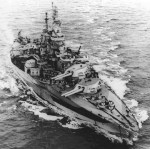
On 24 October 1944, Vice Admiral Jesse Oldendorf’s Task Force 77.2, the 7th Fleet Support Force, i.e “MacArthur’s Navy”, fired its last few high explosive shells at Japanese positions on Leyte and then steamed south. A sharp eyed observer on a PBY flying boat spotted Japanese battleships in the Sulu Sea off the Philippine island of Negros. The only place Admiral Nishimura could enter the Leyte Gulf was the Surigao Strait, and Oldendorf planned on meeting him there.

Oldendorf’s battleships were, no pun intended, old. They were all commissioned during the First World War and they were the backbone of the US Navy prior to World War Two. They were the centerpiece of War Plan Orange, America’s interwar contingency plan in case of hostilities with Japan. War Plan Orange was scrapped after Pearl Harbor because the Japanese targeted these battleships to deadly effect: The West Virginia and California were sunk, and the Maryland, Tennessee, and Pennsylvania were badly damaged. Only the Wisconsin escaped damage that day. For the next six months, maintenance, recovery, and salvage crews worked frantically to get them battle ready as the carriers held the line at Coral Sea and Midway. Once America counterattacked, the carriers were now the premier platform of sea power, but the big, slow, resurrected battleships of Battleship Row found their place again: this time as mobile fire support platforms.

Oldendorf’s battleships shelled every island the marines or soldiers landed on for the last two years, from Guadalcanal to Leyte. But they had never fired their armored piercing shells in anger. In the early morning of 25 October 1944, they would.

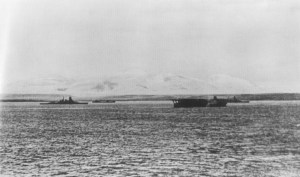
At 0200, Nishimura’s Southern Force of two battleships, six cruisers and ten destroyers slipped into the confined waters of the Surigao Strait. For the next two hours, 32 American PT boats harassed the formation causing much confusion. Then, in a prelude to what would happen the next day, Oldendorf’s destroyers made torpedo runs that disoriented the Japanese formation and destroyed the battleship Fuso. The Fuso didn’t sink… but she broke in half and the two pieces floated around the strait for two days, burning. When Nishimura exited the Surigao Strait into the Leyte Gulf, Oldendorf and his old battlewagons were waiting. Nishimura’s “T” was crossed in a fashion that would have made Lord Nelson proud. Oldendorf’s six battleships and four cruisers pummeled Nishimura’s remaining ships. None escaped. It was the last time in history battleships would fire their guns at another ship. It was the end of an era.

Just west of the San Bernardino Strait off the island of Samar, Rear Admiral Thomas Sprague’s Task Force 77.4 Escort Carrier Group prepared for another day in support of the soldiers and guerrillas fighting the Japanese on Leyte. On the USS Gambier Bay, the USS St Lo and the four other small escort carriers of Rear Admiral Ziggy Sprague’s (No relation) Task Force 77.4.3, “Taffy 3”, the crews readied their aircraft for close air support of MacArthur: attaching rockets, napalm canisters, fragmentation bombs, and even some canisters filled with leaflets that a PSYOP officer needed dropped. The crews of the USS Hoel, USS Johnston, USS Samuel B Roberts, and Sprague’s other destroyers and destroyer escorts huddled around their radios listening to “The Big Game” going on between the battleships.

It seemed the naval Battle of Leyte Gulf was over. It was time to get on with MacArthur’s land Battle of Leyte. Taffy 3’s escort carriers launched their first close air support missions at dawn.

Thirty miles to the west, Adm Kurita’s massive Center Force of four battleships, eight cruisers and eleven destroyers slipped unimpeded through the San Bernardino Strait separating the big island of Luzon and the island of Samar. As Adm Kurita looked east into the rising sun, he thought he saw Halsey’s six fleet carriers, three battleships and four cruisers of TF 38. He actually saw the six jeep carriers, three destroyers, and four destroyer escorts of Ziggy Sprague’s Taffy 3.

Kurita immediately ordered the mighty Yamato, and the rest of the Center Force, to attack.

“J’accuse…!”: The Dreyfus Affair.

During the French Revolution, “J’accuse…!”, or “I accuse” in French with the implication of more to come, was used to incriminate anyone suspected of pro-nobility activities, a lack of revolutionary fervor, or simply to settle old scores. In the time of Robespierre, a simple “J’accuse!” was enough to get one sent straight to the guillotine without any shred of evidence or defense of the accused (sounds familiar). However a hundred years later in 1898, the great French author and intellectual Emile Zola turned the phrase on its head by doing exactly what the Jacobins didn’t: use sound reasoning and evidence regarding the Dreyfus Affair. With an open letter to French President Felix Faure published in a French newspaper “L’Aurore”, titled “J’accuse…!”. In the letter, he comprehensively pointed out the injustice and unlawful incarceration of Alfred Dreyfus, a French General Staff officer accused of espionage and sentenced to lifelong servitude on Devil’s Island, a penal colony off of French Guiana.

Captain Alfred Dreyfus was a Jewish Alsatian found guilty of passing French military secrets to the German embassy in Paris in 1894. There was little evidence against him but a case was made against him because of his Jewish decent. He was found guilty and sentenced to Hell. In 1896, evidence came to light that Dreyfus was innocent and one of his fellow staff officers was guilty. However, the culprit was well connected and correct thinking, and exonerated after a quick show trial. Based on the new evidence Dreyfus was charged with new crimes just to make a point. “The Dreyfus Affair” was biggest story in France in the last decade of the 19th century and akin to the OJ Simpson trial in the US in the 1990s (except that Dreyfus didn’t actually do anything).

Zola’s article “J’accuse…!” systematically laid out for the French president, and L’Aurore’s readers, the flimsy evidence and judicial trickery used to implicate Dreyfus, and the evidence in support of the real culprit. Furthermore, he accused the French government of anti-Semitism and finally the evidence of an official cover up. Doubling down, the French police arrested Zola for libel and in a quick trial was sentenced to jail. Zola fled to England and the French government thought the matter resolved.

However, “J’accuse…!” was filled with sound reasoning and no amount of propaganda on the part of the French government could convince the French people that Dreyfus and Zola were being unjustly persecuted. Thousands demanded a retrial for Dreyfus, who thousands of miles away, sat ignorant of the turmoil his predicament was causing at home. In 1899, Dreyfus was retried and found guilty again in what coined the term, “Trial of the Century”. The French government could not accept anything but “guilty” in order to save face. However, Dreyfus was pardoned ten days later. In order to placate the French people, others who were arrested for coming to Dreyfus’ defense were given amnesty. Zola returned to Paris shortly thereafter.

The Dreyfus Affair continues to this day to be the gold standard for a miscarriage of justice in France. If it wasn’t for Emile Zola’s article “J’accuse…!”, the French government would have continued its unlawful crackdown on those they disagreed with, and Alfred Dreyfus would have languished and died on Devil’s Island instead of going on to be a decorated artillery officer in the First World War.

Future Proofing the Profession: The Importance of Military History

Future Proofing the Profession: The Importance of Military History

The study of military history must therefore inform the long-term development of the military professional to provide a universal experience and to improve performance. In this way, military history supports professionals in understanding context, past successes and failures, and the causation and/or correlation between actions. The long-term development of a military professional must include the study of military history as it provides a ready reckoner for military professionals that informs their decisions, actions, and future intent.

Trapped

The Battleship USS West Virginia was struck with seven torpedoes and two bombs on 7 December, and sank into the mud. After the Japanese departed, survivors reported hearing a strange rhythmic bang from the ship. At first they thought it was just a bulkhead breaking, and with the harbor in chaos, no one paid any attention to it. That night however, the banging traveled far in the water. Men were still trapped in the West Virginia.

The next morning, an attempt was made to reach the survivors. But fuel oil covered everything and the cutting torches would cause an explosion. In any case, cutting through the pressurized hull would cause a blow out, flood the inside, and kill them. There was nothing left to do: they had to be left to die.

During the day it wasn’t noticeable, but at night, Pearl Harbor rang with the faint rhythmic banging from the forward hull of the sunken wreck. On those nights sailors refused to stand watch on the ships close to the West Virginia, knowing there was nothing they could do for the doomed souls trapped inside the hull. The banging continued until Christmas Eve. Then stopped.

In May 1942, the West Virginia was raised and the bodies of the sailors recovered. In Pump Room A-109, they discovered the bodies of Ronald Endicott, 18; Clifford Olds, 20; and Louis “Buddy” Costin, 21. They had flashlights, and batteries, food and water for weeks, but no fresh air. They had a clock that was still working and on the wall was a calendar. On the calendar were red X’s and the last one was over the twenty third – nineteen days after the attack on Pearl Harbor.

The Jaeger Report

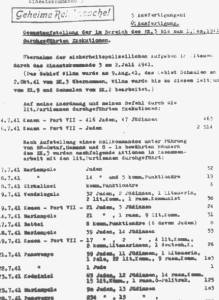
After Army Group North’s push through the Baltic countries on their way to Leningrad, Einsatzgruppe A (EG A) was tasked with ridding the newly occupied territories of “undesirables”, including Jews, Roma, intelligentsia, teachers, capitalists, commisars, homosexuals, and the mentally ill. On 1 December 1941, Einsatzkommando 3, a subordinate of EG A tasked with actually conducting the killings, finished operations in Lithuania. Their commander, SS Colonel Karl Jaeger, issued a very detailed report of his command’s activities, “Complete tabulation of executions carried out in the Einsatzkommando 3 zone up to December 1, 1941”. The cold and clinical “Jaeger Report” is one of the most complete and most horrifying documents of the Holocaust. The last page:

“Total carried forward 99,804
12.9.41 City of Wilna 993 Jews, 1,670 Jewesses, 771 Jewish children 3,334
17.9.41 City of Wilna 337 Jews, 687 Jewesses, 247 Jewish children and 4 Lith. Comm. 1,271
20.9.41 Nemencing 128 Jews, 176 Jewesses, 99 Jewish children 403
22.9.41 Novo-Wilejka 468 Jews, 495 Jewesses, 196 Jewish children 1,159
24.9.41 Riess 512 Jews, 744 Jewesses, 511 Jewish children 1,767
25.9.41 Jahiuna 215 Jews, 229 Jewesses, 131 Jewish children 575
27.9.41 Eysisky 989 Jews, 1,636 Jewesses, 821 Jewish children 3,446
30.9.41 Trakai 366 Jews, 483 Jewesses, 597 Jewish children 1,446
4.10.41 City of Wilna 432 Jews, 1,115 Jewesses, 436 Jewish children 1,983
6.10.41 Semiliski 213 Jews, 359 Jewesses, 390 Jewish children 962
9.10.41 Svenciany 1,169 Jews, 1,840 Jewesses, 717 Jewish children 3,726
16.10.41 City of Wilna 382 Jews, 507 Jewesses, 257 Jewish children 1,146
21.10.41 City of Wilna 718 Jews, 1,063 Jewesses, 586 Jewish children 2,367
25.10.41 City of Wilna 1,776 Jewesses, 812 Jewish children 2,578
27.10.41 City of Wilna 946 Jews, 184 Jewesses, 73 Jewish children 1,203
30.10.41 City of Wilna 382 Jews, 789 Jewesses, 362 Jewish children 1,553
6.11.41 City of Wilna 340 Jews, 749 Jewesses, 252 Jewish children 1,341
19.11.41 City of Wilna 76 Jews, 77 Jewesses, 18 Jewish children 171
19.11.41 City of Wilna 6 POW’s, 8 Poles 14
20.11.41 City of Wilna 3 POW’s 3
25.11.41 City of Wilna 9 Jews, 46 Jewesses, 8 Jewish children, 1 Pole for possession of arms and other military equipment 64
EK 3 detachment in Minsk from 28.9-17.10.41:
Pleschnitza Bischolin Scak Bober Uzda 620 Jews, 1,285 Jewesses, 1,126 Jewish children and 19 Comm. 3,050

Prior to EK 3 taking over security police duties, Jews liquidated by pogroms and executions (including partisans) 4,000

Total 137,346

Today I can confirm that our objective, to solve the Jewish problem for Lithuania, has been achieved by EK 3. In Lithuania there are no more Jews, apart from Jewish workers and their families. . . .

The distance between from the assembly point to the graves was on average 4 to 5 Km. . . .

I consider the Jewish action more or less terminated as far as Einsatzkommando 3 is concerned.

Those working Jews and Jewesses still available are needed urgently and I can envisage that after the winter this workforce will be required even more urgently.

I am of the view that the sterilization program of the male worker Jews should be started immediately so that reproduction is prevented. If despite sterilization a Jewess becomes pregnant she will be liquidated. . . .

(signed)
Jager SS-Standartenfuhrer”

Common Sense

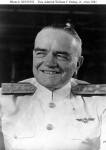
On 28 November 1941, Vice Admiral William “Bull” Halsey departed Pearl Harbor on the USS Enterprise to ferry Marine fighter squadron VMF-211 to Wake Island. Sitting in the office with the Commander Pacific Fleet (CINCPAC) Adm Husband E Kimmel that morning, he asked about the Rules of Engagement if he should encounter Japanese forces.

Halsey: If I run into a Jap ship, how far can I go?

Kimmel: Use your common sense…

Halsey: That’s the best damn order I’ve ever received.

The Cossacks’ Reply

In 1676, Sultan Mahmud IV of the Ottoman Empire wrote,

“Sultan Mahmud IV to the Zaporozhian Cossacks:

As the Sultan; son of Muhammad; brother of the sun and moon; grandson and viceroy of God; ruler of the kingdoms of Macedonia, Babylon, Jerusalem, Upper and Lower Egypt; emperor of emperors; sovereign of sovereigns; extraordinary knight, never defeated; steadfast guardian of the tomb of Jesus Christ; trustee chosen by God Himself; the hope and comfort of Muslims; confounder and great defender of Christians — I command you, the Zaporogian Cossacks, to submit to me voluntarily and without any resistance, and to desist from troubling me with your attacks.

–Turkish Sultan Mahmud IV”

The Zaporozhian Cossacks, (the Cossacks that settled the eastern end of modern Ukraine) replied,

“Zaporozhian Cossacks to the Turkish Sultan!

O sultan, Turkish devil and damned devil’s kith and kin, secretary to Lucifer himself. What the devil kind of knight are you, that can’t slay a hedgehog with your naked arse? The devil excretes, and your army eats. You will not, you son of a bitch, make subjects of Christian sons; we’ve no fear of your army, by land and by sea we will battle with thee, fuck your mother.

You Babylonian scullion, Macedonian wheelwright, brewer of Jerusalem, goat-fucker of Alexandria, swineherd of Greater and Lesser Egypt, pig of Armenia, Podolian thief, catamite of Tartary, hangman of Kamyanets, and fool of all the world and underworld, an idiot before God, grandson of the Serpent, and the crick in our dick. Pig’s snout, mare’s arse, slaughterhouse cur, unchristened brow, screw your own mother!

So the Zaporozhians declare, you lowlife. You won’t even be herding pigs for the Christians. Now we’ll conclude, for we don’t know the date and don’t own a calendar; the moon’s in the sky, the year with the Lord, the day’s the same over here as it is over there; for this kiss our arse!

Koshovyi otaman Ivan Sirko, with the whole Zaporozhian Host”

Get Some.

The Kido Butai

For nearly 18 months, Admiral Isoroku Yamamoto the commander of the Japanese Combined Fleet fought the Japanese Army and the Imperial Naval General Staff on the need to strike Pearl Harbor at the outset of war with America. The General staff wanted the fleet carriers for operations in the south, but Yamamoto knew everything depended on the Pacific Fleet being neutralized. At one point the Pearl Harbor operation was only approved when Yamamoto, his staff, and all of his senior commanders threatened to resign. The entire time was spent planning, politicking, and solving the numerous technical problems involved in striking the American Pacific Fleet in the shallow waters of Pearl Harbor in far off Hawaii. But on 26 November 1941, the hard work passed into the hands of the operation’s commander, Japan’s premier carrier admiral Vice Admiral Chiuchi Nagumo, when the Kido Butai secretly departed Hittokapu Bay in the Kurile Islands for the long journey east.

The Kido Butai, the “mobile strike force” of the Imperial Japanese Navy, was the most powerful naval fleet ever seen in history up to that point. It consisted of three of the five Japanese carrier divisions, and all of Japan’s big fleet carriers. These carriers: the Kaga, Akagi, Soryu, Hiryu, Shokaku, and Zuikaku, could together put the 414 modern fighters, dive bombers, and torpedo/level bombers of the 1st Air Fleet into a devastating first strike. Additionally every plane was superior to anything comparable flown by the Americans. This massive strike force was further escorted by two battleships, three cruisers, nine destroyers, eight tankers, and 23 submarines. Finally, the Kido Butai carried four midget submarines for penetrating the tight defense of the harbor entrance.

The trip would take ten days. They were scheduled to arrive at the launch point just north of the Hawaiian Islands on the morning of 7 December, 1941.

Operation Crusader: The Dash to the Wire

“The Auch”, the Commander Middle East Gen Claude Auchinleck, was having none of it – the Eighth Army would attack until the last British soldier physically couldn’t, despite what its commander thought. When he appointed Cunningham to lead the Eighth Army, he thought he was solid, if unimaginative. He didn’t think he would crack after one bad day. Auchinleck didn’t trust the Operation Crusader reports reaching him in Cairo, so decided to see for himself. Fortunately he did because when he arrived, Cunningham was about to withdraw the Eighth Army back to Egypt.

Over his dead body: Auchinleck spent months preparing for this offensive. He hoarded supplies and practically beggared himself kissing American ass for weapons and tanks. And he took a huge political gamble with Churchill waiting until November. He wasn’t going to waste all that effort, not to mention the lives of his men who died in the last week, just because their commander lost his nerve.

Cunningham had to go, but he would wait until after the offensive was over out of respect for Cunningham’s elder brother, the commander of the Mediterranean Fleet. Despite the loss of three brigades and 300 tanks the day before, the British still outnumbered Rommel two to one in tanks, three to one in infantry, five to one in artillery, and most importantly the supplies and fuel to continue fighting for at least another month.

Auchinleck knew Rommel’s weak point was fuel. Math didn’t lie: at the tail end of a 500 mile supply line, the Germans and Italians couldn’t have more than ten days of petrol for offensive operations. This was even confirmed, via Ultra, when it was found that Rommel was so desperate for fuel that German U boats were screening fast Italian cruisers from Italy to Benghazi, filled not with fuel oil for naval operations but with petrol for the Afrika Korps. Every minute the Eighth Army continued to fight, was one minute closer to Rommel’s inevitable retreat.

This unfortunate fact was not lost on Rommel. He planned to have enough fuel in mid November to capture Tobruk, no more. He wasn’t expecting to throw back a major offensive, much less advance into Egypt. But now that opportunity had shown itself.

After the Afrika Korps’ victory on Totensonntag, Cruell wanted to advance just far enough to consolidate the battlefield and secure all the “wonderful loot” abandoned by the Eighth Army – tanks, trucks, food, water, ammunition etc. But Rommel knew he needed to keep pounding on the British weak point: it’s leadership. He needed to break Cunningham before his own fuel situation broke. (He did, but wasn’t counting on the Auch personally taking over command from Cunningham) The only way he could do that was to attack: one last big push before logistics forced him to withdraw closer to his depots near Benghazi on the far side of Cyrenaica.

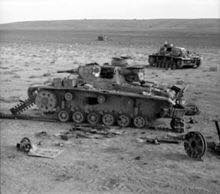
On 25 November 1941, Rommel ordered the entire Panzerarmee Afrika on the offensive. The plan was essentially Operation Crusader in reverse: Their objectives were relieving the cut off Italian garrison at Bardia, destruction or capture of any British armor they found, and the capture of any Eighth Army supply dumps. The dumps had to be near the Egyptian frontier, which was marked by enormous amounts of barbed wire. (With any deliberate offensive preparation, the attacking unit always pre-positions supplies as far forward as possible. This mitigates the increasing distance the convoys travel to the forward elements as they advanced. For Crusader that meant near the frontier with Libya, which is exactly where they were.)

When Auchinleck woke that day in the Eighth Army HQ at Magdalena, effectively if not officially taking command of the Eighth Army himself, he received the first reports of panzers slashing through the seam between the XIII and XXX Corps.

Rommel’s “Dash to the Wire” was on.