
Category: History
The Most Useful Invention Ever
As the United States began planning the upcoming amphibious campaigns against the Japanese, and to a lesser extent the Germans and Italians in Europe, a need was identified for something to seal ammunition cases to keep water out. The company Revolite, a subsidiary of Johnson and Johnson, developed a roll of rubber based adhesive on canvas cloth backing. In the textile industry, canvas is referred to as “duck cloth” and on 24 June 1942, the US Army received its very first roll of Duck Tape (As in “Duck” with a “k”, not a “t”. Quack, quack). It was an instant hit, and like today, it was used for everything.
The Battle of Plassey
In 1756, the 20 year old Nawab of Bengal, Siraj-ud-Daulah, did not share his grandfather’s fondness and welcoming of the British East India Company traders. He accused them increasing their fortifications in the area and of meddling in internal politics with some justification. This caused him great difficulties and distractions from his wars against the Afghan tribes and Mahratta raiders to his north. Siraj-ud-Daulah mobilized his levies, sought support from the French East India Company, and moved against Fort William, the British East India Company’s outpost near Calcutta. The British for the most part evacuated, but left a small force of soldiers, sepoys (native troops equipped and trained in the tactics and techniques of European warfare) to garrison Fort William including civilian administrators and family members.
The fort surrendered after a brief siege. Unbeknownst to Siraj-ud-Daulah, the 146 garrison survivors were placed in a 14’ by 21’ foot cell. When morning came, 123 died of suffocation, dehydration, madness, or were crushed to death in what became known the “Black Hole of Calcutta”. (The exact details are still in dispute, such as the number in the cell. What isn’t in dispute is that 123 died that night of the 146 that surrendered that evening.) The British East India Company ordered Col Robert Clive with a small force at Madras to sail for Calcutta to exact retribution. He defeated Siraj with an aggressive night attack on the Nawab’s camp in February 1757, and secured a treaty which restored the British East India Company’s former privileges in Bengal.
So would have ended the Third Carnatic War, had Great Britain and France not been fighting the Seven Years War at the same time in Europe (and in America as the French and Indian War). At the time, the French, Dutch, and British trading outposts were under the Nawab’s protection by treaty (the violation of which was the official pretext of Clive’s expedition in the first place, well, second, since Siraj argued that the British violated it first with their meddling). Clive saw an opportunity to replace Siraj with one of his more pliable generals, Mir Jafar. But he had to work fast because he was going to be recalled to fight the French at Ponicherry near Madras.
After quickly laying the proper political groundwork, Clive advanced on the French outpost at Chandranagar and burned it to the ground. Siraj sent troops to intervene but anticipating this Clive bribed the Bengali general beforehand. Correctly guessing that Clive was trying to have him replaced, Siraj again massed his feudal levies and headed south, this time to crush the British force.
Clive was vastly outnumbered but had a clear quality advantage. However, that wouldn’t last as he heard a French force was approaching the area from the west. The French force was small like his, but it would provide the necessary backbone for Siraj’s men. Furthermore, many in Clive’s force were Frenchmen, either captives fighting instead of going to prison, or just isolated French merchants and adventurers who chose to join the expedition. Clive was worried that they would defect if an actual French army was in the area. So Clive confronted Siraj in the mango groves outside the village of Palashi 93 miles north of Calcutta. The village is better known by its Anglicized name of Plassey.
Siraj had 19,000 cavalry, 42,000 infantry, and 50 large field cannon, including a number of war elephants and 200 Frenchmen who mostly supervised the guns, and even crewed a few. Clive had a mixed European force of 800 professional infantry, 2100 Indian sepoys, and eight cannon crewed by about 200 gunners and sailors. Although Siraj vastly outnumbered Clive, Clive’s men were much more disciplined for the most part, and all had modern firearms. Siraj’s men mostly had swords and spears, but did have a significant number of old firelock muskets.
On 23 June 1757, Clive and Siraj’s respective troops lined up against each other and the battle began with a thunderous barrage on both sides. The professional British gunners managed a rate of fire of two or three rounds a minute, while the Bengali’s, under French tutelage, managed just one round every fifteen minutes. Fortunately for Siraj, a thunderstorm broke out which ceased the firing on both sides.
When the storm subsided, Siraj decided to attack since his guns and gunpowder were soaked, and assumed Clive’s were the same. However, Clive’s gunners covered their guns and powder with tarps, and unleashed devastating volleys into the Bengali masses as they approached. The Bengali’s retreated.
Siraj by this time was clearly unsure of what to do and sought counsel. He spoke to his astrologer (who was bribed by Clive) and the seer predicted his death if he stayed. Also, Mir Jafar, one of Siraj’s division commanders, also counseled retreat. Siraj did not know that Clive had secured Mir’s assistance. As Siraj was discussing his options with his advisers, Clive attacked. The Nawab of Begali quickly got on his camel and sped out of camp. With their leader gone, the army broke and Mir Jafar and his men defected. Siraj was eventually killed by his own people, and Mir Jafar replaced him as Nawab of Bengal.
The Battle of Plassey removed the French presence from Bengal and brought the area under control of the British East India Company. It was the first step in the British quest for domination of South Asia. Over the next one hundred years, the British would go on to conquer the rest of the Indian subcontinent. By the time of Queen Victoria in the late 19th century, India was known as the Crown Jewel of the British Empire.
The Raid at Targovisti and The Forest of the Impaled
In 1559, the Ottoman Sultan Mehemd II sent envoys to the Principality of Wallachia to inquire why the jizya (The Islamic tax on non-believers) had not been paid. Wallachia’s voivode, or prince, Vlad III Dracula (“Dracula” because he was the son of Vlad II Dracul) felt that his rule over Wallachia was sufficiently consolidated, and that he no longer needed the Turks. He knew war would come with the Ottoman Empire if he didn’t pay so in his customarily bloodthirsty manner, Vlad provoked one. He asked the envoys why they didn’t remove their turbans in his presence, and when they replied it was not their custom, he had his guards nail the turbans to their heads.
After ambushing and defeating the army the sultan sent for revenge, Vlad III Dracula invaded Bulgaria. He slaughtered, by his own words, over 25,000 Turks and Bulgars, “…without counting those whom we burned in [their] homes or the Turks whose heads were cut [off] by our soldiers…” In retaliation, Mehmed II sent a massive army of over 130,000 against Vlad to annex Wallachia outright.
Vlad could muster only about 30,000 men against this force, so he needed to reduce the Turkish numbers if he planned to defeat them in battle, or more likely, force them into a siege where the Turks could be weakened then annihilated. Vlad conducted a guerrilla campaign against the Turks with his cavalry, killing and capturing thousands of foragers and stragglers. He also sent diseased people into the Turkish camps in a crude form of biological warfare, and managed to infect part of the sultan’s army with the Bubonic plague and leprosy. Worse still, he conducted a scorched earth policy back across Bulgaria and into Wallachia. He killed or removed the people, poisoned the wells, salted the fields, burned the villages, rerouted rivers to make swamps, and rendered the castles indefensible, even in his own country. The Turks advanced into a wasteland. In mid-June 1462, Mehmed approached Vlad’s capital, the fortress city of Targoviste, where he knew Vlad planned to make a stand. A few days before the Turks invested the city, they paused and made camp to prepare. Vlad, who grew up among the Turks as a hostage but didn’t convert, snuck into the camp to assess his adversaries. He found them weak and disorganized.
On the night of 16-17 June 1462, Vlad III Dracula attacked the Turkish camp in daring torch lit raid for the specific purpose of assassinating the sultan. The charge of about 10,000 horsemen caused great confusion amongst the Ottomans. Vlad himself led the attack directly at the sultan’s tent. However, in the confusion of the assault, Vlad mistook the grand vizier’s opulent tent for the sultan’s. By the time he realized his mistake, the sultan’s Janissaries (elite warriors comprised of Christian boys forcibly converted to Islam then trained as soldiers) led by Vlad’s brother Radu, whom shared his time as a hostage, rallied and protected the sultan. The Wallachians withdrew back into Targoviste, unsuccessful in their mission.
It took the Ottomans several days to reorganize. Once ready, Mehmed advanced again on Targoviste intent on ending the Wallachian resistance once and for all time. He was not prepared for what he found in the fields just outside the city.
Vlad III Dracula was one of the most bloodthirsty men in history, for good reason. Even by the brutal standards of the day, Vlad set himself apart. His favorite form of torture and execution was “impalement”. During impalement, a long thick sharpened pole was inserted into the victim’s anus and the pole was then placed upright into the ground with the victim perched above. Over hours and sometimes days, the victim would slowly slide down the pole until sharpened end pierced out of the torso, or even the throat or mouth if the angle was correct. In an age of gruesome executions, impalement was probably the worst way to die.
On 23 June 1462, Mehmed approached Targoviste and found tens of thousands of his warriors and people impaled. All of the stragglers and any Turkish people Vlad captured, including prisoners from the recent raid, Vlad had impaled in front of Targoviste. An observer noted, “Twenty thousand men, women, and children had been spitted” and “There were infants too affixed to their mothers on the stakes, and birds had made their nests in their entrails…” The sultan called the grisly sight, “The Forest of the Impaled”. It had its intended effect on the Ottoman Army; Mehmed withdrew from Wallachia.
Thereafter Vlad III Dracula would be known as “Vlad Tepes” – Vlad the Impaler.
The Battle for Wireless Ridge
The British 3rd Commando Brigade “yomped” across East Falkland Island and successfully assaulted and occupied the five hill masses that surrounded Port Stanley to the west. The 3rd Battalion of the Parachute Regiment (3 Para) seized Mt Langdon with some difficulty, but was fixed by accurate Argentine artillery fire and could not continue on to seize its eastern most spur, Wireless Ridge, whose occupation would render Argentine defenses on Mt Tumbledown untenable, and isolate Port Stanley from the north. The task to seize Wireless Ridge was given to 2 Para, who was fifteen kilometers away on the slopes of Mt Kent as the brigade reserve.
On the evening of 13 June 1982, 2 Para yomped the 15 km to its assault positions north of Wireless Ridge. 2 Para’s new commander, Lt-Col David Chaudler who was recently flown in from Britain (!) and replaced the former commander killed at Goose Green, vowed that the battalion would not attack without adequate fire support again. So in support, 2 Para was allocated a generous allotment: two batteries of 105mm tube artillery, 3 Para’s mortars, two Scimitar tanks (skinny), two Scorpion light tanks (stubby… you know what I am talking about… The cards, man, the cards) from the Blues and Royals, and the 4.5 in deck gun of HMS Ambuscade (One of my favorite words. We need to get the term “ambuscade” into doctrine).
Just after midnight, 2 Para assaulted on line after a diversionary attack on Mt Tumbledown by the Scots Guards, and a short but vicious preparatory bombardment on the dug in Argentine positions. D Co would actually assault Wireless Ridge, while other companies seized the small hillocks to the north. The assault on Wireless Ridge was tactically polar opposite from Goose Green. Argentine resistance was systematically rooted out by superior firepower, by the light tanks, artillery, mortars and machine guns, upon contact. The Argentinian soldiers of the 7th Infantry Regiment usually broke before they were engaged in close combat with 2 Para infantry. There were four notable exceptions.
The first was not by 7th Inf Regt soldiers, but by a platoons worth of troopers from the Argentinian 2nd Airborne Regiment on their way to Mt Longdon, who counterattacked west directly into D Co as it assaulted east. D Co fought them off over the next several hours. The second exception was a dismounted counterattack by the crews of an armored car squadron (read “troop” or “company”), which was annihilated by heavy machine guns and the Scorpions and Scimitars. The third attack by the Argentinians was by a bypassed 7th Infantry Regiment platoon who struck the flank platoon of D Co. The Argentinian platoon leader was furious after hearing his friend was killed, and rallied his men to counterattack. The surprised defenders were led by a brand new lieutenant fresh from school. The Argentinians nearly overran their adversaries, but were brought under intense and accurate fire support by the British platoon commander, who had to drop down to the fire support net in the confusion and coordinate his own support. D Co (the main effort) didn’t have a forward observation officer (?), and the other FOO’s were prioritizing their missions. The young platoon commander just asserted himself into the net, and probably saved D Co a very bad morning.
The fourth and final Argentine counterattack came as the sun came up. 200 Wireless Ridge survivors and staff officers were rallied by the 10th Brigade operations officer and formed a hasty defense on the west side of Port Stanley. Since about 4 am, the remaining Argentine artillery fired on Wireless Ridge. As dawn broke about six, 50 members of the ad hoc defense, led by the 7th Inf Regt executive officer and regimental chaplain, assaulted the ridge with fixed bayonets under cover of the bombardment. The Paras were initially flabbergasted at the lines of Argentinian infantry singing as they advanced, but they were eventually beaten back with great losses.
The failure of the impromptu Argentinian dawn assault broke the Argentine defenses and the Argentinian infantry to the south and west on Mt Tumbledown routed and fled back to Port Stanley. That evening the Argentinian commander in the Falkland Islands, with no further help from the mainland, recognized the futility of the situation and surrendered. The British reoccupied the South Sandwich Islands, the last Argentinian conquest in the South Atlantic on 20 June, and both sides declared an end to the hostilities.
The Fall of Tobruk
During the night of 19-20 June 1942 Rommel discontinued his feigned pursuit of the retreating British and masterfully turned around his four best divisions, the veterans of the old Deutches Afrika Korps: the 90th Light, 15th and 21st Panzer, and the Italian armored division Ariete. That night they moved from an all-out pursuit and prepared to assault Tobruk. At 5:30 am 20 June, every Luftwaffe bomber in the Eastern Mediterranean struck the south east corner of Tobruk perimeter and the defending unit, the 11th Indian Brigade, broke under the combined arms assault by Italian infantry and artillery with German tanks and planes. Confusion in the British headquarters would not allow the numerically superior South Africans to reposition forces from uselessly defending against an amphibious assault, or from the south and west to counter the threat. By nightfall on the 20th, the Germans secured the port.
The next day, the British surrendered. 30,000 Commonwealth troops marched into captivity and it was the second largest surrender in British history after the fall of Singapore some months earlier. In the last six months, the Japanese captured Malaya and Singapore despite being significantly outnumbered, and ignobly ran the British out of Burma with barely better odds. Operation Crusader had six months of dedicated support and priority within the entire British Empire and Rommel erased those painstaking gains in a matter of weeks: first in January, and then in June. The Australians and Poles held Tobruk against all odds for nearly nine months; The British Army gave it away in two days. Any reputation for competence and fighting prowess held by the British Army was gone.
Rommel would tell the captured officers, “Gentlemen, you have fought like lions and been led by donkeys.” He was promoted to Field Marshal shortly thereafter; Rommel was a lieutenant colonel just four years before.
Winston Churchill, in Washington DC meeting with President Roosevelt, called the Fall of Tobruk “a shattering and grievous loss”. He would say to Roosevelt that “I am the most miserable Englishman in America since Burgoyne” (the British general who surrendered at Saratoga during the American Revolution).
Churchill commented in his memoirs that 21 June 1942 was the worst day of World War II.
The Monterey Pop Festival
America temporarily lost its greatest invention, Rock and Roll, when Elvis Presley left for the Army and the Day the Music Died in a cornfield in Iowa. But the generation that didn’t remember the horrors and sacrifices of their parents’ generation during the Great Depression and the Second World War, the Baby Boomers, were coming of age. Primed by Chubby Checker and Motown, the Big Bang that was the British Invasion reminded America of what it had lost: Rock and Roll, the music that changed a generation.
The Monterey Pop Festival is the seminal event in the history of Rock and Roll: everything that came before it led to it, and everything’s that came after it was because of it
The Stars and Stripes
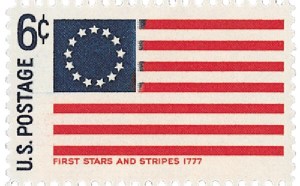 After the victories of Trenton and Princeton, the Continental Army swelled with new recruits and the skirmishing between foraging parties and raiding between patriots and loyalists over the winter and spring of 1777 was fierce. In early spring, Lieutenant General George Washington moved the Continental Army out of winter quarters and encamped at a strong position at Middlebrook, New Jersey to prevent Gen William Howe’s British Army in New York from moving on Philadelphia overland. 1777 was expected to be the decisive year of the American Revolution. Washington needed every advantage he could muster and mitigate every issue possible. One small issue was the Continental Army’s colors.
The Grand Union Flag which by this time was carried by the majority of the Continental regulars caused quite a bit of confusion. It had a Union Jack in the upper left corner on a field of alternating red and white stripes. Many patriots disliked the flag by 1777. Some saw it as a loyalist flag, including British troops. Moreover, it didn’t look particularly different from the Union Jack on the battlefield. At the very least, the Grand Union flag didn’t symbolize a complete break from Great Britain as was promised by the Declaration of Independence. Washington needed a new flag. In response to Washington’s request, on 14 June 1777, the Continental Congress passed the first flag law. It read, “Resolved. That the flag of the United States be thirteen stripes, alternate red and white; that the union be thirteen stars, white in a blue field, representing a new constellation.”
This resolution left quite a bit to the imagination, such as the size and location of the blue field, the position of the stars, even the shape of the flag and the direction of the stripes. These details were filled in, not by Betsy Ross as in the popular American myth, but by Francis Hopkinson, a signer of the Declaration and Congressional delegate from New Jersey.
Hopkinson was a talented designer and had a keen interest in designing the symbols for the new Republic. It was his recommendation that the blue field with stars replace the Union Jack in the Grand Union flag carried by the Continental Army. Although his first design was not a circle but alternating columns of two and three stars. This meant that the current Grand Union colors could easily be “fixed”, without the problems of sewing a brand new flag and replacing the existing ones. (Hopkinson would go on to design just about every American symbol from the Great Seal to the dollar bill.)
Whether the first original flag of the new United States of America was sewn by Betsy Ross is so far lost to history. The entire Betsy Ross story is based on a single written testimony by her grandson given nearly a hundred years later in 1870. The story is not backed up by any physical evidence or written records whatsoever: no committee records, no bills of payment, and no journal entries in anyone’s diary or memoirs. Nothing. That doesn’t mean it didn’t happen, just that there is no solid evidence for it at all. The first flag had to be sewn by someone, Betsy Ross is as good a choice as any, and better than most.
The British began their invasion of the United States the same day as the flag resolution, 14 June 1777, when Gen John Burgoyne and his Indian allies crossed into New York from Canada, and Howe began a series of maneuvers against Philadelphia. 1777 would be a momentous, if frustrating, year for America. To meet the threat, the Continental Army would have a new flag for her regiments to rally around: a flag of thirteen alternating red and white stripes with a blue field in the corner upon which there was a circle of thirteen white stars.
The original Stars and Stripes of the United States of America.
The Battle of Gazala: Black Saturday
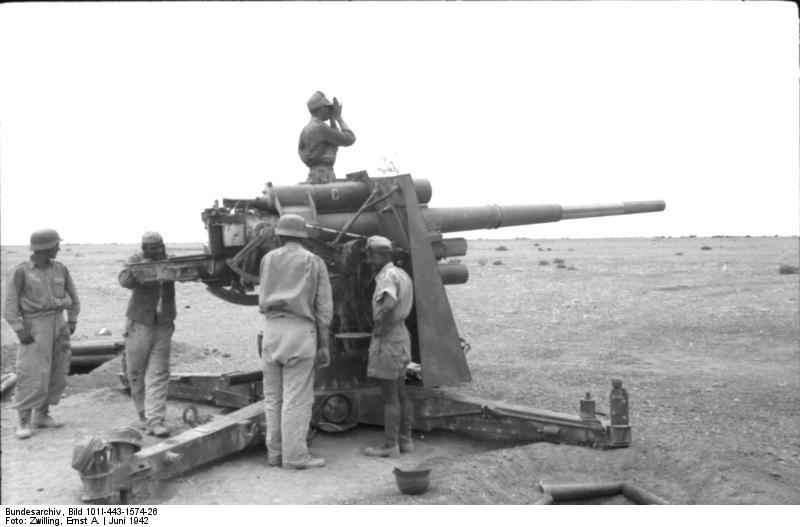
The failure to capture the Free French defensive “box” at Bit Hacheim greatly delayed and disrupted Gen. Erwin Rommel’s Gazala offensive. The Germans and Italians broke though the British lines above Bir Hacheim but couldn’t exploit the breach. Rommel’s forces formed what became known as “The Cauldron” while they waited for the Free French position to be reduced which would allow the Axis mechanized and motorized forces to proceed east without a worry to their flank and rear.
The British Eighth Army launched their armoured brigades at the Cauldron according to their commander, Lieut Gen Neil Ritchie’s plan, Operation Aberdeen, but the Germans cut them to pieces when they neared the screen of 88mm anti tank guns. As the British approached, they were accurately engaged by the longer ranged 88mm guns, and in the confusion, counterattacked by Rommel’s panzers. Moreover, the British counterattacks were uncoordinated brigade sized assaults, of which Rommel commented, “if you attack me in penny packets, then I shall defeat you in detail.” The failure of the Operation Aberdeen allowed Rommel to take the time to reduce Bir Hacheim in a deliberate manner.
Bir Hacheim fell on 9 June 1942, and Rommel unleashed the Afrika Korps two days later on the southern and eastern end of the British Gazala Line, on 11 June.
Even though the Germans were attacking this time, Rommel’s tactics worked just as effectively as they had during Operation Aberdeen. As the German and Italian tanks approached the boxes at Knightsbridge and El Adem, the British tanks charged forward in the grandest tradition of the Scots Greys and Household Cavalry to engage them. They were then consistently massacred by the waiting 88mm anti tanks guns, in position due to superior German radio intercepts, then mopped up by the panzers. With the only British counterattack threats neutralized, Rommel went about systematically reducing the remaining defensive boxes, rendering the Allied defenses to the north and west untenable.
On 13 June 1942, the British lost nearly 400 tanks, and the Knightsbridge box fell. Rommel’s panzers were now in a position to isolate the port of Tobruk, and more importantly cut off the remainder of the British Eighth Army on the coast road and Gazala Line. The damage to the Eigth Army was so extensive that many troops referred to 13 June 1942, as “Black Saturday”. Gen Claude Auchlinek, the commander of all Allied troops in the Western Desert, authorized Ritchie to withdraw from the Gazala Line to a position south of Tobruk, and if that couldn’t be held, to the Egyptian frontier.
The Gazala Line was broken. British, Commonwealth, and Allied troops streamed east, and in some cases counterattacked east. Rommel wouldn’t relent on his assaults and the Eighth Army had no time to consolidate a defensive line anchored on Tobruk. The British fled further east to reach the safety of the bottlenecks on the Egyptian frontier: whether Mersa Matruh, or the small town of El Alamein.
The painstaking gains made by Operation Crusader the year prior were erased in less than three weeks. Despite superiority in men, tanks, artillery, and equipment of all kinds, Ritchie could not contain Rommel. He lost nearly a thousand tanks, including almost all of his new lend lease American Grant tanks, and left Rommel with the initiative. The Battle of Gazala was Rommel’s finest moment, though it was almost entirely due to his cryptanalysts and 88mm anti aircraft guns used in a now familiar role. Nonetheless, through Rommel’s leadership, the Axis troops leveraged their asymmetrical advantages against his adversaries’ self imposed constraints, namely limiting the size of the armoured formations, to great effect.
The Germans and Italians would capture countless tons of much needed Allied equipment, and chased the British far into Egypt. The advance would call into question the need for Operation Herkules, the invasion of Malta, then in its final preparations. Tobruk would fall under siege a second time.
Tobruk had held out the year before for nine months, but it would not do so again.
The Diary of Anne Frank
On 12 Jun 1942, a young Dutch girl received a red and white plaid covered diary from her father for her 13th birthday.
She would start recording her thoughts in it a week or so later. Her father picked the diary out based on her pointing it out on one of their walks along the streets of Amsterdam. That walk would be one of their last.
Otto Frank and his daughter, Anne, were Jews. In July 1942, the Netherlands’ German National Socialist conquerers and their Dutch collaborators would place great restrictions on them in preparation for the implementation of the Final Solution of the Jewish population in the country.
The plight of the Dutch Jews was a difficult one. Unlike other countries, the huge population density of the Netherlands meant there were few places to escape to. There were no vast forests for refuge as there were in Eastern Europe. Also, the advanced Dutch civil bureaucracy had records on the entire Jewish population of the country and the Germans quickly identified and located them all. Moreover, although the Dutch people were sympathetic to the Jewish plight under Nazi domination, the Dutch government was unwilling to publicly intervene on their behalf, even passively. Unlike in other countries, the Dutch administration did the bidding of their National Socialist overseers with cold efficiency. In exchange for continued employment, pay, and benefits, the supposedly apolitical Dutch civil service ushered the Jewish population to its death. Few Dutch Jews were detained by Germans: they were identified by Dutch census data, rounded up by Dutch police who went directly to their homes based on Dutch tax files, held in Dutch camps run by the Dutch civil servants and held there by Dutch guards, and sent East to the death camps on Dutch trains run by Dutch engineers and Dutch rail crews.
Anne Frank and her family went into hiding to escape the Nazis and their own countrymen. They hid in a small three story room concealed behind a bookshelf in her father’s workplace. They were taken care of by several of her father’s sympathetic coworkers who visited once a day to deliver food and stay for a visit.
Anne chronicled each day in the cramped space in her diary. Her diary was her escape. She wrote of the dreams of a teenage girl, the boredom and difficulties of their existence, her love for and exasperation with her family, the terror of the listening to German soldiers and Dutch police searching the premises, her budding romance with the son of another family in hiding, and most importantly the hopes of survival in one of the darkest periods in human history.
The Frank family survived in hiding for more than two years, almost each day chronicled by Anne. They were arrested by the Gestapo after being betrayed in August 1944, by whom is unknown and subject to much debate. Anne and her family were sent to Auschwitz where she was separated from her father, but was not sent to the gas chamber with the rest of the children because she just turned 15 two months before. Nevertheless, Anne and her sister were transferred to Bergen Belsen Concentration camp to be worked to death. They both died of typhus in March 1945.
Anne Frank’s diary was saved by one of her family’s helpers after their arrest and recovered by her father who survived after being separated from his family. Anne Frank’s unedited record of her family’s existence behind the bookcase was published in 1947 as “The Diary of a Young Girl”.
The Diary of Anne Frank is one of the most poignant documents of the Holocaust, and Required Reading for Humanity.
The Raid on Medway
The late seventeenth century saw a series of wars from the 1650s through the 1680s between two great European Powers, England and the Dutch Republic, for control of the world’s seas. Although victorious in the First Anglo-Dutch War, by 1667 the English couldn’t prevent a Second.
England had just experienced the Great Plague of 1664 and the Great Fire of London in 1666. When combined with the extravagant spending of King Charles’ court, the English Parliament had had enough. They simply couldn’t afford the navy anymore despite the Dutch threatening a grand alliance between itself, France, and Spain. The English decided to rely on diplomacy alone. The English Navy went into dock until it could be afforded again. The Dutch struck.
The English laid up their best and largest ships at Chatham on the Medway River south east of London at the mouth of the River Thames. On 9 June 1667, Admiral Michael De Ruyter led the Dutch fleet and the very experienced Dutch Regiment De Marine up the heavily fortified river on a daring raid to destroy what was left of the English Navy.
The Dutch marines stormed the surprised defenders of the fort at Sheerness, protecting the Mouth of the Thames. The actual anchorage at Medway was protected by a great chain at Gillingham, supported by a few warships and two hastily constructed gun batteries. But they did little to stop the determined Dutch. The only factor preventing the complete destruction of the entire English fleet was unfavorable winds, which prevented the fireships from closing the distance to the docks at Gravesend and Hope.
Fifteen of the last eighteen English ships of the line were destroyed, and the two largest, the HMS Royal Charles and HMS Unity, were towed back as trophies. It was the worst defeat in English naval history and they sued for peace soon after.
The Treaty of Breda was a great victory for the Dutch. They received many territories in the Caribbean and the Pacific, includingrecovering most of what they were forced to cede in the First Anglo-Dutch War. The only piece of former Dutch territory the English kept was a small island they captured in North America: New Amsterdam. They promptly renamed the town on the island after James Stuart, Duke of York and governed it as the Province of New York.
 Buk's Historical Ad Hockery
You must be logged in to post a comment.