
Tagged: WWII
The Battle of Britain: 303 Squadron

The invasion of Poland in 1939 was not the walkover portrayed by German National Socialist propaganda, particularly in the air where the Polish air force was portrayed as destroyed on the ground. Poland’s small air force consisted of 400 obsolete planes, but number of flight hours made its pilots some of the best trained in world. The Luftwaffe suffered 900 planes shot down by the Poles before the German 5:1 superiority overwhelmed them. Towards the end of the campaign, thousands of pilots and ground crew escaped to Great Britain or France.
In August 1940, the RAF’s Air Marshal Dowding didn’t want to use the Polish squadrons because their lack of English language skills prevented their effective integration into his early warning system. So for the first 45 days of the Battle of Britain the Polish pilots, dozens of whom were aces and double aces, spent their time learning the proper English language procedures for coordinating with the Sector Control Centers and other fighters in the air.
However, on 30 August 1940 during a training flight over Kent, 303 Squadron RAF encountered a German bomber raid enroute to the airfield at Eastchurch, and one of the Polish pilots attacked. The pilot, a veteran of both the Polish and French campaigns, was frustrated with the RAF’s insistence on more training, and used the time honored tactic of not understanding the radio commands of his British instructor pilot. He shot down a German Bf110 and broke up the formation. Bowing to the inevitable, Dowding made 303 Squadron operational the next day.
303 Squadron was nicknamed the “Kosciuszko Squadron” after the Polish patriot and engineer who fought in the Continental Army during the American Revolution. 303 Squadron was formed on 28 July 1940 from pilots of the former 111 “Kosciuszko” and 112 “Warszawa” squadrons of the Polish Air Force. They were equipped with older Hawker Hurricane fighters, unlike many British squadrons which were equipped with far superior Supermarine Spitfires. Nonetheless, in the first seven days of September, 303 Squadron shot down 43 German planes for only six planes shot down and three pilot losses. The RAF refused to believe the numbers until the British sector commander came down to fly with them on 8 September. They scrambled four times, and shot down five more German planes without loss.
One victory that day was a Bf 109 that the Polish pilot chased over the tree tops. Out of ammunition, the Pole flew just above his target. The German pilot looked up, saw the fuselage of the Hurricane less than a meter from his canopy and instinctively dove away… straight into the ground. (The real life inspiration for Goose’s Polaroid scene in Top Gun? You know, “foreign relations”.) Impressed with their aggressiveness, dedication, technical and tactical expertise, and their “lust for contact”, the RAF never doubted the Poles of 303 Squadron again.
145 Polish pilots in five squadrons took part in the Battle of Britain, by far the largest contingent after the British. In early September, when the Germans had bombed Fighter Command’s airfields almost into submission, British Secretary of State for Air, Sr Archibald Sinclair noted, the RAF had “only 350 pilots to scramble, of which nearly 100 were Poles.”
The scarlet scarves of 303 Squadron would go on to shoot down 126 German planes in six weeks with the loss of only 13 pilots. This was the largest number of any of the 66 RAF fighter squadrons that fought in the Battle of Britain. Sgt Josef Frantisek, a Czech member of 303 Squadron who fought for the Poles after his country was given away by Neville Chamberlain in 1938, had the most kills of any pilot in the Battle of Britain with 18.
Pic notes: Note the cavalry czapka in the center of the 303 “Kosciuszko” Squadron emblem. The 13 stars around the outside of the red and white stripes was Kosciuszko’s heraldic device which he adopted after the American Revolution. (It was also a medal for gallantry in the Republic of Poland between 1919-1939). Also note the traditional Polish “war-scythes” on the emblem. “War-scythes” were made by uprighting normal scythe blades to make a form of fauchard. “Uprighting the scythe” was the traditional sign that the Poles were going to war. (You can’t harvest grain with an uprighted scythe; you can only harvest Germans, Russians, Swedes, Turks, and Communists.) The war-scythe is also a symbol for Polish independence, and “scythemen”, “Kosynierzy” in Polish, are roughly equivalent to “minutemen” in American culture. That was particularly appropriate during the Battle of Britain when the pilots had only a few minutes to get airborne to engage the Luftwaffe.
The Battle of Britain: Adlertag

By the first week of August 1940, it was obvious to the Germans that the costal convoy and port attacks were not going to lure the RAF into a battle over the channel where it could be destroyed. Herman Goring ordered the Luftwaffe to attack targets in Southern England which he believed would bring the RAF to battle. He was correct and Air Marshall Dowding unleashed his fighters on the Luftwaffe.
The revised plan was named Adlerangriff, or “Eagle Attack” and 13 August 1940 was designated Adlertag or “Eagle Day”. Luftwaffe bombers struck a variety of targets including airfields, radar stations, and aircraft factories in order to bring the RAF up to fight. Adlerangriff’s climax was actually very early in the battle: 15 August was declared Der Groesste Tag or The Greatest Day because of the sheer number of German sorties flown and the number of casualties on both sides. Nonetheless, it was a straight attritional battle, and although the Germans had more planes, the flaws in Adlerangriff became readily apparent.
Dowding’s early warning system proved to be much more resilient than expected. The radar towers were very difficult to damage much less destroy, and their ancillary and supporting systems were not targeted, such as telephone exchanges and power stations. Also, the slow Ju87 Stuka dive bombers were massacred in the air, and any bombers escorted by the big and ungainly Bf 110 fighter/bombers were likewise swept from the sky. Furthermore, since the battles mostly took place over England, any downed Allied pilots could be back with their squadrons in hours, unlike German pilots whom became POWs. Finally, the scattershot nature of the targets severely limited the effectiveness of the bombers, and did not complement the many victories scored by the fighters. It would take two weeks before the Luftwaffe High Command figured out that the key to defeating the RAF was not shooting down its planes but destroying its airfields.
The USS Indianapolis
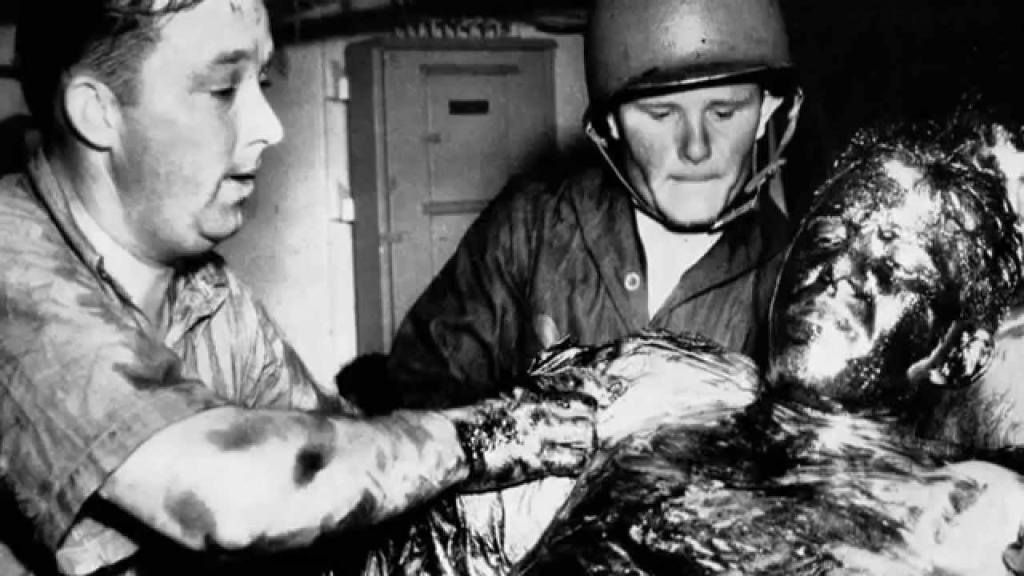
On 16 July 1945, the Portland class heavy cruiser CA-35, the USS Indianapolis, departed San Francisco for the island of Tinian to deliver parts for the first atomic bomb to be dropped on Japan. After successfully delivering the parts, the Indianapolis set off for the Philippines to participate in exercises for the upcoming planned invasion of Japan. Because of her secret mission, neither the 3rd nor the 5th Fleet were tracking her. Furthermore, she set off alone because naval intelligence deemed the waters between the Marianna’s and the Philippines safe.
On 30 July 1945, the USS Indianapolis was struck by a torpedo fired by Japanese submarine I-58. 300 of the 1200 crewmembers died in the initial attack and 900 abandoned ship into the oil slick and shark infested waters. A distress call was sent but none of the three stations that heard it acted on it. For four days and three nights, the survivors endured dehydration, saltwater and oil poisoning, hallucinations and madness, hypothermia, and numerous shark attacks.
On 2 August, a PV-1 Ventura spotted the survivors when the bombardier was rubbing his stiff neck (from changing an aerial) and glanced in their direction. They called it in and soon a PBY Catalina dropped rubber life rafts, water, and lifejackets to the remaining survivors. The pilot violated his patrol orders and landed to pick up stragglers after he watched in horror a shark attack consume one of the Indianapolis’ crew. Several hours later the destroyer escort USS Cecil J Doyle arrived on her captain’s own authority after hearing the PBYs desperate calls for assistance.
Only 317 of the Indianapolis’ 1197 crew members survived.
The Swiss Defy Germany
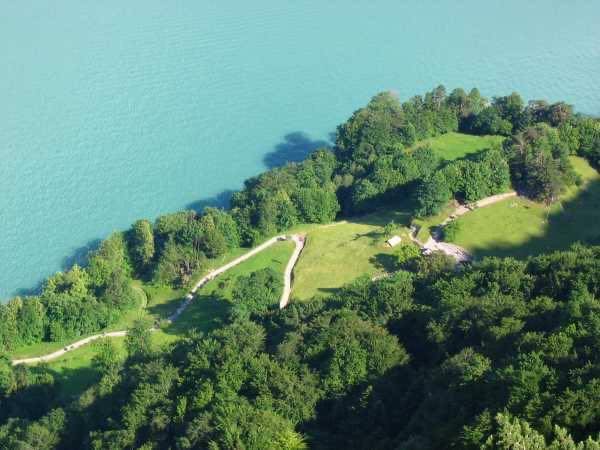
After the invasion of Poland, Switzerland mobilized its full army of 850,000 to defend their country. After the fall of France the Swiss learned of “Case Tannenbaum” or “Operation Christmas Tree” the Invasion of Switzerland for the autumn of 1940.
In 1291, the original eight Swiss cantons rallied with Swiss patriot William Tell (you know: the guy the Lone Ranger theme is named after), and declared the Rutlischwur or Rutli Oath in a meadow off Lake Lucerne. The Rutlischwur established the Swiss Confederacy which remains in place to this day.
On the same meadow, seven hundred years later on 25 July 1940, Gen Henri Guisan announced to the Swiss officer corps that they would not submit to Germany. He reminded them of the Battle of Morgarten where 1400 Swiss peasants defeated 20,000 Austrian knights and that the Swiss National Redoubt had never been conquered. He also reiterated that in accordance with their federalized constitution any surrender announcement by the decentralized Swiss government only applied to that official and those individual civilians who support them. And since the Army will never surrender they would resist to the last drop of their blood.
Hitler despised the Swiss but recognized that conquering Switzerland would be time consuming and difficult. Besides the obvious terrain issues, the Swiss army comprised 20% of the population and an additional 40% were armed in some fashion. In late 1940, Hitler delayed Case Tannebaum until after the Battle of Britain then again until after the invasion of the Soviet Union, and only finally cancelled it after the Allied landings in Normandy in 1944. From 1940 to 1944 Switzerland remained one of the few countries on continental Europe not under National Socialist domination.
Pegasus Bridge
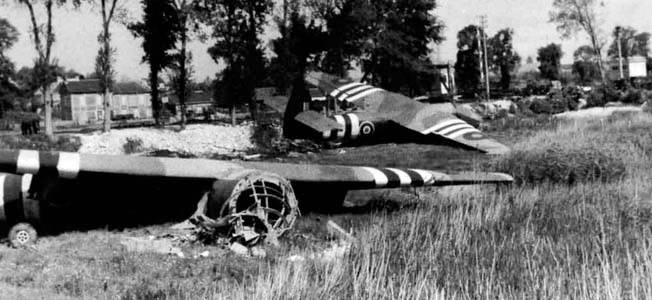
At exactly 1214 BST (British Standard Time, 7:15 pm EDT) on Tuesday 6 June 1944, six Halifax bombers cut tow lines for six gliders full of British paratroopers as part of Operation Deadstick to seize bridges over the Orne River and the Caen Canal outside the town of Bénouville in Normandy. The capture and successful defense of the two bridges would prevent any German counterattacks into the eastern flank of the vulnerable beachheads and force any German reinforcements to cross upstream at Caen and travel six miles out of their way.
The night was dark and glider pilots were flying blind, strictly by altimeter, airspeed and stopwatch. They had to put Major Jon Howard’s 181 man assault force as close as possible to the bridges without killing them. This was a tough task in a plywood Horsa glider with a penchant for breaking up on impact and known to the men as “Hearses”. This was particularly true of Horsas that carried equipment: a direct impact more than likely caused the equipment to become unstrapped and fly forward. If that happened, the lucky pilots were just tossed through the windshield, most were crushed.
Howard’s needed his pilots to put his men as close as possible no matter the danger because surprise was paramount. He needed to seize the bridges intact. A destroyed bridge would also prevent the Germans from crossing, but it would also prevent the Allies from crossing in the inevitable drive further into France. In addition to his reinforced company of Oxfordshire and Buckinghamshire (“Ox and Bucks”) Light Infantry, he had 20 Royal Engineer sappers to clear demolitions from the two bridges. Howard’s mission was so critical that it was the first of the invasion after the pathfinders, and a full hour earlier than the rest of the 6th Airborne Division, whose patch was a winged Pegasus.
At 1216, the Horsa gliders crash landed at 90 miles per hour and stopped near their objectives, five of the six next to the bridges. Staff Sergeant Jim Wallwork, Howard’s pilot expertly penetrated the wire surrounding the bridge but the landing was so hard, it knocked everyone out, and sent him and his copilot through the windshield still in their seats. The second glider also broke apart, and knocked out most of men. However, the pilot SSgt Oliver Bland was awake and coherent. He started kicking the paratroopers awake and when one complained he was wounded said, “Piss off. We’re here. Now do what you’re paid to do.”
Surprise was complete. The third and fourth gliders landed without issue. However the fifth landed in a pond and one soldier L-Cpl Fred Greenhalgh was thrown out of the glider, knocked unconscious and drowned before he was found. Greenhalgh was the first casualty of Operation Overlord. The rest of the men poured out and stormed the bridge after destroying a German machinegun with a direct mortar hit.
The operation went quickly once the men were out of the gliders. The fifty defenders were mostly Polish, Russian, and French prisoners who were given a choice to either join the Wehrmacht or get sent to a concentration camp. Some of the conscripts even attempted to surrender to still unconscious paratroopers in gliders that landed on top of them. Only the German officer and NCOs fought back. By 1219, the Orne River Bridge was secured without firing a shot and the Caen Canal Bridge was being overwhelmed. Howard’s only other casualty in the initial operation was Lt Den Brotheridge who was shot leading the final assault across the Caen Canal Bridge. At 1226, the sapper reported the bridges were secure, and Howard ordered the success code words “Ham” and “Jam” broadcast until they were received, which only happened an hour later.
Howard’s task wasn’t complete. He had to hold the bridges until he was relived, and he had no idea when that would happen. The first German counterattack came an hour later in the form of two Mark IV tanks attached to a platoon of infantry from a panzergrenadier battalion of the 21st Panzer Division, the only panzer division engaged on D-Day. The Ox and Bucks did not have any anti-tank weapons except one cumbersome PIAT launcher and three rounds. Fortunately, the first round struck the ammunition rack of the lead tank and it exploded for several hours, blocking the intersection. The Germans assumed there were 6lb anti-tank guns and a battalion of infantry guarding the bridges, not 179 men with few heavy weapons. The delay for more men and tanks probably saved the bridgehead.
Reinforcement for Howard came at about 0200 with 200 men of the 7th Parachute Battalion (including Richard Todd, who would play Howard in the movie The Longest Day), the rest were scattered over Normandy along with Howard’s missing glider. German Panzergrenadier counterattacks started in earnest at 0300. They captured Bénouville but failed to cross the bridges. Nonetheless, Howard’s positions were exposed to mortar and machinegun fire and limited only by the amount of ammunition the Germans had with them. Dawn brought a new threat, snipers, which made movement impossible in the small perimeter. The Germans attacked with two gunboats coming up the canal form Ouisterham. One was destroyed with the PIAT and the other withdrew. The Luftwaffe even made a rare appearance, dropping a bomb on the canal bridge which failed to explode.
By the afternoon, three of Howard’s platoons were led by corporals and there seemed no end to the Germans. In a desperate attempt to gain some breathing room he led a counterattack to clear the Germans from Bénouville which was largely successful. A newly found crate of Gammond bombs no doubt the trigger for the assault. Just after midday, the Germans launched a coordinated attack of almost entire panzer grenadier regiments, but they were spotted enroute and broken up by Allied air attacks and artillery from Juno and Sword Beaches.
At 1330, Howard’s men heard the distinct sound of bagpipes. They were from Billi Millin, Lord Loat’s personal piper who arrived with the lead elements of the 1st Commando Brigade, with a few tanks gathered along the way. The Orne River bridgehead was the furthest British penetration on 6 June.
The Caen Canal Bridge, renamed Pegasus Bridge, and the Orne River Bridge also renamed but to Horsa Bridge, remained in Allied hands for the rest of the Normandy campaign.
The Raid on Rembertów
Ever since the Red Army arrived on Polish soil in 1944, the Soviets raped, looted, and murdered their way across the country. The largest Polish underground resistance movement, the Home Army, turned from fighting German socialists to fighting Russian socialists. At the Yalta Conference in February 1945, Churchill made the same mistake Chamberlain did seven years previously and trusted a dictator. Stalin broke every pledge he made at Yalta, including allowing free elections in Poland, and power sharing between the American, French and British backed Polish Government-in-Exile and the Soviet puppets, the Polish Communists. The Soviet secret police, the NKVD, arrested any Pole even tangentially associated with the Polish Government-in-Exile or the Home Army. The detainees were placed in repurposed Nazi camps. Those that survived the torture, starvation, neglect, and interrogations at these camps were packed into cattle cars and sent east to the gulags, where most were never heard from again.
NKVD Special Camp No.10 near the town of Rembertów outside Warsaw was a former German labor camp for Soviet POWs. In May 1945, No. 10 was the final stop in Poland before prisoners and detainees disappeared into the Siberian wilderness. Since the camp was visible from the town of Rembertów, the guards ordered the prisoners around in rudimentary German to disguise from the townspeople that the prisoners were Poles. The ruse didn’t work, and the townspeople worked with the Home Army to free the prisoners. Many of the prisoners were high ranking Home Army and Exile leaders, and the next scheduled transport was 25 May.
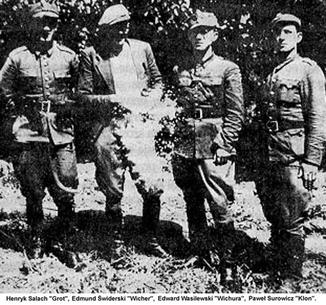
Disguised as Polish Communist Army soldiers, Home Army soldiers under Captain Walenty “Młot” (The Hammer) Suda reconnoitered the camp. The raid to free the prisoners was tasked to Lieutenant Edward “Wichura” (The Gale) Wasilewski and his reinforced platoon of 44 heavily armed fighters.
On the night of Saturday 20 May 1945, the townspeople of Rembertów along with some prisoner’s relatives brought the guards some booze, and threw a party in the town for the camp commandant. With most of the guards and camp administration drunk, Suda executed a textbook raid on Special Camp No. 10 with security, breach, and assault groups. The raid was a complete surprise. The only casualties were three Home Army wounded, and 40 prisoners killed when they were caught in a field trying to escape into the woods. In less than 25 minutes, 100 sick and wounded prisoners were spirited away in two trucks, while somewhere between 800 and 1400 Polish prisoners escaped through Suda’s breach.
The Raid on Rembertów escalated the Polish resistance to the Soviets to an all-out civil war between Polish Communists and the Soviet Union and the “Cursed Soldiers” of the Home Army and the Polish people. Prison raids were a favorite tactic. For the next 18 months, 150,000 Home Army and resistance partisans fought two million Red Army soldiers, 50,000 NKVD agents, and 30,000 Polish communist militia. The Poles fought on alone without any support from their former allies in the West. The last of the Cursed Soldiers were killed or deported by October, 1946.
The Battle of Arras and the Dawn of the 88

On 20 May 1940, the Germans had broken through the Allied lines and were racing to the channel. In order to slow their advance, the British Expeditionary Force launched a counterattack into the German flank, more specifically the flank of the 7th Panzer Division, led by Generalmajor Erwin Rommel.
Rommel’s panzers were having a great time tearing apart French headquarters, supply units, and routing withdrawing French units, and was hell bent on reaching the coast. He was taken completely by surprise with the BEF’s attack. Moreover, the 200 Czech made Pz38, and German made PzII and PzIV tanks that made up his division were no match for the 70 British Matilda heavy tanks. The guns of the German tanks simply couldn’t penetrate the Matilda’s armor and Rommel suffered heavy losses.
In desperation, Rommel ordered his 88mm antiaircraft guns to fire on the British tanks. The 88mm was designed to reach bombers at high altitudes and its high velocity round proved to be devastating against the British armor.
The famous (or infamous) “88” proved to be Germany’s most effective general purpose artillery piece throughout the war, whether in an anti-tank, anti-personnel, or anti-aircraft role. It was the bane of the Allies’ existence and redefined German armored tactics for the rest of the war.
The Fall of France and the Low Countries, and the Failure of Allied Leadership

Germany invaded France, Belgium, Luxembourg, and the Netherlands on 10 May 1940. The main effort was a surprise attack through the supposedly impassable Ardennes Forest, and the panzer divisions of Field Marshal Von Rundstedt’s Army Group A arrived at Meuse River at Sedan in just three days. Though surprised at the unexpected thrust, French theatre commander General Maurice Gamelin confidently thought they could be held at the river. He expected them to wait for the infantry, artillery, and the heavy bridging equipment still moving through the forest before they treid a crossing. Consequently, Gamelin sent artillery to the Meuse in preparation for a defense along the river. The concentrations were quickly destroyed by Stuka dive bombers, or overrun by aggressive German probes. Gamelin was not prepared for the German armor to cross the Meuse. With infantry and reconnaissance units assaulting the far side in rubber boats, Rundstedt’s panzer divisions seized bridges that the British and French air forces did not destroy. His panzers crossed the last natural obstacle before the excellent tank country of the French central plain.
The German breakthrough at Sedan threatened to outflank both of the main Allied defensive positions along the Maginot Line to the south and the Dyle River to the north. The main French armies and the British Expeditionary Force had advanced into Belgium to meet Germany’s Army Group B, and Rundstedt’s breakthrough found them out of position to meet Germany’s main effort. In response, French Prime Minister Paul Reynaud exclaimed “We are lost!” The new British Prime Minister, Winston Churchill, who took over after Neville Chamberlain stepped down due to the invasion, spent much of his precious first few days convincing the French to continue the fight.
As shocking as the breakthrough at Sedan was, it lacked the infantry support (whom were still marching through the forest) to defend the vulnerable bridgeheads. Nevertheless, the panzers’ leader Heinz Guderian (pun intended) ignored orders to hold fast and conducted an overly large “reconnaissance in force” to “secure the bridgeheads”. This he did on 14 May, and extended the penetration 40 miles. But his superior was worried about French armored divisions to the north, and rightly so. (Yes, the French had armored divisions). Guderian’s tanks were vulnerable to counterattack without accompanying infantry, artillery, and heavier anti-tank guns.
On 14 May 1940, the French Cavalry Corps struck the German 3rd and 4th Panzer Divisions in the Gembloux Gap just north of the breakthrough at Dinant and Sedan in the first large scale armored battle in West. The German Panzer Is, IIs, IIIEs, 35ts, 38ts, and IVBs were consistently out fought by the French S35s, R35s, H39s and especially the Char B1 bis. Only massive air support from dive bombing Stukas prevented the complete destruction of both panzer divisions. From Gembloux, Guderian’s bridgeheads lay vulnerable and had the FCC been reinforced, the breakthrough would have almost assuredly been pinched off. Instead, Gamelin, like PM Reynaud, was overcome by events and ordered the FCC to retreat. To add insult to injury, he dispersed the FCC amongst the infantry divisions, and thus ended any possibility of halting the Germans at the Meuse.
Further north, the Dutch leadership was also having a crisis of confidence. Due to the Dutch penchant for opening the dikes, flooding the low lands and turning the country into an island called “Fortress Holland” in the event of an invasion; the Germans planned on seizing the country from the air and holding it until the road bound infantry could arrive. Unfortunately for them the Dutch were prepared for this. A spy in the Abwehr, German intelligence, had informed the Dutch of the impending invasion. The German paratroops made some initial successes, but most were wiped out. The Luftwaffe destroyed the small Dutch air force but paid dearly for it, taking 40% casualties in the process. Furthermore Dutch anti-aircraft defenses were extensive and modern, and nearly 3/4s of the German transport fleet was shot down. The Luftwaffe and the Wehrmacht in the north didn’t just get a bloody nose, it was on life support.
By 14 May, the same day the French Cavalry Corps defeated the German panzers, the fight for the Netherlands had reached its climax, and the Dutch were winning. The campaign, supposed to only be a diversion for the fighting further south, was much more difficult than expected. The Germans were desperate and the only uncommitted forces were the Luftwaffe’s medium range bombers. Like Guernica and Warsaw before it, the Germans bombed Rotterdam hoping to destroy their enemy’s will to fight. Unlike, Guernica and Warsaw, this time it worked: Rotterdam was flattened and fearing for their safety, the Dutch royal family fled the country that night. The Dutch High Command surrendered the country the next day. Most of the Dutch Army had yet to fire a round.
Unlike the Dutch, the Belgians, French, and British failed to inflict serious losses on the Luftwaffe. Soon the Stuka sirens broke up any counter attacks and struck terror into the retreating Allied commands. Luftwaffe bombers were seemingly everywhere, and though the Allied air forces outnumbered the Luftwaffe, they were nowhere to be found. They were destroyed on the ground, wasted away or their airfields were overrun. The massive Belgian fortress at Eben Emael was the centerpiece of their defense and fell to creative airborne and glide assault, one of the few German airborne successes in the war. The best Allied troops were fighting on the Dyle River in Belgium and on the Maginot line in the south, and there was nothing left to defeat the German breakthrough in the center. The French high command was paralyzed.
On 15 May, Reynaud phoned Churchill to say the war was lost, and Churchill, in spite of the French historical inclination to do so and still survive, believed him. The next day, the German panzers sprinted out of the bridgeheads and caused even more chaos to Allied command and control. Soon after, Churchill ordered the British Expeditionary Force, which had hardly engaged any Germans so far in the war, to retreat to Dunkirk, and the Belgian Army to the north was cut off.
The Germans defeated the Allies in just six days. They did it by defeating the Allied leadership not the Allied armies. Most of the French, British, Belgian, and Dutch troops hadn’t even fired their weapons yet. The Battle for France and the Low Countries lasted another 40 days through the sheer force of will of what was left of the French Army.
Germany Surrenders to the Allies
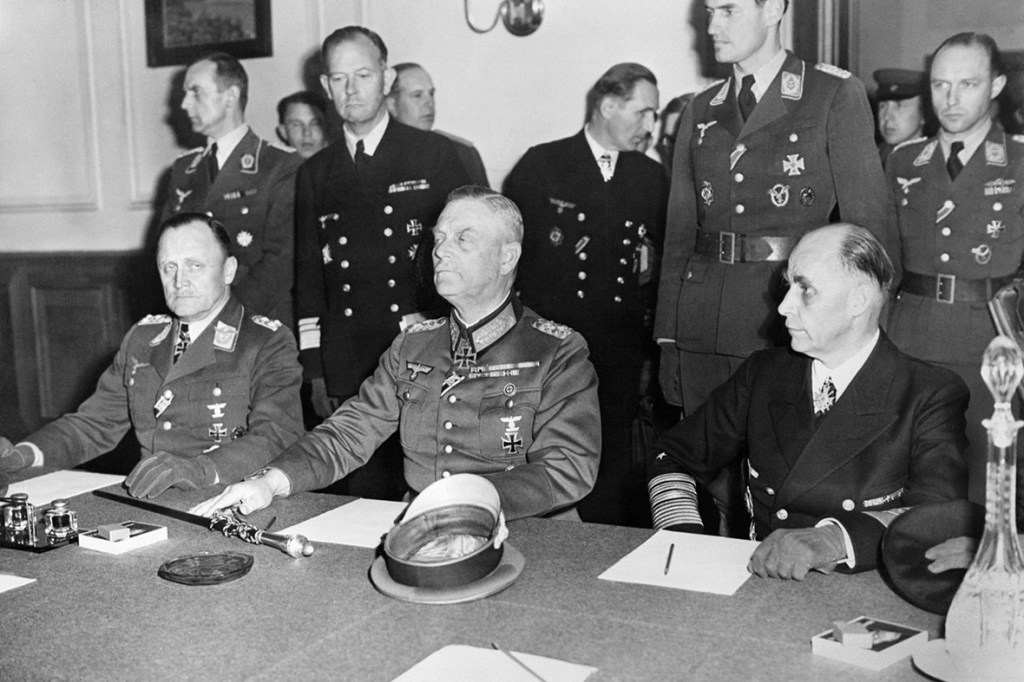
Before Hitler committed suicide on 30 April 1945, he appointed Grand Admiral Karl Dönitz his successor as National Socialist Germany’s head of state. On 2 May, Dönitz sent Admiral Hans-Georg von Friedeburg to Field Marshal Montgomery’s headquarters to negotiate the surrender of the three German armies still fighting the Soviets in northern Germany. Montgomery, unwilling to offend the Russians, said the Germans had to surrender to the Soviets. The only other option was if all German forces in Northern Germany and Denmark surrendered to him. If that happened, the capitulation would look like a tactical surrender to Monty’s 21st Army, which shouldn’t upset the Soviets. Friedeburg said he didn’t have the authority to surrender everyone Monty demanded, but he’d ask. He returned the next day and acquiesced. 1,000,000 German troops surrendered to Monty. After the details were worked out, Friedeburg asked for passage to negotiate directly with Eisenhower for the surrender of all German forces facing the Western Allies.
Bad weather kept Freideburg from flying directly to SHAEF headquarters at Reims, France, but he eventually arrived on 5 May. Eisenhower told Friedeburg to pound sand. There would be no conditions on the German surrender. There would be no partial surrenders, either he negotiates the surrender of all German forces, including those facing the Soviets to the Soviets, or none at all. Eisenhower’s chief of staff LtGen Bedell “Beetle” Smith showed Friedeburg the situation maps confirming Germany’s hopeless position, including a fake one with arrows continuing the Allied drive east, deep into Czechoslovakia and the Balkans. With tears in his eyes, Friedeburg again professed that he didn’t have the authority. He cabled Dönitz for additional instructions.
The next day, the SHAEF staff wrestled with itself trying to create the surrender documents. There were several competing versions. The first was by the European Advisory Commission, signed in the summer of 1944 and approved by all of the Allies and the Soviets. But there was also a Yalta Conference version that wasn’t officially approved by all parties, specifically France. And everyone knew how touchy DeGaulle was. He could ruin the whole thing, maybe even restart the war just out of pride. Smith compromised – he created a new one.
The Stars and Stripes newspaper recently published the Italian surrender document in its entirety. Smith used the wording of the Italian document, which the French had approved, and inserted “Germany” where “Italy” had been. One of his staff officers updated it. At the hysterical urging of the US Embassy in London, he inserted an “enabling” clause at the last second, stating that the Allies can add conditions in the future as needed. The final version was still being translated when a new German negotiator finally arrived that evening.
General Alfred Jodl was the OKW operations chief, and only departed for Reims after his own awards ceremony in which Dönitz awarded him a Knight’s Cross of the Iron Cross. After Friedeberg’s message, Dönitz felt that Jodl, a member of Wehrmacht, might convince Eisenhower to accept the surrender of just the German forces facing the Western Allies. Or maybe even convince Eisenhower to join the Germans in fighting the Soviets, for the sake of the German population. The Soviets were raping and looting their way across Germany, and “You’ll have to fight them eventually”, as Jodl stated matter-of-factly.
Eisenhower angrily reiterated unconditional surrender. Jodl, now fully aware that it was all or nothing, began to stall. Eisenhower told him he had 48 hours to sign the freshly produced surrender documents, or he was going to close his lines to any Germans, military or civilian, and force them to surrender to the Soviets. Jodl, aghast, said he didn’t have the authority. Eisenhower just looked at him and said the clock was ticking. Jodl quickly cabled Dönitz, and just after midnight, received permission to sign the documents.
At 2:40 am on 7 May 1945, General Alfred Jodl signed the capitulation of Nazi Germany. The surrender ceremony took just ten minutes. No one said a word, and Eisenhower didn’t even attend. When Jodl finished signing, he asked that the victors treat Germany with generosity. Smith took Jodl to Eisenhower’s office. Ike asked if he understood what he did and that he was personally responsible. Jodl nodded, saluted, and left.
Ike and Smith broke out a bottle of champagne. Ike told the staff to quickly compose a suitable message to send to London, Paris, Moscow, and Washington DC informing them of Germany’s surrender. Every staff officer in the building wanted a piece of the message, and each version was longer and more grandiose than the last. Ike took out a piece a paper, wrote a single line and told Smith to have it sent. It said,
“The mission of this Allied force was fulfilled at 0241, local time, May 7, 1945, Eisenhower.”
The Battle of Schloss Itter

By the beginning of May 1945, the war in Europe was coming to an end. Hitler committed suicide on 30 April, and Berlin fell to the advancing Soviets on 2 May. Wehrmacht units were streaming west to surrender to the Western Allies lest they be captured by the Soviets, an almost inevitable death sentence. The only Wehrmacht units still fighting were those opposite the Soviets, and only so they could buy time for civilians to flee west. However, fanatical SS units still routinely fought the Allies and Soviets, and many SS units even engaged Wehrmacht who sought to surrender and civilians who refused to fight for the Fatherland. In the Austrian Tyrol, the remains of the 17th SS Panzergrenadier Division roamed the alpine countryside, detaining Wehrmacht soldiers, and shooting any civilians who displayed Austrian or white flags.
On 3 May, 1945, the commandant of the Dachau concentration camp system fled to the southernmost of his satellite camps, Schloss Itter. That “camp” was the castle (“schloss” in German) outside the Austrian town of Itter. Castle Itter was a VIP camp, where political hostages were held who were deemed important enough to save for future negotiations. In May 1945, Castle Itter held mostly French prisoners, including former Presidents Reynaud and Daladier, Generals Weygrand and Gamelin, along with French resistance leaders, influential civilians, and members of Free French leader Charles De Gaulle’s family. The prisoners, lounging in their “cells”, converted guest bedrooms in the castle, were startled when two shots reverberated among the thick castle walls. The Dachau commandant killed himself, first by trying to shoot himself in the heart, then when that didn’t work, in the head. After the commandant’s death the guards of Castle Itter saw no reason to stick around.
On the morning of 4 May, the Castle Itter commandant, Captain Wimmer, departed with his wife. He assured the French prisoners he would send help to protect them from the SS. Ironically, Wimmer enlisted the aid of SS Captain Kurt-Siegfried Schrader, who was convalescing in Itter. Schrader regularly went to the castle to catch a ride to the military hospital in Wörgl, where he had his wounded leg checked out periodically. At first glance, Schrader was the typical blonde haired, blue eyed, goose stepping stormtrooper who stepped out of an SS recruiting poster, but his wound and the time spent in Itter brought disillusionment with National Socialist Germany. When he arrived at Castle Itter with his family, he was determined to protect the French prisoners, if only to buy him some gratitude from the Allies upon his inevitable capture.
Schrader found that the eclectic group of French prisoners had already armed themselves and taken control of the castle. In a rare moment of French humility, the proud and normally politiclly divided ex-prisoners realized they needed Schrader’s tactical expertise to survive the imminent arrival of the SS. Schrader noted the defenses, and recognized that they could not hope to repel even a small determined attack by themselves. Several of the prisoners were Eastern Europeans who did the menial tasks around the castle. Schrader dispatched the camp’s electrician, Zvonimir Čučković, a former Yugoslav resistance fighter, to find the nearest Wehrmacht or Allied unit to come to their aid. When Čučković failed to return several hours later, Schrader sent the camp’s cook, a Czech named Andreas Krobot to Wörgl.
Schrader assumed Čučković went to Wörgl which was supposedly still in the hands of the Wehrmacht but he didn’t. Čučković traveled in the opposite direction when he heard the Americans just captured Innsbruck. Čučković informed the 103rd US Infantry Division staff there of Castle Itter’s plight and the importance of its former prisoners. He then stayed with the Americans. The next morning the 103rd dispatched a rescue force. However, the commander eventually forced it to halt after the staff realized it was going to cross a boundary into the 36th Division’s zone, and the staff didn’t want to risk friendly fire. Though Čučković’s efforts were temporarily stymied, Krobot fortunately found troops willing to help Castle Itter in Wörgl.
Wörgl was still held by the Wehrmacht, but in cooperation with the Austrian resistance. Major Josef Gangl brokered a deal to protect the town from the SS while he waited to surrender to the nearby Americans. Kropot told Gangl of Castle Itter. Gangl knew of the SS situation in the area better than most, and knew he couldn’t spare enough troops to secure the castle without endangering Wörgl. But he also believed that securing the French prisoners with American help would go a long way with his soon to be captors. He loaded up a truck with a dozen former Wehrmacht artillerymen, jumped in his staff car, and set off toward the nearest American unit eight miles away in Kufstein.
While Gangl was gone, an understrength SS battalion retook Wörgl, and there they heard of the important French prisoners at Castle Itter.
At Kufstein, Gangl surrendered to the reconnaissance elements of the 23rd Tank Battalion, 12th Armored Division led by 1st Lieutenant Jack Lee. Lee was surprised by the surrendering Germans. He’d been ordered to halt in Kufstein after a grueling weeks’ long advance and let the 36th Infantry Division take over. He was napping on the top of his Easy 8 Sherman tank, “The Besotten Jenny” while his unit and elements of the 36th were in the process of passing lines, when Gangl approached. When informed of Castle Itter’s situation, Lee gathered up an adhoc team and set off to Itter.
Lee could have hidden behind his orders and just passed the information up the chain of command for the 36th to take care of, but Lee wasn’t the type to pass a problem on. He left half his platoon in Kufstein with his commander to follow up later, and then sought volunteers from nearby units. It was going to be a tough sell, the war wasn’t over, but it would soon be, and no one wanted to be the last man killed before the Germans formally surrendered.
Lee convinced his friend, 1st Lt Harry Basse, the battalion motor officer, to come along with a recently repaired Sherman, the “Boche Buster” crewed by his warrants and mechanics. Nearby infantry from the African-American 17th Armored Infantry Battalion climbed up on the two tanks. When Lee’s tanks departed, they were followed by Gangl’s kuebelwagen and truckload of Germans. Five more Shermans from the 36th and supporting infantry 142nd Inf Regiment also wanted in on the action and pulled in behind Lee’s the little column.
Lee got to Wörgl to quickly find out that the SS had recaptured the town and had already departed, presumably to take Itter. He left the 36th’s men to hold the town, and took off with his two tanks, their riding infantry, and the Germans. Just outside Itter, they found the bridge to the town wired for demolition, which they removed. Lee left the Boche Buster under Tech Sergeant William Elliot to hold the bridge, and proceeded into the town towards the castle. Immediately in the town, Lee came into contact with SS setting up a roadblock. The column blew through with the bow machine gun firing and the troops on top and in the truck gunning down any SS they saw. Lee’s column tore ass through the town and sped to the castle (and probably powerslid into the courtyard).
The French were not impressed with the size of their rescuing force. They were expecting columns of tanks and halftracks as far as they eye could see. Reynaud was even less impressed with Lee, whom he called rude and overbearing, and thought if he was a typical example of American leadership, the post war world was going to be difficult. And then there was the issue of command. The French prisoners included numerous officers, including two full generals. Gangl was a major, and Schrader was a captain. Lee was having none of it and the surly New Yorker quickly took command shepherding the French VIPs into the cellar, and saw to the defense of the castle.
Lee had eight African American infantrymen, the crew of the Besotten Jenny, and Basse, who came up from the bridge. He also had ten younger Frenchmen fit to fight, a few Czech and Polish workers (including Krobet) a few Austrian resistance members, and 12 Germans – eleven Wehrmacht including Gangl, and a Waffen SS officer, Captain Schrader. It was as weird a fighting force as had ever assembled with former enemies and current friends fighting beside former prisoners and their overseers with a few odd civilians sprinkled in. Lee marshaled the men and assigned positions.
Castle itter’s gatehouse was the obvious point of attack. The approaches to the castle walls were steep, lined with barbed wire, and easily covered from the parapets. From these directions the prison was just as hard to get in as it was to get out. The Besotten Jenny was placed on the near side of the bridge in front of the gatehouse, and could pull into the gatehouse if need be. It was safer in the gateway, but that position would limit the Jenny’s field of fire to a narrow cone covering the bridge. From inside the gatehouse, the Besotten Jenny would not be able to cover the sally ports, which were also obvious points of attacks. The main defensive line was the gatehouse, since its thick walls would provide some cover from artillery and it provided the only way to cover the castle’s obvious weak point: the ravine abutting it. The defense established, Lee crawled into one of the castle’s guard dormitory beds to continue his nap.
At 4 am on 5 May, 1945, machine gun fire cracked through the darkness. The ripping sound of MG-42s mixed with the staccato of .30 cals, and rhythmic pounding of the the Jenny’s mighty .50 cal. The SS battalion’s reconnaissance unit went straight for the ravine, with MG-42’s providing a distraction. The .50 cal silenced the SS machine guns and the SS troopers attempting to cut through the concertina in the ravine were all killed. However, one of Gangl’s men deserted in the confusion. To him, throwing in his lot with SS was preferable to certain death if they took the castle. The deserter knew precisely how few defenders there were.
The main SS attack of about 150 came shortly thereafter. Lee’s troops broke up the initial attacks, but the SS managed to get the support of 88mm anti-tank gun later in the morning. No one could see the 88, and its rounds pounded the castle. Eventually, the 88 destroyed the Besotten Jenny, and the SS surged towards to gatehouse. Reynaud, Dadlier and other French elders picked up weapons and joined the motely force on the walls. Gangl desperately searched for the 88 from the castle’s tower, it was quickly making the gatehouse untenable.
Lee needed to find help, and fast. But the Besotten Jenny had his only radio. Schrader suggested calling someone on the castle’s telephone. Lee sprinted to the top of the tower and Gangl gave him the number to the gasthaus in Wörgl: the innkeeper, Alois Moyr, was the Austrian resistance leader.
Fortuneately the line wasn’t cut from all the fighting. Mayr couldn’t send much help; he sent two German soldiers and an Austrian teenage resistance fighter, but he could tell the Americans Lee left outside of town. He wasn’t sure who was in charge. It would take time.
By noon, the defenders and the SS were engaging each other through the castle’s loop holes. Gangl was killed in the tower by a sniper. Many of the defenders were wounded and they were nearly out of ammunition. The fanatical SS wouldn’t stop coming on. Lee devised a plan to fall back to the keep and force the SS to fight hand to hand in its corridors, stairwells, and rooms, just as its medieval architects designed them.
Then the phone rang.
It was Major John Kramer from the relief column dispatched from the 103rd Inf Division that Čučković got the day before. He was in Wörgl, albeit without his column. Kramer was so infuriated with his division staff and commander who forced him to halt because of the boundary issues that he left his column behind. Kramer spoke fluent German and had a French liaison officer, a war correspondent, and a photographer with him. They all jumped in Kramers jeep and took off toward Itter alone. Between them they figured they could figure something out along the way. They did.
Kramer arrived in Wörgl just as Mayr was telling the crews and infantry of the five Shermans about Castle Itter’s imminent fall. Kramer took command of the detachment and then also took command of the reconnaissance elements of 142nd Infantry who, at that moment, arrived after finally following up from Kufstein. Kramer called Lee and told him he was on his way but he needed to know more about the situation at the Castle Itter.
Before Lee could tell him, the line went dead.
Solid information or not, Kramer and his adhoc column took off. Just outside of Itter, they encountered the Boche Buster still guarding the bridge. Sgt Elliot, the warrants, and mechanics were having an argument about what to do: they could clearly hear the fighting, but a lone tank and the narrow streets of Itter doesn’t make for a good situation. Kramer’s arrival settled the matter.
With the Boche Buster in the van, Kramer’s column, which consisted of men from three different American divisions – the 36th, 103rd, and 12th Armored, drove into Itter.
The progress was slow. The SS had already been encountered in Itter, and the winding streets made the going difficult. The column actually got turned around in the town. Kramer’s frustration grew until French tennis star Jean Borota trotted up to the Boche Buster. Borota sprinted from Castle Itter through SS fire, avoided SS patrols, and jogged toward Wörgl to guide Kramer in. When Lee’s telephone connection with Kramer died, Borota offered to run to Wörgl with the necessary information on the SS and the surrounding terrain, so Kramer didn’t have to advance blind.
With Borota on the Boche Buster in the lead, Kramer’s column launched an attack from the march on the road up to the castle.
Just as the SS were about to destroy the keep’s gate with a panzerfaust, Boche Buster and the column was spotted charging up the road with all guns blazing. Elliot was hammering away with the .50cal, with Borota in an American uniform and the remaining African American soldiers firing away beside him. The main gun knocked the 88 in the distance, and the bow gun shot into the backs of the SS assaulting the castle. The Boche Buster lived up to its name and line of vehicles behind wasn’t stopping for anything. Kramer’s attack quickly broke the SS. The SS melted away to jubilations from the defenders in half a dozen different languages.
Eliot drove across the castle’s bridge and pulled up next to the destroyed Jenny. Lee emerged from the ruined gatehouse. He looked up at Eliot and said,
“What kept you?”
 Buk's Historical Ad Hockery
You must be logged in to post a comment.