
Tagged: WWII
Merrill’s Marauders
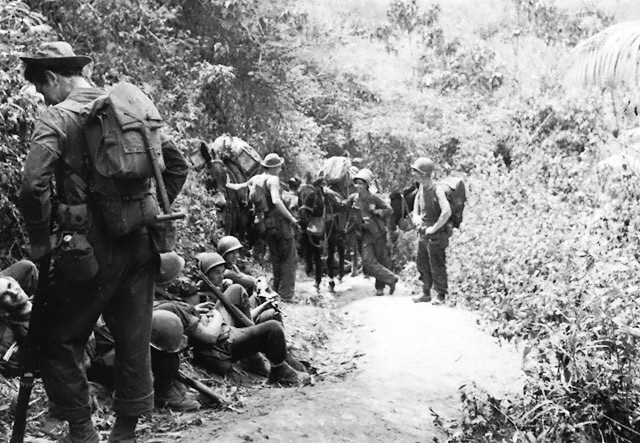
In 1943, the colorful and eccentric British general, Orde Wingate, created his famous “Chindits” for long range deep penetration raids behind Japanese lines in Burma support of Slim’s 14th Army. Not to be outdone, Joseph Stillwell wanted a similar American formation for long range deep penetration raids behind Japanese lines in Burma in support of his Chinese American Army along the Burma/Ledo Road. A call went up throughout the US military for volunteers for a long and dangerous mission in some of the most unhospitable and unforgiving terrain imaginable. 3000 soldiers, sailors, airmen, and marines from across the Pacific and continental US headed to India to train. They were formed into the 5307th Composite unit (Provisional), codename “Galahad”, and were commanded by BG Frank D. Merrill.
They quickly took the nickname,”Merrill’s Marauders”. On 26 February 1944, 2700 marauders departed Ledo on the 1000 mile march through the Himalayan foothills and Burmese jungle to destroy the Japanese logistics hub at Walabum. Like the Chindits, they were to be supplied completely by air. Due to the Japanese counteroffensive into India in March, the two month operation turned into a four month operation. In those four months of living in the jungle, they had five major and dozens of minor engagements with the Japanese, marched over 2000 miles, fought through the height of the monsoon season, and made Japanese operation in northern Burma a living Hell until they finally seized the vital Myitkyina airfield in late May, 1944. But they wouldn’t be pulled off the line until June.
Malaria, typhus, jungle rot, and particularly dysentery took its toll (Because of this, they all had flaps sewn into their pants so they didn’t have to drop their drawers when they needed to defecate). BG Merrill even had to be evacuated for malaria (and a second heart attack) in April. By the time the Marauders returned to Ledo, they had a staggering 95% casualty rate: only 149 of the original 2997 were not killed, wounded, captured, missing or stricken with disease.
Those 149 would go on to form the nucleus of the 475th Infantry Regiment, which of course would be redesignated after the war to the 75th Infantry Regiment (Ranger).
The Japanese Inner Perimeter

By early 1944, Allied submarines, particularly American submarines, were doing to the Japanese what German U Boat captains could only dream of. No cargo ship flying the Rising Sun was safe anywhere in the Pacific. Moreover, American industry was pumping out new ships faster than crews could be trained to man them. There were enough aircraft carriers that fast carrier “strike groups” were raiding islands and shipping all throughout the Central and South Pacific. Inefficiencies in Japanese industry meant they simply could not keep up with the losses, much less innovate and upgrade their current ship types. Finally, their “Outer Defensive Ring” was under siege and penetrated in a few places: The “Japanese Pearl Harbor”, the Truk lagoon in the Caroline Islands, was a beacon for submarines. And most of its ships and port facilities were destroyed in Operation Hailstone, a concerted air and naval attack to destroy shipping there on 16 February. Heeding the lessons of Tarawa, Nimitz made short work of the Japanese garrisons in the Marshall Islands. The Japanese 28th Army was in process of being destroyed in Burma. Australian, Kiwi and American troops under MacArthur were steadily marching across New Guinea. Landings and land based airpower on New Britain, Bougainville and New Georgia had already isolated and neutralized Rabaul, unbeknownst to the soldiers and Marines fighting toward it from Cape Gloucester. And MacArthur wasn’t even attempting to hide preparations for landings along the north coast of New Guinea and in the Admiralty Islands to its northeast. The Japanese had to fall back; Bushido be damned.
As early as September, 1943, the Japanese Imperial Headquarters considered the withdrawal to a smaller perimeter in the Pacific but the admirals did not want to lose face in front of their bitter rivals, the generals of the Imperial Japanese Army. Their new perimeter would start in Burma, where they would hold the line against Slim’s 14th Army, then attack into India and cut the Ledo/Burma road that supplied the Chinese. The rest of the perimeter would extend to Singapore, the strategically and economically important Dutch East Indies, Dutch New Guinea, the Philippines, and finally the Palau, Marianna, and Bonin Islands. There the Allies were to be stopped.
For a few months they discretely “redeployed” capital ships under the guise of preparing for a massive counterattack. By January 1944, they had no choice but to strip the forward bases of anything that could be used. Everything to the south and east of this line was to be abandoned. But the submarine threat and the lack of industrial output meant that there was only room for irreplaceable equipment, not troops. The remaining garrisons were told they would receive no more support and they were on their own. On 22 February 1944, the last convoy left Rabaul, once the most important Japanese base in the South Pacific, taking with it the last of its vital equipment, and never to return.
300,000 isolated Japanese soldiers, sailors and marines were abandoned to their fate, and left to fight or starve to death
The Election of November 1938 and the Reichstag Fire

In July 1932, Chancellor Franz von Papen dissolved the German parliament, or Reichstag, and called for new elections in November, hoping to reduce the National Socialist majority. As Papen predicted, at the polls on 6 November 1932, Adolf’s Hitler’s National Socialist German Workers’ Party lost seats to the Nationalists, and the Social Democrats lost seats to the Communists. The Nazi’s voting bloc of Nationalists, National Socialists, Social Fascists, and Anti-Comintern Social Democrat defectors that elected the Nazi Party to the most seats in the Reichstag in 1931 and 32 was breaking down and had seemingly culminated. However, the Communists, on orders from Moscow, refused to work with the Social Democrats who in turn refused to work with Nazi’s. The National Socialists had by far the most seats, but not enough to form a government. Since no one party in the German parliament could form a majority government President Hindenburg was urged to continue governing through emergency decrees until a new electoral system that included an upper house was devised.
Franz von Papen, the most historically important person you’ve never heard of, had other ideas.
At the end of January, von Papen, formerly of the Catholic Center Party but opportunistically turned Nationalist after they picked up Center Party seats, co-opted the National Socialists to form a government. For seven months Germany lacked a government at the height of the Depression. This alliance gave the Nationalists and National Socialists a slim majority in parliament, but just enough to form a government exclusive of the other parties, and with von Papen the puppetmaster of the upstart Nazis.
Hindenburg, a monarchist, would still be president and Von Papen, as the minority member would be Vice Chancellor. Papen, a nobleman, convinced Hindenburg that the Nazis could be controlled if the low born Hitler was made part of the government. Hitler, a former laborer, starving artist and corporal in the Great War, was thought to be susceptible to manipulation when confronted daily with the problems of governance, and would seek assistance from his political and administrative betters. On 30 January 1933, Adolf Hitler was appointed Chancellor. But Hitler wasn’t interested in sharing power with the Nationalists. One of his first acts was to dissolve the Reichstag and announce a new election in March, an election he was sure would bring majority power to his National Socialists.
However, on the night of 27 February 1933, just a month after Hitler became Chancellor, the German Reichstag building, where the parliament met, caught fire in an obvious arson attempt. Before the Berlin Fire Department could put out the fire, the building was gutted. A member of the Dutch Communist Party, Marinus van der Lubbe, was caught at the scene. Hitler, Josef Goebbels his propaganda minister, and Herman Goering, a cabinet minister charged with forming the secret police (the eventual Gestapo) immediately denounced the Communists and declared the attack the first act of a Communist revolution. The next day, President Hindenburg issued the Reichstag Fire Decree to preempt the suspected Communist putsch.
With no parliament, the President had emergency dictatorial powers according to the Weimar Constitution and the Reichstag Fire Decree suspended virtually all civil liberties in Germany. The freedoms of speech, assembly, press, privacy, association and habeas corpus were all suspended indefinitely. The National Socialists immediately mobilized and shut down any newspaper and radio station not friendly to the Nazis. Tens of thousands of Communists and political adversaries were arrested and the Communist party banned in the March election.
After mass voter fraud, suppression, and intimidation stemming from the provisos in Reichstag Fire Decree, the National Socialists won a majority in Reichstag that March. The first act of the new democratically elected majority in the German parliament was to pass the Enabling Act. The Enabling Act was an amendment to the Weimar Constitution which allowed the German cabinet, in effect Hitler himself, to enact laws without consent of the Reichstag. On 23 March 1933, the elderly President Hindenburg signed the Enabling Act into law which made Chancellor Adolf Hitler a legal dictator.
In the space of just two months, the National Socialists, with just a simple majority, went from a powerful, but still minority party, to the majority party with sole lawmaking and executive powers. The Nationalists were intimidated into dissolving their party in June 1933, and all other political parties were banned that November. By the end of 1933, Adolf Hitler and the National Socialists had complete control of Germany.
While Hitler and the National Socialists consolidated power, Marinus van der Lubbe and several other Communists were put on trial for the Reichstag Fire. A court in Leipzig determined that van der Lubbe acted alone and he was executed in 1934 for his role in the Reichstag Fire.
Though no definitive “smoking gun” was ever found implicating the National Socialists in the Reichstag fire, a mountain of circumstantial evidence did, most of which was found from captured German documents in the Soviet Archive after the fall of Soviet Communism in 1990. Though we will probably never know exactly what happened, the generally accepted theory is that van der Lubbe, a lifelong unstable pyromaniac who had recently firebombed several buildings, did plan, and maybe even attempted to destroy the Reichstag building. Goering through his spies learned of the plan and Goebbels ordered Ernst Rahm of the SA to carry out a parallel plan. After Rahm’s SA team started the fire and escaped, van der Lubbe was arranged to be in the area (or was even possibly setting his own arson) and picked up as the culprit. His own planning was used as evidence against him. The SA team, and Rahm himself, were killed in The Night of the Long Knives in 1934, erasing any future witnesses of Nazi complicity in the fire.
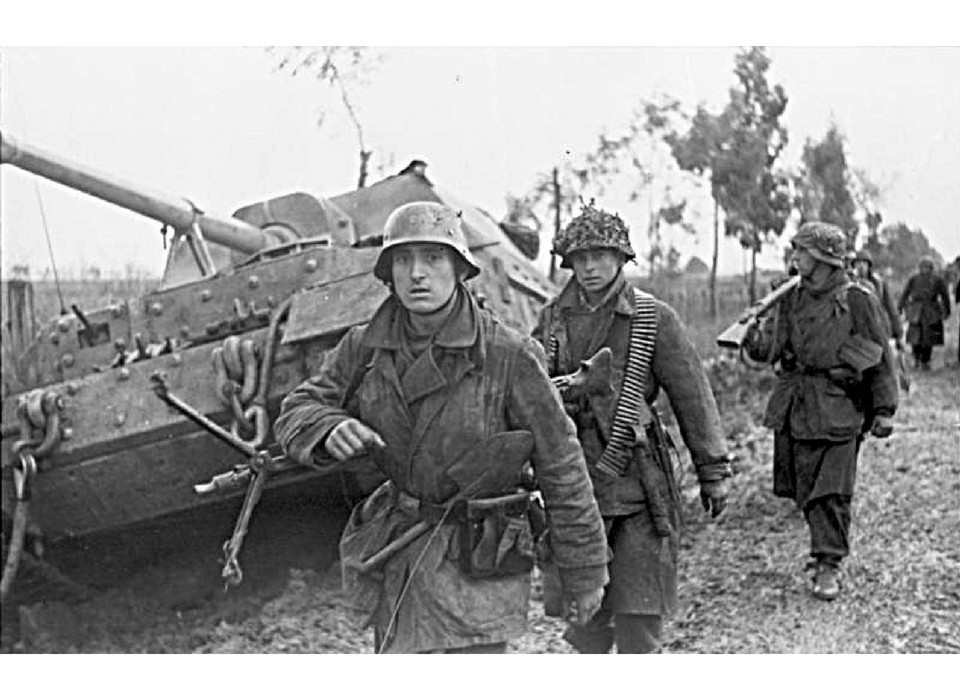
Operation Fischfang: The Germans Strike Back, The Stand of the REMFs, and The Return of Old Ironsides
Operation Hailstone: The Raid on Truk, the “Japanese Pearl Harbor”
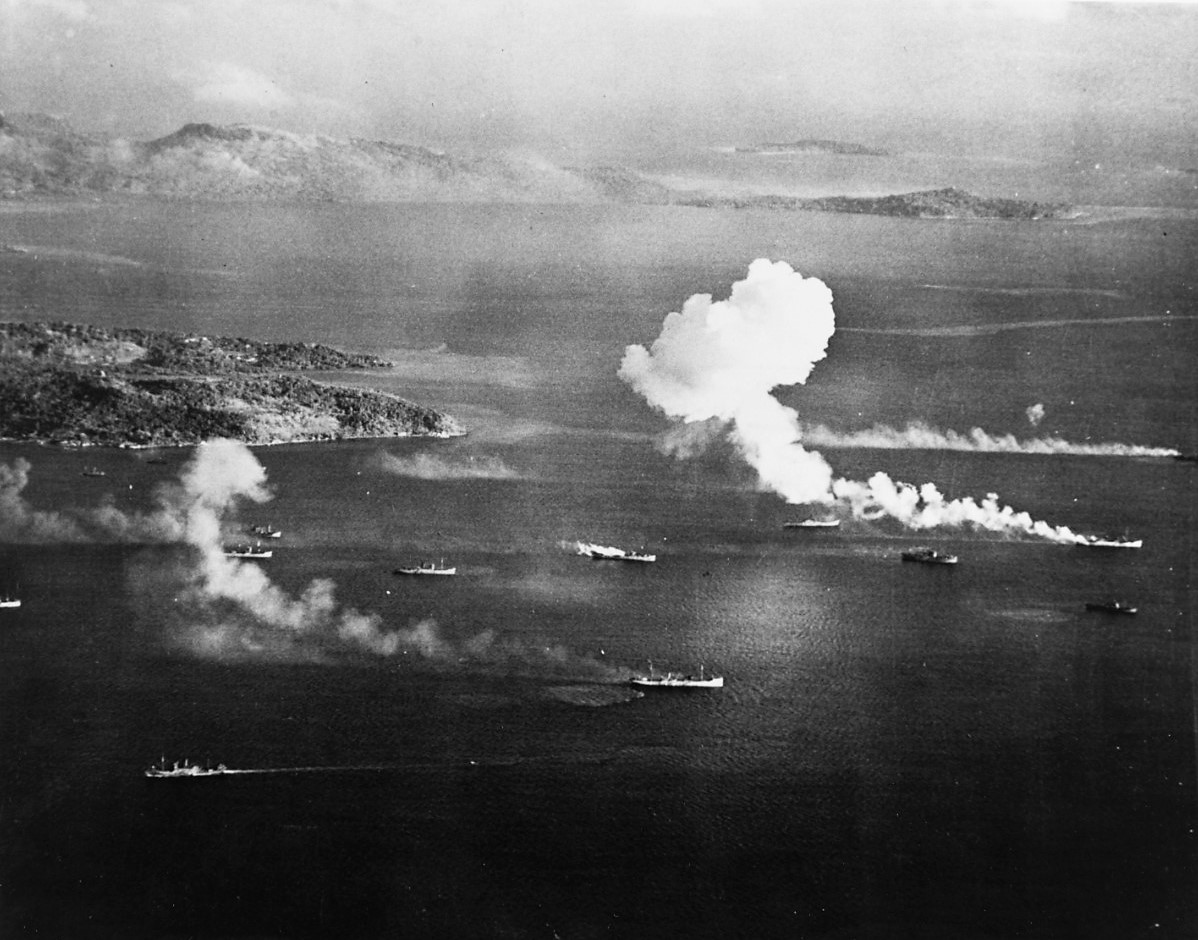
The invasion of Kwajalein in the Marshall Islands finally exposed the Japanese shortfalls in naval and land based aviation to American intelligence officials. Additionally, the increasingly one sided air battles over Rabaul after the invasion of Bougainville proved that the quality of Japanese airpower was in serious decline. To ensure adequate numbers to face the American fighter sweeps over Rabaul, the Japanese were required to “rob Peter to pay Paul” to feed the defense of the South Pacific. Squadrons were transferred from far flung Japanese possessions, including the Gilberts and Marshalls, and sent to Rabaul. The nearly nonexistent Japanese air response to the invasion of Kwajalein convinced Admiral Nimitz to push up the timetable in the Central Pacific, and more specifically the invasion of Eniwetok. However, Eniwetok was within striking distance of the Japanese main naval base in Central Pacific: the Truk Atoll in the Caroline Islands. The “Gibraltar of the Pacific” was essentially a sunken mountain range surrounded by coral reefs and has, by far, the best natural lagoon in the Central Pacific. Its 50 by 30 mile sheltered anchorage has so far in the war allowed the Japanese to strike Pearl Harbor and conduct continuous operations in the South Pacific.
Like Rabaul for Allied planners, Truk was The Lair of the Boogeyman from which All Bad Things Emerged.
Nimitz needed to neutralize Truk. His plan for the Central Pacific involved a future invasion, but the operation to secure the Marshalls meant something had to be done immediately.
By the beginning of 1944, American industry produced enough new aircraft carriers to allow the formation of fast carrier “strike groups”. These strike groups raided Japanese held airfields, anchorages and shipping all throughout the Central and South Pacific. Nimitz formed the largest such strike group so far in the war, Task Force 58 under Vice Admiral Marc Mitscher of five fleet carriers, six light carriers, and seven new fast battleships with accompanying cruisers and destroyers as escorts.
Task Force 58 was a massive force, nearly double the Japanese strength against Pearl Harbor just two years before, but it was still headed for Truk. The idea of willingly sailing aircraft carriers into range of major land based airpower was still alien and unthinkable to most carrier admirals. (The only reason the Japanese did it at Pearl Harbor was because they hadn’t declared war yet. Even at Midway, the main threat was still the island, all the way up until four of their carriers were sunk.) And Truk was the biggest Japanese base outside of Japan. On 15 February when Mitscher announced over the loudspeaker their destination for Operation Hailstone, one of his pilots said, “I nearly jumped overboard.”
However, as early as October 1943, the Japanese recognized they could no longer hold the outer perimeter of the Greater East Asian Co-Prosperity Sphere, and settled on a smaller more easily defensible perimeter to gather strength for a counter attack. They withdrew most of the capital ships from Truk back to the Palaus, so few of the juicy targets remained. The mighty Yamato and Musashi had spent almost 18 months at Truk and had only recently departed. Nevertheless, the withdrawal to the inner perimeter meant that much of the shipping form the outer bases went to Truk first, a major transit point, before heading west. Mitscher’s raid caught the lagoon without capital ships, but filled with arguably more important transport and cargo ships that the Japanese could ill afford to spare.
On the morning of 17 February 1944, Task Force 58 approached Truk behind a storm front and struck the airfields first just as the Japanese did on the morning of the 7th of December 1941. American surprise was complete. Japanese pilots were mostly on shore leave, but the 90 or so Mitsubishi “Zeros” that went up were promptly shot down. By 1944, the Zero was outclassed in almost every category by the new American Hellfighters and Corsairs, and due to fuel and training shortfalls, American pilots had hundreds of more hours in the air than their Japanese counterparts. By the afternoon, any Japanese air response was non-existent, and the Mitscher’s dive and torpedo bombers attacked Truk’s lagoon and shore facilities with impunity. They only had to worry about a few manually controlled anti-aircraft guns and these were quickly dispatched once they revealed their positions.
Unlike Nagumo’s raid at Pearl Harbor, Mitscher didn’t withdraw after two strikes, but launched 13 separate strikes against Truk. Even Mitscher’s boss, Adm Ray Spruance, wanted to get in on the action. He took tactical command of the battleships New Jersey and Iowa and some escorts to chase down fleeing Japanese ships that managed to escape the lagoon. Only darkness ceased Operation Hailstone.
And it was in the darkness that the Japanese managed to strike back: a single torpedo from a “Kate” night bomber penetrated the screen and struck the carrier Intrepid.
For the loss of about 25 planes, most whose pilots were rescued and about 40 personnel, mostly from the Intrepid, Mitscher sunk five cruisers, four destroyers, and almost forty support, transport and cargo ships, including the all-important fleet oilers, and damaged many more. His fliers either shot down or destroyed on the ground almost 250 planes, and over 4500 Japanese personnel were killed, and twice that number wounded, most of whom could not be evacuated.
The destruction of the Truk anchorage convinced Nimitz that it could be bypassed and that an invasion was unnecessary. In the space of just 12 hours, the mightiest Japanese naval base outside of the home islands went from being the focus of all American operations in the Pacific to a tiny and obscure footnote in most Pacific War history books.
The Second Battle of Monte Cassino: The Uncoordinated Ground Attack
The Battle of the Admin Box
The Second Battle of Monte Cassino: The Destruction of the Abbey
In 529 CE, during the darkest days of the so called “Dark Ages”, Benedict of Nursia established a small monastery on the site of an old temple to the god Apollo outside of the Roman village of Cassium. He wanted to take his small religious community in a new direction, and created a monastic rule for his followers based on order, balance, and moderation. The Benedictine Rule for Catholic monks spread throughout Europe. Their manuscripts and dedication to education went far in preserving the light of Western civilization during the numerous and successive barbarian invasions of Europe.
1415 years later, the Abbey at Monte Cassino took on a sinister visage to the Allies, in particular the remnant of the remnant of the US II Corps. Since the capture of San Pietro in December 1943, there was nowhere on the battlefield that you couldn’t look up and see the Abbey. During the meat grinder at San Pietro, the massacres crossing the Rapido River, the carnage swept slopes of Monte Cairo and Castle Hill, the brutal house to house fighting in Cassino, and a hundred other bloody engagements where the Allies were slaughtered, there was only one constant: the Abbey. Like a cackling mad god surveying his vicious handiwork, it loomed over the bloody hills and valleys of the Gustav Line. The American soldier wanted the Abbey obliterated.
Lt Gen Bernard Freyberg, the commander of the recently arrived New Zealand Corps, agreed. His Kiwis, Brits and Indians were next in line to feed the Beast in the shadow of the monastery. The II Corps staff was convinced the Germans had occupied the stout walls of the Abbey, or were at least using it for observation. And that is exactly what they briefed the New Zealand Corps’ staff during the relief in place. On 12 February 1944, Freyberg formally requested the Abbey be smashed by heavy bombers with “blockbusting” bombs. Gen Mark Clark disagreed based on the recommendation the II Corps commander, MG Keyes, who said, “They’ve been looking so long (at the Abbey), they’re seeing things.” No concrete evidence has ever been uncovered that the Abbey was ever occupied by the Germans before the 14th of February.
Field Marshall Kesselring specifically ordered that the Abbey was not to be so in any form, and made sure Hitler, the Allies and the Vatican knew that. Lieut Gen Viettinghoff, the German Tenth Army commander, ruthlessly enforced the edict and knew that the military crest of Monte Cassino was just as advantageous anyway. But British Field Marshall Harold Alexander, the CinC of the Allies in the Mediterranean, overruled Clark. Alexander wanted to give the bomber enthusiasts a chance to show what they could do in support of ground operations in Italy.
On the 13th, the Allies dropped leaflets on the Abbey telling the monks to leave. The Abbot knew there were no Germans in the monastery and thought the Allies were doing this to protect them from the ground fighting and stray rounds, so there was no sense of haste. Additionally there were over a thousand Italian refugees in the monastery, and they would take days to organize for movement north through the German lines.
Two days later on 15 February 1944, 300 Allied bombers and 100 fighter bombers destroyed the Abbey. The German Minister of Propaganda Jozef Goebbels immediately exploited the act and broadcast the news around the world. Most of the monks and civilians were killed. Vietinghoff immediately ordered the remains of the Abbey occupied. The elite German paratroopers of the 1st Fallshchirmjaeger Division turned the ruins into an impregnable fortress, exactly what the Allies accused them of doing in the first place. For the Allies, the future battles around Monte Cassino just became exponentially more difficult.
Operation Flintlock: the Invasion of Kwajalein
After the invasion of Tarawa in November, the next step for Adm Nimitz’ Central Pacific Campaign were the Marshall Islands, specifically the Kwajalein Atoll.
On 29 Jan 1944, Nimitz’ Bombardment Group centered around 6 fleet carriers, 6 Escort carriers, and eight battleships shelled, staffed and bombed the islands of the atoll. On the 31st, the US 7th Infantry and 4th Marine Divisions assaulted the islands of Kwajalein and Roi-Namur. The Soldiers and Marines never encountered more than 300 dazed survivors at a time. Within a week, the Kwajalein atoll was secured.
Although there was hard fighting at times, Operation Flintlock was successful because it was characteristic of the changing nature of the war in the Pacific, and the Japanese slowness to adapt. The Japanese fortified the outer ring islands of the atoll, but the Americans broke their code and knew which islands to isolate. Without a challenge from the Japanese Navy (which still had not replaced the losses from the Guadcanal naval battles), the US Navy just sailed around the heavily defended islands and secured the supporting islands. Without a navy to come to their aid, most Japanese were cut off and just left alone by the Americans to starve to death.
Furthermore, the heaviest Japanese defenses were focused on the ocean side of the islands because they believed the Americans did not have the technology to penetrate the lagoon or wherewithal to risk another Betio. They were mistaken. The Americans learned from their mistakes of the last year, and either found solutions or did not repeat them. So if any heavily defended islands had to be attacked, the Allied assaults hit Japanese defenses pointed on the wrong direction. Finally, the pre invasion bombardments were particularly effective. The Japanese weren’t as heavily fortified on the supporting islands. Estimates from both Japanese and American sources say that 50% of the 8000 Japanese defenders on the atoll were killed or wounded before a single soldier or Marine set foot on dry ground.
The Kwajalein and nearby Eniwetok atolls would provide the springboards for the American return to Guam and the Mariana Islands later in the year.
The Battle of Cisterna
After a short buildup, MG Lucas, the commander of all of the troops in the Anzio beachhead, was under great pressure from Gen Mark Clark and Winston Churchill to break out. The Alban Hills, the original objective for Operation Shingle, was out of the question: they were already too strongly defended and would grossly extend his perimeter if he did capture them. So he sent the British 1st Division to seize them anyway just to temporarily get his superiors off his back. However, another possibility, a real one, did exist. He could still cut Highways 6 and 7 to stop supplies heading to the Germans in front of the French and Americans fighting around Cassino by capturing the Italian town of Cisterna. He couldn’t hold it for any length of time, but the town provided a good point to push further inland and cut Route 7. And because it briefed well, there was always the pipe dream that the shock of being temporarily cut off might cause the Germans to withdraw.
The US 3rd Infantry Division was given the job. Leading the attack would be COL William O Darby’s 6615 Ranger Force. Leading the way, the 1st and 3rd Ranger Battalions and the 3rd ID’s Recon Troop were to infiltrate Cisterna the night before to pave the way for the assault.
Unfortunately, the German main line of resistance was much closer and stronger than the Rangers expected. Clark and Lucas underestimated the German operational ability to quickly mass troops at trouble spots. The rangers and scouts infiltrated right into the assembly areas of two German panzer divisions — the 26th and the powerful Herman Goering Panzer Division.
The two Ranger battalions were immediately cut off, and over the next seven hours, methodically destroyed. Even the best light infantry in the world is no match for an armored force when it’s fixed in an exposed position without heavy equipment.
The 3rd ID and 6615th, spearheaded by the 4th Ranger battalion and the 504th Parchute Infantry Regiment, launched themselves repeatedly at Cisterna to relieve the entrapped Rangers. The fanatic and soon desperate assaults were in vain. Of the 800 Rangers and Troopers trapped in Cisterna, only six returned. What remained of the 6615th was disbanded and the Rangers were sent to the replacement depots as ordinary infantry. COL Darby was ignominiously reassigned to Lucas’ staff.
The Rangers weren’t used again until the invasion of France in June.
 Buk's Historical Ad Hockery
You must be logged in to post a comment.