
Tagged: WWII
The Battle of Best
Operation Market Garden, the Allied airborne and ground invasion of the Netherlands in September 1944 conceived by Britain’s Gen Bernard Montgomery, didn’t need to capture just four bridges to succeed, as many of the narratives of the battle imply; the operation needed 32 bridges over 20 different rivers, canals, and streams along the 62 mile axis of advance to succeed. One such bridge was over the Wilhelmina Canal at the small town of Best outside of the Dutch city of Eindhoven. On the afternoon of 17 September, 1944, Company H, 502nd Parachute Infantry Regiment, 101st Airborne Division infiltrated the town to seize the bridge in order to allow the British armor to bypass Eindhoven on their way to Nijmegen. They didn’t know it, but they were outnumbered 6:1.
Two weeks before, Montgomery’s 1st Canadian Army seized the vital port of Antwerp and pushed the German 15th Army out of the city. A functioning port at Antwerp could alleviate the Allies massive supply problems, but the Canadians failed to also clear the Scheldt Estuary. Without the estuary cleared, Antwerp was “as useful as Timbuktu” in the words of Eisenhower’s chief of staff. Moreover, the failure to adequately clear the estuary allowed the battered German 15th Army to escape. Gen Walter Model ordered the 85,000 strong 15th Army to rest and refit just west of the Dutch town of Eindhoven.
Like Bittrich’s SS Panzer Corps at Arnhem, the German 15th Army was in a perfect position to counterattack the Allied landings and the single highway that XXX Corps was advancing northward on. The 15th Army sat astride the highway just west of the American 101st Airborne Division landings around Eindhoven.
When the planes of the airborne invasion were seen overhead on the morning of the 17 September 1944, German commanders in the 15th Army formed ad hoc “kampfgruppes” (battlegroups roughly 1000 strong) to operate against the landings. The German ability to “plug and play” units with a competent commander gave them an amazing flexibility on the battlefield. One such kampfgruppe was formed around an SS police battalion and sent to Best. As the lightly armed lone American airborne company with its attached engineers approached Best, they came under intense fire. Best became a microcosm of what happened to the British 1st Airborne at Arnhem. At Best, one platoon from Company H made it to the bridge and held the north end, while the rest of the company, and eventually the battalion was cut off nearby. That one platoon survived for two whole days before being overrun. The Germans who captured them thought an entire company had held the bridge, not just 22 men.
Over the next three days, the 15th Army counterattacked from around Best to try and cut “Hell’s Highway” at its base. Three German divisions: the 59th, 245th and 716th, and various Luftwaffe and rear area troops organized into battlegroups, including two battalions of fanatical and zealous SS policemen, launched themselves at the Americans. The fighting around the town of Best consumed the entire 502nd PIR, the 327th Glider Infantry Regiment, and the 101st’s reserve BN from the 401st Infantry; or over 2/3rds of the entire 101st Airborne Division. The battle only ended when the 101st was reinforced by a brigade of British hussars and grenadiers from XXX Corps, which crossed the canal at the rebuilt Son Bridge to the east.
That British brigade was desperately needed in the fighting around Nijmegen to the north, and the lack of an exploitation force prevented the British from immediately continuing on to Arnhem after the capture of the Nijmegen Bridge over the Waal on 20 September. And although the 15th Army did not succeed at Best, it did cut the all-important highway in two other places farther north over the next several days.
The Soviet Invasion of Poland
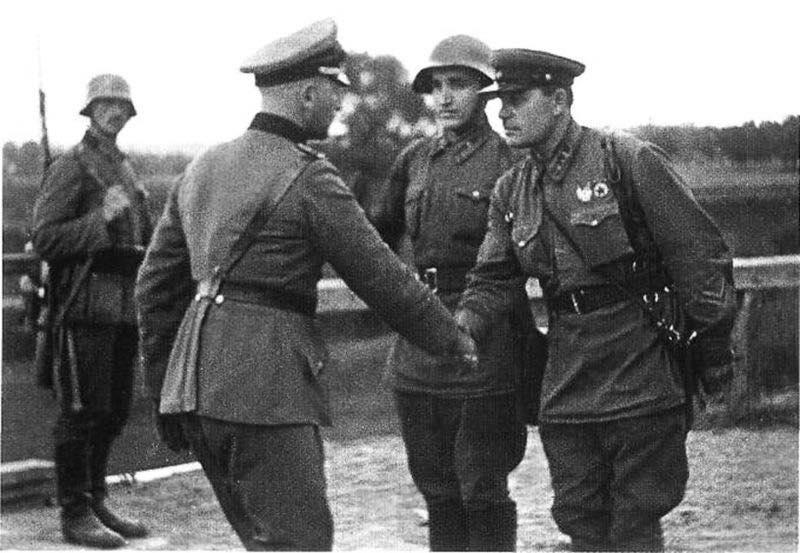
On 17 Sep 1939, Hitler’s de facto ally, the Union of Soviet Socialist Republics better known as the Soviet Union, invaded Poland from the east as the Poles were fighting the Germans coming from the west.
By 9 September 1939, Polish mobilization was complete the Poles and were holding their own along the Vistula and in the Carpathians against the German attack. They even launched a large counterattack at Bzura and repulsed the initial German attacks on Warsaw. Unfortunately on 9 Sep the German propaganda minister Josef Goebbels announced to the world that the Germans had reached Warsaw. The German people thought they had won and were jubilant. Goebbels ran with it. Poland had no way of contradicting Goebbel’s message. The British, French, and Soviets all soon believed Poland was lost. The mistaken belief absolved the Brits and French from any further assistance, and on the 11th, Stalin decided he’d better invade Poland before the Germans took it all.
On 17 September 1939, eight days after the Poles were supposedly defeated by the Germans, Soviet forces crossed the Polish frontier from the east, and made defense along the Vistula pointless. Initially Polish units on the eastern frontier thought that the Soviets were coming to Poland’s assistance, but that notion was quickly dispelled. On 25 Sep, the Polish government announced the evacuation of the country. The last Polish army unit only surrendered on 6 Oct – a month after the war had supposedly been lost.
In occupied Eastern Poland the NKVD, the forerunner of the KGB, immediately arrested and summarily executed tens of thousands of Polish army officers and NCOs, politicians, police officers, business owners, priests, school teachers, and university professors, anyone exhibiting leadership qualities. The Red Army sacked, tortured, raped, and killed its way through eastern Poland in a prelude of what would happen to Germany 5 1/2 years later. Hundreds of thousands Poles were sent to slave labor camps in Siberia. Sham elections were held by the NKVD to give an air of legitimacy to the brutal occupation. Anyone who ran against their preferred candidate was killed, and anyone who voted against them was sent to Siberia.
“The liberation of Poland (by National Socialist Germany and Communist Soviet Union) is an example of cooperation of socialist nations against Anglo-French imperialism.” – The Communist International, 7 Oct 1939
The Invasion of Angaur

On 17 September, 1944, the 3rd Amphibious Group, landed the 322nd and 321st Regimental Combat Teams of the US 81st Infantry “”Wildcat” Division on the island of Angaur to secure the phosphate plant and airfield, and prevent Japanese artillery from shelling Peleliu. By the 22nd, and after fierce fighting, the two RCTs forced the Japanese defenders into the northwest corner of the island, but then the battle began in earnest.
The northwest corner of Angaur was dominated by Romauldo Hill, but it couldn’t be approached effectively without going through the torturous terrain of a large stone quarry beneath it, dubbed by the Wildcats “The Bowl”. Furthermore, the Bowl had only one entrance, which they quickly named “The Bloody Gulch”. With the Japanese throwing shells at the Seabees constructing the airfield, all three had to be taken.
The 322nd RCT secured the Bloody Gulch after three furious and costly frontal assaults, all of which were to cover the construction of a road to bring up tanks and bulldozers. Once the entrance was secure, the battles for The Bowl and The Hill took on a different approach. The Japanese were dug in like they were on Peleliu, but the terrain meant only one RCT could fight at a time. The limited troops needed to be used differently.
The 322nd RCT decided to bury the Japanese.
Once a tunnel or bunker entrance was discovered, the Wildcats seized it. They then packed it with smoke pots and napalm from the airfield, and sealed it by bulldozer. It was then ignited and wherever the smoke and coughing Japanese appeared elsewhere on the Hill or in the Bowl, the process was repeated. After a few days, the Japanese fiercely counter attacked when they heard or felt the approach of a bulldozer. The last hole was filled a month and 1,614 casualties later, on the 23rd of October.
The 322nd had to secure Angaur by themselves was because the other RCTs were needed elsewhere. On 26 Sep, 1944, the 323rd RCT loaded up on the USS Storm King and was sent north to secure the Ulithi Atoll so MacArthur had a deep water lagoon close by for his invasion of the Philippine island of Leyte. The rest of the 321st were pulled off the line on Angaur on 23 Sep so they could be sent to help out the 1st Marine Division on Peleliu. By 27 September the 321st were in the thick of the fighting for Bloody Nose Ridge. That battle would eventually would consume all three RCTs of the 81st Wildcat Division.
The Invasion of Peleliu

Although the Japanese suffered a devastating loss at Saipan, the Imperial Japanese General Staff considered the battle lost by the Japanese Navy, not the Japanese Army: the Americans took enormous casualties taking the island. The battle validated the new Japanese island defensive tactics of dug in ambushes, interlocking fields of fire, infiltration and night counterattacks instead of defending on the beaches. The Imperial General Staff planned for the new doctrine to buy the Japanese Navy the time necessary to create the opportunity for the Khitai Kessen, or the decisive battle that would end the war. Furthermore, the war in the Pacific would become an attritional battle and the casualties sustained in taking each island could break the will of the American people.
Lt Gen Sadae Inoue, commander of the 14th Infantry Division was charged with the defense of the Palau Islands, which were tailor made for the new defensive tactics. The three islands of Peleliu, Ngesebus, and Angaur consisted of steep ridges honeycombed with caves that were perfect for this defense. His 14000 troops had four months to prepare for an American invasion. He dug his artillery in deep and his troops prepared to fight from underground for the entire battle. One of Inoue’s regimental commanders, Kunio Nakagawa, would not slavishly follow the new doctrine though. On Peleliu, the only landing areas were small and obvious and they were covered by a small outcropping on the southern coast (The Point) that enfiladed the entire beach, which could only be assaulted from inland. On Peleliu, Nakagawa planned for the Americans to fight a Tarawa style battle at the beach, followed by a Biak and Saipan style battle further inland. And the the Marines did.
On 15 September 1944, the US 1st Marine Division landed on the island of Peleliu in order to secure MacArthur’s right flank from attack as he returned to the Philippines and secure the Palau’s airfields for future use. The US Navy’s three day bombardment had little effect on Inoue’s defenses. The Marines took enormous casualties seizing the beachhead, the airfield, and finally the Point. The Japanese counterattacked with 13 Type 95 Ha Go tanks and 200 infantry supported by artillery and mortars, and nearly retook the airfield. Japanese artillery fire from Ngesebue Island and Umurbrogol Mountain, soon to be nicknamed Bloody Nose Ridge, made every square foot of Peleliu unsafe.
On 19 Sep, the Marines began their assault on Bloody Nose Ridge. The Marines quickly found that grenades and flamethrowers were no longer sufficient to root the Japanese out of their caves because they were too deep. Every cave had to be cleared and sealed, and the Japanese were ingenious in concealing entrances and firing holes. In the next six days Chesty Puller’s 1st Marine Regiment took 70% casualties. On 20 September, the 5th Marines invaded Ngesbue Island to silence the artillery there that was devastating the troops on Peleliu.
Marine regiments, and soon US Army regiments from the 81st US “Wildcats” Infantry Division were rotated through the fight for the ridge. On 23 Sep, the 7th Marines, and the III Amphibious Corps reserve, the 321st Regimental Combat Team of the US 81st Infantry Division surrounded the mountain and continued the assault. They in turn were replaced by the 5th Marines and the 323rd RCT in early October. The 81st Infantry Division took over the battle on 15 October, after the 1st Marine Division was “fought out”, until the island was declared “secure” on 27 November, two and half months after the initial landing.
The last Japanese unit on the small island didn’t surrender until April… of 1947, and the last Japanese soldier on Peleliu wouldn’t surrender until 1955.
The 1st Marine Division took 7000 casualties, and the 81st took 2500 casualties taking Peleliu. The battle for the Palau’s was the most casualties in one operation in the entire Pacific theatre up to that time. The Imperial Japanese General Staff was correct though: a great controversy immediately arose as to whether the cost to take Peleliu was worth its contribution to MacArthur’s upcoming campaign in the Philippines.
Pennsylvanians in Paris
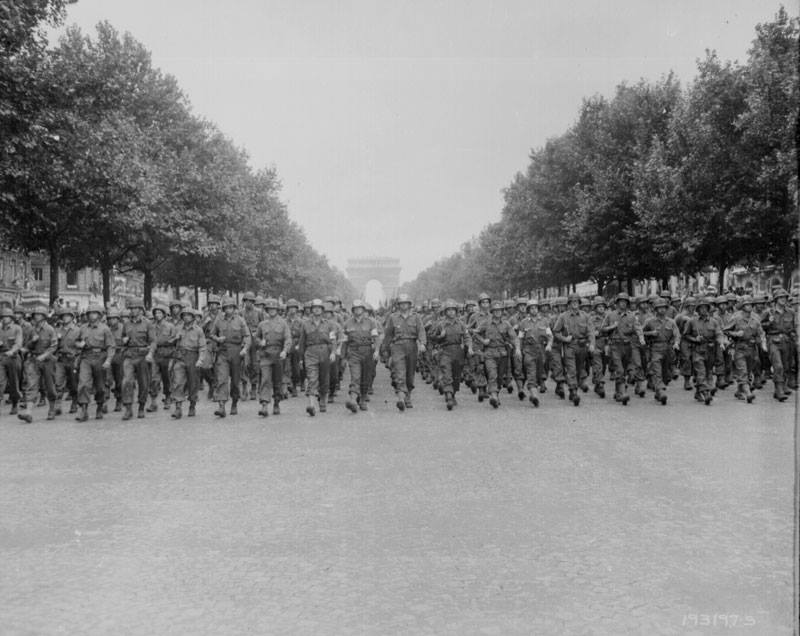
On 25 and 26 August 1944, Charles DeGaulle gave uncomfortably long victory speeches to crowds of hundreds of thousands of Parisians. Not once did he recognize any of the other allied countries whom had a role in France’s or Paris’ liberation. At least thirteen Allied countries had soldiers fighting on French soil, and besides the French, four others: the British, Poles, Canadians, and Americans, were directly involved in the liberation of Paris. This incensed the normally unflappable Gen Eisenhower, who devoted almost all of his efforts to keeping the allied coalition functioning.
Eisenhower directed the Allies to have another victory parade on the 29th, and that every Allied unit heading to the front move through Paris, if practical. The first unit enroute to the front east of Paris was the US 28th “Keystone” Infantry Division made up of soldiers from the Pennsylvania Army National Guard. (They would only receive the nickname “Bloody Bucket” from the Germans in the vicious fighting along the Siegfried Line and the Huertgen Forest later in the year.) Their commander, MG Norman Cota, directed that most of the 18,000 Pennsylvanians march in one imposing, and intimidating, mass formation, 28 abreast, with loaded personal weapons. It was to show the Parisians, and DeGaulle, that the war was not being fought by France alone, and that millions of soldiers from around the world were also fighting to liberate France and defeat the Germans.
The Molotov-Ribbentrop Pact
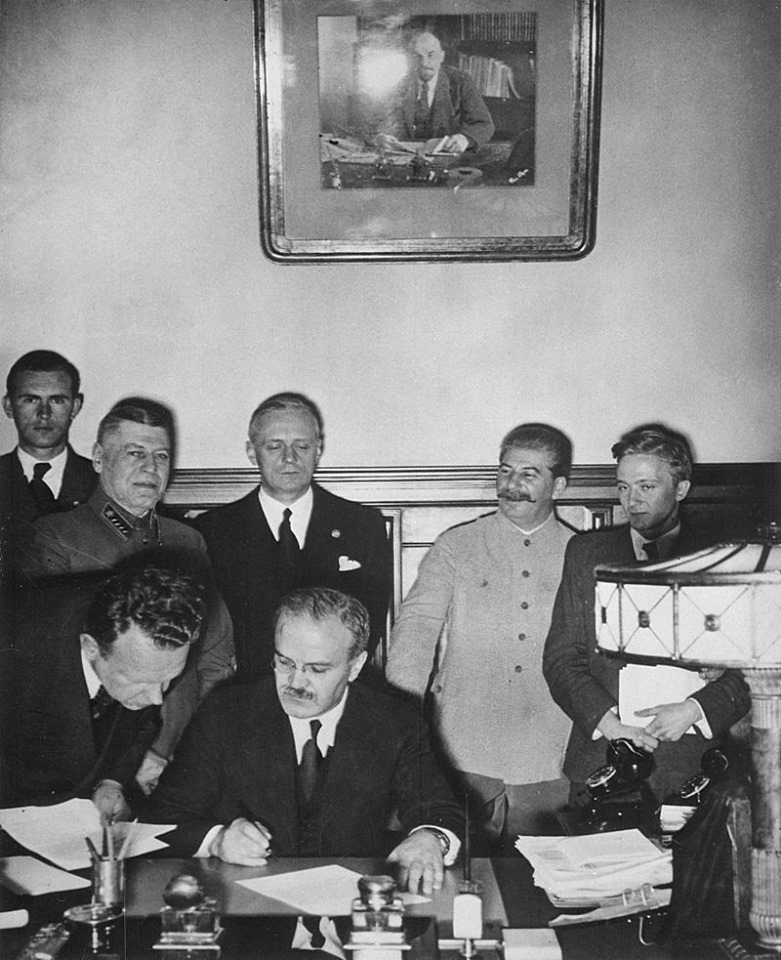
July and August 1939 were months of furious negotiation between Germany, the Soviet Union, Great Britain, France, Poland, and the United States in order to secure alliances which it was hoped would deter war. The first sign that all was not going to be well for the Poland and the Western Allies was when Stalin fired his Jewish foreign minister in April and replaced him with Vyacheslav Molotov. Russian archival documents confirm that this was day that Stalin decided to ally with his “brother Socialist” Adolf Hitler in order to defer the inevitable conflict with Germany to a later date.
On 23 August 1939, Stalin’s Communist Soviet Union and Hitler’s National Socialist Germany signed a non-aggression treaty, named after their respective foreign ministers: Vyacheslav Molotov and Joachim von Ribbentrop. Ostensibly an economic and political treaty of non-aggression and prevention of either country allying with third parties e.g. Poland, Britain, France etc, the pact had secret provisions to divide up Eastern Europe between them. Germany would be free to seize most of Poland and have a secure eastern frontier for the inevitable fight with France and Great Britain. The Soviet Union was given assurances that they could conquer Lithuania, Estonia, Latvia, Eastern Poland, Finland, and Bessarabia (Eastern Romania, Romania was one of Germany’s allies) without German interference.
Germany invaded Poland a week later, and started the largest and bloodiest conflict in human history: The Second World War. The Molotov-Ribbentrop Pact turned the Union of Soviet Socialist Republics and National Socialist Germany into de facto Allies when the Soviet Union invaded Poland from the east two weeks later on 17 September 1939. The Soviet invasion rendered a rapidly stabilizing Polish defense against Germany untenable. At the end of the month, both countries affirmed their alliance in the German-Soviet Treaty of Friendship, Cooperation and Demarcation.
The 23 August anniversary of the Molotov-Ribbentrop Pact is remembered in Europe to “reconcile its totalitarian legacy” (EU’s words). In most of the EU 23 August is known as the “Day of Remembrance for Victims of Stalinism and Nazism” or in some countries, such as Poland and the Czech Republic, as “Day of Remembrance of Victims of All Totalitarian and Authoritarian Regimes”. In the United States, 23 August is known as “Black Ribbon Day” to
“recognize the victims of Soviet Communist and Nazi regimes and remember and never forget the terror millions of citizens in Central and Eastern Europe experienced for more than 40 years by ruthless military, economic, and political repression of the people through arbitrary executions, mass arrests, deportations, the suppression of free speech, confiscation of private property, and the destruction of cultural and moral identity and civil society, all of which deprived the vast majority of the peoples of Central and Eastern Europe of their basic human rights and dignity, separating them from the democratic world by means of the Iron Curtain and the Berlin Wall. The extreme forms of totalitarian rule practiced by the Soviet Communist and Nazi regimes led to premeditated and vast crimes committed against millions of human beings and their basic and inalienable rights on a scale unseen before in history.”
The Breakout From Normandy

In the last week of July 1944, the Allies were still stuck in Norman hedgerow country, and they needed to break out because they were far behind schedule. Also, the Soviets were nearing Warsaw, and Churchill feared the post war ramifications of the Soviets invading Germany while the Allies were still stuck in France. The Allies fell back on good old American firepower and devised Operation Cobra.
On 25 July, the entire Eighth Air Force and British Bomber Command carpet bombed a narrow 6km portion of the front near St. Lo. After which the US VII Corps, including the US 1st Infantry Division, charged through. Unfortunately, of the 2000 bombers, 80 dropped their bombs short and caused serious friendly casualties including a US 3 star general (McNair), and disrupted the follow on attack. The bombers pulverized German defenses but the attacking troops soon encountered a situation that would have been very familiar to their fathers in World War One: the devastation was so great that the attackers couldn’t move or bring up supplies over the terrain fast enough before German reserves were brought in to defend the shell holed moonscape left behind by the bombing. Fortunately, most German reserves were tied down by companion British offensives. By August, the Germans were pushed out of the hedgerow country and the Americans were poised to breakout of Normandy.
On 1 August, Operation Fortitude, the deception to convince the Germans the Allies would land at Pas de Calais concluded when LTG George Patton’s 3rd Army was activated on the continent (The Germans were convinced Patton would lead the landings at Pas de Calais). By 4 August Patton had broken out of Normandy and was tearing ass across France…in the wrong direction. Patton broke out, but he did so by going west into Brittany and toward the Atlantic coast, not east towards Paris and Germany. It took another week or so for Patton to turn around and attack in the right direction.
Hitler, ignorant of the true situation, saw an “opportunity” to destroy Patton and ordered an offensive of 13 panzer divisions to seize Avaranches and cut off the 3rd Army from Normandy. Only four were able to participate and they didn’t get very far. On 9 August Montgomery launched Operation Bluecoat and then Operation Tractable to cut off this German attack that threatened to cut off Patton’s attack. Eventually, Gen Von Kluge called off the western offensive when it was obvious (to everyone except Hitler) his troops were driving further into a trap as Polish and Canadian tankers closed in from the north and Patton closed in from the south.
On 13 August, Von Kluge ordered the retreat expressly against Hitler’s wishes in order to save as many panzer troops before they were encircled in what would later be known as the Falaise Pocket. The Allies had broken out of Normandy, permanently. The race was on.
Panzers, Monty, Mother Nature, and the Vikings

The landings on 6 June at Normandy were a complete operational surprise, and the deception plan was so effective that the Germans continued to believe the main invasion would come at Pas De Calais, even well into July. But the ruse wouldn’t last much longer, and most of the German’s reserves were already committed to containing the Allied lodgement.
In the east, Montgomery failed to take Caen on the first day for a variety of reasons, most of which weren’t his fault. The British troops faced the only panzer counterattack on D-Day, and that by their desert nemesis, the 21st Panzer Division. The terrain around Caen is all open fields and river valleys, and this made the counterattack particularly difficult, and Montgomery stopped the 21st Panzer from reaching the beachheads. Unfortunately, the reverse was also true, and Montgomery would launch no less than 6 separate army level offensives to try and take Caen over the next 6 weeks. To counter this, Field Marshal Von Rundstedt committed the bulk of the panzer reserves in the West to face them, including three of the best panzer divisions in the German military: the Panzer-Lehr, the veteran 2nd Panzer Division, and the fanatical 12th SS “Hitlerjugend” Panzer Division made up of Hitler Youth. The British Sherman, Churchill, and Cromwell tanks did not fare well against the Tiger, Panther, and Pzkfw IVs of the panzer divisions. Only British stubbornness and overwhelming material and airpower superiority allowed Monty to capture Caen on 10 July 1944, over a month later than planned.
Monty’s material superiority came at a cost to the other areas of the front because Mother Nature had a say-so. Just after D-Day, the great storm that Group Captain Stagg feared had finally arrived. On 9 June, “The Great Gale of 1944” did damage to the invasion force that the Luftwaffe could only dream of. Several ships were sunk, dozens were beached, all were damaged, and one of the two vital “Mulberry” artificial harbors was destroyed. This created a massive supply shortage for weeks in Normandy, and what supplies were on hand went to either Monty trying to take Caen, or to the Americans trying to capture Cherbourg: a deep water port on the Cotentin peninsula which could do much to alleviate the Allies supply problems. The US VII Corps captured Cherbourg on 26 June, but the Germans did “masterful” work wrecking the harbor. They did such a good job emplacing mines and boobie traps, destroying facilities, sinking ships in the channel, and ruining the docks that it would take three weeks for small ships to get through and eight weeks before it was safe enough for larger ships to unload. There would be no influx of supplies from Cherbourg and what supplies that did come through the one working Mulberry would go to Monty. This was unfortunate because the Americans in the center of the landing zone were facing something unexpected and ancient, and used to deadly effect by the Germans: the bocage, or Norman hedgerows.
Bocage was the French term for the hedge/tree walls that surrounded Norman fields. In the 9th century, Danish and Norwegian Vikings raided the area, and with the collapse of Charlemagne’s Empire, settled it. The better off Vikings established themselves at the mouths of the rivers, such as the Orne and the Seine, primarily in the east. They intermarried with the local population and the Franks named the area “Normandy”, or “Land of the Northmen”. West Normandy was settled by Viking farmers. However, this did not stop future generations of Danish and Norwegian Vikings from continuing to raid just because their forebears settled the area. The Vikings could no longer sail up the rivers to raid the French because of the Norman fortress towns such as Caen, Carentan, and Harfleur. So they beached on the coast and traveled overland to get around the Normans at the mouths of the rivers, frequently by raiding isolated farmsteads in the west and stealing horses and food. The Norman farmers, former Vikings themselves, knew this and combatted it by planting trees around their fields with thick thorny bushes at their bases. This forced the raiding Vikings onto predictable paths where they could be watched and ambushed. Over the centuries, the Norman farmers continued the practice. By the twentieth century, erosion, sunken roads, and a dropping water table exposed the roots of these hedgerows. This formed a four or five foot high impenetrable wall of packed earth and gnarled roots, covered with thorny bushes and topped with a line of thick trees. They couldn’t be climbed over, much less pushed through or seen through.
The bocage itself wasn’t deadly but the Germans used the hedgerows to great effect. They would ambush the Americans on the roads, just as the Normans did to the Vikings, and force them to breach the hedgerows to get around. Once the Americans went through the lengthy and difficult process of breaching the hedgerow walls, they would be met by another German ambush on the other side, usually machine guns and anti tank guns dug into the hedgerow in an opposite corner of the field. They easily covered the beautiful fields of fire that were the enclosed Norman farms. It would take Gen Omar Bradley and US First Army until 25 July, seven weeks after D-Day, to break out of the Norman Hedgerow country.
Operation Bagration: The Death of Army Group Center
 The Red Army on the Eastern Front was not obliging the Wehrmacht in 1944. The Red Army usually did limited operations during the winter snows and spring mud, and this gave the Germans time to dig in and reorganize. But the winter and spring of 1944 were different, very different, particularly for Army Groups North and South.
In the previous six months, Army Group North was forced to lift the two year long siege of Leningrad and was driven back to the Baltic States. And Von Manstein’s Army Group South was chased almost all the way out of the Ukraine in a series of surprisingly effective and overwhelming Soviet offensives. Only the intervention of panzer formations from Army Group Center stabilized the front. The Abwehr, or German Intelligence, thought that the Soviets would continue in the south, so the panzers stayed there. The Abwehr and German High Command were distracted by Soviet deception operations, and the Allied landings in France which were just 1000 miles from Berlin. The nearest Soviets were 1200 miles away and they were opposite Army Group Center, in the very defensible terrain of the trackless forests and swamps of Byelorussia.
But this was only defensible against the Red Army of 1941, 1942, or even 1943. The Red Army of 1944 was a new animal. It finally had the equipment, staff proficiency, specialized training, and mobile logistics to put their “Deep Operations” doctrine into practice. Of which, Von Manstein in the Ukraine was the full dress rehearsal.
Deep Operations was the standard Soviet Doctrine since the mid-30s, but Stalin’s purge of 90% of the officer corps in 1937, the calamitous losses in Finland in 1940 and the German invasion in 1941/42 meant that they had to resort to massed tank and human wave attacks to make up for the lack of leadership and trained manpower. It took three years for the talented survivors, such as Zhukov, Konev, Rokossovsky, Vasilevsky and others to rebuild. By 1944, that situation was rectified.
Deep Operations was the logical end state of JFC Fuller’s influential “Breakthrough” theory during the interwar period. DO relies on specialized troops, with massed rifle and artillery breaking through a defensive line, followed by local heavy tank formations to confirm the penetration. Then this penetration was exploited by huge tank, mechanized, cavalry, or elite Guards armies (mounted in American Lend Lease trucks) who attacked deep operational objectives to cut off and encircle German forces. German pockets of resistance were bypassed. Deep Operations has been likened to a Russian matryoshka doll where a small encirclement is then encircled by a larger one, and then a larger one, and so on, until the offensive culminated. (Glantz, “When Titans Clashed”) The Soviet summer offensive in Byelorussia was the ultimate expression of Deep Operations.
Marshall Zhukov launched Operation Bagration on 22 June 1944, and fell upon an unsuspecting Army Group Center. The penetrations were immediate. Although some panzer formations from the South attempted counterattacks that resulted in apocalyptic tank battles, the Germans never recovered. Hitler declared every city in the area a fortress to be defended to the last man, so the retreating German commanders just avoided them in their quest to escape the overlapping layers of encirclement.
It didn’t help. By August the Red Army was at the gates of Warsaw and German East Prussia, Army Group North was cut off in Courland, Army Group South was cut off in the Ukraine, and Army Group Center ceased to exist. The German army lost 500,000 men and 4000 tanks and assault guns that could not be replaced. 57,000 German prisoners were marched through Red Square, and then the Soviets made a point to wash the streets afterwards.
The Soviets were now much closer to Berlin than the Allies were.
The Great Mariannas Turkey Shoot
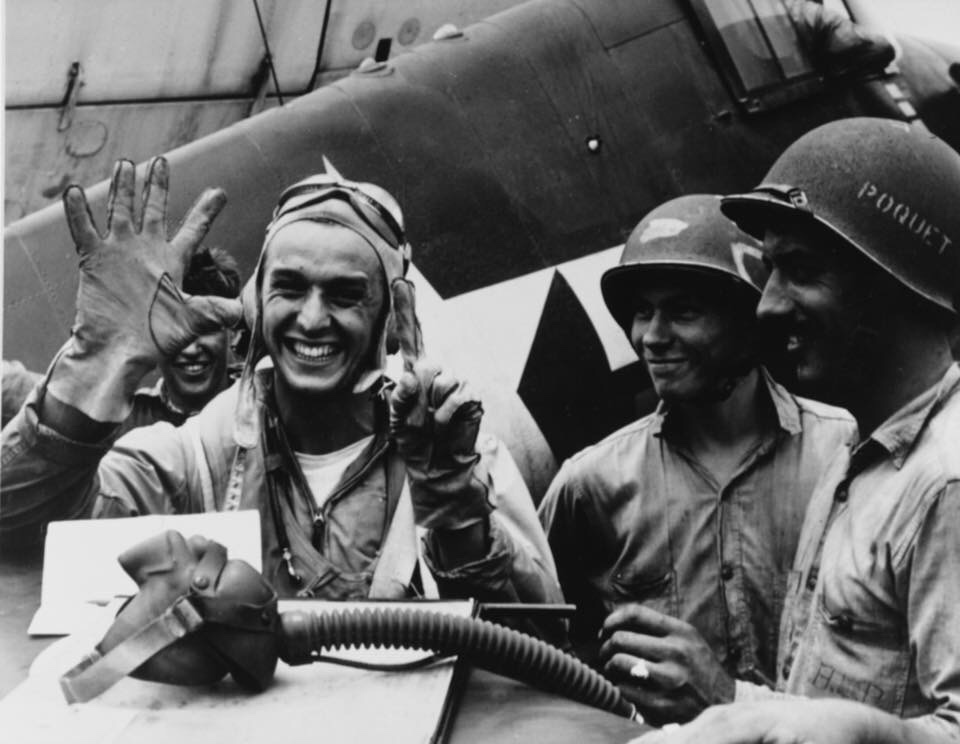 The Imperial Japanese High Command was desperate for a decisive victory over the Allies. After their retreat to the inner circle in late 1943, they looked for an opportunity for the “Kantai Kessen”, or the decisive victory that would end the war. Historically, the Japanese won their wars through a single titanic decisive battle that irrevocably smashed their enemies ability to fight. There was a Kantai Kessen that defeated the Mongols in the 13th Century, one that brought the Tokugawa Shogunate to power in the 17th, and one that defeated the Russians in the early 20th. Admiral Spruance’s 5th Fleet off of Saipan would provide the opportunity to similarly defeat the Americans. The Japanese hoped that destroying the US Navy in the Philippines Sea would be the Pacific War’s Kantai Kessen.
If the Japanese wanted a final showdown with the Allies’ strongest force, they couldn’t have chosen a better target. Their objective was the innocuously named Task Force 58, the carrier task force of the 5th Fleet, led by Vice Admiral Marc Mitsher. TF 58 was the largest and most powerful independent naval strike force in the history of mankind. Mitsher commanded seven big fleet aircraft carriers, eight light carriers, seven fast battleships, 900 aircraft, and dozens of cruisers, destroyers, and submarines. Against this, Vice Admiral Ozama had only five fleet carriers, four light carriers, 400 carrier based aircraft, and five battleships, but two of those were the Yamato and Musashi, the largest battle ships in existence, and he also had 300 land based planes on Guam.
But it wasn’t the numbers that defeated the Japanese, it was the Japanese that defeated the Japanese. By 1944, they were being out produced and out innovated by a wide margin. All but one of Ozawa’s capital ships were commissioned before Pearl Harbor, while virtually none of Mitcher’s were. Ozawa’s ships were 1930’s designs, while Mitcher’s ships reflected the hard lessons learned over the past two years, and his planes even more so. The Japanese A6M Zero was the terror of the skies in 1941 and 42, but by 1944 it was obsolete. The US Navy F6F Hellcat and the US Marines’ distinctive gull winged F4F Corsair had more power, more armor, and more guns. The Zero was still more maneuverable but to take advantage of that, you needed experienced pilots.
Bushido, or at least the perverted version of Bushido pushed by Imperial Japan in the Second World War, destroyed the once vaunted Japanese naval air arm well before the Battle of the Philippines Sea. Specifically the “No Retreat” rule. Fear of being shamed, Japanese aircrews would not come off the line to train the next generation of airmen. The victors of Pearl Harbor fought until they died. The Battles of Coral Sea, Midway, Guadalcanal, and the Solomon’s saw thousands of irreplaceable aircrews shot down, and there was no one to train the replacements. Furthermore, Allied submarines created an oil shortage, so very little fuel was allocated for training. What fuel there was available was wasted by bad instructors, whom were usually the worst flyer of the previous class who was left behind to train the next class. There was no honor in training new flyers, only in engaging the enemy and dying for the emperor. Most Japanese airmen in 1944 had fewer than 60 hours in the air, were poorly trained, and had no combat experience.
When the Japanese attacked TF 58 on 19 June 1944, the outcome of the largest carrier air battle in history was already a foregone conclusion. The Americans did lose over one hundred aircraft but the majority of them were due to empty fuel tanks, not Japanese bullets. It would have been more, but Mitcher ordered his whole task force to turn on their lights during the night of the 19th, defying every, risk management worksheet, safety officer, and OPSEC notice on his wardroom bulletin boards, in order to bring his flyers back home in the dark. Ozawa lost two carriers, but more importantly, he lost 700 pilots, never to be replaced. An American anti air gunner on a destroyer said, “It was like shooting fish in a barrel”, but it was a Hellcat pilot’s quote that would stick; he said,
“It was like going to a turkey shoot back home.”
 Buk's Historical Ad Hockery
You must be logged in to post a comment.