
Tagged: WWII
East Meets West
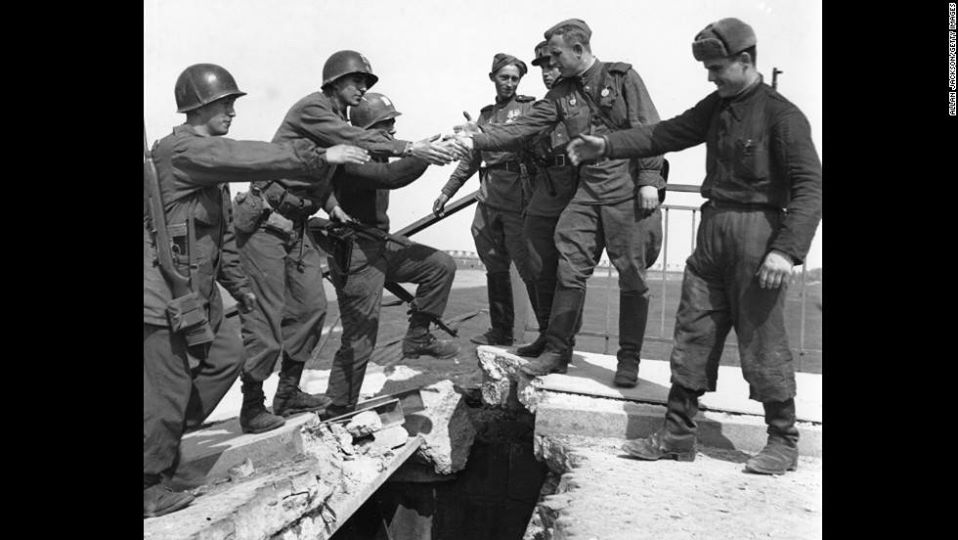
On 25 April 1945, the US 69th Infantry Division met the Soviet 58th Guards Rifle Division at the German town of Torgau on the Elbe River. The Eastern Front met the Western Front. The War in Europe was almost over.
The Gurkhas Enter British Service

In 1814, the British East Company invaded the aggressive Gorkha Kingdom of Nepal in order to prevent them from distracting the Company from their expansion into the Kingdom of Marathas. During the hard fought Anglo-Nepalese War, the British recognized that their best irregular troops were the wielders of the distinctive inwardly curved knife, the khukuri, whom were actually deserters from the Gorkha Army.
Impressed by their loyalty, courage, stoicism, resilience, and military efficacy, the British formed the Gorkhas into the First Nusseree Battalion on 24 April 1815. By the end of the war (which was fought to stalemate) there was an entire regiment of Gorkhas and an agreement with the Kingdom of Nepal to continue recruitment in the future. Living up their motto “Kayar Hunu Bhanda Marnu Ramro” (Better to die than live like a coward), the Gorkhas quickly formed the backbone of the East India Company’s, and eventually Great Britain’s, Indian Army.
For the next two hundred years, the Gurkhas served faithfully in every conflict involving the Indian or British Army. They were one of the few indigenous units to remain loyal during the Indian Mutiny of 1857. 200,000 served in the First World War, including in the trenches on the Western Front and in the landing at Gallipoli in 1915. At the height of the Second World War, the Gurkhas contributed 250,000 men from their home villages in the Himalayan foothills, which were neither a part of the British Empire nor a protectorate of Great Britain. In 1947, the Gurkha regiments were split between the newly independent Indian Army and the British Army.
Currently 3500 Gurkhas serve in the British Army in the Brigade of Gurkhas. Tens of thousands of young Gurkha men apply during recruitment events in Nepal for the few hundred training slots. They also serve in the armies of India, Brunei and Singapore.
One of my favorite Gurkha stories. From the Second Battle of Monte Cassino:
On the night of 12 February 1944, one of the Gurkha battalions sent out a reconnaissance patrol to identify German positions around the town of Cassino. The small patrol came across six German infantrymen in a house: two awake and alert, and four asleep. The Gurkhas snuck up on the German sentries and slit their throats without waking the others. They then decapitated two of the sleeping soldiers and let the others to slumber so they can find their comrades in the morning.
A friend of mine said of the Gurkhas he worked with in Afghanistan, “They react to contact (with the Taliban) the way my kids react to Christmas morning.”
Jaya Mahakali, Ayo Gorkhali! (Glory to the Great Kali! Gorkhas Approach!) –Gurkha war cry, then and now.
The Ship That Would Not Die
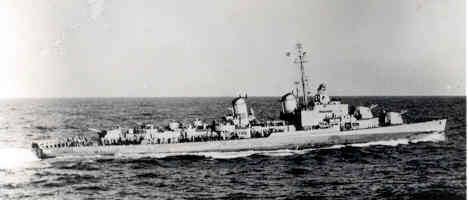
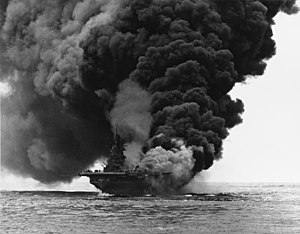
On the morning of 16 April 1945, US Sumner class destroyer DD-724, the USS Laffey, was assigned the most dangerous job in the US Navy: radar picket for the Fifth Fleet off of Okinawa. The USS Laffey was expected to identify Japanese air attacks originating from the Japanese Home Islands and direct American fighters to intercept. The problem was that many Kamikaze attacked the first American ships they saw, which invariably were the radar pickets.
Just after dawn while most men were in breakfast chow line, the first Japanese bomber was spotted radar and the crew raced to battlestations. The single D3A Val divebomber with its distinctive fixed landing gear retreated from the Laffey’s anti-aircraft fire. An obvious scout, the Val was a harbinger for the hell about to descend on the Laffey.
At 0825, the Laffey identified a large raid of 320 Japanese aircraft. They directed the fighters to intercept. At 0830, four Val divebombers attacked. Twelve minutes later, 50 planes broke off from the main formation to attack the Laffey, including 22 Kamikaze. The Laffey had just four older FM2 Wildcat Fighters from the escort carrier USS Shamrock Bay flying top cover.
The captain, Commander Frederick Becton, ordered the Laffey to flank speed while the helmsman made frequent radical course corrections to disorient the attacking Japanese. The first Kamikaze hit started a fire that the flank speed exacerbated. Becton slowed the ship down to contain the flames, but this just convinced the Japanese that the Laffey was crippled and ready to sink. After several more strikes, Becton increased the speed and the crew fought the flames, flooding, and Japanese simultaneously.
The Laffey, the four Wildcats, and eventually twelve F4U Corsair fighters desperately fought off the Japanese attacks for over 80 minutes. In that time, the Laffey took serious damage: she was hit by six Kamikaze, four bombs, strafed three times, and was even clipped by a Corsair whose daring pilot prevented an attacking Val dive bomber from slamming into the bridge. By 1030, the Laffey was on fire and out of ammunition, listing to port, and the stern was almost underwater due to flooding. She had all of her 5” guns knocked out, half of her 20mm and 40mm AA mounts destroyed, all of her masts knocked down, and the American flag hung off of a makeshift pole.
When asked if they should abandon ship, Becton replied, “No! I’ll never abandon ship as long as a single gun will fire.” He did not hear a nearby lookout who said under his breath, “And if I can find one man to fire it…”
At 1033, 24 more Corsairs and F6F Hellcats arrived and shot down the last of the attackers to much jubilation from the remaining crew. The USS Laffey suffered 32 dead and 71 wounded in two hours of fighting.
The USS Laffey is now a museum ship off of Patriots Point, outside of Charleston, South Carolina.
The Liberation of Bergen-Belsen
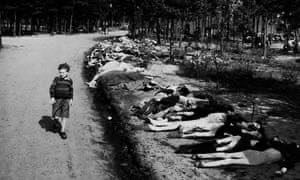
Rumors about the extent and horrors of German concentration camps had been circling among the Allies for about two weeks, mostly from news stories about the Soviet discovery of Auschwitz-Birkenau camp system, and the American liberation of the camp at Buchenwald on 4 April. On 15 April 1945, the British 11th Armored Division became the next initiates into the horrific and insanity inducing fraternity of soldiers who first discovered a National Socialist concentration and extermination camp when they liberated the camps at Bergen-Belsen.
The camp at Bergen-Belsen was originally a Wehrmacht prisoner of war camp, and an exchange camp where Jewish civilians were held so they could be traded for German prisoners of war captured by the Allies. About 50,000 Jews, Polish and Russian pows died in the overcrowded camps before Bergen-Belsen was turned over to the SS in 1943. After the Wannasee Conference, Bergen-Belsen was expanded into concentration and extermination camps. Jews from across the Third Reich were sent Bergen-Belsen based on their potential ransom. The Jews were either exchanged for prisoners or sold to Allied and neutral nations for hard currency. Jews that didn’t sell quickly enough or got sick were shot. As the Russian armies closed in from the east, prisoners from the camps in Poland were sent west and many ended up in Bergen-Belsen.
By 1945 disease was rampant. Typhus, tuberculosis, typhoid, and dysentery ravaged the overcrowded camps. Anne Frank died of typhus at Bergen-Belsen in February 1945. On 11 April the typhus outbreak was so bad the SS created an exclusion zone around the camps and handed them over to British without a fight. Unfortunately, the peaceful transfer of the camps enabled time for the National Socialists to destroy the very meticulous records of their atrocities.
When the Brits arrived on 15 April 1945, they found 64,000 half starved and sick prisoners in camps designed to hold 10,000. They also found 19,000 unburied corpses. The captives had not eaten for days and madness and chaos engulfed the camps. The British troops restored order and trucked in food, water, and medical supplies and personnel to deal with the survivors. Medical specialists were flown in from Britain to assist. Despite their best efforts, about 500 prisoners died everyday for next the few months, mostly from disease. One of the last Luftwaffe attacks of the war occurred at Bergen-Belsen on 20 April which killed three British medical orderlies and several dozen prisoners.
The British forced the camp staff and civilians from nearby Celle to bury the dead. Correctly assuming that future generations would deny the Holocaust and National Socialist atrocities, the British command documented the Bergen-Belsen camps. No. 5 Army Film and Photographic Unit (like todays combat camera detachments) thoroughly covered Bergen-Belsen and interviewed as many survivors and liberators as possible.
The madness inducing pictures and recordings are available on the Imperial War Museum’s website.
The camps at Bergen-Belsen were so thoroughly riddled with disease that the camps were completely evacuated in August and burnt to the ground to prevent further spread. In the end, about 100,000 prisoners died at Bergen-Belsen from torture, medical experiments, disease, malnutrition, or execution, including about 14,000 after it was liberated, most to disease or complications in feeding.
The Demise of U-1206

By 1945, the Battle of the Atlantic was won by the Allies. However the Germans clung to the hope that wonder weapons and superior technology could somehow turn the tide. U-1206 was a brand new Type VIIC boat that could travel faster and stay submerged longer than U-boats before it.
Part of the reason U-1206 could stay submerged for long times was the toilet system. Unlike Allied submarines where human waste went into a holding tank, waste on German U-boats was flushed directly into the sea. The lack of a holding tank allowed more space for other critical necessities, like fuel and batteries. This also meant that the waste couldn’t be flushed out while submerged too deeply, an unfortunate olfactory situation for a submarine if it was submerged for too long. The Type VIIC boats fixed this problem, not with a holding tank, but a complicated high pressure valve system that permitted a crew member to flush while deeply submerged. The valve system was so complicated that “Toilet Specialists” were needed to operate it.
On 14 April 1945, the captain of U-1206 was taking his daily constitutional while submerged off Scotland. He didn’t want to bother the toilet specialist to flush, so he broke out the manual to do it himself. In the process, he stuffed up the toilet. Swallowing his pride, but not too much, he called the boat’s engineer to fix the problem instead of the junior ranking toilet specialist. While trying to unplug the toilet, the boat’s engineer opened the wrong valve and seawater flooded into the boat. The water eventually reached the boat’s batteries and the chemical reaction caused a cloud of chlorine gas. The crew brought the boat to the surface so they could open the hatches to air the gas out. While on the surface, U-1206 was promptly sunk by the RAF.
The Katyn Massacres

In accordance with the Molotov-Ribbentrop Pact, National Socialist Germany and the Union of Soviet Socialist Republics invaded and divided Poland in September 1939 as de facto allies. After a chaotic winter stabilizing eastern Poland (Western Belarus and western Ukraine today), the Soviet Union began an organized and deliberate campaign to ethnically cleanse Poles from its conquered territory. In early 1940, the NKVD (the Soviet secret police, the forerunner of the KGB) was holding over 500,000 Polish prisoners. On 5 March 1940, Laventry Beria, the head of the NKVD proposed the execution of all possible Polish leadership in captivity. The execution order extended to any person formerly of the Polish Army officer corps and any civilian leadership, including anyone who showed any signs of leadership ability. The proposal was approved by the Soviet Politburo and Josef Stalin.
Starting 3 April 1940, hundreds of Polish Army officers, government workers, land owners, school teachers, university professors, police officers, “intelligence agents”, lawyers, scientists, Polish Jews, factory managers, writers and publishers, business owners, Boy scouts and scoutmasters, and priests and clergy were murdered every night in their camps. The subject was usually grabbed from a prison gathering, had his or her credentials checked against a list of undesirables, led to a cell lined with sandbags, forced to kneel, and then shot in the back of the head or neck. The shots were muffled by the sandbags and the use of machinery and fans to prevent rioting among the prisoners. The executions were usually carried out using .25 ACP Walter Model 2 pistols obtained from Germany through prewar trade deals. Since the Walter Model 2 had significantly less recoil than the Russian made 7.62 Nagant M1895 revolvers in Soviet service at the time, more executions could be made in less time. Soviet executioners found that the Nagant’s recoil began to make executions difficult after the first dozen; there was no such problem with the smaller, but equally effective round of the Walter. The executions were carried out in camps all over Western Russia, Eastern Poland, Belarus, and Ukraine. The corpses were carried onto trucks and then taken to mass graves deep in the forest.
In June 1941, National Socialist Germany stabbed its erstwhile ally in the back and invaded the Soviet Union. In late 1942, captive Polish railroad workers heard from locals that mass graves of Polish soldiers were located in the Katyn Forest. A few months later, a German intelligence officer became aware of the rumor and had it investigated. A mass grave filled with 3000 bodies was discovered on Goat Hill in the Katyn Forest. Further investigation found more mass graves in the area, totaling more than 22,000 bodies. Nazi propaganda minister Josef Goebbels seized upon the discovery to show “the horrors of Bolshevism and Anglo-American subservience to it”. The European Red Cross formed the “Katyn Commission” of forensic experts, neutral journalists, and Allied prisoners of war, who were brought in to observe to investigations and excavations. The Soviets denied the accusation that they were responsible. After the Soviets overran the sites in 1943, the London based Polish Government-in-Exile asked Stalin to investigate. Stalin immediately broke off relations with the Poles and accused them of being Nazi collaborators.
With the Soviet Union bearing the brunt of the fighting against Nazi Germany, the United States and Britain accepted the official Soviet explanation that the mass graves were Polish construction workers murdered by the Nazis in 1941. President Roosevelt had his own commission look into the massacre and when it came back conclusively that the Soviets were responsible, Roosevelt ordered the report destroyed and the lead investigator exiled to American Samoa for the rest of the war. The Soviets denied responsibly until 1990. After the Cold War, about a dozen sites similar to the one in Katy Forest were identified, a testament to the extent of the murders of Polish leadership by the Soviet Union in 1940.
On 10 April 2010, Polish Prime Minister Lech Kaczyński, his wife, and Poland’s top military and political figures flew to Smolensk, Russia to attend the 70th anniversary memorial ceremony of the Katyn Massacre. On approach to the Smolensk airport, their plane crashed and everyone on board was killed. Russian Prime Minister Vladimir Putin was put in charge of the investigation and he concluded “pilot error”. Poland disputes the findings. As of April 2020, Russia has yet to turn over any evidence, including the plane’s wreckage and black boxes, for independent Polish or international investigation.
Operation Weserubung: The Invasions of Denmark and Norway
During the “Phony War” between the Western Allies and Germany in 1939 and early 1940, both sides eyed Norway as a potential area of operations. The Allies wanted to cut off Germany’s supply of Swedish iron ore that was shipped thru the Norwegian port of Narvik, and ship arms and supplies to Finland who was at war with Germany’s de facto ally, the Soviet Union. (Finland surrendered in March before the plan came to fruition) Germany wanted to use Norway’s fjords for U-boat bases, and use airfields on the Norwegian Sea to secure the iron ore shipments. In early April 1940, both sides struck near simultaneously but where Allied operations (and the Norwegian response) were characterized by confusion and timidity, the German attack was characterized by decisiveness and audacity.
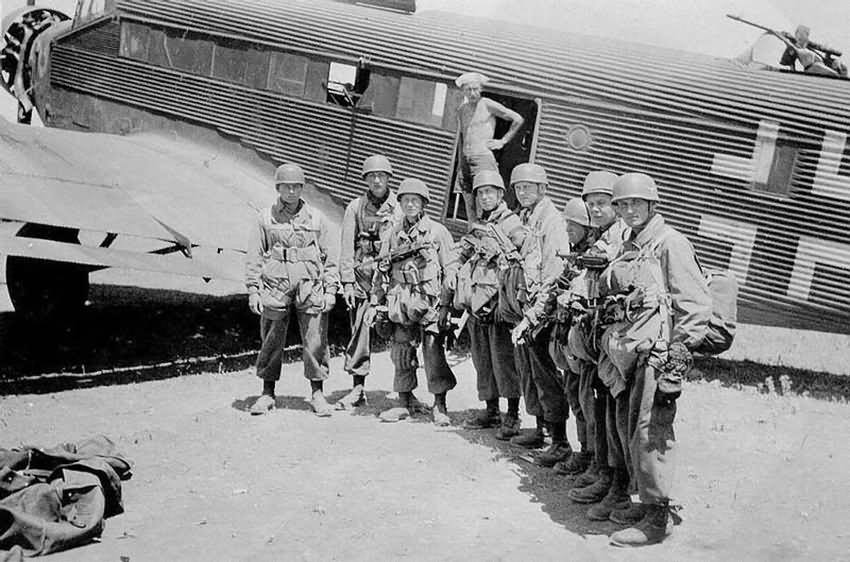
In the early hours of 9 April, 1940, two hundred German transport planes approached the various Scandinavian coasts. Each of the distinctive three engine Ju-52s carried a “stick” of 18 German Fallshirmjaeger (paratroopers) and a canister containing their weapons and ammunition (The Germans jumped unarmed and retrieved their weapons on the ground). The lightly armed paratroopers had to hold out against a possible overwhelming Allied response before any help could arrive by troops carried by the Kriegsmarine (German Navy) The fallshimjaegers’ vital mission was to seize five airfields that constituted the all-important initial objectives for the first contested airborne operation in history: Operation Weserubung.
Operation Weserubung was the German codename for the invasions of Norway and Denmark. It was a complicated and flawed, but tenaciously executed joint, interagency, and multinational (well, two anyway) surprise attack that had little reason to succeed, and every reason to fail. It required independent simultaneous successful actions against a series of linear unsupportive but logistically connected objectives. The plan required airborne troops to seize airfields for future Luftwaffe dominance of the sky. Simultaneously and underneath the nose of the British Home Fleet at Scapa Flow, the Kriegsmarine landed troop at five spread out target cities along the Norwegian Atlantic coast. Due to troop transport shortages, the ground troops available were woefully understrength for the tasks assigned to them. A serious failure at any point would have caused the failure of the entire operation. However, German diplomatic and informational efforts more than made up for the troop shortfall.
During the military attack, the German Foreign Ministry convincingly continued to negotiate with the Norwegians and prevented a timely full mobilization. Additionally Norwegian fascists under Vidkun Quisling sabotaged any response and assisted from within their socialist cousins from the south. Fortunately for the Germans, individual initiative from their junior officers mitigated any temporary Allied successes, and most importantly, Allied indecisiveness assured German victory.
The Allied invasion fleet was actually off of Narvik on 9 April but was recalled to Scotland in order to not offend the Norwegians, despite reports of German planes and ships nearby. It was turned around and sent back five days later. Unfortunately for the Norwegians, this five day delay meant any Allied assistance arrived long after they could be used to attack the vulnerable German enclaves in the southern portion of the country. Through dishonest and duplicitous negotiations, the Nazi Foreign Ministry prevented a full mobilization of the Norwegian Army. The Norwegian delgation continued to negotiate in good faith for days, all the way up until Gestapo agents arrested them. Furthermore, the Quislings in the government, particularly the bureaucracy, prevented the partial mobilization from being carried out efficiently. Instead of two days, it took a week for the Norwegian Army to mobilize. By then it was too late and air landed German troops poured into the country through the secured airfields.
The only Allied successes in the first few days were at sea. On the night of 9 April, five British destroyers attacked and scattered the German’s Narvik invasion force, whose ships were then hunted down and sunk by a larger task force centered on the battleship HMS Warspite. In the south, the Oslo Invasion Force but halted by Norwegian cannon protecting the entrance to the fjord, which allowed time for the Norwegian royal family, the parliament, and the treasury to escape capture. But the captain in charge of the German embassy’s security, on his own initiative, commandeered a few Norwegian Army trucks and a company of German paratroopers, and chased the Norwegian decision makers out of the country, which further delayed Norway’s response to the German invasion.
90% of German objectives were seized within 24 hours, if tenuously. Denmark fell in six hours. But even with the German’s amazing initial successes, the British, French, Polish and Norwegian troops resisted and even advanced over the next two months, especially around Narvik. It took the fall of France in June and the impending invasion of Britain for the Allies to evacuate their troops and finally surrender Norway.
The only positive outcome for the Allies was the near total annihilation of all of Germany’s destroyers and troop transports in the two months of battles against the Allied navies in the North and Norwegian Seas. Their loss forced Germany to require total control of the air over the English Channel to compensate for the lack of escorts for the slow invasion barges destined for Operation Sealion, the invasion of Great Britain.
The Battle for Okinawa: Operation Ten’ichigo

At dawn on 7 April 1945, the crews of the fourteen remaining ships of the Japanese 2nd Combined Fleet were assembled on their decks and briefed on Operation Ten’ichigo, “Heaven One”. Now commonly known as Operation Ten-Go, the plan was a naval Kamikaze attack on the American Fifth Fleet off of Okinawa.
The last remnants of the 2nd Combined Fleet centered on the mighty battleship Yamato, which was still the largest and most powerful battleship in history. Once there, the Yamato and his escorts were to beach and become unsinkable shore batteries, with the Yamato’s massive 18” guns destroying the American invasion fleet. Each sailor was given the opportunity to stay behind, and of course none did. The Japanese task force departed Yokohama with all of the remaining fuel in port for the one way trip to Okinawa. Hundreds of aircraft Kamikaze from the second wave of Operation Kikusui No. 1 were to keep the Americans busy while they were in transit.
Fortunately for the Allies, the 2nd Combined Fleet never made it to Okinawa. Two submarine’s spotted them departing but could not engage because of the TF’s speed. The Japanese, with no air cover, planned to avoid submarine and air attack by traveling at flank speed and violently zig-zagging for the entire trip. The tactics worked for about five hours, until the first planes of three waves of over 400 American and British torpedo and dive bombers finally found them and attacked just after noon. For two hours Japanese gunners and damage control crews valiantly kept the ships afloat, but by 1400 the one sided contest was over. All of the ships were sunk and the Yamato took twelve torpedo hits and eight bomb hits before he went down. Operation Ten-Go was the last significant action in the Second World War by the Japanese Navy, which three short years earlier was the terror of the Pacific.
The Battle for Okinawa: Operation Kikusui No. 1
In 1336, Japanese warrior Kusunoki Masashige fought a brave but futile defense at the Battle of Minatogawa. The moment before his inevitable defeat, Masashige committed seppuku, ritual suicide, in front of his attackers rather than surrender or be taken prisoner. Masashige became a legend in Japanese history and his emblem, the kikusui or floating chrysanthemum, became the symbol for Japan’s struggle to death with the Allies in 1945.
On 6 April 1945, the Japanese launched the first of ten massed airborne Kamikaze strikes against the US Fifth Fleet off Okinawa. Operation Kikusui, No 1 consisted of almost 700 aircraft including 355 Kamikaze. US codebreakers knew of the attack and every fighter in the Fifth Fleet was airborne to meet them. Nonetheless, the Allied fighter patrols could only shoot down 200 or so before they reached the fleet. The northern most destroyers on radar picket took the brunt of the initial attacks. Notwithstanding orders to bypass the destroyers and hit the vulnerable carriers closer to Okinawa, most Kamikaze struck the first ships they came across. Once a “gap” was made in the picket line, Kamikaze continued on toward the fleet. 200 more were shot down by antiaircraft gunners. It wasn’t enough.
180 Kamikaze and normal strike aircraft slammed into the fleet. Despite hours and even days of epic damage control efforts, two destroyers were sunk, and four more so damaged that they were sent to scrap after the day’s battle. Four other destroyers and two destroyer escorts were so badly damaged that they required more than 30 days of repairs. One LST and two ammunition ships were destroyed, and one fleet carrier, the USS Hancock, was sent back to Pearl Harbor for repairs.
The Japanese were not pleased with results considering the resources expended. The Americans’ mastery of the fundamentals: damage control, disciplined anti-aircraft fire, radar direction, combat air patrols, intelligence, and fleet logistics provided the fleet a resilience that had prevented a disaster.
Unfortunately, the worst was yet to come.
Operation Iceberg: The Battle of Okinawa

On 22 March 1945, the last of the 180,000 men of the US Tenth Army, under US Army Lt Gen Simon Bolivar Buckner were loaded onto transports. The final ships bearing the US 1st, 2nd, and 6th Marine Divisions, and US Army’s 7th, 27th, 77th, and 96th Infantry Divisions departed the Ulithi atoll on the 1400 ships of the US Fifth Fleet that afternoon for the trip to Okinawa in the Ryukyu Islands. The US Tenth Army was the largest land force under direct US Navy command in American history. On 26 March, the US Fifth Fleet arrived off Okinawa. That morning, the US 77th Infantry Division seized the Kerama Islands just west of Okinawa for an anchorage to support the main landings, and protect the vulnerable transports from small Kamikaze suicide boats.
On Easter Sunday, 1 April 1945, the US Army XXIV Corps, and US Marine III Amphibious Corps landed on the eastern shores of Okinawa to complete silence.
On paper the Japanese 32nd Army under Gen Mitsuru Ushijima had over 150,000 soldiers to defend the island of Okinawa, including tens of thousands of drafted Okinawan civilians, and thousands of school children shamed into volunteering. The number wasn’t nearly enough to cover the entire island as the Japanese did at Iwo Jima. Okinawa is 22 times the size of Iwo Jima, so Ushijima decided to defend, Peleliu style, at choke points and successive fortified lines across the southern half of the island. The Americans landed against no opposition.
The Americans seized the Kadena and Yontan airfields by nightfall. The US Tenth Army was the only US Army in the war to have its own dedicated air force, and it flew off of those air fields every minute of day light for the next 80 days. By 4 April, the Marines controlled the northern half of the island, with only small Japanese stay behind troops conducting guerilla warfare in the Marine rear areas. The Marines only finally defeated the guerillas once all Okinawan civilians in their sector were herded into internment camps. Without civilian support, the Japanese hold outs were all hunted down by the end of the campaign. The last organized Japanese force in northern Okinawa fought to the death on Mount Yae Take on 20 April.
On 16 April, the 77th Infantry Division conducted another amphibious invasion, this time the island Ie Shima. The fighting on Ie Shima was fiecre and included hand to hand combat with Japanese civilians, including women and children, armed with spears. Famed war correspondent Ernie Pyle was killed on Ie Shima when a Japanese machine gun ambushed his jeep as he drove to the front with one 77th’s regimental commanders. A burst caught him in the forehead and he was buried on the island with the rest of the 77th’s casualties. The 77th erected a small monument, which still stands, that reads, “At this spot the 77th Infantry Division lost a buddy, Ernie Pyle, 18 April 1945.”
Though the fighting in the north was tough, the battle for southern Okinawa was in an entirely different level of Hell. The XXIV Corps was stopped cold in the broken ground north of Shuri. The defenses extended the width of Okinawa and there was nowhere for the Americans to go except into the teeth of Ushijima’s defenses. The Americans only took the Japanese advanced line when its defenders retired to the main line of resistance just a bit further south. The Army divisions were fought out by 24 April and the relatively fresh Marines of the III Amphibious Corps were sent south.
On 2 May, the skies turned cloudy and it started raining. It would stay that way until July. That same day, the Marines went on the offensive. They made almost no progress despite fierce fighting and several potential breakthroughs. The Japanese didn’t just defend, they counter attacked using tunnels and defilades in the broken terrain to move troops to the flank or even behind the Marines. Ushijima had thousands of fresh troops that were guarding southern beaches which were obviously not going to see a landing. Several Marine companies were cut off and nearly annihilated before they fought their way out of their entrapments.
The successful defense on 2-3 May against the Marines convinced Ushijima’s subordinates to pressure him into a large scale attack with tanks and beach landings behind the Marines. Ushijima knew he could not win the Battle of Okinawa, but he did believe that every day he held the Americans on Okinawa was another day that the Home Islands could prepare for their inevitable invasion. He had an entire veteran division in reserve and wanted to use them bleeding the Americans in the naturally defensible terrain of the island. But his subordinates demanded that they attack lest they lose face. Ushijima gave in.
The Japanese counter offensive was initially a complete surprise, but the landings and assaults were quickly isolated and destroyed. As Ushijima had foreseen, the offensive was a complete waste of men; men he had no way to replace. Nonetheless, for the next 45 days, the Americans ground down the Japanese in brutal attritional warfare. The superior Japanese positions endured a seemingly inexhaustible supply of American firepower. An example of the brutal and ruthless nature of the fighting was Sugar Loaf Hill, a bare 15m high bald hill that was initially a company objective for the 29th Marines. Sugar Loaf anchored the far end of the Shuri Line. Eleven assaults over seven days, 12-18 May, by three different marine regiments consumed nearly 5000 American casualties, and killed 2500 Japanese. Most American wounded at Sugar Loaf never saw a Japanese soldier. But every American casualty could be replaced while the quality of the Japanese defenders declined. On 29 May the Shuri Line was broken when the Marines secured Shuri Castle.
The remaining 30,000 troops of the 32nd Army withdrew to the Kiyan peninsula for a last stand. By this point in the battle, cut off Japanese troops were committing suicide by the thousands. A Marine landing on the peninsula resulted in nearly 1200 Japanese sailors committing suicide when they were cut off below ground. As the situation for the Japanese became untenable, the Japanese soldiers began demanding of Japanese civilians that they too commit suicide. Corrupted by propaganda that the American were going to rape and kill them anyway, many did. The sound of a grenade going off in an underground bunker was a common occurrence, and thousands of Japanese civilians jumped from the southern cliffs to avoid capture. Of the 300,000 pre-battle civilian population of Okinawa, over 100,000 were dead by mid-June, mostly by suicide.
On 18 June, while checking on troops, Buckner was killed by Japanese artillery fire and became the highest ranking American officer killed by enemy fire in the war. He was replaced by Marine Major General Roy Geiger before he was replaced by Gen Joseph Stilwell, who was in the Philippines returning from China when Buckner was killed.
On 21 June, Ushijima ordered his remaining troops to disperse and conduct guerilla operations. He committed seppuku the next day, but not before ordering his aide, Colonel Yahara, to stay alive to tell the Japanese side of the story. Yahara was the senior Japanese officer to survive Okinawa. About 14,000 Japanese soldiers surrendered during the Battle for Okinawa, but almost all were Okinawan or Japanese mainland civilians drafted just before the battle. The Americans suffered 14,000 dead and 50,000 wounded in the Battle of Okinawa, more than in the Battle of the Bulge in Europe, the largest American battle in history.
The ferocity of the Japanese defense, the American casualties, and the mass suicide of Japanese civilians on Okinawa (and the specter of a post war conflict with the Soviet Union) convinced President Truman to authorize the use of atomic bombs against Japan in lieu of direct invasion. The planners of Operation Downfall, the invasion of the Japanese Home Islands, and its two subordinate operations, Operation Olympic: the invasion Kyushu, and Operation Coronet: the invasion of Honshu had projected more than a million Allied casualties subduing Japan. Truman said, “I do not want another Okinawa from one end of Japan to the other.” The first atomic bomb was dropped on Hiroshima on 6 August, 1945, and another on Nagasaki three days later on 9 August. Emperor Hirohito announced Japan’s surrender on 15 August 1945.
 Buk's Historical Ad Hockery
You must be logged in to post a comment.