
The Last Jedi

Incompetent and toxic leadership personified

*SPOILERS* Don’t read any further if you haven’t seen the movie. I mean it – Go see the movie first.

*SPOILERS*
.
.
.
.
If you are reading this sentence then I am assuming that you know that Luke died, Leia sort of died, Snoke died, Phasma died (WTF!), Ackbar died (Seriously WTF!) the galaxy is ruled by a whiny, petulant, and incompetent child (actually, that *is* pretty scary), The Finn is now a character straight out of the Diary of a Wimpy Kid, the fate of the Rebelistance is on the shoulders of a Mary Sue who was sand-sledding a few weeks before (and she probably needs to wash), and in that time the Jedi have developed unbelievably new force powers that even the Jedi at the height of their training and scholarship didn’t have.

But at least we still have Poe, Rose, DJ, BB-8, and hopefully a few more from the Rebelistance survivors to carry the series forward (I kinda liked that A-Wing pilot too. I can’t remember her name though). But no decent Imperial characters are left alive except Ren, and he’s problematic.

But for some reason, the movie worked for me, even the second time when I knew what was going to happen. It was a fun movie even if it had issues. Like I said before, it’s no Rogue One. Rogue One with a John Williams score would be in my top five favorite movies of all time. But alas, we got John Williams-lite. There are three types of Star Wars Fans: Lightsaber fans, Blaster fans, and Turbo Laser fans. I am the latter. I love Star Wars’ space battles, and it’s going to take a long time for me to forgive Disney for what they did to Ackbar. And I love a good blaster fight as long as they get in their ships at the end. The Force is just a Deus Ex Machina for lazy writers and ruined The Extended Universe for me in the mid-2000s. And well, that’s what’s looking to happen with Star Wars after seeing The Last Jedi.

So let’s get what I didn’t like out of the way. The biggest problem with the The Last Jedi is the Force. I don’t care what the Force can do, but it has to be consistent. Consistency is key. Consistency leads directly to integrity, and without integrity there might as well be nothing. The Force has to follow the in-universe rules of its existence, and anything new has to retroactively fit. If it doesn’t the franchise dies. The Terminator franchise died because the time travel didn’t follow the in-universe rules established in the first and second films. If a plot device has no integrity, then there is no tension, because the audience will subconsciously say, “The writers will just add a new Force power. They’ve done it before”. The Last Jedi made this mistake twice. Once with Dead Yoda affecting the real world (which has never happened before even in the wildest fever dreams of the EU writers). And the next was with the Jedi telepathic/telekinesis/Force holes (which has also never happened before).

First, Dead Yoda lit the tree on fire. No Dead Jedi has ever affected the “real world” with anything except words before. We know the Dead Jedi are always watching. So if they can affect the real world (“world” as in universe created by George Lucas), why didn’t Dead Obi lightning the Death Star’s exhaust port in the original Star Wars? Or Dead Qui Gon come back and lightning Jar Jar before he fucked the galaxy? There’s a thousand examples over the previous seven movies when the Dead Jedi could have affected the world as Yoda did with that tree. Why didn’t they? At least it can possibly be explained away by saying Yoda forced (Ha!) Luke to channel the lightning without his consent. But again, no dead Jedi, or even a live one, has ever forced another Jedi to use the Force against his or her will before. That’d be “Force Rape”, wouldn’t it?

The bigger Force inconsistency in The Last Jedi were the telepathic/telekinesis/force induced worm holes. That’s never happened before. It was hinted at between Leia and Luke, and Luke and Vader in Empire, but until the big reveal that Leia was force sensitive, it was a liability and required proximity. In TLJ it’s plot centric and they have entire conversations. So why didn’t the Jedi use it before this? Was the power only learned from the ancient texts in the tree, that Rey never read? Surely Yoda and Sam Jackson knew about it when the Jedi for all intents and purposes ruled the galaxy? So why wasn’t it used when Order 66 was executed, when a simple “Beware” to the Jedi would have saved them? Or during the Clone War? The communication aspects alone would have made it a game changer: A person to person instantaneous communication system that doesn’t rely on connecting infrastructure or line of sight? And we know from the water on Ren’s hand that physical objects can be transported. That’s a whole other dimension to warfare. The Jedi could have formed an agile command, control, communications, computers, intelligence, information, surveillance, reconnaissance, targeting, and force (C4I2SRTF…) architecture and infrastructure that would be exponentially more powerful than a bunch of warriors wielding laser swords. The Separatists could never have competed. That’s the very definition of a Revolution in Military Affairs. Robert Jordan’s Wheel of Time did it with Tel’aran’rhiod but it had to at least follow its own logic. If Fake Luke could touch Real Leia, and Real Rey could touch Real Ren, why can’t Real Ren touch Fake Luke or Real Luke? The best Fantasy and Science Fiction follow their own internal logic, as whacked as it may be. The Last Jedi did not.

OK, enough about Hokey Religions, let’s talk about what Star Wars was always about, characters and relationships. As I alluded to in the beginning, most of the main characters at worst suck, or are irritating at best.

Rey is the very definition of a “Mary Sue”. If you don’t know, a “Mary Sue” is an annoying literary trope where a lead female character is perfect in every way, surpasses the other main characters in every way, is beloved by all who see her, and has no flaws that are not endearing. Rey is a better pilot than Poe, a better Jedi than Luke, a better shot than Han, a better gunner than Finn, a better swordsman than Vader, etc etc. And she learned this all in a week or so. She hasn’t even had time to change from what she was wearing as a slave, scavenging wrecked star destroyers on Jakku. Luke might have been a whiny bitch that almost put a lightsaber blade through his eye the first time he was given one, but he was just a moisture farmer and bush pilot. He was relatable. How could Rey learn to fly when she scavenged all day for a cinnabun? Take a shower, Wish Fulfillment.

The rest of the characters aren’t nearly as bad, though some were wasted. Phasma most of all. She could have been The New Boba Fett. But she’s like the last remaining stormtrooper from the original trilogy who were always getting knocked out, beaten up by teddy bears, or not hitting anything. I’d be pissed if I was Brienne. She was to the First Order what Finn was to the Rebelistance. I do not like the direction Finn is headed. He fucks up everything he touches. He’s like a TV dad with few redeeming characteristics. In Force Awakens, he was a great gunner, had intimate knowledge of the First Order, and tried to take care of Rey, even if she didn’t need it (I still consider that a positive, it’s the Romantic in me). In The Last Jedi he was a bumbling fool just along for the ride, literally. He contributed nothing after the first few minutes after waking up. He has been demoted to sidekick.

At least he was a sidekick to Rose, one of the better newly introduced main characters. Like I said before, I have a soft spot for supporters rising to the occasion. Too bad the occasion she rose to (Ha!) meant absolutely nothing. I mean, the trip to Monaco allowed Hollywood to get some preaching in. It’s 2017, I get it. When Hollywood isn’t raping itself, it’s virtue signaling, and you aren’t going to get a good rating on entertainment’s worst monopoly, the Tomato Meter, without some virtue signaling. But Finn and Rose’s mission was absolutely meaningless. Unless of course, it was meant to introduce some new tension in the form of a Twilight-Style love triangle. If it did then consider me on TeamRose (You heard it here first). TeamMarySue can suck it.

But again, their mission, though exciting, was a waste. In fact if it wasn’t for BB-8, who did all the actual work, and DJ’s magically convenient appearance, they’d still be rotting in jail waiting to be rescued, or frozen in carbonite hung up as a decoration to cover a hole in a casino wall. Actually, that would be awesome and make a great transition to the next movie, just like Empire and Jedi. And they would have accomplished more in the plot.

So I might be on TeamRose, but I also have a soft spot for magenta based short haired women, especially when they know how to handle a squadron of star cruisers. I was furious when my main Mon Calamari, Admiral Ackbar, died in the same explosion that caused Leia to go Michaelangelo. (Seriously, Disney, you did Ackbar wrong) But he was quickly replaced with Amiliyn Haldo. For a fleeting moment Vice Admiral Amilyn Haldo replaced Princess Leia as my favorite female character in the Star Wars franchise. I’ll be in ma bunk. Then she immediately went toxic and incompetent, even if she did have the baddest-ass scene in the movie (I wonder why no one thought of that for the Death Stars?). What a waste.

Poe said, “So what’s the plan”? And she didn’t tell him. “Do what you’re told and like it, peasant”. (That’s my exact quote that I said out loud at that moment). This isn’t the Empire, this isn’t the First Order. This isn’t a division headquarters or the State Department. This is the Rebelistance. This is the Republic. We have Flat Organizations. There was absolutely no reason Haldo shouldn’t have told Poe the plan. He deserved to know. Hell, the whole crew deserved to know. A simple, “Thanks for asking Poe, but I was just about to brief the crew. Please take a seat. Attention everyone. This is Vice Admiral Yummy Hot. We are going to fuel up these small transports that are magically equipped with super rare cloaking devices, and escape to a secret hideout on a nearby planet that doesn’t show up on anyone’s scanner. (*eyeroll*) When we are safely away, the First Order will destroy this ship and assume we are dead. Then we will rebuild.” And Poe will say, “Thanks, ma’am. Great plan; I’m proud to be a part of it. I was wondering when we were going to use these cloaking devices. Need me to do anything? No? Mind if I buy you a drink while we wait?” *They adjourn to the bar* Now, admittedly Rose would then just be the foil to prevent Finn’s plan to escape. But we would still have our Twillight-style love triangle when Poe and Finn try to out complement each other in front of Haldo at the bar. In that case, consider me TeamPoe.

But all we got were four of the five most interesting new characters in the franchise acting like morons with no effect on the plot at all. Their shenanigans did introduce us to Benicio Del Toro’s DJ. Can’t wait to see him in the next one. Is he a Lando or a Boba Fett? Only time can tell. Speaking of time, how about Snoke? Ha! That was a quick reign… what a waste. I’m still saying he was the whiny kid from Star Wars Rebels all growed up. At least Kylo Ren had a semblance of a character arc.

Thank God Ren ditched the helmet. (Oh, did you catch the references to Baby Jesus in this movie? That’s never happened before either) I hated his helmet. And getting rid of it alone saved him in my eyes. I might have bitched before about the fact that the new Jedi telepathy exists, but the actual content of the conversations was great acting and writing. And Rey and Ren had the best lightsaber battle in the franchise. I honestly wanted more Crimson Guard to burst into the room just so the fight wouldn’t end. And now he’s the supreme leader of the First Order. Kylo Ren is a suitable villain for this generation: An evil spoiled child with delusions of grandeur and wielder of a nearly unlimited power who has no leadership or teambuilding experience and has to rule through brute force, coercion, and intimidation. I think I might dig up the cache of blasters in my back yard and join the Rebelistance myself.

Just about everything else I really liked. BB-8 is a great character and a Hero of the Republic. Chewie stole every scene he was in but I still think he should have eaten the Cornish hen. Chewie rips people’s arms off! Screw your plush doll. Rawwwwrrrr! Leia were awesome and Carrie swirled the dust in the room. Mark Hamill did the best he could with the stupid direction Luke was headed, but that’s more a criticism for Force Awakens. They’re going to be missed. Great space battle in the beginning, Hollywood is obviously setting us up for the Eighth Air Force miniseries. I loved that the Cruiser was named after the admiral in Rogue One. I loved Maz’ extended cameo. I really thought she was talking about Chewie though. That would have been awesome. All of the other supporting characters were great and I really hope some of them get bigger parts in the next movie.

Now it may seem like I didn’t like the movie, but I am a bitter and cynical old man hardened and numbed by decades of After Action Reviews where my every action was a disaster mitigated only by the cross talk of my junior leaders and NCOs. Pointing out the negative is all I know how to do. If you got a “good job” from me you probably more than deserved it. I am not going to tell you why you did a good job because I’ve learned I probably don’t understand why anyway, and to be honest I don’t really care. I’m just glad you did a good job. So, that being said.

Good job, Disney. I’ll probably see it again tomorrow

The Rape of Nanking

In 1936, the League of Nations’ failure to prevent the Italian annexation of one of its members, Ethiopia, directly led to Hitler’s remilitarization of the Rhineland and Japan’s invasion of China in 1937. Between August and November 1937, nearly a million Nationalist Chinese and Imperial Japanese fought block by block and house by house for the city the Shanghai. Even though Shanghai was defended by Chiang Kai-Shek’s best troops, the Japanese were better trained and equipped, and their naval superiority allowed them to land anywhere on the coast they wished.
By the beginning of November, Shanghai was lost, and Chiang moved China’s capital to Nanking. Led by America, the Western nations were in talks to intervene to stop Japanese aggression, but the Japanese thought that the loss of Nanking would force the Chinese to surrender before that could happen. So to preclude Western intervention, Emperor Hirohito sent Prince Asaka to Japan’s Central China Area Army and ordered its commander Gen Iwane Matsui to immediately seize Nanking.
Matsui’s men made the 250 mile march in under a month. The speed of the Japanese advance and the incessant bombing by the Japanese air force prevented Chiang from consolidating a defense, and Matsui arrived outside the walls of Nanking on 9 December. The next day, he ordered his exhausted and worn, but so far victorious, troops for one last push, which he was sure would end the war. With the rising sun, Matsui’s entire army banzaied the Chinese defenses. Three days of brutal close quarters fighting and unremitting heavy artillery shattered the defending Chinese, who streamed back into Nanking. The jubilant Japanese followed close behind. And then the real chaos began.
Like all people who cannot see beyond the lens of race and ethnicity, the Imperial Japanese saw their adversaries as less than human. The Japanese had no ethical boundaries regarding the treatment of the Chinese civilians, and justified their increasingly brutal actions as if the Chinese somehow deserved it. In the six weeks after Asaka and Matsui overran Nanking, their troops engaged in both systematic and spontaneous mass acts of arson, murder, looting, rape, and other war crimes on a grand scale. Over 200,000 Chinese men, women, and children were killed, and afterwards, Westerners in the city were unable to find a Chinese female of any age who wasn’t under their personal protection who wasn’t raped multiple times.
Most Westerners fled the city before the final Japanese attack, but some did not. Those that remained formed the “International Committee for the Nanking Safety Zone” ironically led by John Rabe, a German businessman and Nazi Party member. The Committee consisted of about 30 American and European missionaries, businessmen, and embassy staff. In anticipation of the fall of the city to the Japanese, they set up the Nanking Safety Zone in the Western end of the city, demarcated by Red Cross flags.
Rabe negotiated the Zone with Matsui through the radio on the American gunboat USS Panay, which the Japanese strafed and sank on 9 December while Rabe was on board. The survivors swam to shore, and the Panay Incident showed how far the Japanese would keep their word regarding the dealings with the West. Nevertheless, Matsui allowed the Safety Zone as long as there weren’t Chinese troops inside. The Japanese soldiers for all intents and purposes disregarded the Nanking Safety Zone, but fear of Western intervention prevented direct assaults on Rabe and the Committee members. It is through their accounts and photographs that we would even know of the Rape of Nanking today.
The Japanese did not believe that they would be held accountable for their actions, as long as they didn’t harm the Westerners. Small bands of Japanese soldiers roamed the city, looting, raping, and murdering along the way. All surrendering Chinese troops were taken outside the city and massacred. The worst incident occurred on 18 December, in the Straw String Massacre. The Japanese tied the arms of thousands of prisoners together, and laughed as the writhing mass frantically tried break free by ripping each other’s arms off as the Japanese slowly murdered them all for entertainment. 12,000 bodies were excavated later from “The Ten-Thousand-Corpse-Ditch” just outside the city. Ten of thousands more were murdered and thrown into the Yangtze River.
When the captured soldiers ran out, the Japanese continued with the civilians in the Safety Zone. Individual Committee members attempted to protect the Chinese, but they couldn’t be everywhere. Most times, the Japanese ignored them or even forced them to watch. The Japanese used the civilians as live targets on rifle ranges and bayonet courses. They forced the civilians to walk over mines to demonstrate their effectiveness, or doused them in petrol to see how long they would live before being consumed by the fire. Chinese were beheaded to prove the sharpness of their officer’s swords, or were buried alive for sport. Chinese corpses were piled high in the alleyways of the city. Mass graves were continually discovered for years afterwards.
The reports from Nanking convinced Chiang Kai-Shek that he was fighting for the very survival of his people, and his armies continued to fight the Japanese for the next seven years. But it would take a world war for justice to come to the people of Nanking. After Japan surrendered following the detonation of atomic bombs on Hiroshima and Nagasaki, the International Military Tribunal for the Far East and the separate Nanjing War Crimes Tribunal found Matsui and his subordinate commanders guilty of crimes against humanity. They were executed in 1946.
Asaka was not tried because he was a member of the Japanese Imperial family. As part of Japan’s surrender in 1945, MacArthur implied that the Japanese Emperor and his immediate family would not be tried for war crimes, and protected the Imperial family in order to prevent a bloody insurgency in post war Japan. Even in the 20th century (and the 21st for that matter), the aristocracy seems to have its privileges.

The United States Army National Guard

At the end of the 16th and early 17th century, three or four small pox epidemics wiped out the majority of the Native American population in what is now known as New England and created a power vacuum. Into this void came the first English and Dutch settlements such as the Plymouth, Saybrook, Connecticut, and Massachusetts Bay Colonies. Of the remaining tribes, the Pequot Indians (Mohegan for “destroyers”) warred on the other regional tribes, the Mohegan and Narragansett, in order to aggressively expand their hunting grounds and secure a monopoly on the lucrative fur and wampum trade with the settlers.

In the spring of 1636, the Pequot killed John Stone, an influential English trader, smuggler, and privateer, for the death of one of their traders by the Dutch. The Pequot paid a blood debt for the mistake, but didn’t hand over the culprits for trial, as demanded by the English. A few weeks later, a Narragansett hunting party killed John Oldham, a respected trader from the new Puritan colony of Connecticut for trading with the Pequot, which they wanted to discourage. After an English raid on Block Island the Narragansett offered to turn the wrongdoers over to the English but before that could happen they sought sanctuary with the Pequot. When the English tracked the murderers down, they demanded not only Oldham’s but also Stone’s killers. The Pequot stalled to evacuate the culprits, so the English attacked. They torched the village but didn’t catch them. The Pequot War had begun.

The Pequot called all their clients and allies to war, including the Nehantic, close neighbors of the Mohegan and Narragansett who joined the English. The offensive minded Pequot immediately went on the attack, and raided towns, villages, and farmsteads all across New England. In the autumn and winter of 1636. they besieged Fort Saybrook.

On 13 December, 1636, the General Court of the Massachusetts Bay Colony ordered the formation of three regiments of infantry from the existing militia companies of the colony, and any remaining able bodied men between the ages of 16 and 60. They were to protect the towns from Pequot raids and assist the Connecticut Colony in relieving Fort Saybrook.

Tulip Mania

While Germany was ravaged by the Thirty Years War, the Dutch Netherlands were relatively untouched as they continued their on and off fight for complete independence from the Spanish Empire. In 1636 the Dutch were beginning their Golden Age. The Merchant Republic of the United Provinces of the Netherlands had a far flung trading empire with colonies and trading posts in the Americas, Africa, Ceylon, India, the South Pacific, and Japan. The Netherlands was easily as powerful as its much larger neighbors, Great Britain and France. As the Dutch slowly asserted their own foreign policy, they sent ambassadors around the world; one of them returned from the Ottoman Empire with bulbs from a plant hitherto unseen in the Provinces – the tulip.
The bright flowers took to the Dutch soil like peanut butter to jelly, or corruption to politics. With war with Spain winding down, economic resources poured into commerce, and Dutch cities became unimaginably wealthy. Grand city houses were used by the newly rich merchants to display their wealth, and the tulips gracing the small yards and windowsills became the centerpieces of their new status. The more exotic and multicolored the tulip, the higher the price, and thus the greater status accorded to its owners, the only exception being any dark violet bulb close enough to the elusive and coveted Holy Grail of the Netherlands – The Black Tulip. The trade in tulip bulbs had occurred for decades, but only during the months from April (when they bloomed) to October (when they had to be replanted). On 12 November 1636, the Dutch created the first formal futures market for the soon-to-be symbol of the country. Buying and selling of the next season’s tulip bulbs began five months earlier than normal, and without the bulbs actually trading hands.

The Dutch merchants went insane for the new bulb contracts. In taverns and salons across the Provinces, tulip contracts changed hands at a frenzied pace. Speculative buying pushed the prices higher and higher. The entire population dabbled in the tulip market as a quick way to get rich. Within a month, tulip bulb “exports” became the fourth most profitable product in the country without a single bulb actually leaving the ground. Some bulbs went for as much as 3000 guilders, at a time when a skilled craftsman made 300 guilders a year.

Just three months later on 3 February 1637, one of only two Semper Augustus bulbs in existence was used to purchase 12 acres of land. With a fixed supply, the bulbs had gotten extraordinarily expensive. Very soon, the prices for the bulbs had gotten so high that buyers became scarce, then nonexistent. The Tulip Market crashed and the speculative bubble burst. Fortunes were made, but debts more so. France threatened to invade to collect.

By the April tulip bloom in 1637, the prices were back to what they were on 12 November. Tulipmania had run its course, and nearly destroyed the new country.

Operation Winter Tempest

The Soviet encirclement of Paulus’ German Sixth Army Stalingrad doomed the German troops in the city and its outskirts. However, Hitler ordered the city held and the Luftwaffe supply it by air, as had happened for similar, albeit smaller pockets the year before. Field Marshal Erich Von Manstein’s Army Group Don was tasked to break through to Stalingrad.

Manstein knew that his men could not reach Stalingrad. Hitler’s refused to release most of his armored reserve, and much of what was released was sent to Tunisia. Although theoretically Manstein had the entirety of Army Group Don for the attack, only one Panzer corps was readily available to participate. The only hope of saving the Sixth Army was for Paulus to attempt a breakout at the same time. Paulus however would not do so without Hitler’s permission. At best, all Manstein knew he could do was get close enough, and then appeal to Hitler to give Paulus permission.

Army Group Don launched Operation Winter Storm/Tempest/Thunderstorm (whatever the hell historians want to call it these days) on 12 December 1942. The attack made excellent initial gains but the Soviets were massing troops for Operation Saturn, the encirclement of Army Groups B and Don, and shifted forces to the Stalingrad perimeter opposite Manstein. The Soviets then launched Operation Little Saturn to just cut off Manstein. With much shifting of troops Manstein stabilized the front but could not get any closer to Stalingrad.

Manstein was just 30 miles from Paulus, but might as well have been 300. The Sixth Army only had enough fuel to advance 20 miles, and its infantry was starving and frozen. The Luftwaffe’s ability to deliver more fuel and food took a body blow when Soviet troops in the Little Saturn offensive overran the two primary airfields from which the transports flew to Stalingrad. Moreover, an actual winter storm hit the area and the blizzards grounded all aircraft. Even if Paulus was allowed to break out, by the third week of December, it was no longer possible.

Manstein ceased offensive operations on 23 December 1942, sealing the Sixth Army’s fate in Stalingrad.

The Husaria

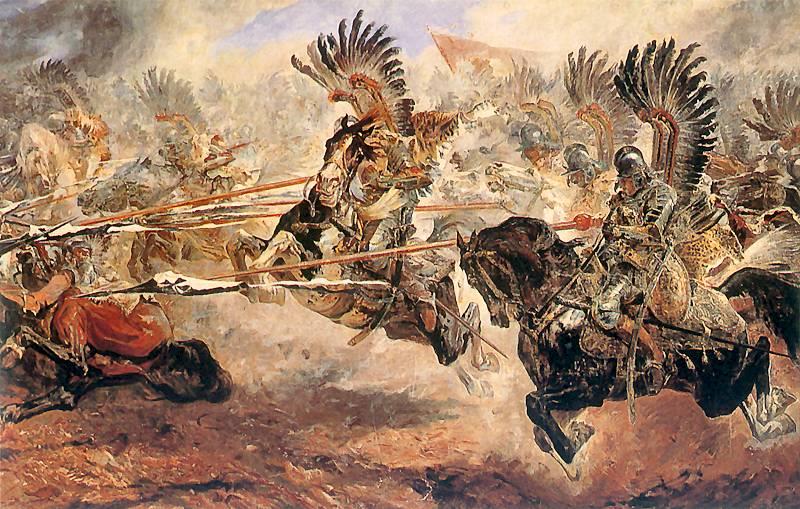
In the late seventeenth century, Monsieur Dalerac was the secretary to King Jan Sobieski’s wife and despised everything Polish. However, just after the Battle of Vienna in 1683, even he said the Husaria were, “without a doubt, the most beautiful cavalry in Europe”. Poland’s famed Husaria were also the most deadly. From 1570 to 1690, 120 years, the Husaria never lost a major battle. They were the shock troops of the Polish-Lithuanian Commonwealth, and only the best equipped and trained of the Polish and Lithuanian nobility could provide them and their equipment. The Husaria were the 17th century equivalent of Napoleon’s Imperial Guard – their charge decided battles.

The Husaria were a product of the peculiar nature of the Polish and Lithuanian nobility. The “Szlachta” in the centuries up to and including the 17th were a unique curiosity and stood apart from the nobility of most countries in Europe. The nobility of England, France, Germany, and the rest of Europe made up about 2% of the population; in the Polish, Lithuanian, and Ruthenian lands, the Szlachta made up about 10% of the population. They were known as the “petty gentry”, and filled the role of the middle class before there was even such a thing in Europe. In addition to the magnates and traditional nobility, the Szlachta were the small landowners in the towns and the property owners in the cities. And woe betide any who insinuated that the owner of a small manor who worked his land, no different than the peasants beside him, was in any way less of a man than the magnate of great estate whose hands didn’t know the scythe.

The Szlachta were inextricably and symbiotically linked to that other middle class, the Jewish merchants and businessmen, whom were welcomed with open arms in Polish and Lithuanian kingdoms when they were persecuted and murdered elsewhere. Together they formed the threads with which the Polish and Lithuanian tapestry was woven. Though the Szlachta’s origins are shrouded in myth, they traditionally claimed to be descendants of the Sarmatian horsemen who banded together in the 5th century with the Slavic tribes in the Oder, Vistula, and Nieman river valleys to defend against the depredations of the Huns. Whether that is true or not is lost to history, but one fact of life remains unchallenged among those who lived on the Ukrainian Steppe or the eastern edge of the Northern European Plain during the Middle Ages or the Renaissance – to be a member of the Polish or Lithuanian nobility, one must go to war on a horse.

But not all of the Szlachta could afford the heavy and expensive panoply of the medieval knight, such as those who broke the Teutonic Knights at the battle of Grunewald in 1410. The lower nobles armed and armored themselves as best as they could afford, and formed a mass of light cavalry behind their richer and better equipped counterparts. By the end of the Renaissance, the “Pospolite ruszenie” or levee en mass of the Szlachta had been called so often to repel invaders that the nobles began to standardize equipment. They were known as “Kozacy” from the freewheeling mounted adventurers then beginning to populate the man made desert known as the Ukrainian Steppe, but out of necessity they armed themselves as that light cavalry from Poland’s interminable friend to the south, the Hungarian hussar.

The development of the Hungarian nobility and cavalry paralleled the Polish and Lithuanian, and their wars with the Ottoman Turks in the 15th and early 16th century standardized the petty gentry’s equipment in the form of the hussar. The destruction of the Hungarian nobility by the Turks at the Battle of Mohacs in 1526 put the hussar on two separate tracks of development. In the West, the hussar became the lightly armed and unarmored cavalryman “par excellence”, exemplified by Frederick the Great’s Prussian light cavalry used for reconnaissance and raiding, or Napoleon’s well-dressed and dashing foragers, scouts, and wooers of ladies. But in the East during the Golden Age of the Polish-Lithuanian Commonwealth, the hussars of the Szalchta became better equipped despite firearms which made the knights’ heavy armor obsolete. With the development of gunpowder and pikes in Western Europe in the 16th and 17th century, the charge of heavy knights became ineffective. However, in the freewheeling and open battles of Eastern Europe where arquebusier fire could be avoided and pike phalanxes out flanked, not so much. So in the countries of Western and West Central Europe, heavily armored hussars were not cost effective against massed pike and shot formations, while the nations of the East: the Russians, Cossacks, Tartars, and Mongols were too poor to afford heavily armored hussars. Only in The Poland/Lithuania Commonwealth were heavily armored hussars cost effective and the country rich enough to afford the Husaria.

By 1570, not all of the Szlachta could call themselves Husaria, but many could. Poles and Ruthenians who were different ethnically but equipped the same as unarmored Cossacks were all still known as “Kozacy”, and this term for light cavalry would continue well into the 19th century. Those Szlachta who could armour themselves in chainmail, still effective against the saber slashes of the Tartar and Turk of 16th and 17th century Eastern Europe, were known as “Panzerini”. The rich nobles who could afford the firearms, long lances, heavy horses, and the plate cuirasses patterned off their Sarmatian forbears were known as the Husaria.

By the time Stephen Bathory was elected King of Poland in the 1570s and definitely by the time the Poles captured Moscow in 1610, the Husaria formed the heavy shock cavalry of the Polish-Lithuanian Commonwealth. The less well equipped Szlachta of the Kozacy and Panzerini performed the traditional cavalry roles of screening, reconnaissance and foraging, while the Husaria existed for one reason and one reason only – to break an enemy formation on the field of battle.

For honors’ sake, the upper strata of the Szlachta wanted to be at the forefront of battle and they armed and equipped themselves as such. Husaria had the heaviest warhorses in Europe, and Poland forbade their export for just that reason. Not wishing to change what was already good enough, Husaria were equipped with a Sarmatian style Roman breastplate and a composite German/Romano helmet, akin to a Spanish conquistadores’ with cheek and nose guard. Their arms consisted of a long 18ft lance topped with a pennant for identification, a straight long sword on the left of the saddle, an axe or war hammer on the right of the saddle, a sabre at the hip like any good noblemen, a brace of pistols like their contemporaneous musketeers, and a carbine for breaking up counterattacks.

But it was neither their arms nor armor that that garnered the Polish Husaria the most attention — it was their accoutrements. On his back, the Husaria could afford a bear, lion, tiger, or even an exotic leopard or jaguar skin. The exotic cape fluttered between wooden poles from which fluttered hawk, eagle, falcon, and even ostrich feathers: The “wings” of the Polish Hussars.

The purpose of the Husaria’s wings are a subject of much scholarly debate. Originally it was thought that the whistling of the wings unnerved enemy troops and horses. Also, the wooden uprights to which the feathers were attached were thought to prevent Turkish lassos from pulling riders from their saddles. More recent scholarship has accepted that that they just looked bad ass and scared the living shit out of those they were about to break. Whatever the reason, when the Polish Husaria charged, the enemy that survived took notice of the wings and fled – that is a historical fact.

On September 12th 1683, Poland’s King Jan Sobieski emerged from the Vienna Wood and his men fought their way through the Turkish lines to relieve the city which was about to fall to a Turkish siege. All morning and afternoon, his Panzerini and Kozacy pounded over the Turkish trenches until they came to the flat terrain that permitted a proper charge. That evening, 1,100 Polish Husaria and the 15,000 remaining light cavalry charged the 90,000 Turkish besiegers. The Husaria didn’t stop until they reached the Gates of Vienna and the Turks never threatened Central Europe again.

“Za wolność Waszą i naszą!”, “For your freedom and ours!”

The Cockleshell Raid

 The raids by Italian frogmen in the Mediterranean were the stuff of legend in commando circles in 1942. The British didn’t have any similar capability: the Italians were just too far advanced in the technology of underwater demolition. However, the British were quite skilled in the use of small boats to conduct similar type raids, which they had been doing for the last two years in the Aegean. After the disastrous raid on Dieppe over the summer, the British Combined Operations decided they had to up the ante and start small boat raids on German ships in France.
 
In late October 1942, the innocuously named Royal Marine Boom Patrol Detachment (one of the forerunners of today’s Special Boat Service) was given the mission to sink German ships at Bordeaux. The Royal Marine commandos would be transported by submarine to the mouth of the Gironde Estuary, where they would then paddle upstream to the port in special canoes code named “cockles”, and then plant mines on the ships.
 
The cockles were semi rigid collapsible kayaks that could fit through the torpedo doors of the British submarines. Each could carry two men and about 200 lbs of equipment. On the night of 7 December 1942, 12 men in six cockles of the RMBPD paddled from the HMS Tuna for the 70 mile trip up the Garonne River to Bordeaux. However, the mission started poorly.
 
One cockle was inadvertently torn pulling it from the submarine, so two men had to immediately swim back before the Tuna departed. All five remaining crews braved the heavy surf for the ten miles to shore. However, one cockle disappeared and their men were never seen again. Another capsized and the two commandos were dragged close to shore. They were told to make their way home by any means possible, but they died of hypothermia before that could happen. And then one cockle became separated. When that crew made landfall in the morning, they were spotted and captured by the French gendarmes. Only 12 hours into the mission, only two cockles remained.
 
For the next four days, the commandos paddled by night and hide on shore during the day. On the moonless night of 11/12 December 1942, the four remaining commandos placed limpet mines on eight different vessels in the harbor including a minelayer, a large cargo ship, and small ocean liner. The men then sank their cockles, and set off on foot for neutral Spain. Two were arrested by French gendarmes and turned over to the Germans. All of the captured raiders were immediately executed under Hitler’s “Commando Order” (That they be treated as spies, even in uniform). But two men did make it to Spain, and eventually back to Britain via Gibraltar in 1943.
 
The next morning the time delayed fuses went off, damaging five ships and sinking one. Unfortunately, the explosions came as a surprise to the Special Operations Executive team (the forerunner of the fun parts of MI6) that were in an apartment down the street. The SOE team spent the last several weeks infiltrating the port defenses to accomplish the same thing.
 
Even three years into the war, the Allies’ alphabet soup of intelligence agencies and special operations units still needed figure out how to coordinate with each other.
 
Some things never change. It;s probably for the best though.

The Border Battles: The Battle of Dak To

 In 1967, the General Secretary of the North Vietnamese Communist Party Le Duan, and the new commander of the Central Office of South Vietnam, Tran Van Tra, felt that South Vietnam was ripe for revolution, contrary to what both Gen Westmoreland, the American Commander of Military Assistance Command – Vietnam and Võ Nguyên Giáp, the commander of the People’s Army of North Vietnam were saying. Both Tran and Le Duan felt that a general offensive during the Tet holiday would lead to a general uprising among the South Vietnamese. However, Giap was politically neutralized over the summer, and could not prevent Tran and Le Duan’s from carrying out their plan.
 
The first phase of the “Tong-Tan-cong-Noi-day” or “General Offensive, General Uprising”, called for North Vietnamese attacks along the borders with Laos and Cambodia in order to lure American units out of the interior of South Vietnam. In the late summer of 1967, the North Vietnamese began a series of division level operations with the short term objective of destroying an American brigade, but with the ultimate objective of pulling American units away from their bases and Vietnamese population centers.
 
The first such battle was for the area around Dak To in the Kontum province of the Central Highlands of Vietnam. Four PAVN (People’s Army of [North] Vietnam) Regiments fortified the hills around Dak To in order to isolate and destroy the Special Forces base there. In October 1967, the American 173rd Airborne Brigade launched Operation Greeley to clear the PAVN troops from their fortifications among the jungle covered hills. The 173rd Airborne Brigade, elements of the 4th Infantry Division, the 1st Air Cavalry Division, the 42nd ARVN Regiment and various US and ARVN Special Forces were in close combat with the North Vietnamese regulars among the steep hills in what became known as “The Battle of the Slopes”. In late October, the North Vietnamese withdrew, but it was a ruse to lure the Americans into a deadly regimental sized ambush.
 
The hills around Dak To were honeycombed with tunnels, bunkers, and fortifications designed to withstand the heaviest American bombardments short of a direct hit from a B-52 strike. On 3 November 1967, the 173rd Airborne and supporting tough ARVN paratroopers launched Operation MacArthur specifically to seize the hills which dominated that stretch of the border with Cambodia, protect the vital Dak To airfield, and destroy the “fleeing” North Vietnamese. The 174th PAVN Regiment was waiting, dug deep into the hills.
 
By 19 November the 173rd and ARVN troops cleared most of the hills, but took heavy losses. The 173rd’s 1st Battalion 503rd Parachute Infantry (1/503rd) was wrecked nearly beyond repair, but the so were three PAVN regiments. That morning, 2/503rd moved overland to clear a hill where a CIDG company reported taking fire from bunkers the day before. The hill was 875 meters high.
 
Unbeknownst to the Sky Soldiers, the veterans of the 2nd Bn, 174th PAVN Infantry Regiment were watching from the steep slopes above. 2/503rd assaulted Hill 875 in a classic “two up – one back” formation since they could no longer put four rifle companies into the field. The assault was actually under tactical command of the senior infantry company commander on the ground, CPT Harold Kaufman, with the battalion commander circling above coordinating support. However, the “one back” company had to hold the landing zone so only two companies assaulted the heavily fortified hill held by an entire PAVN battalion. The initial attack met heavy resistance and only managed to get half way up the hill.
 
At 1400, the 174th sprung the trap. Its 1st and 3rd battalions surrounded and struck A Company who was securing the landing zone. Heavy machine gun fire, mortars, and B-40 rockets pounded the assaulting troops on the hill side. Kaufman immediately called off the assault and formed a perimeter, but he had about a hundred casualties, mostly dead or missing, of his original 300, and the North Vietnamese had overrun the landing zone. That evening six helicopters were shot down trying to deliver ammunition and take wounded off the bare slope. To make matters worse, a Marine A-1 Skyraider dropped two 500 lb bombs directly on the Americans, and caused 80 more casualties. It looked as if Tran and Le Duan would get their destroyed American unit.
 
The “friendly fire” decapitated the 2/503rd leadership on the ground. When the bomb hit, Kaufman and the two other company commanders and first sergeants were conversing on how to hold out for the night, until the relief column could get there in the morning. The errant airstrike killed or seriously wounded them all. Even worse, chaos broke out among the remaining troops who thought they were all going to die. Discipline broke down. The leadership of the battalion fell to the platoon leaders, with C Company commanded by a platoon sergeant, and they regained control of the men. For the rest of the night, one of the PLs called in artillery that ringed the small American perimeter like a palisade.
 
The next morning, the 173rd’s 4/503rd was still hours away. Desperate hand to hand fighting occurred all along the perimeter that morning, The 2nd Battalion men thought they were being sacrificed, but the North Vietnamese shot up so many American helicopters the day before that the 4th Battalion had trouble getting to an LZ near Hill 875. Also, the thick vegetation made the three km ruck difficult, and there was the threat of ambush every step of the way. The besieged 2nd Battalion men were outnumbered, out of water, out of medical supplies, and desperately low on ammunition.
 
The first relief wasn’t from the 4th Battalion though, but from a lone helicopter. Hovering 15ft off the ground, the 2nd Battalion’s executive officer, MAJ William Kelly, jumped out with the battalion surgeon and some of the the companies’ headquarters troops with ammunition and water. Shortly thereafter, the lead company of the 4th battalion fought its way over the dead bodies of the previous day’s battles, and through the attacking North Vietnamese. That night the rest of the relief battalion infiltrated into the perimeter. MAJ Kelly took command of the both battalions. The two battalion commanders circling overhead might have disagreed, but in reality they were just glorified fire support officers. Sometimes your men have to be able to look you in the eye.
 
The next day, the 4th Battalion assaulted the hill while the remnants of 2nd Battalion held the perimeter against the North Vietnamese at the base. The bunkers had to be cleared before any medical evacuation or resupply could be attempted for the cut off Americans. After fighting all day, the 4th Battalion managed to take the first line of trenches and bunkers, but it was enough for several helicopters to get in that night. On the 22nd the 173rd’s brigade commander forbade any further frontal assaults and ringed the perimeter with constant airstrikes and artillery. A battalion from the 4th Infantry Division was landed at the same landing zone that 4/503rd landed at two days before. A combined assault was scheduled to take the hill the next day.
 
On Thanksgiving morning, 1967, the North Vietnamese regimental commander decided that he had had enough. He mauled the Americans, but he had lost over a thousand men. Just before the American assault, he pulled his men off of Hill 875 through escape tunnels. Tran ordered the remaining PAVN troops around Dak To area back to Cambodia. Le Duan wouldn’t get his destroyed American brigade, though he came close.
 
The Battle of Dak To was some of the bitterest fighting of the Vietnam War. The Americans defeated the North Vietnamese, and badly, but the Battle of Dak To and those like it, such as the Siege of Khe Sahn, fulfilled Tran’s operational objective of pulling the Americans away from the population centers. More than half of American combat power in South Vietnam was along the borders of Laos and Cambodia when the North Vietnamese launched the Tet Offensive three months later in January, 1968.

Popski’s Private Army

British Col John Hackett was a light cavalryman born a hundred and fifty years too late. The open spaces of the Western Desert were prime territory for the raiding, reconnaissance and derring-do of the hussar of old. While at the Middle East GHQ recovering from wounds suffered at the Battle of Sidi Rezegh, Hackett was instrumental in forming the Long Range Desert Group and the Special Air Service to operate deep behind German and Italian lines in Egypt and Libya.

Hackett knew talent when he saw it, and approached Major Vladimir Peniakoff to form his own group. Peniakoff was a Russian Jew who was also a Belgian citizen that enlisted in the British Army, after being turned down by the RAF and Royal Navy as too old. He was assigned to the recently disbanded Libyan Arab Desert Force. The Libyan ADF was a polyglot organization of native Arabs and Bedouins with British officers, who fought the Italians. However, the LADF was disbanded because the LRDG refused to work with them anymore as they were to ill-disciplined. Hackett found Peniakoff drunk in Cairo after coming back from a difficult LRDG mission, only to find his unit disbanded, his pay stopped, and himself unemployed. He gladly accepted Hackett’s request to start his own group.

Taking the best of the former members of the LADF and scouring the replacement depots, barracks, brothels, and bars of Cairo for men of “special qualifications”; Peniakoff formed the No. 1 Demolition Squadron and trained them to conduct reconnaissance, espionage, and raiding behind German lines. The No. 1 Demolition Squadron consisted of Englishmen, Scots, Arabs, Bedouins, Poles, Russians, Frenchmen, and Turks. His Arab signalmen couldn’t pronounce “Peniakoff” but they could pronounce “Popski” which was a buffoonish cartoon character in the army’s daily paper. “Popski” soon became Peniakoff’s nom de guerre.

To keep his motley crew in line, Popski had only one punishment for a disciplinary infraction or not performing a duty to standard: dismissal from the unit. This gave the unit an uncommonly high level of competence and espirit d’ corps, attributes that were much needed when operating alone in the unforgiving Libyan desert. Popski’s squadron used heavily armed but reliable jeeps and trucks which they treated like “ships on the sea” i.e. they carried everything they would need with them and required no support from anyone. The unit was self-contained and self-supporting: if a truck broke down and couldn’t be fixed or towed, it was left, along with the crew if there was no room on the other trucks.

On 9 December 1942, Col Hackett approached Popski and demanded he change his call sign because No1 Demolition Squadron was causing too many problems on the radio. Popski couldn’t think of anything. Hackett, exasperated, told him if he didn’t come up with a suitable name right away, he was going to call his unit “Popski’s Private Army”. “I’ll take it” and the PPA was born. For the next two years, Popski’s Private Army consistently raised havoc behind German and Italian lines, appearing where they were least expected and dashing off before the Germans could do anything about it. They were arguably one of the most effective (and daring) small units in the Mediterranean theater and their exploits read like a dime store adventure serial.

Lydia Darragh and the Battles of White Marsh

When General Sir William Howe’s British army occupied Philadelphia in 1777, he commandeered the house of a wealthy local patriot as his residence. The house wasn’t large enough to properly accommodate meetings with his officers, so he decided to seize the house across the street, belonging to the Irish Quaker Lydia Darragh, the local midwife. Darragh protested that she had already sent her children away and she herself had nowhere to go. Howe let her stay as long as she made her house available for British officers to rest, and she retire early if they had any evening meetings.

Although Darragh was Quaker and had family in the British Army, her oldest son was a soldier in the Continental Army and she despised the British. She routinely listened at the door of Howe’s evening meetings. On the night 3 December 1777, she heard of Howe’s plan to launch a surprise attack on Washington camped at White Marsh outside the city to the northwest.

The next morning, Darragh was granted permission to leave the city to purchase flour. On her way she met an American cavalry officer to whom she delivered the information about the impending attack. Washington planned to use the information to surprise the British and force them to fight another Bunker Hill-style battle on ground his choosing.

Washington was in desperate need of a morale boosting victory. Horatio Gates’ victory at Saratoga had some in the Continental Congress calling for Gates to replace Washington. Furthermore, the Continental Army was woefully under supplied and lacked shoes, clothing, and blankets for the coming winter. Desertion was becoming a problem. The arrival of Morgan’s Riflemen, and Glover’s and Patterson’s brigades from up north further exacerbated the supply situation, not to mention the morale situation as the Washington’s men hadn’t won a victory since Princeton the winter before. Darragh’s information was a God-send.

On the evening of 4 December 1777, Howe’s army departed Philadelphia in hopes that a night attack on Washington’s encampment would destroy the Continental Army. However just after midnight, Howe’s surprised light infantry encountered fully alert cavalry pickets and American skirmishers. Washington planned on engaging the British army, withdrawing in feigned confusion back to his entrenchments, fixing the British with a Bunker Hill style defense, and then attacking both flanks. Unfortunately Howe saw through the ruse.

For the next three days, both sides skirmished and jockeyed for position as Howe continually kept trying to out flank Washington’s strong entrenchments and Washington tried to force Howe into attacking them. The British got the better of the Americans in most engagements, but Howe couldn’t find a way to defeat Washington without doing exactly what Washington wanted him to do. To everyone’s surprise, Howe withdrew his men back to Philadelphia on the eighth of December. The shame of the withdrawal would lead to Howe’s resignation as commander in chief of the British Army in North America.

Though he still held the field of battle, the frustrated and disappointed Washington accepted that he would not be able to encamp his army in the warm houses of Philadelphia for the winter. He still had to monitor Howe so he needed to quarter for the winter relatively close to Philadelphia, but far enough away to preclude any surprise attack by the British. Washington chose a clearing along Valley Creek wherein resided a local iron forge, about twenty miles away from his encampment at White Marsh.

The trek from White Marsh took the exhausted and demoralized Continental Army almost eight days. On 19 December 1777, the Continental Army arrived at Valley Forge.