The Armenian Genocide

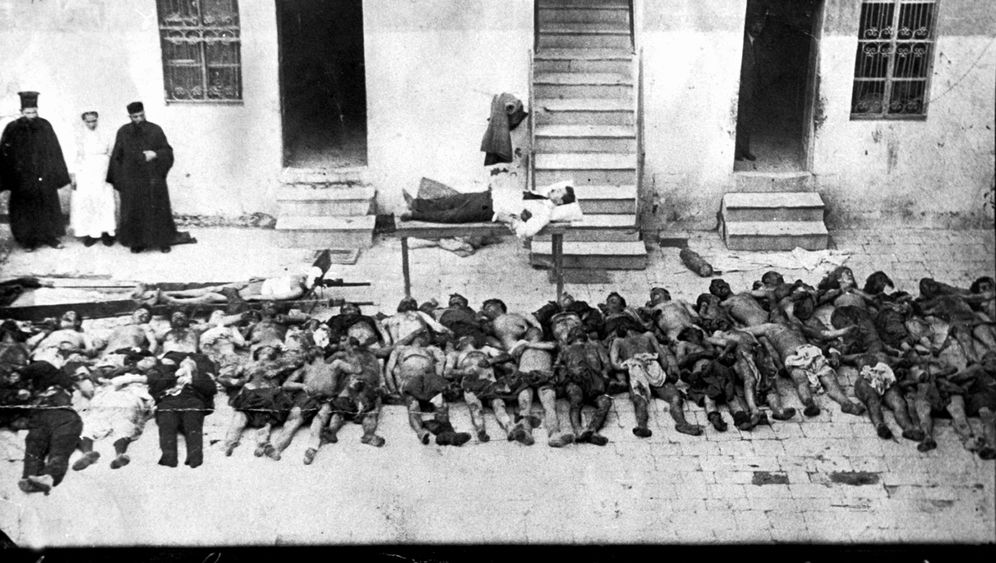
On 24 April 1915, Muslim Turkish authorities of the Ottoman Empire detained 250 Christian Armenian intellectuals and community leaders in the Ottoman capital Constantinople (modern Istanbul). Although there had been many massacres of Armenians in the past, 24 April saw the start of a systematic, well planned, and state sponsored scheme to remove Christians, mostly Armenian, and to a lesser extent Greek and Assyrian, from the Ottoman Empire.

The Armenian Genocide was done under the pretext that they formed a fifth column inside the country after the Ottoman Empire joined the side of German and Austria-Hungary in the First World War. 1.5 million Armenians were murdered or starved to death over the next five years, but most in 1915. The US Ambassador to the Ottoman Empire, Henry Morgenthau, extensively documented the genocide, and routinely called it “race extermination”

Thirty years later, Hitler used the world’s non-reaction to the Armenian Genocide to move ahead with his Final Solution of the Jews and other undesirables.

The Gurkhas Enter British Service

In 1814, the British East Company invaded the aggressive Gorkha Kingdom of Nepal in order to prevent them from distracting the Company from their expansion into the Kingdom of Marathas. During the hard fought Anglo-Nepalese War, the British recognized that their best irregular troops were the wielders of the distinctive inwardly curved knife, the khukuri, whom were actually deserters from the Gorkha Army.

Impressed by their loyalty, courage, stoicism, resilience, and military efficacy, the British formed the Gorkhas into the First Nusseree Battalion on 24 April 1815. By the end of the war (which was fought to stalemate) there was an entire regiment of Gorkhas and an agreement with the Kingdom of Nepal to continue recruitment in the future. Living up their motto “Kayar Hunu Bhanda Marnu Ramro” (Better to die than live like a coward), the Gorkhas quickly formed the backbone of the East India Company’s, and eventually Great Britain’s, Indian Army.

For the next two hundred years, the Gurkhas served faithfully in every conflict involving the Indian or British Army. They were one of the few indigenous units to remain loyal during the Indian Mutiny of 1857. 200,000 served in the First World War, including in the trenches on the Western Front and in the landing at Gallipoli in 1915. At the height of the Second World War, the Gurkhas contributed 250,000 men from their home villages in the Himalayan foothills, which were neither a part of the British Empire nor a protectorate of Great Britain. In 1947, the Gurkha regiments were split between the newly independent Indian Army and the British Army.

Currently 3500 Gurkhas serve in the British Army in the Brigade of Gurkhas. Tens of thousands of young Gurkha men apply during recruitment events in Nepal for the few hundred training slots. They also serve in the armies of India, Brunei and Singapore.

One of my favorite Gurkha stories. From the Second Battle of Monte Cassino:

On the night of 12 February 1944, one of the Gurkha battalions sent out a reconnaissance patrol to identify German positions around the town of Cassino. The small patrol came across six German infantrymen in a house: two awake and alert, and four asleep. The Gurkhas snuck up on the German sentries and slit their throats without waking the others. They then decapitated two of the sleeping soldiers and let the others to slumber so they can find their comrades in the morning.

A friend of mine said of the Gurkhas he worked with in Afghanistan, “They react to contact (with the Taliban) the way my kids react to Christmas morning.”

Jaya Mahakali, Ayo Gorkhali! (Glory to the Great Kali! Gorkhas Approach!) –Gurkha war cry, then and now.

The Second Battle of Ypres: Gas

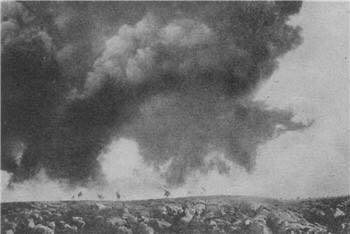
By the end of 1914, the Western Front in the First World War had stabilized, and trenches ran from the North Sea to Switzerland. During the winter the armies dug in even further. A stalemate existed that both sides were desperate to break. On 22 April 1915, the Germans released chlorine gas in front of their trenches and a favorable wind blew it west into the French, Canadian, and British lines at the Ypres Salient. Mild contact with chlorine gas causes irritation to the eyes and chest, a heavy dose causes a person to drown in their own lungs. The gas cloud affected the French sector the worst and soon thousands were killed and tens of thousands more fled to the rear. A five mile gap formed in the Allied lines

Fortunately, the Germans could not exploit the gap fully due to poor staff planning and a lack of reserves to exploit the breach. (The Second Battle of Ypres is one of the great “What if? Moments of history. If they would have broken through, the First World War would have almost definitely ended in a German victory in 1915.) Also, chlorine gas is water soluble. Allied soldiers used improvised masks of cloth, usually handkerchiefs, which soldiers soaked or urinated to protect themselves from the gas. This allowed the Allies to hold the line where the gas was less prevalent. Instead of a breakthrough, the hard fought Second Battle of Ypres raged for almost a month with over 100,000 casualties from both sides.

The attack spawned a chemical warfare arms race that would last for the rest of the war.

The Man in the Arena

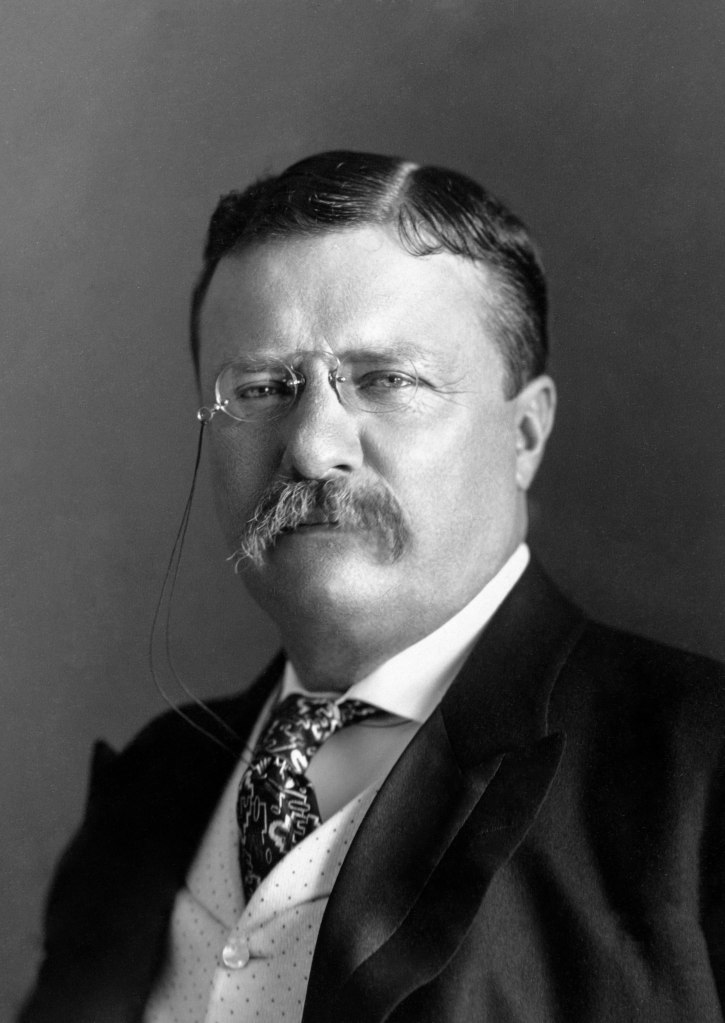
After spending a year hunting in Africa, Teddy Roosevelt and his son Kermit toured Europe in 1910. On 23 April, they arrived in Paris and the former president was asked to speak to a crowd of about two thousand at the University of Sorbonne. He spoke on history, family, war, human rights, property rights, cynics, and most prominently, the responsibilities of being a citizen. The speech was officially titled “Citizenship in a Republic” but is now more commonly known as “The Man in the Arena” speech because of this passage,

“It is not the critic who counts; not the man who points out how the strong man stumbles, or where the doer of deeds could have done them better. The credit belongs to the man who is actually in the arena, whose face is marred by dust and sweat and blood; who strives valiantly; who errs, who comes short again and again, because there is no effort without error and shortcoming; but who does actually strive to do the deeds; who knows great enthusiasms, the great devotions; who spends himself in a worthy cause; who at the best knows in the end the triumph of high achievement, and who at the worst, if he fails, at least fails while daring greatly, so that his place shall never be with those cold and timid souls who neither know victory nor defeat.”

Other great passages:

“Self-restraint, self-mastery, common sense, the power of accepting individual responsibility and yet of acting in conjunction with others, courage and resolution—these are the qualities which mark a masterful people.”

“Indeed, it is a sign of marked political weakness in any commonwealth if the people tend to be carried away by mere oratory, if they tend to value words in and for themselves, as divorced from the deeds for which they are supposed to stand.”

“The poorest way to face life is to face it with a sneer. A cynical habit of thought and speech, a readiness to criticize work which the critic himself never tries to perform, an intellectual aloofness which will not accept contact with life’s realities—all these are marks, not of superiority but of weakness.”

“But with you and with us the case is different. With you here, and with us in my own home, in the long run, success or failure will be conditioned upon the way in which the average man, the average woman, does his or her duty, first in the ordinary, every-day affairs of life, and next in those great occasional crises which call for the heroic virtues. The average citizen must be a good citizen if our republics are to succeed. The stream will not permanently rise higher than the main source; and the main source of national power and national greatness is found in the average citizenship of the nation. Therefore it behooves us to do our best to see that the standard of the average citizen is kept high; and the average can not be kept high unless the standard of the leaders is very much higher.”

“Shame on the man of cultivated taste who permits refinement to develop into a fastidiousness that unfits him for doing the rough work of a workaday world. Among the free peoples who govern themselves there is but a small field of usefulness open for the men of cloistered life who shrink from contact with their fellows. Still less room is there for those who deride or slight what is done by those who actually bear the brunt of the day; nor yet for those others who always profess that they would like to take action, if only the conditions of life were not what they actually are. The man who does nothing cuts the same sordid figure in the pages of history, whether he be cynic, or fop, or voluptuary. There is little use for the being whose tepid soul knows nothing of the great and generous emotion, of the high pride, the stern belief, the lofty enthusiasm, of the men who quell the storm and ride the thunder. Well for these men if they succeed; well also, though not so well, if they fail, given only that they have nobly ventured, and have put forth all their heart and strength. It is war-worn Hotspur, spent with hard fighting, he of the many errors and the valiant end, over whose memory we love to linger, not over the memory of the young lord who “but for the vile guns would have been a soldier.”

Saint George

In 303, George of Lydda, Roman officer, Slayer o’ Dragons and patron saint of England, Ethiopia, Georgia, Malta, Portugal, Serbia, Lithuania, knights, armor (and its ailing but delightfully crazy uncle “armour”), cavalry, chivalry, scouting, domestic animals, damsel rescuing, lawn gnomes, bacon, rugby, Rock and Roll, cool stories, general badassery, medium rare steak, and morning coffee with a ‘lil nip nip was executed by Emperor Diocletian for failing to renounce his faith.

May You Always Slay Your Dragons.

Happy Saint George’s Day!

Radio Caroline

Since the 1920s, the British Broadcasting Corporation had a lock on the radio airwaves in Great Britain. In the early 1960s, the cultural Marxists at the BBC outlawed Rock and Roll. In 1964, club owner and recording producer Ronan O’Rahilly was sick of the BBC refusing to play his music, so he created his own radio station. He couldn’t set it up in Great Britain because of the BBC’s state run monopoly. But there was nothing preventing him from broadcasting from international waters. O’Rahilly hired a boat, crew, and DJs. He broadcast Rock and Roll from the North Sea, always staying three miles from land and outside the jurisdiction of Her Majesty. He named his pirate radio station “Radio Caroline” after JFK’s precocious young daughter.

Ronan O’Rahilly’s Radio Caroline broadcast Rock and Roll to the culturally starved masses of the British Isles. The British Invasion brought Rock and Roll back to America, and Radio Caroline brought the British Invasion back to Britain. Though Radio Caroline was illegal to listen to, by 1965 Radio Caroline had higher ratings than all of the BBC radio stations combined. At the behest of the BBC, the British government tried to scramble O’Rahilly’s signal, steal his transmitter, arrest his DJs, sink his ship, and even seriously considered having him assassinated. But you can’t stop the signal.

In 1967, Parliament passed the “Marine, &c., Broadcasting (Offences) Act” which made it illegal for any British “citizen” to do business with Radio Caroline, which ended Radio Caroline’s ad revenue. Radio Caroline survived, but the act forced the BBC to create BBC Radio 1, its popular music station, to placate demand, lest the British have another revolution.

RIP Ronan O’Rahilly \m/

The Gunpowder Incident

Patrick Henry’s “Give Me Liberty or Give Me Death” speech and subsequent authorization of the expansion to the Virginia militia infuriated Lord Dunmore, the royal governor of Virginia. Dunmore was loathed by Virginians in the best of times, but his temperament just spurred patriots in Virginia to even greater lengths to stand in defiance to the Crown. Virginia patriots amassed arms, powder, ammunition and cannon quickly and in great quantities to outfit the new minute companies. One such cache of gunpowder was located in Williamsburg, Virginia’s capital.

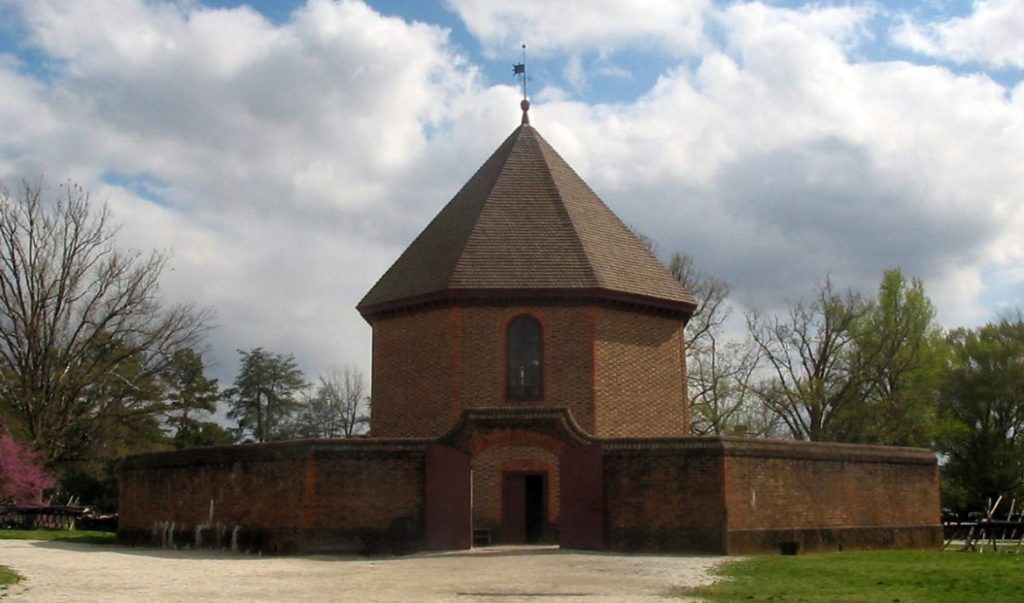
As Israel Bissel was still racing south to bring the news of the Battles of Lexington and Concord to Philadelphia, Dunmore requested and received a detachment of Royal Marines whom he billeted in his mansion. On the night of 20 April 1775, the Royal Marines snuck into the Williamsburg magazine and removed the gunpowder. On their way back, they were spotted. Dispatch riders sped across the city and into the countryside informing everyone that Dunmore was disarming the militias. The Royal Marines loaded the powder onto barges on the James River. The crowd and assembling minutemen were too late to stop the powder from reaching the fleet, so they followed Royal Marines back to Dunmore’s mansion.

The crowd outside the mansion grew large and unruly. Dunmore resorted to arming his servants and prepared for an assault. Only the intercession Peyton Randolph, the Speaker of the House of Burgesses prevented the crowd and the minutemen from storming the estate. Dunmore met the Williamsburg City Council who demanded the return of the powder since it was paid for with colony funds. Dunmore’s seizure of it was used as another example of Crown interference in colonial business. Dunmore then justified seizing the powder to prevent it from falling into the hands of an imminent slave rebellion, but the patriots saw right through the feeble excuse. Cornered, Dunmore offered to pay £330 to Patrick Henry for the powder. Henry accepted, but only if the check was guaranteed by a plantation owner since he didn’t trust the Crown to actually pay. Dunmore agreed and the crowd dispersed.

But by then the damage was done, minute companies were streaming into Williamsburg from all over Virginia. On 22 April a crowd again assembled at Dunmore’s mansion. Virginians still didn’t know what had happened outside Boston, so patriot leaders dispersed the crowd. However afterwards, Dunmore scolded them. He threatened to declare the colony’s slaves free, arm them himself, and “reduce the City of Williamsburg to ashes.” He said, he “once fought for the Virginians” but “By God, I would let them see that I could fight against them.” He wouldn’t have long to wait.

On 29 April, the news of the Battles of Lexington and Concord, and the Siege of Boston had reached Virginia. Patriot leaders wanted to immediately expel the British and royal governor. At Fredericksburg, a thousand Virginia militia had assembled, but Randolph and longtime colonel of the Virginia militia George Washington counseled restraint. However, their prudence did not extend outside Fredericksburg. Henry assembled the militia of Hanover County and marched on Williamsburg. Dunmore forbade anyone from assisting Henry and specifically disallowed cashing the check because Henry “extorted the Crown”. But that wasn’t going to stop Henry. Dunmore fled with his administration and family to the HMS Fowey anchored in the York River. With Dunmore gone and Williamsburg in patriot hands, Patrick Henry departed for Philadelphia to attend the Second Continental Congress.

The Gunpowder Incident prematurely amassed Virginia militia in Williamsburg and the surrounding areas, and prevented Lord Dunmore from properly responding to the news of Lexington and Concord. It took six months for Dunmore to coordinate a response to the American rebels in Virginia, and Dunmore’s men were promptly defeated at the Battle of Great Bridge in December 1775. Because of Patrick Henry’s response to the Gunpowder Incident, no further British military operations occurred in Virginia until 1779. During the critical years from 1775 to 1779, Virginians could focus on supporting the American Revolution elsewhere in the Thirteen Colonies. Dunmore’s £330 deposit was one of the first direct financial contributions to the American Revolution.

Operations K and R: The Extermination of the Czechoslovak Religious Orders

By 1950, the Iron Curtain had fallen across Europe and Soviet control of its satellite states in Eastern Europe was nearing completion. In Czechoslovakia, Communist control of the Czech Parliament was won in the relatively free elections of 1946. Following Socialism’s historical playbook of never giving up power once taken, the Communists seized complete control of the country in a coup in 1948. Power was consolidated, and by 1949, only one institution stood in opposition to the Czech Communists: the Czechoslovak Catholic Church.

Czechoslovakian StB (state security) agents and troops, trained and controlled by the Soviet Ministry of State Security (MGB, predecessor of the infamous KGB, the Committee of State Security), closed down churches and schools, outlawed all religious printed materials, and arrested priest and laity. The Stb engineered show trials to discredit Czechoslovak Catholics and parade them as agents of the Vatican, the Americans, and the British. The most famous show trial was that of the Číhošť Miracle, where 19 parishioners swore that a cross on the main alter moved on its own. The StB brutally tortured the priest to confess that he mechanically linked the alter and pulpit, from where he could control the cross. The show trial failed when Father Josef Toufar died from the torture before testifying that he staged the miracle.

The Číhošť Miracle show trial inflamed Czechoslovak passions, particularly the only remnants of the Catholic Church left in the country: its monasteries and nunneries. The Czechoslovak religious orders had emerged from the state sponsored violence relatively unscathed. They were socially isolated and physically distant from population at large and initially deemed no threat to the state power. However after the death of Father Toufar, the Church was no longer “an opiate of the masses” but a potential source of insurgent political power.

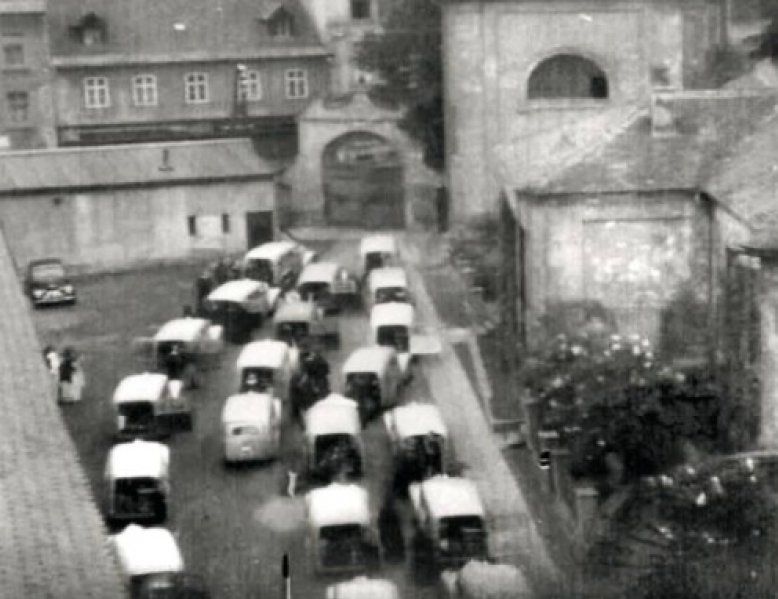
On the night of 13 April, 1950, StB plainclothes agents and troops, “People’s Militia”, and their Soviet handlers launched Operation K (for kláštery, Czech for monastery) to eliminate the monastic system in the country. In one coordinated operation, 75 Czech and 62 Slovak monasteries, belonging to the Salesian, Jesuit, Redemptorist and Benedictine orders, were raided that night. 13 more monasteries were raided later in the week. The monks were loaded onto trucks and sent to concentration camps, if not outright shot. Most of the older monks were not seen again, while the younger ones were worked to death in slave labor battalions. Prominent abbots were found guilty of treason in public show trials. The buildings were looted and the land confiscated for state use. In the most notorious example, the oldest monastery in the country, the Břevnov Monastery in Prague was converted into the Interior Ministry’s Central State Archive. About 2500 monks were killed or imprisoned during Operation K.

Several months later the Communists launched Operation R against Czechoslovak Catholic nunneries. Little evidence (in English, that I can find anyway) exists regarding Operation R, other than it happened and the Catholic nunneries in Czechoslovakia ceased to exist afterwards. The lucky nuns were sent into exile to live in the village of Bílá Voda. The vast majority were never heard from again. One can only speculate as to the nuns’ fate, but the Soviet proclivity of sexual violence toward female “enemies of the state” during and after the Second World War probably provides a clue.

The Shot Heard ‘Round the World

Paul Revere and William Dawes were not the only riders warning the countryside of the British raid, about a dozen people lost to history took up the alarm. Even more did so later in the morning, most famously Israel Bissel who rode from Watertown Massachusetts to Philadelphia, 345 miles, in four days, shouting “To arms, to arms, the war has begun”. The American system of outriders warning of an attack (usually French or Indian) had been in existence since at least Queen Anne’s War, 70 years before. The Sons of Liberty just coopted it for use against the British. Though there were other riders, Dawes and Revere were the only ones tasked specifically to reach Concord.

On the night of 18/19 April 1775, the British sent out patrols to stop the American early warning. They were only partially effective, and when one was captured, more took their place. “The regulars are coming”, sounded throughout the countryside. Both Paul Revere and William Dawes avoided the patrols and reached Lexington just after midnight. They warned Sam Adams and John Hancock and every house they passed. They then departed for Concord. Just outside Lexington, they met Dr. Samuel Prescott, a Concord native who was supposed to show them the way. The British patrols were further out than they thought, and shortly after they met, one patrol scattered the three riders. Revere was captured, Dawes was thrown from his horse and walked back to Lexington, but Prescott made it to Concord. Prescott warned the Massachusetts Provincial Council, though adjourned until May many were still in town, of the impending British raid.

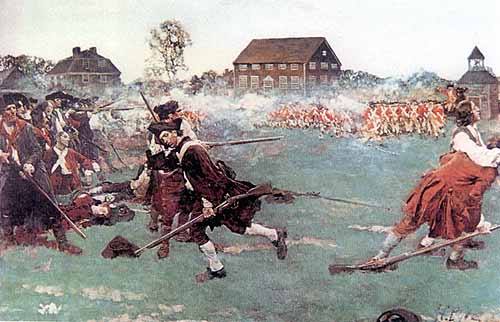
In Lexington, Captain John Parker mustered his minute company whom fully a quarter were his relatives, and sent out men to watch the road from Lechmere Point. After taking roll, they retired to Buckman’s Tavern to await word from the scouts. Five hours later at dawn, Maj. John Pitcairn with the advanced guard of Lieut. Col. Smith’s column entered the town. Parker formed his men in plain sight on Lexington Green but did not block the regulars’ passage to Concord. About 100 spectators formed on the side of the green. As Pitcairn turned off the road instead of continuing on, Parker said, “Stand your ground, men. Don’t fire unless fired upon. But if they mean to have a war, let it start here.”

An officer rode up to Parker’s 77 man company and told them to disperse, as 180 regulars behind him fixed bayonets and continued to advance. The detachment was intent on finding Adams and Hancock, and Parker’s militia was in the way. Parker felt that their stand had shown the regulars that the Americans were serious, and wishing no unnecessary bloodshed, told his men to disperse. But during the tense standoff, a shot rang out from an unknown source. The British fired a volley followed by a bayonet charge which routed Parker’s men. Eight Americans were killed, ten wounded, and one British soldier was slightly wounded. Pitcairn’s men quickly searched Lexington and found nothing (Both Adams and Hancock were in Burlington, Massachusetts at the time). Pitcairn then rejoined Smith’s column and the British continued on to Concord.

As the British marched, they heard shots fired warning of their approach and observed the American minutemen watching them from outside of musket range. The American early warning system was so effective that towns 25 miles from Boston knew of the British advance while they were still unloading boats at Lashmere Point. By the time Smith arrived at Concord, all of Massachusetts knew of the British raid, and thousands of minutemen were descending on the obvious British route of march.

At 8 am, Smith’s column arrived at Concord. 400 Americans were formed up on the hill across the Concord River northwest of town but were not actually in the town. So under the watchful eyes of the minutemen across the river, the British searched Concord. They found some old siege cannon which they disabled and some gun carriages which they burned on the green. The carriage fire spread to the meeting house, which the British assisted in extinguishing. Smith also learned from loyalists of vast stores of powder at Barrett’s Farm, the route to which was blocked by the Americans.

Smith decided to move on to the farm fully expecting to rout the rebels just as his men did at Lexington. But as they approached the Old North Bridge, the British noticed the Rebels also advanced towards them. The Americans saw the smoke from the green and meeting house, and thought that the British were setting fire to all of Concord. The Concord minutemen were determined to stop the firing of their town, and the other minute companies joined them. Fire was exchanged. Canalized by the bridge and faced by superior numbers of Americans, Smith couldn’t force his way to Barret’s Farm.

With a growing number of hostile minutemen across the bridge, Smith realized the grave situation his exhausted men were in. They had been up all night and had already marched nearly 20 miles. Safety was still another 20 miles away along an obvious route. Every minute brought more Americans. Smith ordered a retreat back to Boston.

The march back was not going to be as easy as the march to Concord. Thousands of minutemen were streaming in from all over Massachusetts. They lined the road back to Boston (now known as “Battle Road”) shooting at the British from behind trees and stone walls as they passed. Only the aggressive nature of the troops he commanded saved Smith’s column from complete annihilation. The British light infantry and grenadiers that made up the raiding force were the best soldiers in General Gage’s army. Despite exhaustion, they continually sent out flanking patrols and conducted pulse charges to engage the Rebels and break up any concentrations along the route. Still, hundreds were killed and wounded.

At 3 pm, 19 April, 1775, 17 hours after notification of the mission, Smith’s column returned to Lexington where it met a much needed relief column from Boston. However, the British didn’t tarry long and after a brief respite outside of Munro’s Tavern to consolidate, reorganize, and wait for stragglers, they continued on. More than four thousand American minutemen were in the area, and more on the way.

The column arrived back in Boston at dusk, protected by the guns of the Royal Navy. The British marched 41 miles on 19 April and fought a running battle most of the time. It is estimated that some marched over 50 miles along the way trying to engage the Rebels. Within days, 15,000 American militiamen surrounded and laid siege to the British inside Boston, some from as far away as Connecticut and New Hampshire.

America had just picked a fight with the most powerful country on the planet. Though America didn’t know it at the time, “The Shot Heard Round the Word” at dawn on Lexington Green started a new phase in world history. The American Revolution had begun.

Two If By Sea

By 1775, the British Prime Minister, Lord North, had had enough. He and Parliament had made conciliatory gestures to the troublesome North American colonies twice already. The first by repealing the Stamp Act in 1766 and the second by repealing the Townsend Acts in 1770. He was not going to do the same with the Coercive Acts. In January 1775, North ordered General Thomas Gage, the Governor General of Massachusetts and commander of the occupying army in Boston, to arrest the nucleus of the shadow government, the Massachusetts Provincial Council, who controlled most of the colony outside of Boston. The Massachusetts Provincial Council met in the crossroads town of Concord and was instrumental in raising rebel “minuteman companies” of militia (because they said they were ready to fight at a minute’s notice) to oppose the British. In February 1775, Parliament and King George III officially declared the Massachusetts Colony in a State of Rebellion.

In April 1775, Gage correctly believed that the radical patriot group Sons of Liberty were behind most of the overt acts of rebellion. On 14 April, Gage finally received Lord North’s specific instructions. On 15 April 1775, Gage received intelligence that two of the Sons of Liberty’s most important leaders, Sam Adams and John Hancock, were in Lexington, 12 miles away. The Massachusetts’s Provincial Council had just adjourned until May and Adams had orders to go to Philadelphia immediately. Furthermore, loyalist spies also reported there were cannon, gunpowder, and muskets for the minuteman companies located further up the road at Concord. As he had several times before, Gage organized a column of troops to capture Adams and Hancock before they departed, and seize the stores from the rebels. Every regiment he commanded wanted to take part in the raid. Because the march to Concord was over 40 miles there and back, he assembled his best troops, the light and grenadier companies, from the regiments in his army.

At 9 pm on 18 April 1775, the tireless Dr. Joseph Warren, one of the few remaining Sons of Liberty in Boston, informed William Dawes and Paul Revere to be prepared to ride. Both Dawes and Revere were couriers for the Sons of Liberty, and Revere had even warned Lexington and Concord of the impending raid two days before. But a general alarm to raise the minuteman companies was beyond Warren’s sole authority. The Massachusetts’s Provisional Council required the five members of the Committee of Public Safety to unanimously vote to raise the alarm. Warren was the only member in Boston. Three were staying at the Black Horse Tavern in Menotomy, across the river, and the fourth was in Charlestown. Traveling and gathering them up for the vote would take time and possibly cause a later alert, if the British moved while he was away. He decided to stay and personally oversee the placing of the lanterns in the Old North Church

Dr. Warren was waiting for the British to move before sending the initial signal. Revere had actually coordinated the system two days before but it was left to Warren to actually initiate it. If Revere and Dawes saw one lantern in the steeple, the British raiding force was moving via the Boston Neck; if there were two lanterns, they moved by boat across the Charles River estuary. They would then alert the countryside of the British Army’s movements and raise the minute companies; Dawes by the Neck and Revere by rowing to Cambridge first. The two riders were to meet Samuel Prescott, a Concord native, just past Lexington to make the journey to Concord. Neither Revere nor Dawes were familiar with the roads west of Lexington and Prescott was to be their guide.

The massing of boats and barges was a clear sign that the British were going to cross the estuary. It was only a question of when it was going to happen. Warren, Revere and Dawes did not have long to wait. It seemed everyone knew what was about except the British troops that were going to participate in the battle. About 9:30pm Lieut. Col. Francis Smith, the commander of the raid was finally informed of the mission.

At 10 pm, 18 April, 1775, 700 troops under Smith and his executive officer, Major John Pitcairn, loaded barges off of the Boston Commons. Dr. Warren immediately had two lanterns placed in Old North Church, and Revere and Dawes departed for Lexington and Concord, rousing minute companies along the way. Their routes were not always safe, Gage sent out officers on horseback to patrol the roads to prevent just such a warning. The British landed at Lechmere Point at 11pm and began their march on Lexington and Concord.