The Continental Army

On 23 April 1775, the Massachusetts Provincial Congress authorized the formation of 26 line infantry regiments in order to organize the impromptu army that formed around Boston to besiege the British after their defeat at the Battle of Concord. Connecticut, New York, Rhode Island, and New Hampshire quickly followed suit.

On 14 June, 1775, the Second Continental Congress authorized the recruiting, training, and equipping of ten companies of riflemen, to serve as light infantry, from Pennsylvania, Delaware, Maryland, and New York, with a minimum age of 16, 15 with parental consent. In the tactics of the day, a single light infantry company was part of an infantry regiment made up of ten or so other line infantry companies. The line companies would form the battle line, while the light infantry company would move forward in an open formation, defeat the enemy’s light infantry then disrupt the enemy’s line by sniping their officers and forcing them to prematurely discharge their weapons before the line infantry engaged. Outside of battle the light infantry were the scouts and foragers of the regiment.

By authorizing the light infantry companies which were subsequently attached to various Massachusetts line regiments around Boston, the Second Continental Congress effectively “stealth nationalized” the colonies’ legislatively approved provincial armies. The colonies planned on that eventually, since Massachusetts in particular, wanted help paying for and equipping the army. (The provincial officers hated the new riflemen and complained they were the most I’ll-disciplined, rambunctious, and troublesome men in their formations. Later, in 1776, the original ten companies were reassigned from their colonial regiments to form the 1st Continental Regiment.) Furthermore, the Second Continental Congress specifically named four major generals and seven brigadier generals. The Congress conspicuously left off George Washington’s name, much to the irritation of his rivals, whom they announced as Lieutenant General and Commander of the Continental Army the next day.

This We’ll Defend.

Happy birthday, United States Army!

The Battle of Waterloo: The French Operational Commander, the Prussian Staff System, and Auftragstaktik

In 1815 there were two competing staff systems, the French and the Prussian. Until 1813, everyone used the French system. After their embarrassingly quick defeat in 1806, Prussian generals Gerhard: Von Blucher and Von Scharnhorst, reformed the army and in particular their staff processes. The Prussian General Staff system is roughly the same one we theoretically use today. In short, a commander has a staff of junior officers usually two ranks lower than himself, but sometimes three, who keeps the commander informed of the war fighting functions: operations, logistics, communications, intelligence, information ops etc. And this staff is supervised by an executive officer, chief of staff, 2iC etc who is the senior staff cat, but is still two ranks lower than the commander. Think of it as a wagon wheel: operations is the hub, the other staff sections are the spokes, the 2iC is the rim which keeps everything together, and the commander is the axle that keeps the cart upright and moving in the right direction. (And that’s as far as that analogy goes)

The relative seniority of the commander over the staff was deliberate: it allowed the specialists and star performers to rise to the top and be noticed (the epitome of this were August Gneisenau, Blucher’s Chief of Staff, and everyone’s favorite dead Prussian, Carl Von Clausewitz, the III Corps CoS at Waterloo). More importantly, the system prevented the staff officers that were the same rank as the commander from issuing orders, which was a feature of the French system.

The French system recognized that the largest force multiplier was a commander’s presence on the battlefield. The French system ensured the right decision maker was at the right place at the right time to make the right decision. In the French system, the overall commander, usually Napoleon, came up with the plan, the chief of staff translated it into orders, and an operational commander was assigned to execute it at the operational and tactical level. This freed up the overall commander to concentrate on strategery, influence the operational area through the use of the reserve, and be at the decisive point. (Stop me if this sounds familiar… cough IJC/ISAF… cough) This was very effective when combined with the French corps system: when each corps had a marshal of the same rank as the operational commander, this system provided an amazing amount of flexibility and allowed the subordinate commanders the ease to exercise initiative. In an era where a commander could only influence troops he could physically see and hear, or gallop to, and had trusted subordinates who understood intent, like Napoleon’s marshals, this worked out fine, brilliantly even.

In Prussian terms, the French operational commander was both a commander and operations staff officer (An equivalent today would be FSCOORD/DIVARTY Cdr, a command/staff concept that works for supporting troops, not so much for maneuver troops). The Operational Commander was the connection between the staff, and through the staff to the overall commander, and then the commanders in the field. The big benefit of this was that if a decision had to be made the Operational Commander could make it and he didn’t have to bother the staff or overall commander about it, unlike the Prussian system. He just had to keep them informed, not look for a decision and then wait for an order. This system was in place at the division, corps, and army level. But for this to work, the Napoleons of the world had/have to be hands off, which was increasingly hard to do as the battlefields became larger and subordinates not as talented or trusted. Finally, there are also at least three decision makers at any level: the overall commander, the chief of staff, and the operational commander. This is no problem if orders are clear and everyone understands the plan, and most importantly the intent.

In our Waterloo example, the French system made Ney, Soult, and Napoleon all primary decision makers. This became a problem when Ney attempted to seize key terrain – Quatre Bras, while Napoleon and Soult were at the decisive point – the destruction of Blucher’s Army at Ligny. They eventually “competed” for D’Erlon’s Corps whom were marching between them responding to contradictory orders from four different sources (including Grouchy who was just parroting Napoleon’s orders). Unfortunately for Napoleon, this inherent flaw in the French system was a feature, not a bug. When it worked, and it did most of time during the Napoleonic Wars, the French system worked brilliantly. But when it didn’t, which was rare for the French, it failed catastrophically.

The Prussian system took the personalities out of the system, and placed the responsibility of understanding the immediate situation on the staff, who could then inform their commander, instead of relying on the talent of the commander to intuitively understand everything happening around them. This permitted the primary decision making authority to fall on the commanders at all levels. It allowed commanders to make more informed decisions, but not nearly as fast. The Prussian system is more systems and processes driven than personality driven like the French and sacrifices flexibility for resilience. However, and this is a huge “however”, the Prussians mitigated the relative slowness and rigidity of their staff system compared to the French with a culture of “Auftragstaktik”. Auftragstaktik, roughly translated as “mission tactics” is a culture of trust based on professional competence, situational awareness, and understanding of the commanders’ intent. With Auftragstaktik, subordinate commanders are expected to take initiative and are required to alter their commander’s orders if they are irrelevant to the situation and the accomplishment of the mission warrants it. Auftragstaktik gave the Prussian staff system and its commanders the agility to act upon a situation, without the burden of competing personalities of the same rank, by placing the onus of situation understanding on the lowest level staff and the decision to act on the lowest level commander. Auftragstaktik demands commanders and staffs have “skin in the game”. This responsibility, which good commanders seek out, incentivizes subordinates to support their commander, and more importantly, commanders to support their subordinates. With the lowest level subordinate commander the immediate decision making authority, this also ensured that contradictory orders only happened rarely, as a subordinate commander would only change his own commander’s orders with good reason. At a time when commanders were no longer operating in sight of the armies they commanded, the Prussian system within the context of Auftragstaktik gave them a resilience and agility that the personality driven French armies lacked.

As Rocky pointed out, “It’s not how hard you hit, it’s how hard you can get hit and still keep going that matters”. And that’s exactly what happened when the French failed to destroy the Prussian Army at Ligny. The Prussians bounced back from their defeat, while French dithered about on 17 June, thus setting the conditions necessary for the French defeat at Waterloo.

The Battle of Waterloo: Prelude

The 26 men chosen over the years by Napoleon to be Marshals of France were a collection of talent and ability rarely seen in history. Only the Diadochi, the Apostles, Genghis Khan’s generals, the viziers of Suleiman, the Sun King’s advisors, and the Founding Fathers occupy the same historical pedestal. But of those first 25 marshals, only seven still stood with Napoleon in 1815. On 3 June, 1815, Napoleon needed one more, so he promoted Emmanuel, Count de Grouchy, to the highest rank in the French Empire. Grouchy was an outstanding, aggressive, and very experienced cavalry commander of over thirty years who was more than equal to the other members of France’s most exclusive club.

The Marshals of France were Napoleon’s handpicked “go-to” men to get the job done. And unlike preceding generations, their promotion was strictly due to merit and military efficacy: Someone might be a general based on political considerations or birth, such as Napoleon’s little brother Jerome, but never a Marshal. Napoleon’s Marshals of France included sons of cobblers, barrel makers, priests, and nobles; and most were former privates, NCOs and junior officers who meteorically rose through the ranks. In 1815, although he only had eight, three of his best stood with him and they were given his most important tasks:

Louis Nicolas Davout, the “Iron Marshal” and the greatest of Napoleon’s commanders, had never lost a battle and seemed to intuitively know Napoleon’s intent. In 1815, Napoleon desperately wanted him in the field, but looked to the future and appointed him Minister of War. Davout would oversee the precarious political situation in Paris, command the National Guard, and raise the armies necessary to restore the French Empire.

Louis Gabriel Suchet, Napoleon’s master of counter insurgency and his most successful commander in Spain, was a relatively new Marshal. However, Suchet was one of Napoleon’s most dependable subordinates, and at his best with an independent command. In 1815, Suchet was given responsibility for all of southern France, in particular subduing the Royalist uprisings in the Riviera and preventing an Austrian invasion through the Alps.

Michel Ney, the “Bravest of the Brave” was Napoleon’s operational commander and was responsible for the left wing of the French Army.

Louis-Alexandre Berthier was Napoleon’s Chief of Staff and Right Hand Man. For almost twenty years, Berthier was responsible for translating Napoleon’s vision into practical written orders to units. Napoleon considered him indispensable… But in 1815, he was tired of the endless wars and sided with Louis XVIII. Napoleon was devastated, and needed a replacement.

Nicolas Soult would attempt to fill Berthier’s shoes. Soult was a brilliant administrator, capable tactician, and was Wellington’s nemesis in Spain. He was the natural pick to replace Berthier, if he could be replaced. Nonetheless, for a man accustomed to independent command Soult seamlessly took control of the essential position of chief of Napoleon’s staff. Soult’s staff was the nerve center of the 120,000 strong French army.

On 14 June 1815, the army sat just on the border of Belgium, and was split between only two other Marshals, Ney and Grouchy, with the Imperial Guard under Napoleon’s direct control. That night, Soult issued the orders for the French Army to unexpectedly strike at the seam between Wellington’s British-German-Belgian-Dutch Army and Blucher’s Prussian Army. Napoleon wanted to use his advantage of the center position to force the British to retreat toward the coast where they were supplied by the Navy, and the Prussians to retreat toward their base of supply in Germany. After which they would be isolated and destroyed.

Despite the lack of Berthier, Davout, and Suchet, it nearly worked.

Pegasus Bridge

At exactly 1214 BST (British Standard Time, 7:15 pm EDT) on Tuesday 6 June 1944, six Halifax bombers cut tow lines for six gliders full of British paratroopers as part of Operation Deadstick to seize bridges over the Orne River and the Caen Canal outside the town of Bénouville in Normandy. The capture and successful defense of the two bridges would prevent any German counterattacks into the eastern flank of the vulnerable beachheads and force any German reinforcements to cross upstream at Caen and travel six miles out of their way.

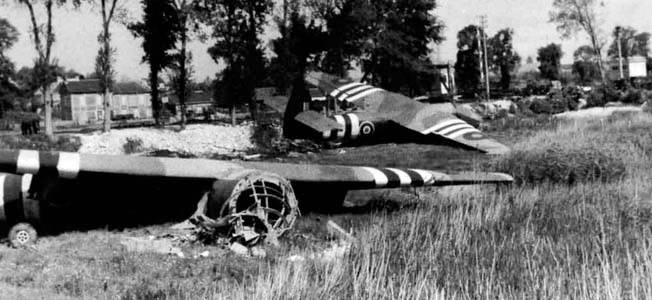
The night was dark and glider pilots were flying blind, strictly by altimeter, airspeed and stopwatch. They had to put Major Jon Howard’s 181 man assault force as close as possible to the bridges without killing them. This was a tough task in a plywood Horsa glider with a penchant for breaking up on impact and known to the men as “Hearses”. This was particularly true of Horsas that carried equipment: a direct impact more than likely caused the equipment to become unstrapped and fly forward. If that happened, the lucky pilots were just tossed through the windshield, most were crushed.

Howard’s needed his pilots to put his men as close as possible no matter the danger because surprise was paramount. He needed to seize the bridges intact. A destroyed bridge would also prevent the Germans from crossing, but it would also prevent the Allies from crossing in the inevitable drive further into France. In addition to his reinforced company of Oxfordshire and Buckinghamshire (“Ox and Bucks”) Light Infantry, he had 20 Royal Engineer sappers to clear demolitions from the two bridges. Howard’s mission was so critical that it was the first of the invasion after the pathfinders, and a full hour earlier than the rest of the 6th Airborne Division, whose patch was a winged Pegasus.

At 1216, the Horsa gliders crash landed at 90 miles per hour and stopped near their objectives, five of the six next to the bridges. Staff Sergeant Jim Wallwork, Howard’s pilot expertly penetrated the wire surrounding the bridge but the landing was so hard, it knocked everyone out, and sent him and his copilot through the windshield still in their seats. The second glider also broke apart, and knocked out most of men. However, the pilot SSgt Oliver Bland was awake and coherent. He started kicking the paratroopers awake and when one complained he was wounded said, “Piss off. We’re here. Now do what you’re paid to do.”
Surprise was complete. The third and fourth gliders landed without issue. However the fifth landed in a pond and one soldier L-Cpl Fred Greenhalgh was thrown out of the glider, knocked unconscious and drowned before he was found. Greenhalgh was the first casualty of Operation Overlord. The rest of the men poured out and stormed the bridge after destroying a German machinegun with a direct mortar hit.

The operation went quickly once the men were out of the gliders. The fifty defenders were mostly Polish, Russian, and French prisoners who were given a choice to either join the Wehrmacht or get sent to a concentration camp. Some of the conscripts even attempted to surrender to still unconscious paratroopers in gliders that landed on top of them. Only the German officer and NCOs fought back. By 1219, the Orne River Bridge was secured without firing a shot and the Caen Canal Bridge was being overwhelmed. Howard’s only other casualty in the initial operation was Lt Den Brotheridge who was shot leading the final assault across the Caen Canal Bridge. At 1226, the sapper reported the bridges were secure, and Howard ordered the success code words “Ham” and “Jam” broadcast until they were received, which only happened an hour later.

Howard’s task wasn’t complete. He had to hold the bridges until he was relived, and he had no idea when that would happen. The first German counterattack came an hour later in the form of two Mark IV tanks attached to a platoon of infantry from a panzergrenadier battalion of the 21st Panzer Division, the only panzer division engaged on D-Day. The Ox and Bucks did not have any anti-tank weapons except one cumbersome PIAT launcher and three rounds. Fortunately, the first round struck the ammunition rack of the lead tank and it exploded for several hours, blocking the intersection. The Germans assumed there were 6lb anti-tank guns and a battalion of infantry guarding the bridges, not 179 men with few heavy weapons. The delay for more men and tanks probably saved the bridgehead.

Reinforcement for Howard came at about 0200 with 200 men of the 7th Parachute Battalion (including Richard Todd, who would play Howard in the movie The Longest Day), the rest were scattered over Normandy along with Howard’s missing glider. German Panzergrenadier counterattacks started in earnest at 0300. They captured Bénouville but failed to cross the bridges. Nonetheless, Howard’s positions were exposed to mortar and machinegun fire and limited only by the amount of ammunition the Germans had with them. Dawn brought a new threat, snipers, which made movement impossible in the small perimeter. The Germans attacked with two gunboats coming up the canal form Ouisterham. One was destroyed with the PIAT and the other withdrew. The Luftwaffe even made a rare appearance, dropping a bomb on the canal bridge which failed to explode.

By the afternoon, three of Howard’s platoons were led by corporals and there seemed no end to the Germans. In a desperate attempt to gain some breathing room he led a counterattack to clear the Germans from Bénouville which was largely successful. A newly found crate of Gammond bombs no doubt the trigger for the assault. Just after midday, the Germans launched a coordinated attack of almost entire panzer grenadier regiments, but they were spotted enroute and broken up by Allied air attacks and artillery from Juno and Sword Beaches.

At 1330, Howard’s men heard the distinct sound of bagpipes. They were from Billi Millin, Lord Loat’s personal piper who arrived with the lead elements of the 1st Commando Brigade, with a few tanks gathered along the way. The Orne River bridgehead was the furthest British penetration on 6 June.

The Caen Canal Bridge, renamed Pegasus Bridge, and the Orne River Bridge also renamed but to Horsa Bridge, remained in Allied hands for the rest of the Normandy campaign.

The Battle of Waxhaws and Tarleton’s Quarter

In the autumn of 1779, the failed Franco-American invasion of Georgia saw the death of popular American general Casimir Pulaski in the American defeat at the Siege of Savannah. Sensing that they could bring the Southern Colonies back into the fold, the British invaded South Carolina in the spring of 1780. The Continental Army under Benjamin Lincoln withdrew to Charleston to secure America’s most important city in the South. Lincoln’s Southern Army was surprised and defeated at Moncke’s Corner and Lenud’s Ferry which cut Charleston off. On 12 May, 1780, Lincoln surrendered Charleston and 5000 men in arguably America’s worst defeat in the American Revolution. British Commander-in-Chief Sir Henry Clinton then cleared Patriot strongholds in Georgia and South Carolina. By mid-May, Patriot sentiment in the Southern Colonies was at its lowest, and its leaders hid from Loyalists who flocked to the British.

The only organized American force left in South Carolina was the 380 men of the 3rd Virginia Detachment under Lieutenant Colonel Abraham Buford. (He was the great uncle of Brigadier General John Buford of Gettysburg fame.) The 3rd Virginia was a composite force of men from several Virginia regiments with attached artillery. Buford’s 3rd Virginia was the advanced guard of Baron de Kalb’s relief force sent by Washington to break the Siege of Charleston. When Lincoln surrendered, the 3rd Virginia, along with some dragoons who escaped Charleston, withdrew back towards De Kalb. On 29 May, Lt Col Banastre Tarleton’s British Legion caught up to Buford at Waxhaws on the border with North Carolina.

Tarleton’s British Legion was a combined arms provincial regiment consisting of infantry, cavalry, and light artillery formed from Philadelphia and New York loyalists. The 450 strong British Legion was known for their distinctive green uniforms, and the ruthlessness and tenacity with which they fought. The infamous British Legion exemplified the idea that the American Revolution was America’s first civil war. Tarleton had defeated the Americans at Moncke’s Corner and Lenud’s Ferry, and looked to do the same to Buford at Waxhaws.

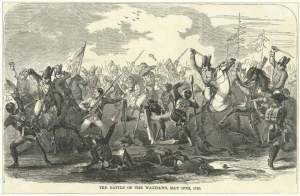
Buford couldn’t run, so he formed a battle line. Tarleton, unwilling to wait for his infantry and artillery, who were still far to the rear, charged his cavalry at Buford. The Continental’s single volley was insufficient to stop the charge and Buford’s line broke. With no way to escape the horsemen, many of the Americans surrendered, asking for “quarter”, or mercy. Recognizing the inevitable, Buford sent a white flag to Tarleton to formally surrender his force. However, before it could arrive Tarleton’s horse was shot out from under him. Tarleton’s men saw their commander go down, and became enraged. They refused Buford’s surrender and massacred any Patriots still on the field, including the prisoners. Though Tarleton was trapped beneath his horse and couldn’t restrain his men, it probably wouldn’t have mattered. The British Legion was notorious for their brutality, and Tarleton was already reprimanded for their conduct at Moncke’s Corner. As commander, Tarlton was responsible for his men’s actions, and the British Legion’s failure to protect its prisoners became known as “Tarleton’s Quarter”. Few Patriots would willingly surrender to the British in the South thereafter. One of Lord Cornwallis’ aides wrote that “the virtue of humanity was totally forgot” at Waxhaws.

In a single engagement, Tarleton and the British Legion undid years of British diplomacy, goodwill, and victory in the South. News of the Waxhaws Massacre spread like wildfire and “Tarleton’s Quarter” became its rallying cry. Volunteers and fence sitters across the Southern states flocked to the Patriot cause, and most Loyalists stayed home. In less than a month, Patriot militias and partisans sprung up throughout the Carolinas and Georgia. Tarleton’s Quarter directly resulted in the rise of Patriot leaders Thomas Sumter, Francis Marion, Andrew Pickens, and Elijah Clark, among many more, whose partisans made the South untenable for the British. News of the Waxhaws massacre brought east the “Overmountain Men”, Patriot militias west of the Appalachians, who decisively defeated the loyalist militia at King’s Mountain, ending any chance for the British in the Southern colonies.

With an unfriendly countryside in the Carolinas, Lord Cornwallis was forced north into Virginia after attempting to destroy the new Continental Army under Nathanial Greene. Cornwallis sought refuge at Yorktown.

A local of Waxhaws, Scots-Irish widow Elizabeth Jackson, was horrified at the needless bloodshed by the British on 29 May 1780, which happened practically on her doorstep. She encouraged her 16 and 13 year old sons, Robert and Andrew, to join the Patriot militia. Andrew went on to be the 7th President of the United States.

The Battle of Fort San Carlos

In 1778 and early 1779, American George Rogers Clark seized British forts and trading posts at Kaskaskia, Cahokia, and Vincennes (in today’s Illinois and Indiana) in the Old Northwest with the ultimate objective of capturing Detroit. In June 1779, Spain entered the war against the British. From their trading post at St. Louis near the confluence of the Mississippi and Missouri Rivers, the Spanish supplied arms and ammunition to Clark and the Americans which prevented the British from retaking the area. The British decided to strike directly at St. Louis.

St. Louis was the administrative capital of Upper Spanish Louisiana, but it was little more than a village of 900. The lieutenant governor of Louisiana, Captain Fernando de Leyba had only 29 regulars of the Spanish Colonial Louisiana Regiment, and about 150 militia consisting of French, Spanish, and Creole citizens of the town, along some friendly Indians and African slaves. His force was not nearly enough to repel a determined assault. In March 1780 Leyba was warned by a fur trader about an attack, and learned that his superiors in New Orleans could not spare any additional troops for St. Louis’ defense. Leyba’s and St. Louis’ townspeople financed the defenses themselves. Leyba appealed to French fur trader François Vallé, who gathered another 150 French militia from those who didn’t respond to Leyba’s call to arms. Leybas and Vallé planned to build four great towers connected by a trench to protect the town, but when the British and their Indian allies arrived in late May, only the northwest tower and the trench were completed.

The plan to seize St. Louis was actually spawned in London, and confirmed that the British government had no concept of the vast distances involved on the North American frontier. British militia captain Emanuel Hesse managed to gather a force of about 1000, mostly Canadian fur traders whom he promised exclusive rights, and Indians marginalized by the Spanish. The Sioux, Menominee, Chippewa, Winnebago, Sauk, and Fox Indians had been on the receiving end of Spanish policies of arming their neighbors to fight against them. Hesse promised them revenge. They gathered in Prairie du Chien (in today’s Wisconsin) and Chippewa war chief Matchekewis took charge of the Indians. When Hesse and Matchekewis arrived outside St. Louis, they sent 300 warriors to fix Clark at Cahokia to prevent him from coming to Leyba’s aid.

When the warning shots sounded the alarm on the morning of 26 May 1780, Leyba gathered everyone he could inside of St. Louis, and his men in the trenches. The round and squat stone tower at the northwest corner of the town was the centerpiece of his defense. Dubbed “Fort San Carlos” after the king of Spain, King Charles III, the fort housed all of Leyba’s cannon. Leyba had four four pound cannon and two six pound cannon.

Hesse and Matchekewis tried rushing the town because they knew they could never hold the Indian coalition together long enough for a siege. The Indian warriors charged across the open fields opposite the trench and Fort San Carlos into the waiting Spanish guns filled with French lead from one of Vallé’s mines. The cannons of Fort San Carlos were especially effective. Although the Sauk and Fox had infrequently encountered muskets before, they had never encountered cannon. The massive eruptions terrified the Sauk and Fox and they immediately deserted Hesse. The direct assault failed, and there was no way to convince the Indians of another try. Hesse then attempted to force the Spanish to come out and fight. He had prisoners taken from the outlying farms tortured in full view of the town just outside of the range of Fort San Carlos guns. Leyba convinced his soldiers and townspeople to wait it out, and not sortie. Hesse’s force melted away that night once it was obvious they couldn’t take the town without another direct assault. George Rogers Clark defeated the Indian force sent to Cahokia the same day.

The Battle of Fort San Carlos was the only American Revolutionary War battle fought west of the Mississippi River. The British defeat ended the possibility of further British and Indian alliances in the Old Northwest for the rest of the war. With the trading post at St. Louis secure, George Rogers Clark secured the Old Northwest for the nascent United States of America. With the west bank of the Mississippi under Spanish control, and the east bank under American control, the British could not prevent the Old Northwest from being ceded to the United States in the Treaty of Paris in 1783. The Spanish victory at the Battle of Fort San Carlos ended the possibility of the Appalachian Mountains being the western border of the United States after the American Revolution.

The Raid on Rembertów

Ever since the Red Army arrived on Polish soil in 1944, the Soviets raped, looted, and murdered their way across the country. The largest Polish underground resistance movement, the Home Army, turned from fighting German socialists to fighting Russian socialists. At the Yalta Conference in February 1945, Churchill made the same mistake Chamberlain did seven years previously and trusted a dictator. Stalin broke every pledge he made at Yalta, including allowing free elections in Poland, and power sharing between the American, French and British backed Polish Government-in-Exile and the Soviet puppets, the Polish Communists. The Soviet secret police, the NKVD, arrested any Pole even tangentially associated with the Polish Government-in-Exile or the Home Army. The detainees were placed in repurposed Nazi camps. Those that survived the torture, starvation, neglect, and interrogations at these camps were packed into cattle cars and sent east to the gulags, where most were never heard from again.

NKVD Special Camp No.10 near the town of Rembertów outside Warsaw was a former German labor camp for Soviet POWs. In May 1945, No. 10 was the final stop in Poland before prisoners and detainees disappeared into the Siberian wilderness. Since the camp was visible from the town of Rembertów, the guards ordered the prisoners around in rudimentary German to disguise from the townspeople that the prisoners were Poles. The ruse didn’t work, and the townspeople worked with the Home Army to free the prisoners. Many of the prisoners were high ranking Home Army and Exile leaders, and the next scheduled transport was 25 May.

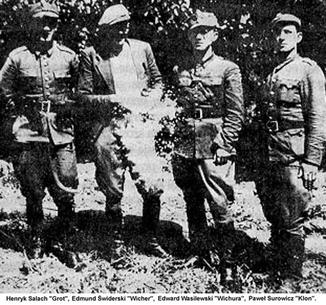
Disguised as Polish Communist Army soldiers, Home Army soldiers under Captain Walenty “Młot” (The Hammer) Suda reconnoitered the camp. The raid to free the prisoners was tasked to Lieutenant Edward “Wichura” (The Gale) Wasilewski and his reinforced platoon of 44 heavily armed fighters.

On the night of Saturday 20 May 1945, the townspeople of Rembertów along with some prisoner’s relatives brought the guards some booze, and threw a party in the town for the camp commandant. With most of the guards and camp administration drunk, Suda executed a textbook raid on Special Camp No. 10 with security, breach, and assault groups. The raid was a complete surprise. The only casualties were three Home Army wounded, and 40 prisoners killed when they were caught in a field trying to escape into the woods. In less than 25 minutes, 100 sick and wounded prisoners were spirited away in two trucks, while somewhere between 800 and 1400 Polish prisoners escaped through Suda’s breach.

The Raid on Rembertów escalated the Polish resistance to the Soviets to an all-out civil war between Polish Communists and the Soviet Union and the “Cursed Soldiers” of the Home Army and the Polish people. Prison raids were a favorite tactic. For the next 18 months, 150,000 Home Army and resistance partisans fought two million Red Army soldiers, 50,000 NKVD agents, and 30,000 Polish communist militia. The Poles fought on alone without any support from their former allies in the West. The last of the Cursed Soldiers were killed or deported by October, 1946.

The Great Siege of Malta

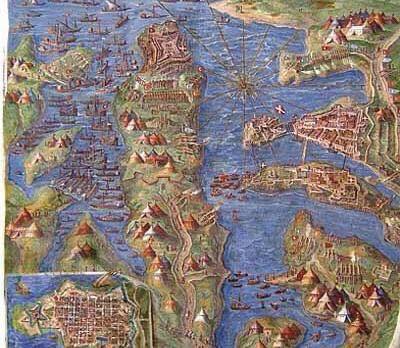
After the capture of Constantinople in 1453, the Ottoman Turks took up the banner of Sunni Islam and their jihad exploded across Europe, Asia, and Africa for the next 100 years. By 1565, Ottoman expansion by land had slowed considerably. After conquering the Balkans, the Ottomans ran into the powerful Hapsburg Empire and Polish-Lithuanian Commonwealth to the north. To the south lay the Sahara Desert and jungles of Central Africa. And to the east were the powerful Shia Safavid Persians. These obstacles required more deliberate preparations. Only to the West, via the Mediterranean Sea, would an advance prove relatively easier. In 1564, the greatest of the Ottoman sultans, Suleiman the Magnificent, authorized the seaborne invasion of Italy.

The Eastern Mediterranean was already an Ottoman lake, but to cut off Italy from Hapsburg Spain (flush with gold from the New World) required the domination of the Western Mediterranean. Once done, the isolated warring city states and petty kingdoms of the Italian peninsula would be easy prey. There was only one problem: the tiny island of Malta. Malta was situated in the narrowest part of the Sea between Sicily and Tunisia, which blocked any real access for large fleets to the West. Malta was like a fishbone stuck in the throat of the Mediterranean, doubly so because it was the possession of the Knights of St. John of Jerusalem, or the Knights Hospitaller, the last of the crusading orders.

The Knights of Malta, as they were known, were Christianity’s rear guard in the disastrous crusades of the last 500 years. Created to protect Christian pilgrims in the Holy Land during the First Crusade, they were at the forefront of every major battle and present at every major retreat. They were thrown out of the Holy Land, off the island of Rhodes, and found their new home on the island of Malta, from which they continued the fight against Muslim expansion.

In the sixteenth century, the Knights of Malta no longer went to war on horses, but in galleys. The white cross on blood red background was a feared sight to Ottomans, whose warships were given no quarter, and merchant ships were turned over to their newly freed galley slaves (which invariably meant the slaughter of the Muslim crew). Moreover, they were on the forefront of sixteenth century military efficacy. The Maltese Knights blended a unique mix of Western land technology and Eastern naval technology. Though few in number, they were the Pope’s and Christianity’s first and only reliable defense against the Ottomans in the Mediterranean.

In May 1565, the Knights of Malta were on their own. Their leader, the indomitable 71 year old Jean de La Valette amassed 700 Maltese Knights, 600 Spanish and Italian knights, 2700 men at arms, and 3000 armed Maltese civilians to defend island. They occupied the three forts, Fort St. Michael, Fort St. Angelo, and the exposed Fort St. Elmo, that guarded the all-important harbor on the north side of the island (Valetta Harbor today). On 18 May 1565, La Valette’s archrival, the Ottoman corsair admiral Dragut-Reis, arrived off Malta with Grand Vizier Mustapha Pasha and 213 ships and 48,000 warriors, including 8000 of the Sultan’s own Janissaries.

The last land battle of the Crusades had begun.

The Battle of Arras and the Dawn of the 88

On 20 May 1940, the Germans had broken through the Allied lines and were racing to the channel. In order to slow their advance, the British Expeditionary Force launched a counterattack into the German flank, more specifically the flank of the 7th Panzer Division, led by Generalmajor Erwin Rommel.

Rommel’s panzers were having a great time tearing apart French headquarters, supply units, and routing withdrawing French units, and was hell bent on reaching the coast. He was taken completely by surprise with the BEF’s attack. Moreover, the 200 Czech made Pz38, and German made PzII and PzIV tanks that made up his division were no match for the 70 British Matilda heavy tanks. The guns of the German tanks simply couldn’t penetrate the Matilda’s armor and Rommel suffered heavy losses.

In desperation, Rommel ordered his 88mm antiaircraft guns to fire on the British tanks. The 88mm was designed to reach bombers at high altitudes and its high velocity round proved to be devastating against the British armor.

The famous (or infamous) “88” proved to be Germany’s most effective general purpose artillery piece throughout the war, whether in an anti-tank, anti-personnel, or anti-aircraft role. It was the bane of the Allies’ existence and redefined German armored tactics for the rest of the war.

The USS Stark

During the Iran-Iraq War from 1980-1988, a low level parallel naval conflict in the Persian Gulf, known as the Tanker War, was waged where each side tried to sink as many of their adversary’s oil tankers as possible. Iran relied exclusively on tankers to export its oil which was its sole source of funding for the war. Iranian mines, and Revolutionary Guard small boat attacks and airstrikes forced Iraq to export most of its oil via pipelines to friendly Saudi Arabia. However, Iran expanded its attacks to neutral flagged ships of those countries friendly to Iraq, such as Kuwait, Saudi Arabia, and the UAE, to intercept Iraq’s oil. Along with the British and French, the US deployed a Mid-East Task Force to the Persian Gulf to protect neutral flagged ships from both Iranian and Iraqi attacks.


On 17 May 1987, a US Navy Oliver Hazard Perry class frigate, USS Stark FFG-31, sailed on a routine patrol in the Persian Gulf just outside of Iraq’s declared war zone, as part of the Mid-East Task Force. About 1900 that night (7 pm) a joint US-Saudi Arabian E-3C Sentry aircraft acquired what it thought was a French made Iraqi F-1 Mirage but it was actually a militarized business jet converted into a long range reconnaissance plane and armed with several air to surface missiles. The Sentry passed the contact off to the USS Stark at 2055. The plane was more than 200 miles out.


The Stark knew about the incoming aircraft for fifty minutes at that point, flipped on her air search radar, and belatedly acquired the aircraft after wrestling with several false reports of a surface contact nearby. (Turning on a powerful radar like the SPS-49 makes the ship a big target for surface to surface missiles.) Just before that, the electronic warfare officer (EWO) went to get a cup of coffee. The Stark’s tactical action officer (TAO) in the combat information center (CIC) ordered the comms duty officer (the acronym for that is insane) to wait on hailing the approaching aircraft as it looked as if the plane would pass benignly by. As the unidentified aircraft continued to approach, the TAO ordered the weapons control officer (WCS) to go find the EWO because his console controlled the chaff (“chaff” are small metal strips launched into the air to confuse incoming radar lock missiles) and was one of the only two stations in the CIC where an incoming threat could be tracked and a weapon assigned (guess where the other one was…). This action left both the EWO and WCS stations vacant, though the ship’s executive officer did enter the CIC on administrative business, and occupied the WCS’ station to observe the TAO while he waited.


At 2104, the TAO gave permission to the comms duty officer to hail the aircraft, presumably because the XO was watching. The aircraft did not respond, and turned slightly toward the Stark to further close the distance, though this was missed by the air tracker watching the radar. At 2108, the Stark tried communicating with the aircraft again, which was 32 nautical miles out and well within range of known Iraqi and Iranian air to surface missiles, and again received no response.


As the Stark was futilely trying to contact the aircraft a second time, the Iraqi pilot launched his first French made Exocet missile. After another minute inputting data into the fire control and locking on a second missile, he launched another Exocet. He was less than twelve miles out.


The Exocet (French for “Flying Fish”) flew across the Persian Gulf three meters above the water at nearly Mach one. As “sea-skimming” missiles, they were never picked up by the air-search radar, and the only stations with the capability to detect the incoming threat were vacant with one’s operator getting coffee, and the other looking for him.


At 2109, the TAO ordered a young ensign to occupy the WCS’s console to activate the weapon systems and the fire control radar. This included a young sailor running topside to manually turn on the chaff launcher, which was completed and probably saved the sailor’s life. As the young ensign jockeyed with the intimidating executive officer at the WCS station, a lookout topside using a pair of binoculars and Mark 1 Eyeballs spotted a white glow on the horizon and spoke into his mic “Missile Inbound Missile Inbound”. The first Exocet struck the USS Stark four seconds later.


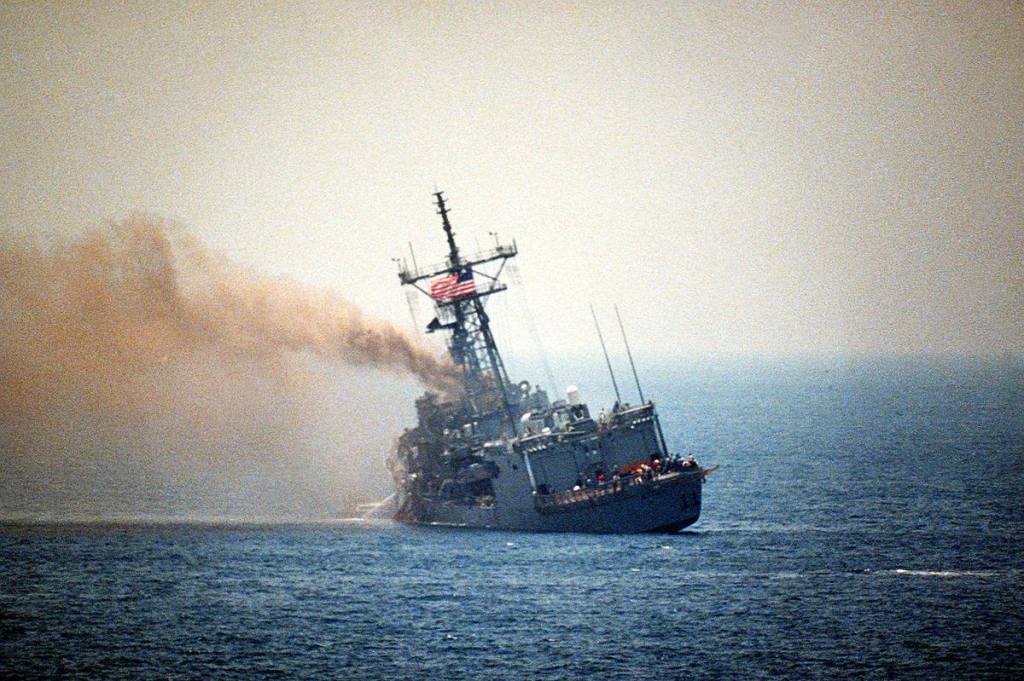
It penetrated the hull just below the CIC but didn’t explode. Its remaining fuel spread fires throughout its path into the ship, particularly in the petty officers quarters, where it came to lie. The Stark’s luck however would not repeat: 30 seconds later, the same lookout said, “inbound missile, port side… all hands brace for shock!”; the second missile struck eight feet forward from the initial hit, and exploded. 29 sailors were killed instantly, many in their sleep or burned to death shortly thereafter. Eight died later of their wounds or were lost at sea. Twenty more were wounded.


From aircraft acquisition to detonation was just 14 minutes. From the first hail to detonation was less than four minutes.

The Stark never fired any of her weapons. The Perry class frigates are primarily surface combatants or escorts conducting anti-submarine warfare, activities for which they are admirably equipped. They rely on other ships, or preferably planes, for wide area anti-aircraft coverage. They possess point air defense weapons i.e. self-protection only, in the form of the 20mm Phalanx CIWS (Close In Weapons System, a giant Gatling gun) for just such incoming threats. However, the system was down with parts on order, and the crew mistakenly believed they couldn’t calibrate the auxiliary targeting system except in an approved gunnery area. The CIWS was never activated and remained on “stand-by mode”, even though it was operational. Furthermore, there was confusion as per the rules of engagement/readiness condition – The CIC crew believed they could not fire unless fired upon, which was not the case. They could have defended themselves any time after the plane didn’t respond to queries and continued to approach. (Condition III Yellow vs Condition III White, or for US Army folks, roughly the difference between Yellow Tight and White Hold).


If the first missile would have exploded, the USS Stark would have been a catastrophic loss. As it was, “only” a 10’ by 13’ flaming hole was bored into the ship. The fires created by the missiles destroyed the storesroom, the berths, the small postal room, and eventually the CIC. The damage created a severe list which was counteracted by reverse flooding to keep the hole above the waterline. However, the essentially Second World War damage control techniques barely kept the 3000 degree fires and list from sinking the ship. The fires were twice as hot as needed to melt the bulkheads. One third of the crew was incapacitated, and there were simply too many tasks needed to be done. Furthermore, the water used to fight the fires threatened to capsize the ship despite the counter flooding. This fate was avoided by the time consuming and difficult process of sledgehammering holes in the aluminum bulkheads to redistribute the water. The Stark had no modern rescue equipment such as cutting torches or Jaws-of-Life. Only the timely arrival of the destroyer USS Waddel several hours later prevented the exhausted and wounded crew from succumbing to the list and flames. The Stark was further aided by the USS Conyngham who departed Bahrain with only a third of her crew: the rest were on shore leave and couldn’t be found. The fires raged for 24 hours. It was only the combined effort, ingenuity, and perseverance of the three crews that saved the Stark. The next day they managed to escort the stricken ship back to port.


Saddam Hussein’s Iraqi government initially blamed the US for violating the declared war zone, but when confronted by conclusive evidence to the contrary, apologized for mistaking the Stark for an Iranian tanker. The attack on the USS Stark was the first incident in the increasingly larger American involvement in the Tanker War.