The Twist

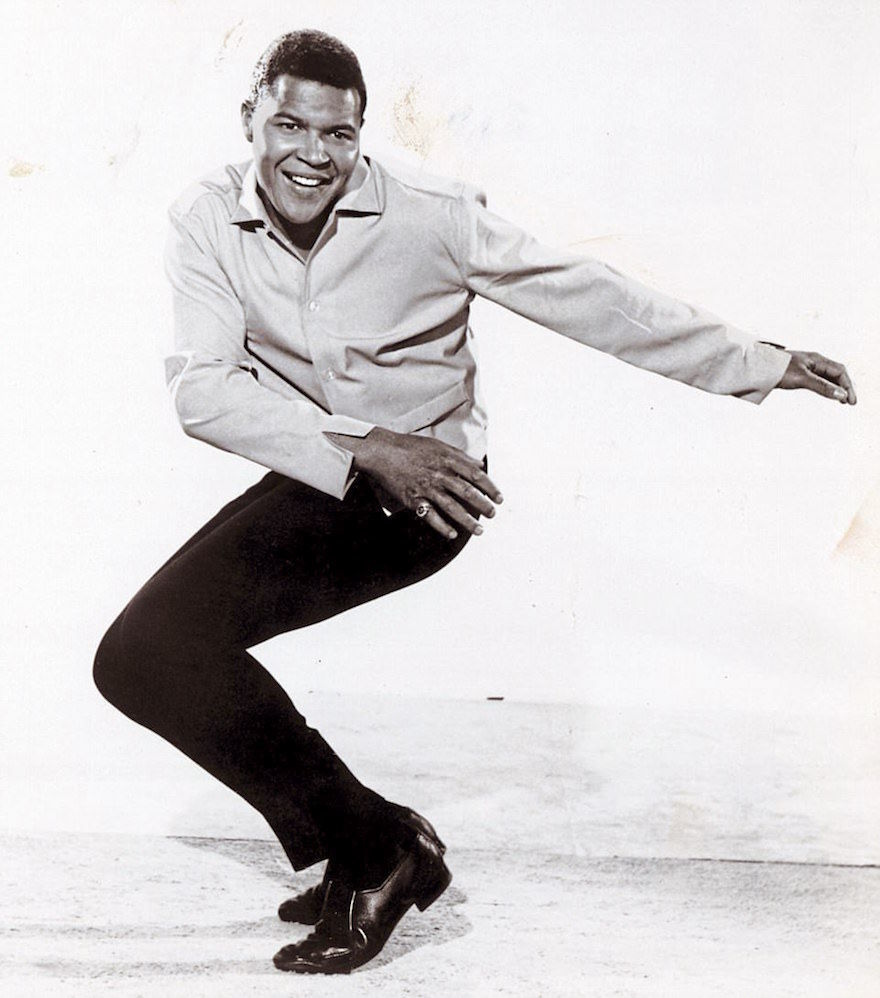
On 19 September, 1960, Chubby Checker and The Fat Boys premiered their single, The Twist, on Dick Clark’s American Bandstand. With its easy dance and catchy tune, it went straight to Number One, and The Twist rescued Rock and Roll.


By the late fifties, the wild, wailing, and over the top Rock and Roll of Little Richard, Chuck Berry, Gene Vincent, Elvis Presley, and Jerry Lee Lewis gave way to the focus grouped, formulaic, starry eyed ballads of teen pop idols like Paul Anka, Ricky Nelson and Neil Sedaka. Vocal harmonies ruled the airwaves, whether the girl group doo-wops, the barbershop sounds of the swooners, or the early gospel inspired Motown acts. The problem was you can’t dance to harmonies. When Elvis Left the Building (for the Army) in 1957, and Buddy Holly, Richie Valens, and the Big Bopper were killed in a plane crash (“The Day the Music Died”) in 1959, everyone assumed Rock was dead.


The Twist was an atomic explosion across the music scene unlike any seen before or since. Even the Charleston of the 1920s and the Jitterbug of the 30s can’t compare to the Twist mania that shook the world between 1960 and 1963. In the space of two minutes and thirty nine seconds, Rock and Roll stopped being about dreamy sequences of wooing your girl at the ice cream parlor, and set it back on the path to its roots in dancing, sweat, booze, sex, drugs, and live music. (You know you almost said “rock and roll” right there.)

The Selective Service Act

On 16 September 1940, US President Franklin D Roosevelt signed the Selective Service Act into law. It required all males from the age of 21 to 35 to register for the draft. The Selective Service Act of 1940 was the first peacetime draft in American history. With Japan overrunning large portions of China, Germany possessing most of Europe and poised to invade Britain, and the Soviets, an ally of Germany, controlling most of Eastern Europe, FDR thought it prudent to prepare the US for war. The law also mobilized the National Guard and called up the officer reserves.


“America stands at the crossroads of its destiny. Time and distance have been shortened. A few weeks have seen great nations fall. We cannot remain indifferent to the philosophy of force now rampant in the world. We must and will marshal our great potential strength to fend off war from our shores. We must and will prevent our land from becoming a victim of aggression.” — FDR 16 September 1940

The Battle of Britain: Culmination

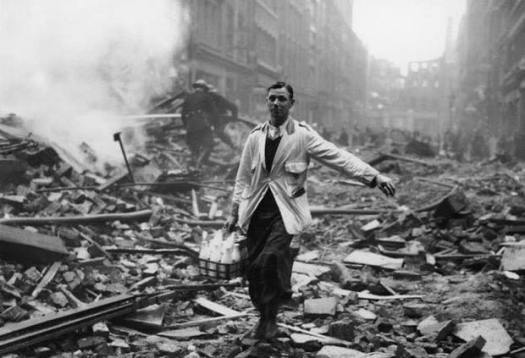
In just eight days thousands of British civilians were killed and wounded, and large areas of London, particularly East London, were in ruins. But with the Luftwaffe’s focus on London, Dowding’s early warning system returned to peak efficiency, and RAF Fighter Command’s airfields were repaired, its pilots rested, and its planes fixed and properly maintained.


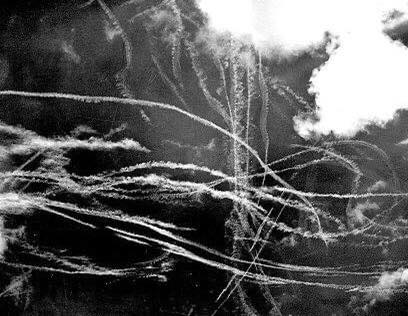
On 14 September 1940, Hitler postponed the invasion one last time, and decreed that if the RAF wasn’t destroyed within the week, the invasion of Britain would be postponed indefinitely. The next morning Herman Goering, convinced the RAF was on its last legs, called for a maximum effort. British radar picked up a formation of German planes over France that was so large it was taking longer than normal to form up. This gave Air Marshal Dowding time to organize the set piece battle he craved since July.

At 0700 as the Germans were enroute, Winston Churchill departed London to the relative safety of the 11 Group airfield at Uxbridge where he would observe the coming battle. 11 Group put up all of its fighters to meet the attack and Churchill asked “What other reserves have we?” 11 Groups commander, Keith Park replied tersely, ‘We have none, sir.”


That wasn’t entirely accurate. When the Germans took so long to form up this gave 12 Group to the north time to form their vaunted “Big Wings”. All told the RAF put up 625 fighters to meet 1120 Luftwaffe fighters and bombers over London and southern England. It was an apocalyptic air battle that lasted all day, with fighters on both sides fighting, landing, immediately rearming and refueling, and then heading back into the battle. Some British pilots did this four and five times. When evening came and the wreckages were counted, the RAF lost 43 fighters and the Luftwaffe lost 136 planes of all types.


But it wasn’t the losses that shocked the Germans, they were completely astonished by the RAF’s response. Like all totalitarian regimes, the Germans had problems with math and routinely made overly positive assessments of their operations to show progress. Just that morning the pilots were briefed that the RAF had only 250 fighters left in the country with just 150 covering London: the Luftwaffe pilots went into battle assuming they had an 8 to 1 advantage.


Luftwaffe planners and commanders tried to excuse away the large numbers of RAF fighters, but the pilots’ eyes did not deceive them and they talked: the British had no less than 500 up at any time. Goering was lying to them. Particularly demoralizing was a five squadron 12 Group Big Wing that descended upon a bomber formation and nearly wiped it out, leaving only a few stragglers…almost as if they were deliberately left alive to tell the tale.


The Battle of Britain continued for another three weeks, but it was anti-climactic after 15 September and the Luftwaffe switched increasingly to safer night raids. On 17 September, Hitler postponed Operation Sealion indefinitely, and switched his attention to the planning for next spring’s offensive: Operation Barbarossa, the Invasion of the Soviet Union.

The Battle of Marignano

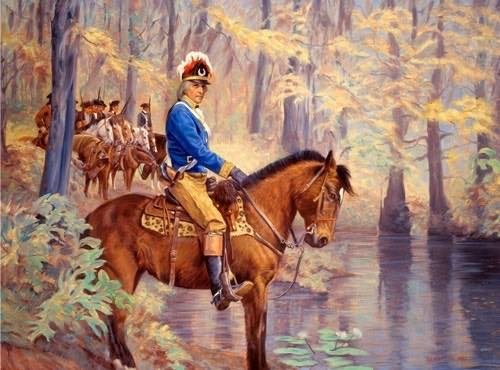
In the summer of 1515 during the Revolution in Military Affairs known as the Italian Wars, France’s Francis I crossed the Alps at the head of 30,000 troops in a feat comparable to Hannibal’s crossing 1600 years before. Francis’ bold movement over an inadequate, treacherous, and unguarded pass completely unhinged the Papal/Swiss/Imperial/Spanish defenses and they fell back to Milan.


Like his grandfather Charles VIII, who seized the Kingdom of Naples, and every French King since the fall of the Roman Empire, Francis saw the Italian peninsula as his political playground. He desired Milan for some overly complicated scheme, and his French gendarmes (knights), cannon, and German Landsknechts (pike and halberd armed mercenaries) lined up outside the city to begin a siege. On 13 September 1515, just outside of the ruins of the village of Marignano, Duke Sforza of Milan attacked the French with three massive columns of Swiss pikemen.


The battle was fought for 28 hours over the 13th and 14th. The Swiss routed the landsknechts on Francis’ left but they rallied, and held the baggage train with the camp followers in an impromptu wagon fort. On the French right the Swiss and Germans were locked in bloody stalemate between pike phalanxes that would not have been out of place in the Diadochi Wars after the death of Alexander the Great. The center was destined to be decisive.


In the center, a Swiss “Forlorn Hope” (there’s a docturnal term we need to bring back, it’s essentially an initial attack by a body of troops that expects to either die or gain great glory in the initial charge) quickly seized the French siege guns. But before they could destroy them, the forlorn hope was massacred by a charge of the Gendarme led by Francis himself, and The Black Band, a group of halberd and arquebus armed German mercenaries intensely loyal to Francis. As the Swiss main body approached, Francis ordered the cannon, which he brought to fire on the walls of Milan, to fire on the Swiss phalanxes. The halberdiers and arquebusiers fixed the Swiss, the cannon broke up the Swiss formations, then the gendarmes charged into the chaos. However, the charge was not decisive. Inevitably, the Swiss would reform and attack again. This cycle continued for the rest of the battle. Francis himself took part in 30 charges over 24 hours. On the afternoon of the 14th, the Swiss finally broke when a Venetian army of condottieri (mercenaries), allies of the French, appeared on their flank.


At the time, the Battle of Marignano was considered a triumph of the armored knight. But in actuality it was the knight’s last hurrah, and signaled the coming of age of cannon. Marignano was the first large scale use of cannon against troop formations, and the battle was the first example of cannons’ use in combined arms warfare in a modern sense. Finally, after the battle, the Swiss signed an agreement of “Eternal Peace” with the French, which began the Swiss tradition of neutrality in all world affairs, which holds to this day.

The Western Desert Campaign: Operazione E, the Italian Invasion of Egypt

On 13 September 1940, the Italian X Army advanced out of Libya and into Egypt to seize Cairo and the Suez Canal, in the first scene of the first act of what would become known over the next three years as the Western Desert Campaign. The Western Desert, known so by the British because it was west of the Middle East, was a 150 mile wide and 1000 mile long strip of rocky desert in North Africa between Tripoli in Libya and Mersa Matruh in Egypt. It was bordered by the Mediterranean Coast to the north, and impassable terrain to the south: the salt flats of the Qattara Depression and giant dunes of the Sahara. The Western Desert had but a single coastal road, the Via Balbia, although there were some Bedouin tracks that connected the oases further south.


With the French threat from Tunisia neutralized by her surrender, the Italian X Army attacked east along the Via Balbia into Egypt. They were met by units of the British Armoured Division (soon to be renamed the 7th Armoured Division, aka The Desert Rats), the New Zealand Division led by the indestructible MajGen Bernard Freyberg, and the “Red Eagles” of the 4th Indian Division. But before those units became famous later in the war, in September 1940, they were underequipped, undermanned, and under trained composite formations only thrown together when the Italians declared war in June. They were overwhelmed by the Italians while defending the frontier. Yet the British and Commonwealth troops conducted a skillful delaying action and scorched earth policy, principally by destroying the coastal road, which exacerbated the Italian supply problems.


The Italian supplies had to be shipped from Italy to Benghazi or Tobruk, or even worse farther west to Tripoli, and then driven to the frontier hundreds of miles east. It didn’t help that Italy was not even remotely prepared for Mussolini’s declaration of war. The Italian merchant marine was completely surprised, and a full 1/3 of all Italian shipping was captured within two days of the declaration, because they were caught in neutral or hostile ports. Furthermore, the rough terrain was hell on the vehicles, and the hot desert wind, called the Sirocco, coated everything in a fine machinery destroying dust. Soon spare parts were fighting with food, fuel, water and ammunition for the limited space in the ships and trucks. Italian trucks were using 60% of the fuel they carried just to get to the forward units. Upon learning that the Duke of Aosta in the Sudan was stopped by the same logistics problems, Field Marshal Graziani decided to halt the Italian offensive on 16 September when he reached Sidi Barrani, just 65 miles inside Egypt. There the Italians dug in to buildup supplies for the next push.


However, the Italians only learned the first half of the First Rule of the Western Desert: “Every step forward for the attacker was one step further away from their supplies”. They didn’t yet understand the second half, “Every step back for the defender was one step closer to theirs”.


The British did.

The Battle of Wauchope (Wahab) Plantation

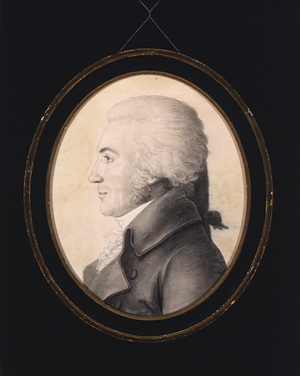
The American defeats at Camden and Fishing Creek convinced Lord Cornwallis that the time was right to mass Major Patrick Ferguson’s Loyalists on the Overmountain Men west of the Blue Ridge, while he invaded North Carolina to destroy the remnants of the American southern army reorganizing at Hillsboro. Monitoring Cornwallis’ advance were about 80 dragoons and about 100 riflemen under Colonel William Richardson Davie.


After the Battle of Hanging Rock in July, Davie was disillusioned with Thomas Sumter and went to North Carolina where he thought his talents would be appreciated. In early September, the North Carolina General Assembly appointed him to commandant of all cavalry in the Western District, just in time for Cornwallis advance on Charlotte. Cornwalis’ army sacked and burned the American leaning countryside his army traversed through, with the 71st Regiment, Fraser’s Highlanders, particularly brutal. One of Davie’s subordinates, Captain James Wauchope (pronounced “Wahab”) family plantation was on the border between North and South Carolina. About 300 Loyalists were encamped on the plantation which was overlooked by the 71st’ camp about ½ mile away as part of Cornwallis’ rear guard. Davie, though desiring to teach the highlanders a lesson, decided to attack the loyalist camp when it was discovered a small 60 man detachment of Banastre Tarleton’s British Legion were there. Tarleton was sick with yellow fever and not in camp but his second, Major George Hanger was.


Guided by Wauchope around Cornwallis’ main body, Davie surrounded the loyalists at Wauchope Planation on the morning of 20 September 1780. His riflemen snuck through a cornfield to the back of the mansion and occupied it through the backdoor during a change in the guard. As the new guard approached, the patriots then fired on the surprised loyalists camped in front of the mansion. The loyalists were caught between deadly accurate rifle fire from the mansion, as they tried to form, and Davie with his dragoons charging down the manor’s entrance lane behind them. Hanger and the loyalists scattered with barely firing a shot. At the cost of one wounded, Davie inflicted 20 killed and twice as many wounded on the loyalists, most of whom never returned after the attack.


As the 71st beat to formation, Davie gathered up one hundred horses, 120 muskets, and all the powder his men could carry, and escaped. Davie’s men, now all mounted, force marched sixty miles that day back to Charlotte with the supplies. Charlotte was Cornwallis’ obvious next stop on the way to Hillsboro, and Davie was determined to make Cornwallis pay in blood before he set it to the torch.

The Battle of Britain: The Blitz

By early September 1940, the RAF’s Fighter Command was a hot mess and barely functioning as a fighting organization. In southern England, 11 Group was not only losing planes faster than industry could replace them, they were losing pilots faster than they could be trained. Pilot losses were extremely heavy among the experienced squadron and flight leaders, and training was curtailed to the point that new pilots had less than ten hours in their Spitfires or Hurricanes before being thrown into the fray. There were numerous examples of flight leaders, and even a squadron leader, with less than fifty hours in the cockpit of their fighter. Furthermore, all of 11 Group’s airfields were cratered and smoking disaster areas, to include the sector control centers which were offline almost as much as they were online. Air Marshal Dowding seriously considered abandoning 11 Group’s airfields (which would cede the Channel to the Germans, and subsequently lead to the invasion of the British Isles), and even scheduled a meeting with Churchill to discuss moving 11Group’s airfields out of range of the Germans.


Despite Dowding’s pessimism, assistance for the RAF would come from an unlikely source, Adolf Hitler. Totalitarian rulers, and those who make decisions based on emotion or rule primarily through manipulation of emotion, are they themselves more susceptible to having their own emotions and decisions manipulated. Adolf Hitler was no different. On the night of 25 August, a Luftwaffe bomber flew off course and accidentally bombed the East End of London. In retaliation, Churchill ordered RAF Bomber Command to strike targets around Berlin. On 5 September 1940, they did so, thus belying Herman Goering’s claim that enemy bombs would never touch the German capital. Hitler was infuriated and ordered the Luftwaffe to cease attacking British airfields and “flatten London”.


On the morning of 7 September 1940, British radar picked up the largest concentration of German fighters and bombers to date. Dowding scrambled everything that had wings to protect 11 Group’s airfields. The stage was set for the largest air engagement in history.


But it didn’t happen: the Spitfires and Hurricanes were greeted by clear skies. The RAF was in the wrong spot.


600 Luftwaffe bombers and fighter bombers had an uninterrupted flight directly to London where they set it ablaze, particularly the East End. It would be the first of 57 consecutive daily raids against the city, and the next months were dubbed “The Blitz” by Londoners. But London’s loss was the RAF’s gain. With the Luftwaffe’s focus shifted to the city, and not the airfields, Dowding had the time to reorganize the early warning system and repair the airfields. The shift also allowed the pilots to get some uninterrupted rest and training, and mechanics uninterrupted time to repair and maintain the aircraft. Finally, with the obvious target being London, 12 Group had time to form up its “Big Wings” and actually get into the fight en masse.


Hitler gave the RAF, and Britain, a second chance.

Little Willie: The Dawn of Fire, Maneuver, and Shock Effect

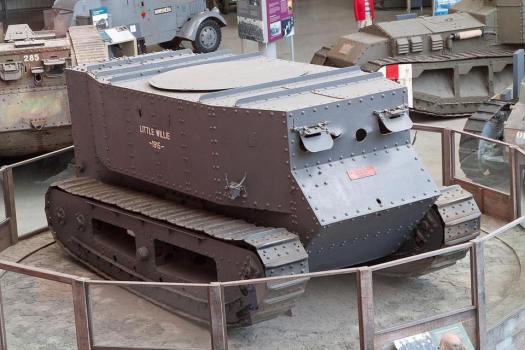
On 6 September, 1915, the prototype British Mark I Tank rolled off the assembly line. “Little Willie” was 14 tons, underpowered, routinely overheated, and couldn’t traverse a trench: its raison d’etre. Even though Littlle Willie was a far cry from the Battlefield Dominating, Fire Breathing Iron Leviathans we have today, he would eventually evolve into the British Mark IV tank that made its debut a year later on the battlefields of the First World War.


Get Some.

The Battle of Blue Savannah

Horatio Gates’ loss at Camden and Thomas Sumter’s defeat at Fishing Creek were body blows to the Patriot cause in the South in the late summer of 1780. Despite his victory at Musgrove’s Mill, Isaac Shelby was run out of South Carolina and sought refuge with the Overmountain Men beyond the Blue Ridge. To capitalize on the British momentum, Major Patrick Ferguson sought to mass his Loyalist militia, then training in disparate camps across Georgia and the Carolinas, and strike the Overmountain mustering camps ending their threat once and for all.


But Sumter, Shelby and Gates weren’t the last organized Patriots in the South. Southern partisans under Lt Col Francis Marion were dispatched by Gates just prior the Battle of Camden to seize and destroy bridges and ferries to prevent Cornwallis’ escape. Gates’ catastrophic loss left Marion and his 70 odd horsemen deep in the swampy wilderness northeast of the Santee River.


The diminutive Marion (he was only 5 ft tall) was one of America’s most talented and aggressive partisan leaders in the South during the American Revolution. In the beginning of September 1780, Marion’s men rescued 250 Maryland and Delaware Continentals taken prisoner at Camden. Believing the war lost most declined to join Marion, and went north. The rescue though got back to the loyalists then marching to join Ferguson.
On 4 September, Marion’s advanced guard met and charged a patrol of Loyalists on a road along the Little Pee Dee River. One of the captured Loyalists told Marion that Major Micajah Gainey’s force of 400 militia was camped three miles down the road. They were camped at a small loyalist settlement for the night.


Despite the overwhelming odds, Marion decided to attack. But the loyalist lied: Gainey’ men men weren’t camped, but on the march. Furthermore, Gainey was with the men the patriots just attacked, who were not a patrol, but the advanced guard; the advanced guard of a force dispatched specifically the recapture the prisoners and defeat Marion. Gainey had escaped the attack and warned his main body. When Marion charged down the road hoping to catch the Loyalists at breakfast, he ran straight into Gainey’s men in battle line blocking the road. Not wishing to push an attack against a far superior adversary prepared for him, Marion and his men fled back up the road.


Gainey could not pursue because he had few horses remaining after the loss of his advanced guard, but he took up the chase at the double. However, Marion did not flee far. He set up an ambush at Blue Savannah, a few miles down road. The open sandy fields punctuated by scrub pines and small lakes (made by meteor strikes in the distant past. These sandy depressions are filled with water and are known locally as “Savannahs”) meant little cover for the loyalists on the road. Gainey’s men, led by Captain Barefield, marched right into the ambush. Marion’s men let out a devastating volley then charged the confused loyalist mass. Barefield’s men got off one volley before they broke and ran into the swamp.


For just three men wounded, Marion inflicted 30 killed and twice as many wounded on a enemy almost five times his force’s size. The Battle of Blue Savannah was Francis Marion’s first battle, and first victory of many, in the American Revolution against the British and Loyalists in the South. Effectively alone, Marion carried the Patriot cause in South Carolina while other American forces reorganized or continued to muster. Dubbed the “Swamp Fox” by Banastre Tarelton, Marion roused the entire Pee Dee and Santee river basins against the British. More immediately, Marion prevented many loyalist bands from eastern South Carolina from joining Ferguson’s expedition against the Overmountain men.

Beetle Bailey

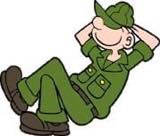
On 4 September 1950, the comic strip Beetle Bailey debuted in the United States. Beetle Bailey was the longest running comic strip still scripted and drawn by the original artist, Mort Walker, who continued to draw until the day he died in 2016 at the age of 93.


Everyone’s favorite Joe didn’t start out in the Army though: he was originally a college student at the University of Missouri. But with the Korean War on the front pages in the summer of 1950 no one wanted to hear about college shenanigans, and only 12 papers picked up the strip. Beetle struggled through college until the spring of 1951 when he suddenly dropped out of school and joined the Army.


The new Beetle Bailey strip was an instant hit, and in weeks every major paper in the country was following the hijinks and tomfoolery of Sham Master Beetle, his friends, and his superiors on Camp Swampy. The strip revolved around the ineptness of those in positions of authority, but was at its best and funniest when it explored the ironic or unintentionally humorous relationships between its characters. The Beetle Bailey cast included Beetle’s squadmates Privates Rocky, Diller, Plato, and Zero; the bumbling but loveable SuperLifer Sarge, Sarge’s competent fixer dog sidekick, Otto, and Sarge’s girlfriend Louise; the enterprising but off-putting Cookie, the stereotypical second lieutenant LT Fuzz and stereotypical first lieutenant LT Flap, the commander General Halftrack and his wife Martha, and every Joe’s dreamgirl: the lovely Miss Buxley, among many others.


I think I’m just going to go behind the building now, put my hands behind my head, cross my legs, and go to sleep.


FTA.