Operation Crusader: The Battle of Totensonntag

Totensonntag, the Sunday of Death, is a Lutheran holiday to remember those who went before, akin to All Soul’s Day in Catholicism. In Germany in 1941, it was also the day that the country remembered its dead from the First World War. The night before Totensonntag outside Sidi Rezeg, a decorated veteran of that war, Erwin Rommel sensed an opportunity.

Rommel sent detailed instructions over the wireless to the Afrika Korps HQ. Then he drove there to direct the next day’s operations, certain that they would win the battle. However, he never made it: he drove straight into the 6th NZ Brigade’s assault positions, and only a quick three point turn by his driver saved them from being captured. He found refuge at Point 175, a small escarpment notable only for an Islamic tomb and a mosque that served as the Regt HQ of the German 361st Infantry Regt. When the Kiwi’s attacked, Rommel was cut off and spent the day playing regimental commander.

GenLt Ludwig Cruell, commander of the Afrika Korps, received Rommel’s instructions and promptly disregarded them as “out of touch”. The only thing Rommel had right was there was an opportunity. After two confused days of fighting Cruell personally managed to consolidate the 15th and 21st Panzer Divisions, and convinced the Italian tankers of the Ariete Division to coordinate an attack. One of his reconnaissance bns identified a gap at the weakened and disorganized British 7th Armoured Division which he had mauled the day before. They were intermingled between the New Zealanders of the XIII Corps, and the 1st South African Division of the XXX Corps.

Despite the threat the New Zealanders posed, Cruell planned to drive east and south into the gap, then boldly strike west and north into the rear of the 5th SA Brigade and the Brit 22 Arm Bde. The loss of these two Bdes would hopefully break the British, and the captured supplies, especially fuel, would sustain the Korps another few days.

At 0430 on Totensonntag 23 Novemeber, 1941, Cruell and his chief of staff (Col Fritz Bayerlain, we will hear his name again) took off in his command vehicle, a captured British Mammoth Armoured Car, to accompany the 15th Panzer into battle. Half an hour after Cruell left, the Kiwis that chased Rommel away overran the Afrika Korps headquarters and captured the entire staff. Nevertheless, the Korps marched to their assault positions relatively unmolested, linked up with the Italians and launched their attack.

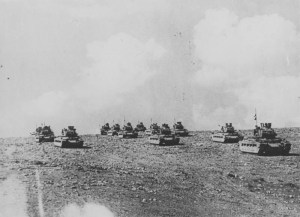
Initially it was field day for the panzers: they surprised the transport and supply columns of both brigades, and the 7th Armoured Div logistics (7 Spt Grp) columns. Supply trucks, fuel tankers, maintenance sheds, recovery vehicles – it was target rich environment. They were in “Happy Land” – every tanker’s dream. The columns scattered. But the South Africans were tough and well disciplined, and soon they were fighting back. In particular the South African artillery (of all types cannon, AT, and AA) made quite an impression on the Germans, as they leveled guns and fired over open sights. Though many South Africans fled, enough stood and fought that the attack became fixed. A lost column of 4th Brigade crusader tanks marched to the sound of the guns, and caused more problems. Then the 22nd Brigade counterattacked and the fight soon devolved into a brawl.

Cruell, like his superior, was always close to the fighting. About 1100, he heard an urgent banging on the rear of his command car. Bayerlain, in the back at the map board, leaned over and unlocked the door. When it opened he was horrified to find that he was face to face with a very surprised British sergeant. Both fumbled to shoot each other, but a random burst of 20mm flak from an unknown source sent the Brit scurrying back to his tank. Cruell stuck his head through the cupola and was equally horrified to see six British Matilda tanks surrounding the command car. They were part of the 22nd Bde’s hasty counterattack into the Cruell’s flank, and they thought the Mammoth command car, which Bayerlain captured months before at Mechili, was South African. They had no idea the prize in their midst. Cruell yelled, and his driver sped away. Only the lack of ready ammunition in the Matildas saved them.

But in the confusion, leadership matters most, especially at the lowest levels, and here the Germans decisively defeated the Allied troops. The unexpected South African resistance and British counterattacks slowed but did not stop the German advance. 88’s systematically picked off British tanks, and with the transports in chaos, the South African artillery eventually ran out of ammunition. By the time the 5th SA Bde HQ was overrun about 1600, the battle was over. Three Allied brigades were effectively destroyed (5 SA, 22 Arm, 7th Arm), and one was “temporarily useless as a fighting entity” (4th Arm). Furthermore, a giant hole was torn in the Allied line. At dusk, the Afrika Korps consolidated on the Sidi Rezegh airfield, right where they started 15 hours before.

That night, thirty miles away at the Eighth Army Headquarters at Maddalena, LieutGen Cunningham was distraught and broken upon the news of the of the Afrika Korps’ attack. There was a lot of fight left in the Eighth Army, but not so much left in its commander.
The Fall of the Hudson Forts

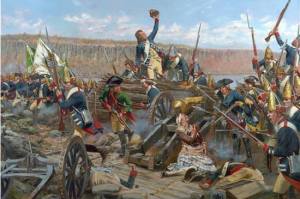
Fort Washington, on the New York bank, and Fort Lee on the New Jersey bank were never meant to withstand a landward siege, just block the British navy from sailing up the Hudson River, a job they did splendidly. But after Washington lost the Battle of White Plains, the Continental Army retreated into New Jersey and the forts became targets. Washington wanted to evacuate because he was now down to less than 8000 in the army, but Howe moved with uncharacteristic speed, On 16 November 1776, Howe’s Hessians stormed the approaches to Fort Washington. Despite a stalwart defense by the Americans, the Hessians prevailed and rendered it untenable. Generals Washington and Greene just narrowly escaped capture on the last boat across the Hudson. Nearly 3000 Continentals surrendered.

Four days later, Washington ordered Fort Lee abandoned as Gen Lord Cornwallis approached. Thus began the darkest period in the history of the Revolution. The Continental Army began a long retreat across New Jersey which would see them cross the Delaware River into Pennsylvania on 10 December. Most of Philadelphia, including many in the Continental Congress assumed the war was lost. Most of the enlistments for the Continental Army were up at the end of the year, and there was no time to raise a new army before Howe took control of the Hudson River valley. This would split the colonies and isolate the heart of the revolution, New England. The war was all but over.

About the time the Continentals were marching out of Fort Lee and the first Americans from Fort Washington were loaded on prison ships in New York, Thomas Paine sat down in his study and decided to pen a new series of pamphlets for publication. They began:

“These are the times that try men’s souls…”

Operation Crusader, Phase One

After several delays, the British Eighth Army launched Operation Crusader on 18 November 1941. The objective of Crusader was to destroy Rommel’s panzers. Everything else: the relief of Tobruk, the fall of Cyrenaica etc, would eventually come to pass if Rommel had no tanks. The British plan was to defeat the German and Italian tanks in Rommel’s inevitable, and frankly needed, counterattack with British armor and a breakout from Tobruk. The plan hinged on Rommel counterattacking immediately and broke down almost immediately. In fact, the day of the attack, the British, Australian, Kiwi and South African troops couldn’t find a single German or Italian soldier. The day started off with a thunderstorm which grounded the RAF, and the only Axis troops facing them were two reconnaissance bns and a company of tanks, who wisely withdrew in the face of the Allied assault. After Rommel’s “Midsummer Night’s Dream” in September, he was convinced that the Allies couldn’t attack until December. So he concentrated his best divisions for an assault on Tobruk while the Afrika Korps, led by GenLt Cruell, reduced to just a screening force of a weak Panzer Div, and a few Italian infantry divisions held the frontier.

As the old saying goes, “No plan survives contact”, Operation Crusader’s plan didn’t even survive NOT making contact. The realities of fighting in that portion of the Western Desert saw to that. The area of operations was about 100 miles long east to west and 60 miles wide north to south. It was so flat that it was like fighting on a chess board. It was an attackers dream: the only terrain were low isolated hills less than 200m high, and minefields. Outflanking the opposition was always an option. However target identification was a problem. The dust covered everything, sand storms were common, and both sides used captured equipment.

It took Rommel a few days to be convinced that major offensive was underway, but when he did he launched the 15th Panzer, 21st Panzer and Italian Ariete and Trieste armored divisions at the British from around Tobruk. Between 20- and 27 November, a wild melee broke out around Sidi Rezeg. Attackers, counter attackers and counter counter attackers seemed to appear from any direction. Confusion reigned on both sides as commanders struggled to envision the battlefield. (Tobruk was actually relieved twice, only for them to be cut off again) Although the British outnumbered Rommel 2-1 in tanks, it seemed the Germans had tanks everywhere, and more importantly, were doing more damage.

The Germans had the upper hand around Sidi Rezeg for three reasons. First, the British thought of their tanks as Wellington thought of cavalry: for the elan of the charge. The Germans thought of their tanks as bait for the deadly 88mm anti-tank guns. Time and again the British would spot an enemy column and charge into an engagement area. In the confusion of being systematically destroyed by an enemy they couldn’t fire back against (if they could even see them), they would be attacked in the flank by the original target. Next, any German and Italian tanks that were knocked out were recovered by maintenance teams, who then repaired very close to the front. The British had no equivalent. Their knocked out tanks sat for weeks before being recovered, and then had to be sent back to Egypt to be repaired. German maintenance teams sent nearly 100 “destroyed” tanks back to Rommel’s divisions that week. Rommel’s maintenance sent more recovered British tanks to Rommel than the British did to their own troops. Finally, the Eighth Army Commander, Sir Alan Cunningham who did so well in East Africa, was not nearly as energetic and imaginative as Rommel, who simply out commanded him in the initial clashes.

Sensing the British were about to break, on 25 Nov, Rommel launched a massive counterattack to split XIII Corps, cut off XXX Corps and destroy the corps and army rear areas. Despite months of preparation by the British, and advantages in nearly every category, Operation Crusader was still very much in doubt.

The Fall of the Hudson Forts

Fort Washington, on the New York bank, and Fort Lee on the New Jersey bank were never meant to withstand a landward siege, just block the British navy from sailing up the Hudson River, a job they did splendidly. But after Washington lost the Battle of White Plains, the Continental Army retreated into New Jersey and the forts became targets. Washington wanted to evacuate because he was now down to less than 8000 in the army, but Howe moved with uncharacteristic speed, On 16 November 1776, Howe’s Hessians stormed the approaches to Fort Washington. Despite a stalwart defense by the Americans, the Hessians prevailed and rendered it untenable. Generals Washington and Greene just narrowly escaped capture on the last boat across the Hudson. Nearly 3000 Continentals surrendered.

Four days later, Washington ordered Fort Lee abandoned as Gen Lord Cornwallis approached. Thus began the darkest period in the history of the Revolution. The Continental Army began a long retreat across New Jersey which would see them cross the Delaware River into Pennsylvania on 10 December. Most of Philadelphia, including many in the Continental Congress assumed the war was lost. Most of the enlistments for the Continental Army were up at the end of the year, and there was no time to raise a new army before Howe took control of the Hudson River valley. This would split the colonies and isolate the heart of the revolution, New England. The war was all but over.

About the time the Continentals were marching out of Fort Lee and the first Americans from Fort Washington were loaded on prison ships in New York, Thomas Paine sat down in his study and decided to pen a new series of pamphlets for publication. They began:

“These are the times that try men’s souls…”

The Battle of Arcola

In 1796, the War of the First Coalition raged in Italy and pitted the aristocracies of Europe against Revolutionary France. The French had bottled up a large Austrian army in the fortress town of Mantua, but another large Austrian army of 28,000 marched to relieve the siege, and together they would throw the French out of Italy. The French commander, a young up and coming Napoleon Bonaparte, needed to stop the relief force. He left small fixing forces for the garrison and other Austrians in the area, and concentrated on the large relief force. But even his tactical genius couldn’t make up for the numbers and terrain, and he was defeated in three attempts. The Austrians closed in on Mantua.

Napoleon, now badly outnumbered and with no terrain available that could make up for the troops lost in his previous three defeats, decided to attack. He would march around the flank of the Austrians and crush them. But first he needed to cross the Arpon River at the town of Arcola. On 15 November 1796, Napoleon’s small army found it strongly defended by a large Austrian detachment. Nonetheless Napoleon ordered his men to force the crossing over the narrow bridge. There was no other choice, it was his last chance to prevent the siege from being lifted.

The Austrian position was strong and the French took hundreds of casualties in the first failed attempt. When he saw the next faltering, Napoleon himself grabbed the fallen colors and charged across the bridge, with dozens of men dying to his left and right. But by now the bodies were stacking up, and his friend Gen Augereau dragged him back lest Napoleon also get shot. However, as the attacks continued, he stayed with the colors near the bridge for the rest of the day. Napoleon had his horse shot out from under him, and his aide de camp and several of his staff killed and wounded. When dusk fell, the Austrians still held the other end of the bridge.

The next day, boats were found and a marshy ford was discovered, and Napoleon crossed in several places. But the Austrians also had reinforced the town, and attacked the crossings. The battle raged all along the river. At one point as Napoleon was rallying a broken battalion, his horse was shot and he fell into the marsh. Only a gallant rescue by Gen Marmont and his staff prevented Napoleon’s capture. The day ended with the bridge still in Austrian hands.

The battle resumed on 17 November, but by now most of the Austrian relief force had arrived. Napoleon had to reduce the Austrian numbers facing him, so he came up with a bold ruse. He took all of his trumpeters and drummers and sent them around the Austrians where they began to play marching tunes. The Austrians redeployed to face this new “threat” which weakened the force defending the bridge. Napoleon struck with a massive column across the bridge that had orders not to stop. The column literally climbed over dead and dying Frenchmen and trampled the Austrian blocking force. He then struck the Austrians in the town and those facing the ruse in the rear, and routed them completely.

Despite heavy losses, momentum was on his side, and Napoleon continued to attack over the next few days. Within a week, the Austrians themselves were thrown out of Italy. On 23 November 1796, Napoleon occupied Venice, ending its 1000 years of self-rule. In the harbor he captured a 44 gun frigate, which he named the Muiron, in honor of his aide that was killed at his side. Napoleon returned to Paris a legend in his own time and a fearless Hero of the Revolution.

License to Ill

Before 1985, the Beastie Boys, Michael “Mike D” Diamond, Adam “MCA” Yauch, and Adam “Ad-Rock” Horowitz, were just three Jewish kids from Manhattan in a hard core punk band. In 1984, they signed on to Def Jam records which their producer, Rick Rubin, ran out of his dorm room. While opening for Madonna’s The Virgin Tour in 1985, they noticed that the audience responded very favorably to the DJ and rap portions of their set so they began experimenting with combining these different elements into their songs.

On 15 November 1986, the Beastie Boys released their genre bending Hip Hop album License to Ill. The way paved the year before by Run DMC’s “Walk This Way”, the Beastie Boys took the concept a step further with all original songs, in both recording and theme. While most white hip hop artists of the 1980s attempted to imitate black artists, the Beastie Boys just rapped in “their unique and irreverent style” about what they knew: themselves, girls, drugs, booze, partying, petty crime, and Rock and Roll.

What Elvis Presley and Chuck Berry did for Rock and Roll, the Miracles and the Temptations did for Motown, and Donna Summers and the Bee Gees did for Disco, the Beastie Boys brought Hip-Hop to an entirely new audience. Public Enemy’s Chuck D called them, “the Jackie Robinson of Hip-Hop”, and the Rolling Stone reviewed their album under the now famous headline, “Three Idiots Create a Masterpiece”.

License to Ill would go Triple Platinum by the end of the year. It became the highest selling rap album of the 80s and the first to reach #1 on the pop charts. Hip hop went mainstream and record sales for artists like Salt and Pepa, Grandmaster Flash, Ice T, and Stetasonic exploded. (And it seemed MTV played “Fight for your Right” every fourth set… )

If you are reading this and were alive in the 80s you probably received License to Ill from a record club in December 1986. There isn’t a bad song on the entire album and its one of the few I can put on and listen straight through.

No Sleep til… Brooooooklyn! (You know you just sang, “Da Na..Da Daaaa” there.)

Operation Flipper: “The Rommel Raid”

LieutCol Geoffrey Keyes

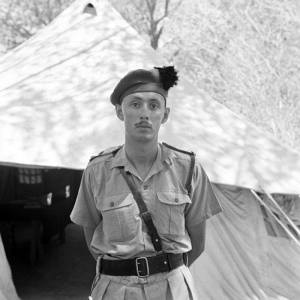
In preparation for Operation Crusader, No 11 (Scottish) Commando landed on the Libyan coast from two British submarines on the night 14/15 Nov 1941. Due to heavy seas only 37 of the 59 actually made it to shore. Led by Brig Robert Laycock (the eccentric and colourful former commander of Layforce, the British rearguard on Crete) and LieutCol Geoffrey Keyes, the 37 men made a grueling 18 mile infiltration to their objectives – Rommel’s supposed headquarters at Beda Littoria, and an Italian Communications Retrans site at Cyrene. Laycock sent six men off with a LT to Cyrene where they successfully destroyed the site. The men sent to assassinate Rommel at the headquarters did not fare so well.

Keyes managed to infiltrate his entire team into Beda Littoria but they were stymied at the headquarters building. The windows and doors were locked. One of his soldiers spoke good German so Keyes banged on the front door, and they called out to open up. The sleepy sentry opened the door and the team pounced on him. But in the scuffle in the doorway they ended up shooting the guard which alerted the garrison. More immediately the Germans in the next room burst out and shot Keyes, killing him. In the confusion, Keyes’ second was shot by his own men, and the senior NCO took command. With the surprise lost, the commandos retreated.

But Rommel wasn’t there, in fact Rommel was actually in Rome arguing with his Italian superiors about resending critical parts and supplies that were on freighters sunk by Force K the week before. Also, it wasn’t even his headquarters, it was his rear logistics coordination center. When he heard about the raid, Rommel was indignant and furious that the British thought so little of him – he would never have his HQ 150 miles behind the front.

As for the Laycock and his commandos, they couldn’t reembark on the submarines, so they dispersed to made their way back to British lines in small teams. They were all eventually killed or captured except Laycock and the senior NCO who both spent 37 days wandering the desert, and one other who spent forty days surviving in the desert before being picked up. The six retrains attackers also survived and hitched a ride with a passing LRDG patrol.

Rommel had Keyes buried with full military honors in a Catholic cemetery outside of Beda Littori

The HMS Mellish

USS Alfred

In October of 1776, Captain John Paul Jones was given orders by the Continental Congress to free captured American soldiers that were being transported from New York to Nova Scotia where they would sit on prison ships. On the morning of 13 November 1776, Jones, aboard the 30 gun warship USS Alfred, and followed by the 12 gun sloop-of-war USS Providence captured the armed transport HMS Mellish. The HMS Mellish wasn’t transporting prisoners but was enroute to Quebec from Liverpool. She had many prominent Canadian citizens on board, but more importantly 10,000 winter uniforms destined for General John Burgoyne.

The Continental Army would be a bit warmer this winter.

Moby-Dick

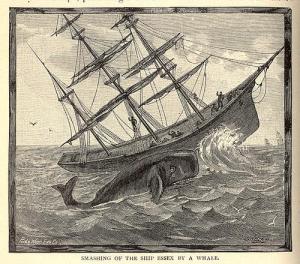
“Call me Ishmael…” and so begins one of the great American stories. Originally published as “The Whale” in October 1851 in London, Herman Melville’s classic American novel was published in New York with its definitive title on 13 November 1851. The story is based partly off of the true and tragic fate of the whaler Essex, which was destroyed by a whale in 1820, whose survivors had to resort to cannibalism, and the Mocha Dick, an albino sperm whale that fed off the coast of Chile in the early 19th century that was notoriously hard to kill. Mocha Dick survived over a hundred encounters with American whalers before he was slain.

Moby Dick is the story of the crew of the Nantucket whaler, Pequod, and told through the eyes of the sailor Ishmael. But it is really the tale of Captain Ahab, and his self destructive and obsessive quest for revenge on Moby Dick, a great white whale. With themes of obsession, race, defiance, revenge, friendship, brotherhood, free will, and duty, the Pequod is a microcosm of America and every bit as relevant today as it was in antebellum America.

“Wherefore … we account the whale immortal in his species, however perishable in individuality… . In Noah’s flood he despised Noah’s ark; and if ever the world is to be flooded again, like the Netherlands, to kill off its rats, then the eternal whale will still survive, and rearing upon the topmost crest of the equatorial flood, spout his frothed defiance to the skies.”

“There is a wisdom that is woe; but there is a woe that is madness.”

Operation Perpetual

Malta was the key to the Central Mediterranean. As long as it was in British hands, Rommel’s supply lines from Sicily and Italy were under threat. But Malta was only 60 miles south of Sicily, well within Italian and Luftwaffe bomber ranges and 100 miles from the main Italian naval base at Taranto. The island was surrounded by Italian minefields and small surface raiders, and prowled by German E-boats and U-boats. The island was under siege since the day Mussolini declared war on the British.

Keeping the island supplied under such a threat required massive operations for the simplest of items. Critical parts, code books ext were run in on fast minelayer or submarines, but everything required for the 35,000 man garrison to attack the Axis and for daily life for the 200,000 Maltese had to be convoyed in with large numbers of escorts, demonstrations and feints by fleet units, and intricate deception operations. Until Sicily was invaded in 1943, the Royal Navy (and eventually the US Navy) conducted 35 named operations involving Force H from the Atlantic Fleet at Gibraltar, Force K, the raiders in Malta, and the RAF and Mediterranean Fleet in Egypt, to keep Malta in the fight and from starving into surrender.

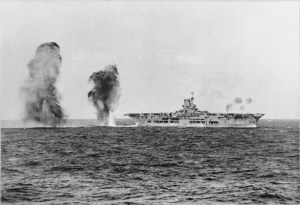
On 13 November 1941, the British launched Operation Perpetual, and it involved every Royal Navy sailor and RAF airman in the Mediterranean basin, and even included raids by the Long Range Desert Group on Rommel’s airfields in Libya lest they be used to attack the convoy. The operation went off perfectly despite the heavy German and Italian response. A month of painstaking planning and preparation between commands separated by thousands of miles (in the era before telecommunications) and a dogged enemy between them paid off. The only hiccup was the loss of the carrier Ark Royal (whose aircraft were instrumental in the sinking of the Bismarck) on the return trip when she was torpedoed by U-81 just outside the harbor at Gibraltar. But the cargo was delivered:

Just 35 Hawker Hurricane fighters.