The early middle ages, and in particular the late 11th Century, was a difficult time for Europe and Christianity in general. In 1055, Roman Catholicism and Eastern Orthodoxy split politically, physically, linguistically, and theologically in the Great Schism, fracturing Christendom in its most trying era.
Islam had been on the march for the last 350 years and nearly 2/3 of Christendom had fallen to the sword of jihad. Most of the bishoprics of the great early Christian thinkers, such as St Ignatius of Antioch, St Clement of Alexandria, St Gregory of Nyssa, and St Augustine of Hippo, were under Muslim occupation, not to mention the birthplace of Christ and the Holy City Jerusalem. Even the books of the Bible were a testament (Ha!) of how far Christianity had fallen to Islam: Galatea was recently conquered by the Seljuk Turks, and the travels in the old Roman Empire by John the Evangelist was a contemporary target list for Muslim corsairs, against whom the new(er) Byzantine Empire was powerless. In several instances, the Muslim tide lapped against the walls of their capital, Constantinople. But most disconcertingly, in 1071, the Byzantine Army, including the entire Varangian Guard, was smashed at the Battle of Manzikert, which left all of Anatolia open to conversion.
Furthermore, the remainder of Christendom was going through its own violent spasms, but internally. Feudalism was a decentralized system of power, protection, and production formed to adapt to the trials experienced by Europe during the Barbarian invasions after the fall of the Western Roman Empire, and it had reached its natural limits. After Charlemagne divided the Carolingian Empire between his sons (the seminal event in European history), feudalism gave rise to a warrior class, the knights, that had little to do but fight amongst themselves. French, Italian, German, Polish, Hungarian, and Scandinavian lands were a patchwork of robber baronies and petty kingdoms that raided and warred upon each other. Among many other examples, Norman adventuring had conquered England in 1066, Southern Italy in the 1070s and were raiding Byzantine ports in the 1080s, all fellow Christians. A unifying force was needed before Western Civilization tore itself apart.
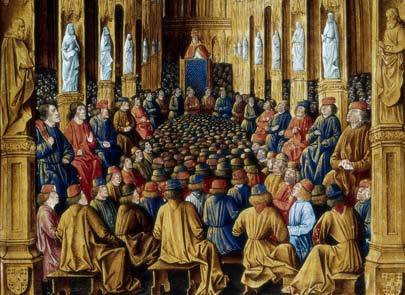
By the 1090s, Pope Urban II was the most powerful man in Europe. He instituted hard fought, if limited, reforms to Catholicism and the Papacy, and emerged from the struggle determined save Christendom from itself. An astute politician, he first put the Italian house in order and then turned to the rest of Europe. Taking note of the Norman conquest of the Emirate of Sicily and the campaigns of a Spanish warlord, El Cid, he began laying the groundwork for the unification of Christendom. In March 1095, he received a request from the Byzantine Emperor, Alexius I Komenos, for help against Seljuk Turks. It was exactly the impetus he needed (and might even bring Eastern Orthodoxy back into the Roman Catholic fold). He called for a Holy Synod in the city of Clermont, and requested that each bishop bring along the strongest lord in his diocese. More than 600 of the most influential men in Europe showed up.
On 27 November, 1095, Pope Urban II gave an emotional speech that appealed to the men’s sense of chivalry, piety, and most especially, greed. He called for a crusade to reconquer the Holy Lands in exchange for forgiveness of their sins. The response was much more than he dared hope for. To the cheering cries of “Deus Vult!”, “God’s Will!” the lords of the land departed Clermont to make ready for an immediate journey east.
What we would know as the First Crusade had begun.
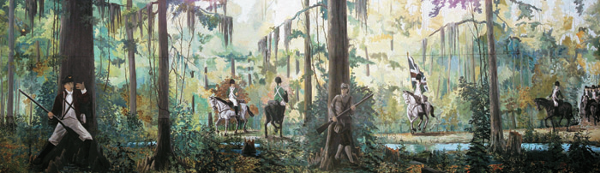
After the failure to capture Colonel Francis Marion in Ox Swamp the week before, Lieutenant Colonel Banastre Tarleton and his Loyalists of the British Legion, reinforced by the 1st battalion of the 71st Regiment of Foot (Fraser’s Highlanders), headed into the South Carolina backcountry to find and defeat Brigadier General Thomas Sumter. Sumter’s large force of Patriots threatened the loyalist stronghold at Ninety Six. Sumter’s men had recently defeated Major James Wemyss and his 63rd Regiment of British regulars at the Battle of Fishdam Ford, and Tarleton mounted them and incorporated the remnants into his British Legion to ride with the dragoons. Tarleton attempted to surprise Sumter, who was on his way to Ninety Six, and got within a day’s march undetected. However a deserter from the 63rd, who had probably never ridden a horse before, informed Sumter of the imminent danger about midnight on 20 November 1780.
In the predawn hours, Sumter moved to Blackstock’s Plantation on the Tyger River. The plantation’s buildings were on a sharp hill above a pasture over which any attack must come. Sumter placed his barely trained militia, most of whom had just recently joined him, among the buildings and fences. Blackstock was a strong position that gave Sumter’s raw militia confidence against the coming attack by the Legion’s dragoons, the Highlanders of the 71st, and the 63rd’s regulars.
About 4 pm, Tarleton was informed that Sumter was at Blackstock’s Farm, and immediately set off with all of his mounted troops to surprise Sumter. It probably would have worked because even though Sumter’s men were assigned positions that morning, by late afternoon the untrained militia were scattered about the farm buildings, many not within easy reach of their positions. Sumter’s officers would have had a hard time reorganizing the men if 350 British horsemen charged down the lane while they were lounging about. Fortunately, a small patrol spotted Tarleton’s imminent approach and fired a shot which warned Sumter’s main position. When Tarleton arrived at the edge of the pasture, he saw that surprise was lost and dismounted the regulars.
Sumter was concerned that Tarleton was waiting for artillery, which would play havoc with his militia, so he decided to force the battle. He sent forward a strong skirmish line of Georgia riflemen and South Carolina volunteers to harass Tarleton as he formed, with orders to gradually withdraw in the face of any advance. The 63rd took up Sumter’s challenge and pushed the riflemen and volunteers back at bayonet point. As the dragoons of the British Legion watched the regulars advance as if they were at a show, 100 South Carolina mounted riflemen under Col. Edward Lacey snuck on the 63rd rapt audience and launched a volley from the woods into their flank. Though the Legion chased them away, they took casualties they could ill afford. About that same time, the 63rd’s sweep of the skirmishers approached too closely to the hill and Carolina riflemen checked their advance with witheringly accurate fire from the barn. The sharpshooters killed or wounded most of the 63rd’s remaining officers, including its commander Major John Money. Despite the fire, Tarleton rode in to save Money and barely escaped with Money’s body draped over his saddle. With his friend dying, Tarleton desperately charged Sumter’s position with every mounted man remaining under his command in a last attempt to salvage the battle. Tarleton’s charge barely made it up the lane before he was attacked by militiamen from the reverse slope screaming Indian war whoops. With his horse shot out from under him, Tarleton withdrew from the battlefield when his men could no longer charge because the lane was blocked by dead and dying men and horses felled by the deadly fire from the top of the hill. Tarleton fell back about two miles to reorganize and attack again in the morning with his Highlanders and Legion light infantry.
The Battle of Blackstocks was a great patriot victory against one of the most dreaded loyalist commanders of the American Revolution. However, Sumter was one of the very few casualties the Americans suffered. Sumter was shot in the chest with five balls of buckshot, and a sixth lodged next to his spine. Sumter turned command over to Georgia militia Col. John Twiggs. That night after policing the battlefield of anything useful the British left behind, Twiggs, in the fashion of Washington, kept the campfires burning and slipped across the Tyger River. When Tarleton returned in the morning, he found the farm abandoned. Unfortunately for the Patriots, what Tarleton couldn’t do on the 20th, Twiggs did on the 21st. Without Sumter, the militia disbanded, just as it did after the victory at King’s Mountain. Sumter spent the winter recovering from his wounds. Any attempt to capture Ninety Six would have to wait until spring.
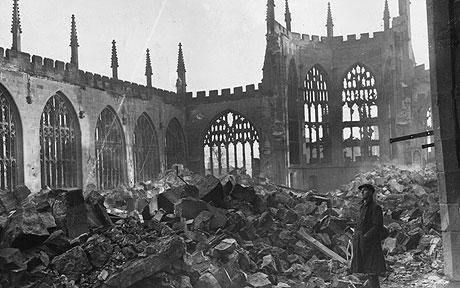
After their loss in the Battle of Britain, Luftwaffe generally stopped large daylight bombing raids. However, they still continued “The Blitz” on London and other British cities at night. Ostensibly to destroy industry, but like the Royal Air Force nighttime bombing raids, doing damage to residential and commercial areas much more often than not. On the night of 14 November 1940, the largest Luftwaffe raid to date hit the British city of Coventry.
Just after supper, fifteen modified He-111 bombers, using special radio navigation equipment, dropped marker flares for the follow on bombers. Coventry was thought to be a poor nighttime target for bombers due to the surrounding terrain so it lacked adequate barrage balloons and anti aircraft guns. But the pathfinding bombers mitigated this. Soon after, the first wave of Luftwaffe bombers dropped high explosive bombs and naval mines with parachutes (the shock of landing would simulate the strike of a ship, and because they didn’t make a crater their explosions went generally outward instead of generally upward). These were intended to destroy the water mains, the telephone exchanges, and overwhelm and slow down the first responders, particularly firefighters. The next wave dropped phosphorus and magnesium incendiaries to start large fires which were intended to spread. The next wave dropped antipersonnel bombs to kill any fire fighters that made through the rubble caused by the first wave. In all, 515 German bombers made several sorties through the night against Coventry.
About 2 am on the morning of 15 November, a firestorm developed in the city center. Most of the civilian deaths from the raid came about because this conflagration consumed the oxygen out of the air raid shelters. When the all clear sounded the next morning, 1/3 of Coventry was leveled, and 1/3 more of its buildings were damaged. Civilian casualties were considered “light” as most citizens left the city at night after earlier raids.
The Luftwaffe Raid on Coventry had a number of firsts: it was the first bombing raid to use pathfinder aircraft, the first to use incendiaries, and the first to use “block busting” bombs. The Luftwaffe would continue to bomb British cities for the next two years but would never be able to mass on one like they did on Coventry for various reasons. But Raid on Coventry did set several precedents, precedents that the RAF, and eventually the US Eighth Air Force, would mimic hundreds of times against German cities.
Soldiers want to learn. As a case in point, during a break in a mission when I was a platoon leader, I made a casual reference to the fight on Little Round Top during the Battle of Gettysburg. Several of my Soldiers asked why it was important, which led to me drawing out a map of the battle on an MRE box and talking through the various maneuvers. At one point I looked up, and was surprised to see the majority of the platoon crowding around to see the map. Being engineers, they quickly grasped how important terrain was in the battle and how the human terrain can be manipulated by good leaders. This was a learning point for me, that history is useful at all levels.
Teaching Army history does not have to be for staff officers at War College only; it can, and should, exist throughout all formations, at every rank. Soldiers want to learn and want to be trained; it is up to the leaders to bring them the training that they deserve. If a private in the Marine Corps can talk knowledgeably about Belleau Wood (and they can, ask one), there is no reason a private in the Army cannot talk about Bastogne. If nothing else, let’s do this to be better than the Marines.
Lord Cornwallis dispatched Banastre Tarleton and his British Legion to chase down Francis Marion and secure his lines of communication to Charleston. Tarleton was eager to finally have his chance at Marion, who had defeated every Loyalist commander he came across. Tarleton learned that Marion had a camp on Jack’s Creek, so he headed to the Widow Richardson’s farm nearby. Mrs. Richardson was the widow of a brigadier general of South Carolina militia and the mother of a paroled militia officer. Tarleton figured he could force Marion’s location from them. When the interrogation failed, Tarleton set a trap. His men built large bon fires, which Tarleton assumed would attract Marion. He was right.
When Marion’s men reported the bonfires on the night of 7 November, 1780, Marion, close by, began infiltrating his men into position to attack what looked like another small militia encampment. Fortunately, Widow Richardson’s son snuck away from the farm and warned Marion of the size Tarleton’s ambush, and his two hidden cannon. Marion immediately withdrew to the safety of his camp at Richbourg’s Mill on Jack’s Creek. However, in the confusion, one of the loyalists Marion captured at Tearcoat Swamp escaped and made his way to Tarleton.
On the morning of 8 November 1780, the Loyalist informed Tarleton of Marion’s whereabouts, and Tarleton took off in the chase with his Green Dragoons, with the light infantry to follow as fast as possible. With no chance in a stand up fight against the British Legion, Marion’s men desperately stayed just ahead of their pursuers. Marion’s rear guard under Major John James fought a series of valiant delaying actions as Marion’s men rode hard into the swamps at the head of Jack’s Creek and then down the Pocotaligo River. For nine hours, Tarleton chased Marion through the swampy thickets of the South Carolina wilderness. Marion headed for Benbow’s Ferry on the Black River, where he planned to turn and ambush Tarleton. Tarleton never got there.
As dusk was rapidly approaching that evening, Tarleton’s British Legion came to the end of a trail, one that Marion was on just minutes before, beyond which was the watery morass of Ox Swamp. Not wishing to get lost in the darkness of the swamp, Tarleton called off the chase. He said to his exhausted and battered troops, “Come my boys! Let us go back and we will find the Gamecock [Sumter]. But as for this damned old fox, the devil himself could not catch him!”
Tarleton’s moniker stuck – Francis Marion would go down in history as the “Swamp Fox”.
After the Loyalist defeat at King’s Mountain in October of 1780, Lord Cornwallis attempted to salvage the situation in South Carolina by quickly defeating its two most prominent militia leaders, Francis Marion and Thomas Sumter. He dispatched his most trusted subordinate Banastre Tarleton to kill or capture Marion and Sumter. Tarleton could only go after one at a time and chose Marion. Marion operated in a much smaller area, and routed some Loyalists at Tearcoat Swamp at the end of October. This left Major James Wemyss and his 63rd Regiment of British regulars to parry Sumter in the backcountry. Wemyss, with loyalist militia, his regulars, and some of the dragoons of the British Legion, was tasked with guarding the mills along the Broad River upon which Cornwallis relied upon to feed his army.
Major James Wemyss was the second most hated man in South Carolina in 1780. Though Tarleton is remembered for his ruthlessness and brutality in the Southern Theater of the American Revolution, Wemyss was no less so. In September of 1780, when Cornwallis and Tarelton were in Charlotte and Ferguson was unsuccessfully attempting to secure the Carolina back country, Wemyss was securing Cornwallis’ lines of communication back to Charleston on the coast. Wemyss did so by torching a 75 mile long by 15 mile wide swath along the Peedee, He fired 80 houses and plantations, including a church, imprisoned the families of patriot soldiers and militiamen, threatened the children of known patriot commanders, and he “gifted” captured slaves to Loyalists. In early November 1780, a patrol reported Sumter’s camp at Fishdam Ford on the Broad River, named for a prehistoric Indian fish weir. On the 8th Wemyss moved out to attack. About midnight on the 9th Wemyss arrived outside Fishdam Ford, and his scouts reported the Patriots’ fires high and bedded down for the night. Wemyss decided to immediately attack despite Cornwallis specifically ordering him not to conduct operations at night.
Wemyss would have been completely surprised had newly promoted Brigadier General Thomas Sumter’s subordinates listened to him. Sumter was convinced the British and Loyalists would not conduct a night attack, probably because he knew of Cornwallis’ order forbidding it. Colonels Thomas Taylor and Richard Winn weren’t so sure. While Sumter lounged in his tent that evening and eventually turned in for the night, Taylor and Winn pushed out extra pickets, rehearsed alerts where their men moved from their bed rolls to formation, and even had their men sleep next to their loaded muskets and rifles. Taylor specifically built up his campfires, then deliberately had his men sleep away from them in the woods. The men grumbled, but the preparations paid off.
When the first picket fired at the approaching British and Loyalists, the only Patriot who acted surprised was Sumter. Half-dressed and barely awake, Sumter took off for the riverbank, assuming he had been surprised and defeated just as he had at Fishing Creek in August, where only his quick escape and nimbleness in the saddle prevented his capture. Sumter’s men, however, were prepared.
Winn and Taylor’s men formed up along a fence at the edge of the wood line just outside of the firelight. Upon receiving fire from the pickets, Wemyss immediately charged with his dragoons and ordered the infantry to follow up as fast as they could. As soon as the horsemen entered the circle of firelight, the Patriots unleashed a devastating volley which brought down at least twenty dragoons, including Wemyss. Command of the British and Loyalists fell to a lieutenant in the 63rd who ordered a bayonet assault with the remaining dismounted dragoons and the regular infantry. But they too met the same fate as the previous charge as soon as they entered the fire light. (As anyone who has been to CTC can tell you: never follow the blinking yellow lights.) Nevertheless, the 63rd decided to make a fight of it. With the bayonet assault stymied by the fence, the 63rd reformed and traded volleys with the Patriots in the woods. The British seemed to have the upper hand until the patriot companies from Col. Edward Lacey’s outlying camp converged on the fire fight and began firing into the flank of British formation. The Battle of Fishdam Ford lasted only twenty minutes before the British and Loyalists broke.
The Patriots, satisfied in a job well done, went back to sleep.
About two hours after sun rise, Sumter returned to find the captured British and loyalist wounded around the camp fires, guarded only by one of his sergeants major. Sumter paroled the prisoners, including Wemyss, and told them to spread the tale of the British defeat. Despite fleeing at first contact and not participating in the Battle of Fishdam Ford in any capacity whatsoever, Sumter declared he had won a great victory over not just Loyalists, but British regulars. Sumter’s command swelled to over a thousand once the news of the victory spread through the countryside.
Though Sumter had a slightly toxic and abrasive leadership style, his subordinates for the most part didn’t seem to mind, or didn’t mind enough to not fight for him. Some of his subordinate regimental commanders came and went when they wanted, but Sumter stalwarts such as Taylor and Winn stayed with him throughout the war. They managed and mitigated Sumter’s peculiar leadership style, and recognized that despite his flaws, Sumter’s charisma and energy were necessary to continue the fight for South Carolina. Lacey, Taylor, and Winn fully credited Sumter with the victory at Fishdam Ford, even though the victory was through their and their men’s efforts alone.
Cornwallis was furious with Wemyss’ loss at Fishdam Ford. First Ferguson and now Wemyss – Cornwallis was running out of trusted and competent subordinates. He recalled Banastre Tarleton from his hunt for Francis Marion in the swamps along the Santee River to defeat Sumter. Cornwallis feared Sumter would seize Ninety Six, one of the few remaining loyalist strongholds in the south. Cornwallis would never be able to subdue the South without Ninety Six. Finally, the Battle of Fishdam Ford and the unsuccessful attempts to capture Marion forced Cornwallis to withdraw his main army from North Carolina back into South Carolina to secure enough supplies to feed his men through the winter. The sodden British camp at Winnsborough during the winter of 1780 has been compared in misery to Washington’s camp at Valley Forge three years earlier in 1777.
The Italian build up at Sidi Barranni was proceeding slowly but steadily, and by early December the Italians would be prepared for a final push into Egypt. The British needed to slow the supplies that were ferried from Italy to North Africa, but the Italian Navy, the Regina Marina, had a significant firepower superiority in the Mediterranean. On the heel of the Italian boot at the naval base of Taranto, the Regina Maria had a fleet of six battleships, sixteen cruisers and thirteen destroyers. The Italian naval threat forced the British Mediterranean Fleet to inefficiently operate en masse against the Italian supply lines linking North Africa and Italy.
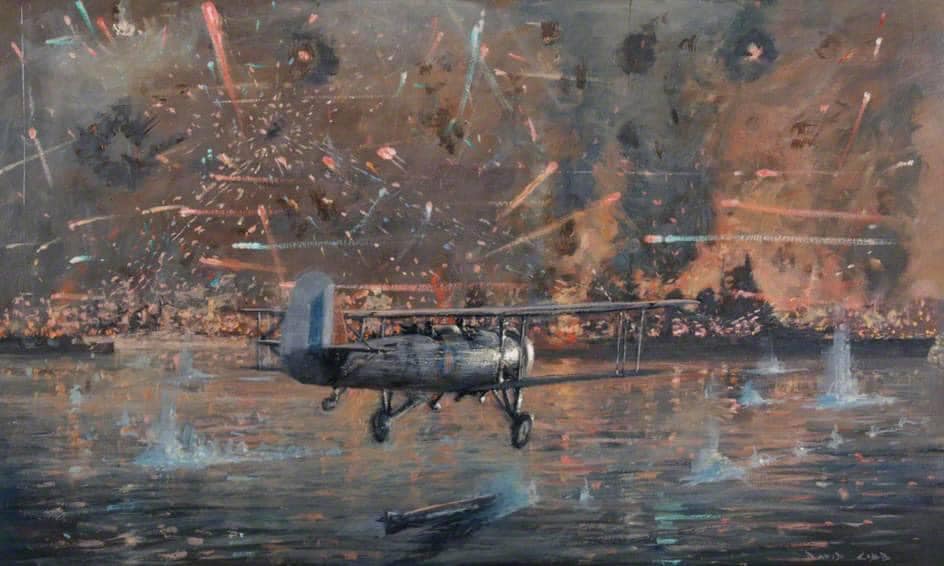
On the afternoon of 11 November, 1940, a naval task force under Rear Admiral Lumley Lyster, Britain’s foremost carrier tactician, quietly approached Taranto. Lumley had just one aircraft carrier, and four cruisers and five destroyers. At dusk, Lumley launched his obsolete Swordfish torpedo bombers from the HMS Illustrious. Two hours later around about 10 pm, 21 Swordfish biplanes screamed out of the flare lit darkness, and struck the Italian battleship row. They sunk one battleship, severely damaged two others and damaged two heavy cruisers for the loss of just a single plane. The Raid on Taranto shocked the Italians. In the space of one hour, the Regina Marina went from a dangerous threat to the British Navy in the Mediterranean to a fleet-in-being which would rarely leave port for the rest of the war.
The Japanese naval attaché in Berlin, Lieutenant Commander Takeshi Naito, flew down to Taranto and documented the raid. Naito passed on the information to his friend, carrier pilot Commander Mitsuo Fushida. Fushida went on to plan and lead the aerial attack on Pearl Harbor just over a year later
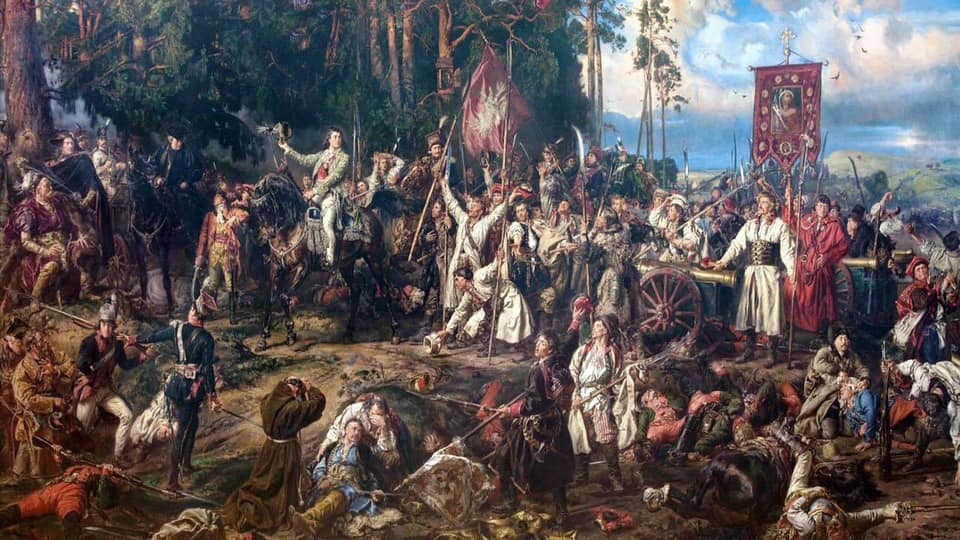
Toward the end of the Age of Enlightenment, the game changed. Though Enlightenment principles were celebrated in the salons of Europe, the aristocracy and their power structures were too entrenched to torment radical change. It took the revolt by Britain’s thirteen North American colonies, an ocean away from the Empire’s power base in England, to show that governance by Enlightenment ideals was possible. It also took a little over a decade of war and a failed experiment called the Articles of Confederation, before the disciples of the Enlightenment could look upon the countries of the world for a success story. The American Revolution, the adoption of the US Constitution, and the impending inclusion of amendments protecting individual rights sent shock waves throughout the world where small aristocracies still held most of the power. Just the idea that all men are equal in the eyes of the law was a radical notion that directly resulted in bloody revolution in many countries. America’s “Life, Liberty, and the Pursuit of Happiness” not only inspired the “Liberty, Equality, and Fraternity” in France, but also the “For Our Freedom and Yours” of Poland. But whereas France’s revolution devolved into an internal bloodbath, Poland’s was relatively peaceful, at least internally.
In the late 18th century, the Polish–Lithuanian Commonwealth was ripe for constitutional revolution. The Commonwealth was the only country in Europe who already enjoyed “democracy of the nobility” where all nobles, no matter their wealth and status, were equal in the eyes of the law (if only in theory). Still, it was not beyond the realm of belief to take this concept to the next logical step and apply this equality under the law to all citizens. Furthermore, the super wealthy magnates, and their foreign backers, had sabotaged the political process to the Commonwealth’s detriment, through the abuse of the ”liberum veto”. The abuse was so obvious, and the corruption so blatant, that reform was obviously needed, and desperately desired by the rest of the szlachta (petty nobility), the burghers, merchants, peasants, and clergy. Finally, the Russian, Prussian, and Austrian Empires sensed the weakness, and encroached on Polish territory — partitioning off pieces of the country in 1772. In the Commonwealth, rule by the super wealthy aristocracy and their elected King was obviously not working.
In 1784, after the end of the American Revolution, Continental Army general and godfather of the US Army Engineer Corps, Tadeusz Kościuszko, returned to his Polish homeland. His arrival sparked the action necessary for Commonwealth to pass the Constitution of 1791 — the “world’s second oldest constitution”, and a near mirror of the US Constitution with the Bill of Rights. (Though the Declaration of the Rights of Man and Citizen was adopted in France in 1789, it was not a governing document; the new French Constitution wasn’t passed until September 1791). Unfortunately the autocratic and aristocratic Empires of Austria, Prussia, and Russia could not abide a nation of free men on their borders. They invaded, overwhelmed, and partitioned Poland a second time just a year later. Tadeusz Kościuszko led an uprising against Russia in 1794, and though initially successful, the country was again overwhelmed. The great empires of Eastern and Central Europe were tired of the rebellious Poles. Kościuszko’s rebellion saved the French Revolution by diverting resources from the victorious First Coalition campaign against the French which allowed the French revolutionaries just enough breathing room to reorganize and call the mass levy. The “Polish Question” needed a permanent answer.
On 24 October 1795, the foreign ministers of the three empires assembled in St Petersburg and formally dismembered the remains of the newly formed Commonwealth of Poland. There would be no Polish rump state as there had been for the previous two partitions. Poland was to be wiped from the map of Europe. They found that a Polish rump state served only to inspire revolution and give sanctuary to radicals. Finally, the subversive Polish culture was to be eradicated. The three foreign ministers abolished all Polish institutions, divided up the country, and declared the official suppression of Polish language and culture.
Poland would not exist as a state again until after the First World War, 123 years later.
In October 1963, the US 5th Special Forces Group established a small camp in the heart of the South Vietnamese Central Highlands at Plei Me in order to train indigenous Montagnard tribesmen for the South Vietnamese Civilian Irregular Defense Group (CIDG) initiative. The 450 CIDG troops at Plei Me, with 12 Americans of ODA-217 and 14 S. Vietnamese advisors, were tasked to gain civilian support among the Montagnards for the South Vietnamese war effort against Communist North Vietnam, and interdict Ho Chi Minh trail access routes along the Ia Drang River.
On 19 October, 1965, the 32nd Regiment of the North Vietnamese Army encircled the camp, while the 33rd Regiment waited for the inevitable relief column from the South Vietnamese army units outside of the city of Pleiku, 25 miles away. The 32nd Regiment came close to overrunning the camp but massive American air support, dropped as close as forty meters from the perimeter, defeated the NVA assaults.
That night the US airlifted 175 Vietnamese Rangers and US Special Forces, led by MAJ Charlie Beckwith, to reinforce the camp. And as the NVA predicted, the ARVN launched a 1400 strong armored task force from Pleiku. Over the next three days the NVA ambushed the column multiple times. Although there was heavy fighting, the combination of South Vietnamese armored firepower and American air support broke up the ambushes.
On 24 October 1965, the North Vietnamese commander broke off the siege and withdrew back toward his base camps around the Chu Pong Mountain near the Cambodian border. That same day, US General William Westmoreland ordered the recently arrived US 1st Cavalry Division, with its unprecedented air mobility through the use of helicopters, to pursue the North Vietnamese before they could escape across the Cambodian border.
At the Treaty of Paris in 1783 which ended the American Revolution, Great Britain ceded parts of the province of Quebec west of Pennsylvania, south of the Great Lakes, and north of the Ohio River to the nacent United States of America. Known as the “Old Northwest” or “Ohio Country”, the cessation consisted of the present day American states of Ohio, Indiana, Illinois, Michigan, Wisconsin, and northeastern Minnesota. Since the government under the Articles of Confederation had no provision to tax, the new US government expected raise money to pay off its war debt through the selling of land in the Northwest Territory to settlers. In the Ohio Country lived Britain’s Indian allies during the American Revolution, whose lands were recognized by the Americans, but forfeit, as per the terms of the Treaty of Paris. The area was a vast wilderness punctuated by only a few Indian nations, but the Indian culture demanded vast amounts of land for hunting grounds in addition to their semi nomadic system of agriculture. The settlers arriving in the Northwest Territory to claim their land naturally led to conflict with the Indian nations and led to increasing bloodshed along the frontier. Moreover, despite the Treaty of Paris, the British had no plans to evacuate their troops from the area, and still occupied Fort Detroit in the late 1780s. The British secretly desired a client buffer state between Canada and the United States, which would keep the Great Lakes under British control, and provide an exclusive market for their manufactured goods, upon which the Indians were dependent but had no way of producing on their own.
At various times between 1783 and 1785, the leadership of the Indian nations of the Northwest Territory, primarily the Wyandot (Huron), Miami, Shawnee, Lenape (Delaware) Ojibwe, Odawa, and Potawatomi, Kickapoo, Kaskaskia, and the Wabash Confederacy, came together at Fort Detroit to form a bulwark against the expansion of the United States westwards. They formed the United Indian Nations in 1785, which was a loose confederation of generally Algonquin speaking Indian nations who agreed not to treat with the United States separately. The decentralized nature Western Confederacy, as UIN was known in the US, was exploited by the land hungry Americans. Less than a year later in January 1786 the Shawnee, Delaware, and Wyandot signed the Treaty of Fort Finney which allowed Americans to settle on their lands along the Ohio River. The Confederate Council Fire at Fort Detroit rejected the treaty which violated the Confederacy agreement. The Americans didn’t care.
The Northwest Territory was formally organized in the Northwest Ordinance of 1787. The governor, Arthur St. Clair, was instructed to “re-establish peace and harmony” with the Western Confederacy, but by 1789 peace negotiations broke down and Indian war parties and American militias raided each other’s settlements regularly. About 1500 American settlers were killed or enslaved, along with an unknown number of Indians, in the two years before the beginning of the Northwest Indian War.
The ratification of the US Constitution in 1787 permitted the authorization for the Executive Branch to raise a permanent army, funded by yearly appropriations by the US Congress. The first 300 American regulars were barely enough to keep up with settlers floating further and further down the Ohio and enforce the treaties with the various nations of the Western Confederacy. The big problem was not the Indians, but the settlers, just as the British found out 30 years before after the French and Indian War. Congress only authorized one regiment for operations on the frontier, and then only for year one terms as per US Constitution. That wasn’t nearly enough time, or men, to train the men properly, man the forts, maintain the treaties, protect the surveyors, much less act on the delicate situation. The untrained, ill equipped, ill funded, and inexperienced soldiers of the First American Regiment under Lieutenant Colonel Josiah Harmer could not keep the squatters and settlers inside the treaty lands, the Shawnee and Miami war parties from attacking homesteads and settlements, nor the Kentucky, Virginia, and Pennsylvania militia from conducting reprisal raids.
In 1786, Harmar built Fort Knox at Vincennes, (the old Fort Knox in present day Indiana, not today’s Fort Knox in Kentucky) specifically to prevent Revolutionary War hero George Rogers Clark and his Virginia militia from raiding Confederacy lands. In 1789, newly inaugurated President George Washington suffered significant blowback from American citizens in the West to do something about the bloodshed. Washington, always a friend to the Indians, at least until he wasn’t, asked St. Clair if the Western Confederacy was inclined to peace or war, St. Clair responded, “War”.
In 1790, Washington and Secretary of War Henry Knox authorized Harmar to conduct a “punitive expedition” against the Shawnee and Miami to deter further attacks. Harmar might have been a dandy, but he didn’t need instructions on how to prevent Indian attacks. He was the senior officer in the American Army. As the Indians and settlers knew, the American frontier was too large and too untamed to defend outside a few forts where refuge could be found, the only choice was to attack, something the Pilgrims and Puritans figured out 125 years previously in the Pequot War. Western New York was just at that time open for settlement because of Sullivan’s Campaign in 1779 broke the Iroquois permanently, even though the Iroquois continued to raid from Fort Niagara and reservations in Canada for years.
Along with the First American Regiment, Harmar, now promoted to major general, mustered the militia at Fort Washington (present day Cincinnati, Ohio), and Fort Knox at Vincennes. The two forces, one under Major Jean Hamtramck at Vincennes and the other under Harmar, were to converge on the large Miami town of Kekionga (present day Fort Wayne, Indiana). They’d destroy any Confederacy villages and British trading posts along the way. The destruction of the British trading posts was key. Their loss would economically tie the Western Confederacy to the United States, no matter how many villages were destroyed. The Indians simply had no choice: the old ways were lost forever, if not completely in knowledge, then certainly in will. With the trading posts gone, the British would be in the same position France was in before the French and Indian War: without massive subsidies, British goods would be too expensive, too few, and of lesser quality than American goods produced nearby. The Indians would have no choice but to buy from American traders. Once Kekionga and the surrounding Miami villages were destroyed, the combined army would go on to Fort Detroit, weather permitting, and expel the British, completing the subjugation of the Western Confederacy.
The expedition got off to a rough start. In early October 1790, Hamtramck’s column burned a few abandoned villages of the Wabash Confederacy, but his Virginia militia began to desert soon after. The militia that Hamtramck, and Harmar, had for the offensive was not the same that took part in the raids. The campaign was in the middle of the harvest and many farmers paid for substitutes, who not fighting for their homesteads and strictly for pay, made for poor militia. As soon as the festive atmosphere of the original muster at the fort was replaced by the hard living and imminent fear of death or mutilation endemic to campaigning, the militia trickled away. Hamtramck was only out for a few weeks before he turned around and returned to Vincennes.
Harmar’s column departed Fort Washington on 7 October had much more success initially. At the head of 320 regulars of the First American Regiment, and 1,200 militia from Kentucky and Pennsylvania, Harmar headed directly at Kekionga, burning villages along the way. On 15 October, about 25 miles from Kekionga his scouts captured a Shawnee scout who told him that the warriors of the Miami and Shawnee tribes were massed at Kekionga waiting for more warriors from the other nations of the Western Confederacy and 320 Cherokee warriors, traditional British allies. Determined to surprise the Indians before they grew even stronger, Harmar dispatched Colonel John Hardin with 600 soldiers and militiamen to force march and surprise the Indians while he followed behind with the trains and main body. Hardin found the village abandoned and when Harmar arrived on the 16th, they confiscated the food left behind, and burned the town to the ground. There were no Confederacy warriors to be found.
The 1000 warriors of the Western Confederacy under war chiefs Little Turtle of the Miami and Blue Jacket of the Shawnee weren’t running away, they were just waiting for Harmar to divide his force. They knew everything about Harmar’s army, its morale problems, and everything about Harmar himself. They knew he spent a significant amount of time in Paris (where he delivered the ratified Treaty of Paris to Benjamin Franklin in 1783) and got addicted to the good life. They knew he was up to his eyeballs in debt because of it, but refused to give up the lifestyle. They knew he would have a sumptuous wagon filled with top shelf booze. They knew he was a drunk. Hell, everyone knew Harmar was a drunk: Henry Knox even referred to it in one of the specified objectives of the campaign “Don’t drink, sober generals are good generals.” Little Turtle and Blue Jacket knew it was only a matter of time before Harmar made a mistake they could exploit and his army disintegrated as a result. There was no reason to waste warriors’ lives, who could not be replaced, in a straight up battle for Kekionga, They didn’t have to long to wait.
As Harmar and the main body established a camp outside Kekionga, Harmar sent raiding parties out to destroy the smaller villages and find the elusive warriors. These raiding arties were exactly what Little Turtle and Blue Jacket were waiting for. On 19 October, Hardin set off to attack the village of Miami chief Le Gris. On the way, Hardin’s 30 regulars, 30 cavalry and 180 militia spotted a lone Indian and they gave chase. The Indian ran into a swampy marsh along the Eel River known as “Helle’s Corner”. He was a decoy. Once inside the marsh, Little Turtle attacked the spread out Americans. The militia immediately broke, mainly without coming into contact, though a few stayed with the regulars and died fighting. Only 8 regulars survived, including the company commander who had words later with Hardin. Though most of cavalry and militia survived, including Hardin, they mostly went home, but not before spreading the tales of their defeat back at Harmar’s camp.
The next day, another 300 strong mixed American force was ambushed eight miles north of Kekionga, leaving 20 dead, including the well-liked ensign who commanded the force. Almost certainly drunk, Harmar surprisingly pulled the camp back two miles further south of Kekionga in response to the attack. Even worse, Harmar refused the men’s request to recover and bury the bodies. They were no strangers to the Indians’ proclivity to mutilate the dead. Morale plummeted at Harmar’s obstinacy.
On the night of the 21st, Hardin decided to attack on his own, if only to bury the bodies. He also said he hoped to catch the Indians digging up their possessions that they buried, but more likely Hardin was looking to redeem himself after the Battle of Helle’s Corner. With sixty regulars and 300 militia, Hardin set out into the darkness. When Hardin arrived at Kekionga, he was surprised to find the ruins occupied by about a thousand Confederacy warriors, well-armed with British Brown Bess muskets. Little Turtle and Blue Jacket occupied the town after Harmar withdrew out of sight the day before. Hardin sensed an opportunity to trap the Indians in Kekionga, which was nestled in the bend of the Maumee River. Hardin sent a rider back to the camp for Harmar to bring up the main body, while he fixed the Indians in place.
Hardin divided his small force and one column rode around the town on the far bank to attack after crossing the river to the north. Unfortunately for Hardin, Little Turtle and Blue Jacket struck first as the small groups moved to their assault positions. Attacking and feigning retreat, the Indians spread Hardin’s command out further. Systematically defeating the small isolated detachments, the Indian warriors surrounded Hardin and the remaining regulars defending the ford over the Maumee River. Hardin’s men held firm and they were confident in the imminent arrival of the main body, just a few miles away.
Harmar wasn’t coming. When the rider told him of the Indians’ strength he began shaking. He was almost certainly drunk by several accounts. He formed the 900 men remaining in the camp into a hollow square to await the Indian attack. After about three hours, and low on ammunition, Hardin and what remained of his command broke out of the Indian encirclement and rejoined Harmar back at camp.
Harmar attempted to throw his officers a victory banquet that evening, but there was no denying the scale of Harmar’s defeat. Over the past three days, Harmar’s command suffered 262 killed and 106 wounded, and he barely heard shots fired in anger. Most of the killed were still laying in the fields, which infuriated the men. An unknown number of Indians were killed and wounded, the best guess was about 150. Ignobly, Harmar decided that he no longer had enough strength to continue. His militia were deserting in droves, so he returned to Fort Washington.
When the sun came up on the morning of 22 October 1790, the bodies of the American regulars and militia still lay unburied on the battlefield. The scalped heads of the dead reminded the Indians of squash steaming in the autumn air. They named their great victory over the United States at Kekionga, “The Battle of the Pumpkin Fields”.
Though Harmar proclaimed victory, Knox had him court martialed. Unfortunately the politically connected Harmer convinced the board to place the blame for the defeat at The Battle of the Pumpkin Fields on the ill-disciplined militia. Washington was furious at the defeat and Congress authorized another expedition, this time with Arthur St. Clair in command. Little Turtle and Blue Jacket became Indian heroes among the Western Confederacy. Most of what we know of Harmar’s campaign comes from the meticulous detail in the diaries of Major Ebenezer Denny, a Revolutionary War veteran, Pennsylvania regular in the First American Regiment, and future first mayor of Pittsburgh, Pennsylvania. The Battle of the Pumpkin Fields was the worst defeat suffered by the United States of America against the indigenous people of North America up to that time. The Battle of the Pumpkin Fields would end up being the third worst defeat against the Indian nations in American history, after the Battle of the Wabash in 1791 and the Battle of the Little Big Horn 85 years later in 1876.





 Buk's Historical Ad Hockery
You must be logged in to post a comment.