The Battle of Alcatraz

After a failed escape attempt to seize the notorious island prison’s boat launch, rioting prisoners took hostages and fortified themselves in one of the cell blocks. On 3 May 1946, prison authorities summoned assistance from nearby Treasure Island Naval Station and the US Army post at The Presidio. Two platoons of marines and coast guardsmen led by Gen Joe Stillwell and BG Frank Merrill arrived the next morning. Using tactics they learned fighting dug in Japanese; the marines and the prison guards isolated the prisoners from the hostages and then stormed the cell block. Three prisoners and two guards were killed, with about a dozen wounded. Two captured prisoners were eventually executed in the gas chamber.

The Vietnam Veteran’s Memorial

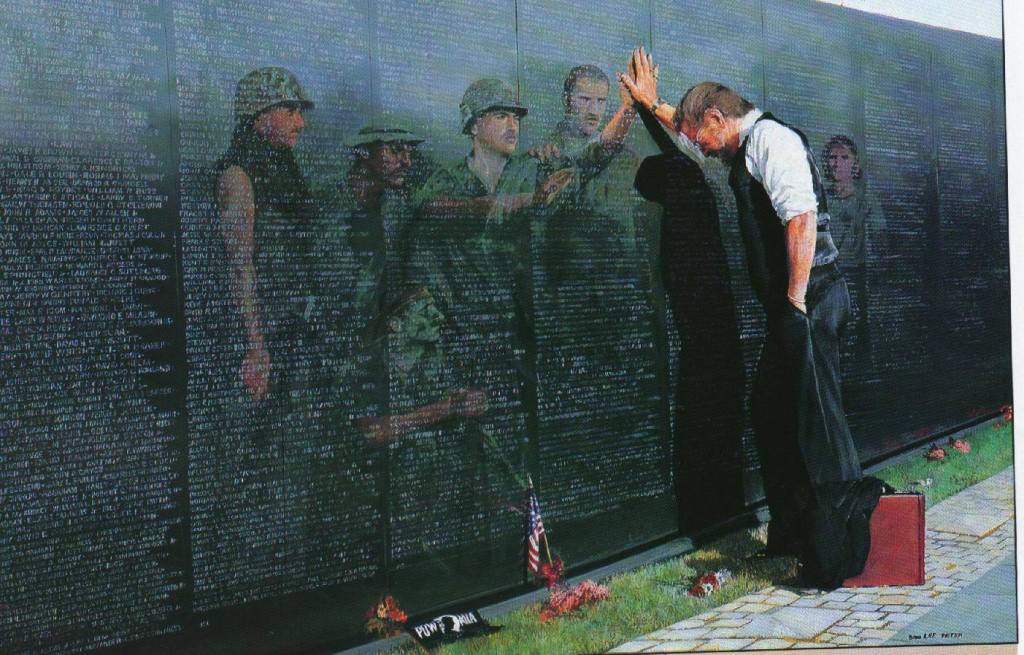
Reflections by Lee Teeter

On 6 May 1981, the Commission of Fine Arts unanimously chose Maya Yang Lin’s simple and elegant design for the Vietnam Veteran’s Memorial in the Constitution Gardens in Washington D.C. Lin’s post minimalist design was of two black walls of granite that descend into a gravelike depression and meet at an angle. It was chosen from over 1100 submissions in an open call to artists by the Department of the Interior. The walls would be engraved with the names of those who were killed in the line of duty during the war in chronological order, starting with Air Force T-Sgt. Richard B. Fitzgibbon Jr. who was murdered on 8 June 1956 by another airman as he was handing out candy to orphans in Saigon.

The choice, like the war, was controversial. Veteran’s groups hated it and wanted something more akin to the Marine Corps War Memorial. Several compromises were proposed, but President Ronald Reagan called the Commission and told them to ignore the critics. One of the compromises, adding the “Three Servicemembers” to the Memorial, was eventually approved but only when it was placed far enough away that it wouldn’t disrupt the integrity of Lin’s creation.

Names are still being added as remains of those listed as “missing in action” are found, or those who died as a direct result of injuries sustained in the war. The last six names were added in 2010.

U-110 is Captured

By May 1941, Great Britain was slowly being strangled and was down to less than six months of the food and essential supplies required to continue the war. In his memoirs, Winston Churchill would say that the only thing that really scared him during the Second World War was the U-boat threat.

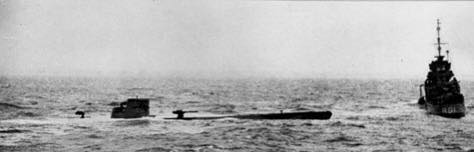
On the morning of 9 May 1941, the German submarine U-110 was part of a Wolfpack that attacked a convoy south of Iceland. One of the escorts, HMS Bulldog, depth charged U-110 and severely damaged it. On the second pass, the Bulldog dropped more depth charges below the U-boat and forced it to the surface.

The German crew abandoned the sub, thinking it was going to sink. But it didn’t. The crew tried to re-board but some machine gun fire from a quick thinking sailor on the Bulldog convinced most of them of the folly of that action. None the less, the U-boat captain died trying: he assumed there was no need so he didn’t destroy the cipher books, message logbooks, or the Enigma machine, used to decode messages from fleet headquarters, before abandoning ship. A boarding party from the Bulldog recovered it all.

The capture of U-110 was an intelligence bonanza for Dr Alan Turing and the British code breakers at Bletchley Park. The Allies were already reading the Luftwaffe’s mail, within the month they were also reading the Kriegsmarine’s. The combination of the two allowed the British to reroute convoys away from German reconnaissance planes, surface raiders, and U-boats, not to mention target Rommel’s supply convoys between Italy and Libya. Merchant marine losses dropped significantly. It was the turning point in the Battle of the Atlantic that year.

The Battle for Crete: Perfect Intelligence and Imperfect Understanding

On 12 May 1941, Group Captain Beamish walked into LieutGen Freyberg’s “office” in the quarry on the neck of Crete’s Akrotiri peninsula, ostensibly to get his ass chewed for the Luftwaffe’s “Daily Hate”, and the RAF’s lack of response, but actually to give the commander his brief on the latest Ultra intercept. Of the 35,000 Allied troops on the island, only Beamish and Freyberg knew of the source, and even existence, of the “Most Reliable Sources” or “Orange Leonard” communiques.

OL-2168, dated 12 May 41 was the analysis of a Luftwaffe order delaying the invasion of Crete from 17 May to 20 May due to the need for an Italian tanker filled with aviation fuel to make its way down the Adriatic. The Luftwaffe order also detailed a change in the invasion’s task organization: the initial landing would still be made by the 7th Fallschirmjaeger Division, but the follow on troops would not be made by the 22nd Air Landing Division, which would stay in Romania, but by the 5th Mountain Division, which was badly mauled in the Greek campaign but reorganized and reinforced for Crete. After the parachutists seized an airfield, the 5th Mountain would be air bridged to Crete from Greece just as the Luftwaffe gad done for Franco’s army from Morocco to Spain five years before.

But the Bletchley Park analyst that composed OL-2168 either misread the order, or more likely, presented the worst case scenario to cover his ass. OL-2168 stated that the invasion of Crete would be made by not two, but three divisions, the 7th FJ, 22nd AL, and 5th Mtn with airborne and air landing components, and a supporting sea borne landing. Freyberg assumed the 5th Mtn was going to make an amphibious assault, as opposed to a landing on a stretch of beach already secured by the parachutists. Despite all of the other evidence to the contrary: a Luftwaffe commander, airfield objectives, lack of German or Italian landing craft, British naval dominance around Crete at night etc. (including future OL comms that clarified the situation) Freyberg was convinced the amphibious invasion was the main effort and altered his orders and disposition accordingly. Nearly half his troops, and almost all of his artillery, now guarded beaches against a non-existent threat.

Churchill’s “fine opportunity for killing parachutists” was slowly turning into a fine opportunity for killing and capturing British, Commonwealth, and Greek troops.

Freyburg Takes Command on Crete

On 27 April 1941, the German army raised the Nazi flag over the Acropolis in Athens and the last Allied troops were evacuated to Crete from the Peloponnese. Crete was the obvious next target. The loss of Crete would isolate Turkey, seal the flank of the upcoming German invasion of the Soviet Union, put permanent Luftwaffe bomber airfields in range of Egypt, prevent the British from easily supporting the already troublesome Greek and Jugoslav partisans, and most importantly, keep British bombers from targeting Hitler’s only dependable supply of natural oil, the Ploesti oil fields in Romania. The three big, and new or expanded airfields on the north coast of the island were the keys to Crete. On 30 April 1941, MajGen Bernard Freyberg was given command of Crete with the explicit task of keeping the airfields out of German hands.

Freyberg was a larger than life and barrel chested man, personal friend of Winston Churchill, and the senior operational officer from New Zealand. He earned the Victoria Cross in the First World War, and was fearlessly aggressive: he was wounded 27 times though he did tell Churchill once that it was only half that as “you usually get two wounds each time – one coming in and one going out”. As the 2nd Zealand Division commander, he inherited “Creforce” with more than 40,000 soldiers. He had three of his Kiwi brigades, one large Australian brigade group, the British brigade sized garrison, three Greek brigades, and a surprisingly effective composite Greek brigade consisting of Greek officer cadets, NCO and basic trainees, their cadres, and the Cretan gendarme. A formidable force to repel any German invasion, on paper at least.

Unfortunately, 15,000 were noncombatant soldiers from which he could only form a single under strength composite brigade. The rest were “mouths to feed” and “useless, except for causing problems with the civilians”. Crete had a food shortage that the extensive vineyards, and olive and orange groves were no help mitigating. Furthermore he had woefully inadequate artillery and AA, only 24 working tanks, few trucks, and only 15 fighter aircraft. Moreover, the exiled Greek Royal family was on the island, and made the local political situation delicate. But most troubling were the few operational radios, and a supply and communication’s system based on runners and vulnerable wire along the single coast road. However, what he lacked in essential resources, it was thought was made up with numbers, a generous to a fault, warlike, and zealously anti-German population, and near perfect intelligence.

The morning Freyberg assumed command, he met with RAF Group Captain George Beamish, ostensibly to discuss the appalling air defenses of the island. But Beamish had a more important additional duty: he was the only officer on the island allowed to decode and view the “Orange Leonard” communiques, the Ultra intercepts of high level Luftwaffe operations orders. Through Beamish and Ultra, Freyberg knew the German objectives (the airfields, particularly Maleme), the German units involved (7th FJ Div, and 22nd Airlanding Div), the invasion method (airborne with supporting seaborne landing), the German commander (Luftwaffe Gen Kurt Student, the Father of the Fallshirmjaeger), the supporting air groups, their airfields, and finally the invasion date – 16 May.

Later that evening, Winston Churchill cabled his support to his friend and said the upcoming battle was, “a fine opportunity for killing parachute troops”.

The Battle for the Corinth Canal

TBy late April, 1941, the British, Commonwealth and Greek forces were in full retreat to the Peloponnesian peninsula where the British navy was already evacuating thousands of troops to Crete off the east coast. In order to reach the Peloponnese, the evacuating troops had to cross over the narrow Isthmus of Corinth which was cut by a canal that linked the Gulf of Corinth and the Aegean Sea.

At dawn on 26 April 1941, the 2nd Fallschirmjaeger (parachute) Regiment landed on both sides of the canal to seize the bridges in order to cut off the withdrawal and open up an avenue for the pursuing panzers to cross the canal. The parachute landings surprised the defending Australian battalion, but by the time the Germans managed to get organized and find their weapons (Fallshirmjaeger parachuted unarmed and gathered their weapons from canisters parachuted separately), the Australian infantry and British Matilda tanks were already counterattacking. However, German Stuka dive bombers broke up the attacks, and within the hour there was hand to hand fighting on both sides of the highway bridge and foot bridge.

About 0800, the bridge exploded. There are two theories: 1. The Australians detonated the charges (the simple and most likely theory) and 2. The German paratroops seized the bridge, cleared the explosives, cut the wires, and a rogue shell fired by a Kiwi artillery piece eight miles away set the explosives off (an account given by a German officer who would have suffered severe repercussions for allowing the bridge to be destroyed. Needless to say this account is most favored by German historians and airborne enthusiasts).

You, intelligent reader, judge for yourself.

In any case the bridge was destroyed, and the 2nd FJ took extensive casualties. The 1st SS Leibstandarte Division was delayed crossing the canal, which allowed another 22,000 Allioed troops to evacuate from Nafplio. The cut off British rearguard, the 4th New Zealand Bde retreated to Megara, near Athens, and was evacuated with great difficulty by the British navy the next day.

Ramones

In 1967, Rock and Roll irreversibly split – fans of the live sound at the Monterrey Pop Festival (where the Beatles couldn’t play) would go on to form hard rock and heavy metal, and fans of The Beatles’ Sgt Pepper album (which sounds like shit live) formed pop. By the early 70s, safe pop rock had taken over the radio airwaves. The meandering sound of the time was technically complex, and in many ways artistically brilliant, but it had a giant flaw: You couldn’t dance to it.

Four middle class kids from Queens, New York wanted to change that. They wanted to bring back the “Rock and Roll Dance Party”. They were fans of the minimalist garage rock style of the bands that flourished in the underground night clubs of New York at the time, such as the Dictators, New York Dolls, and the Stooges. The four “brothers” formed a band and each adopted the last name “Ramone”. They stripped songs down to their most primal, and built them back up with three chords and two minutes of solid sound. The Ramones swept the club scene of New York in 1975 performing covers of 50’s and 60’s songs, rebooted in their own unique way.

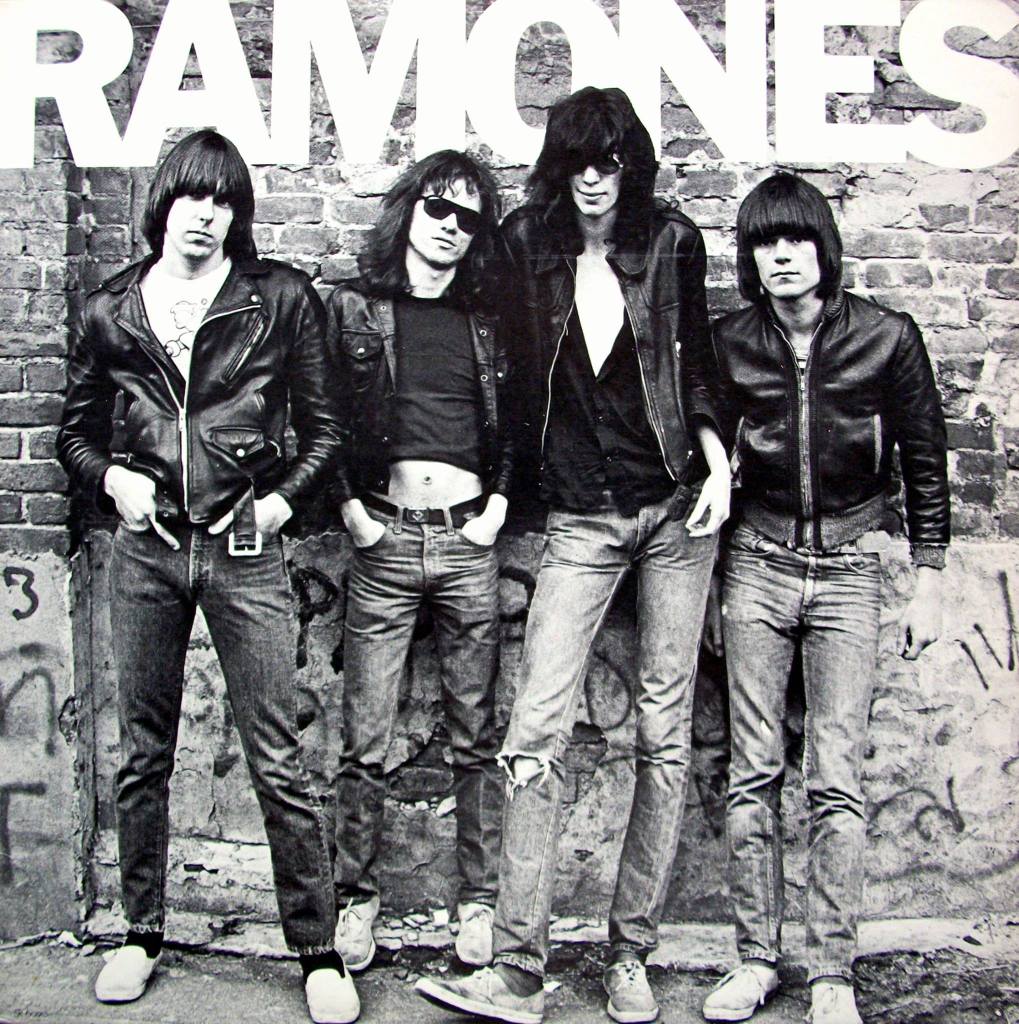
In January 1976, they spent $6400 and two weeks recording their eponymous debut album. On 23 April 1976, the album was released and on the cover was the now iconic shot of the four band members leaning against a wall. Anyone who was anyone had to have that shot of their band. That single shot and simple sound convinced thousands of kids that they too could be rock and roll stars. Hundreds of new bands on both sides of the Atlantic began to emulate their simple, near sololess sound. The Ramones were the perfect combination of 50s energy, 60s teenage angst (rooted in the perception that they missed out on their older brother’s and sister’s fun in the “Summer of Love”) and 70s speed. Critics hated the album, and radio stations refused to play it.

Fuck’em: Punk was born.

OneTwoThreeFour!

The Rats of Tobruk

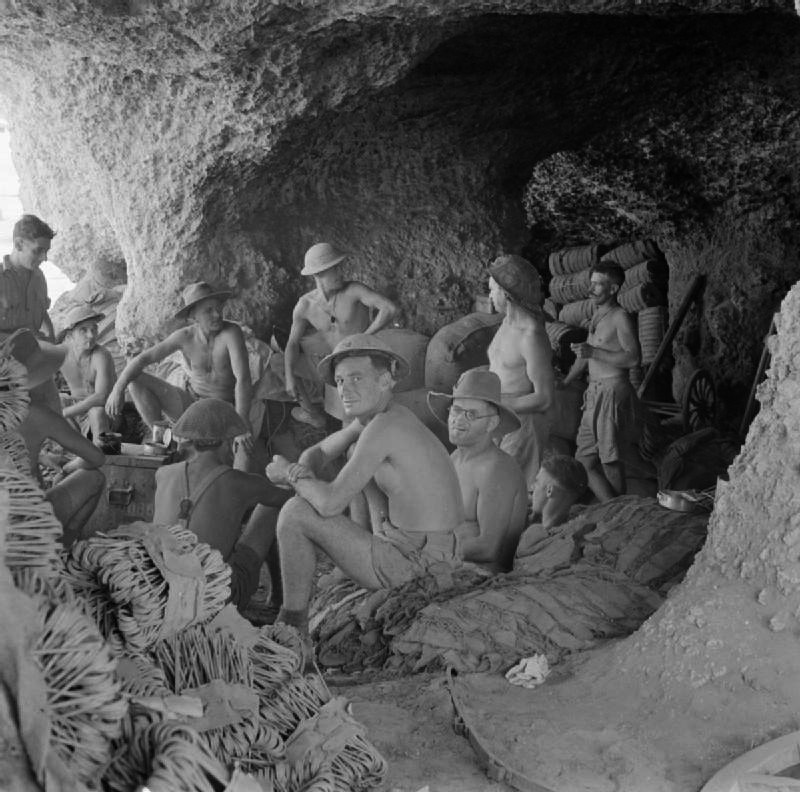
From 10 April to 30 April 1941, Lieutenant General Leslie Morshead’s 9th Australian Division defeated every attempt by Rommel’s Afrika Korps to seize the vital city and port of Tobruk on Libya’s northeast coast. On 1 May, Rommel invested the city with five Italian divisions and continued on to Egypt before the British could regroup. The British Navy provided enough supplies for the the garrison to hold out indefinitely, despite much hard fighting when the Italians made a deliberate assault. The Australians’ aggressive nighttime patrolling and numerous spoiling attacks kept the Italian’s attacks to a minimum. Furthermore, they launched raids on Afrika Korps supply lines from the city which caused great frustration to Rommel’s precarious logistics situation. Morshead held out until the end of August when his Australians were replaced by Poles, Czechs, and Brits brought in by the British Navy.

Piast Poland

Miezko I Piast

The destruction of the Ostrogothic Kingdom of King Ermanaric in 370 CE (in modern day Ukraine) by the ferocious and nomadic Huns under Atilla’s grandfather (or greatuncle) was one of the seminal events of the first millennium, and second only to the founding of Christianity in the 1st Century CE. The ripples of the the Ostrogothic Kingdom’s destruction completely tore apart the fabric of social order in Europe, initiating the so-called “Dark Ages”. For nearly fifty years prior, the Hunnic horse archers raided Germanic, Gothic, and Slavic settlements and were unstoppable versus the infantry based armies of those nations. King Ermanaric’s suicide due to his impotence against the Huns, the first non Indo European steppe culture to move west, was a signal that the latest incursions were permanent and not mere raiding parties. “The Great Migration” westward began out of fear of the Huns.

For the next 100 years, the Huns so terrified the Germanic tribes that they fled westward and southwards. The Visigoths, Bulgars and Avars moved south into the corrupt and beset Eastern Roman Empire. The Angles, Saxons, and Jutes took to their boats and invaded the Romano-Celtic Island of Britain. The Alans, Burgundians, Alemanni, Vandals, Ostrogoths, Suebi, Langobards, Friisi, and Franks invaded the dying and dilapidated Western Roman Empire. Into the vacuum of Eastern Europe left behind by the Germanic tribes, moved not the Huns, but the Slavs.

The Slavs were primarily an agricultural people that lived from the Volga in the East to the Danube in the West. They formed the slaves, lower classes, and levies of the Hunnic, Germanic, and Gothic kingdoms in which they served, with a few independent but isolated tribal groups. As the Vandals, Burgundians, and Goths migrated from the fertile river basins of the North German Plain, they were replaced by the Sclavian Slavs, specifically the Wend, Sorb, Polans and Vistula tribes, with many refugees from the now defunct kingdoms displaced by the Huns. In the 5th century, the Huns under the Attila conquered south and west of the Carpathian Mountains which left the Slavs north of the Carpathians free to consolidate their new lands.

The Polans tribe gradually dominated the area. In the mid-10th century, the looming spectre of conquest from the Turkic nomads from the east or the Christian Caroliginian Empire in the west convinced the Piast leaders of the Polans tribe that they had to join the family of Christian nations to the west in order to survive. In 966, Miezko I Piast converted to Christianity in order to marry the Czech princess Dobrawa, whose country converted one hundred years before. On 14 April 966, Miezko and Dobrawa were married, and their land was converted, its people baptized, and the country consecrated by the Church (not to mention recorded by the Vatican bureaucracy) as Poland, the “Land of the Polans”.

The Battle of Sfax

RM Luca Tarigo

The British naval victories at Taranto and Cape Matapan allowed Adm. Cunningham to anchor the 14th Destroyer Squadron in Valletta Harbor on Malta to raid Axis shipping heading to Libya. The first fruits of that opportunity came on the night of 15-16 April, 1941 just off the coast of Sfax, Tunisia.

Three days before, four troopships carrying the remainder of the 15th Panzer Division (less vehicles), and one ammunition ship carrying three basic loads, departed Naples escorted by three Italian destroyers. The British, informed by ULTRA intercepts, tracked the convoy by seaplane until it was in the shallow waters off Tunisia, where it couldn’t disperse if attacked.

On the evening of 15 April, the four destroyers of the squadron: HMS Jervis, HMS Nubian, HMS Mohawk, and HMS Janus, exploited the Italian’s lack of radar and snuck to within 2000m of the convoy. Just before 2 am, the British destroyers ambushed the convoy and immediately sank or damaged all three destroyers with torpedoes or 4.7″ guns. They then turned their guns on the defenseless and cornered transports and sank all five. Only the heroic efforts of an Italian ensign, the surviving officer aboard the destroyer Luca Tarigo, prevented a one sided victory. The young 20 year old officer rallied what remained of the crew, and attacked the British flotilla as they were systematically destroying the transports. He managed to put two torpedoes into HMS Mohawk, whom had to be abandoned and scuttled.