The Royal Navy’s Bad Day: The Impact of Airpower, 1941

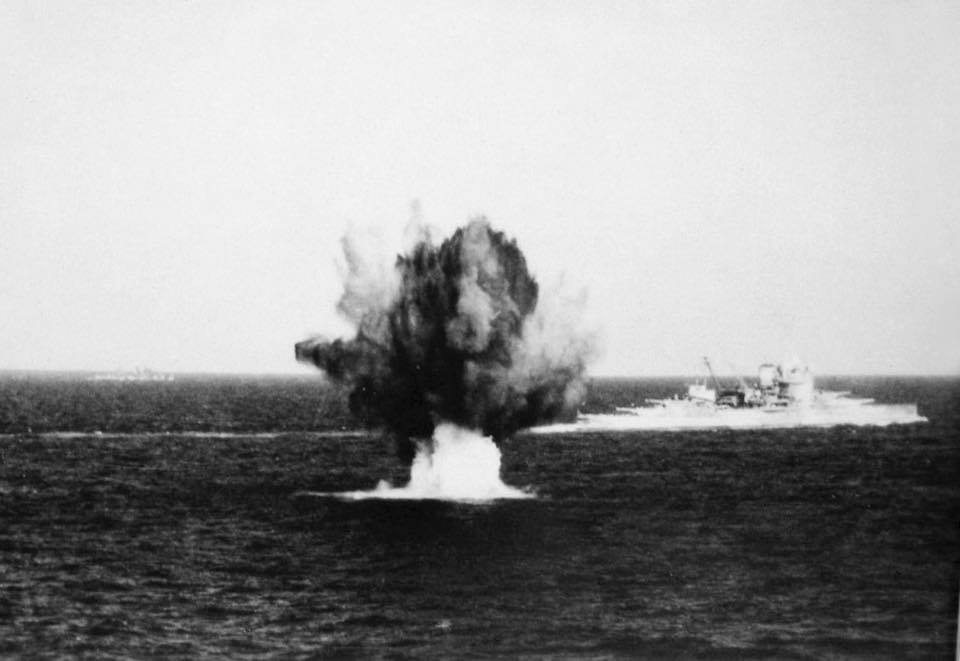
H.M.S Warspite off of Crete

After being stymied by a suicidally aggressive Italian destroyer captain, Admiral Cunningham’s ships around Greece turned to support the Kiwi attack on Maleme airfield. But there was no proper naval gunfire support coordination between the Kiwis and the ships off shore so it was ineffective. Unfortunately, the late start to the ground attack meant the ships were caught in the waters around Crete at dawn. And the Luftwaffe savaged them.

The Luftwaffe attacks were so intense that two destroyers ran out of antiaircraft ammunition and resorted to firing star shells, and laying smoke and sailing in tight circles to distract the planes from the larger and slower ships. Both battleships were badly damaged and limped back to Egypt. Two cruisers were sunk and the remaining ships all damaged to varying degrees. Thousands were killed, wounded, or left in the water for the Italians to capture.

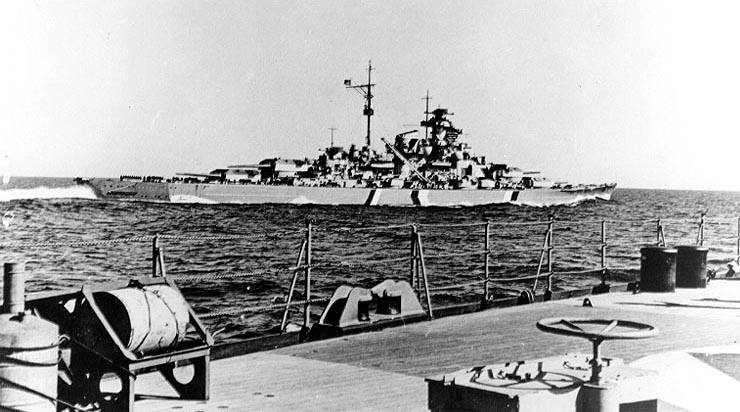
However, battleships were not obsolete as a measure of naval power just yet. Far to the north in the Norwegian Sea at Grimstadfjord near Bergen, the German battleship Bismarck and accompanying heavy cruiser Prinz Eugen stopped to refuel prior to their attempt to break out into the Atlantic. At 1300, they were spotted by a reconnaissance plane. At 1930, the RAF launched an attack, but by the time they reached the fjord the ships were already gone, but because it was dark they didn’t know it and bombed empty water. Since there were no secondary explosions the mission was labeled a failure.

The only bright spot for the day was the RAF mission that the Admiralty requested four days prior (I guess ATO cycles haven’t changed in 75 years) to bomb Brest to prevent the breakout of the Scharnhorst and Gneisenau. The Gneisenau was badly damaged and the Scharnhorst’s dry dock (she was refitting) was damaged. Neither would be able to rendezvous with the Bismarck.

The Battle of Crete: Counterattack

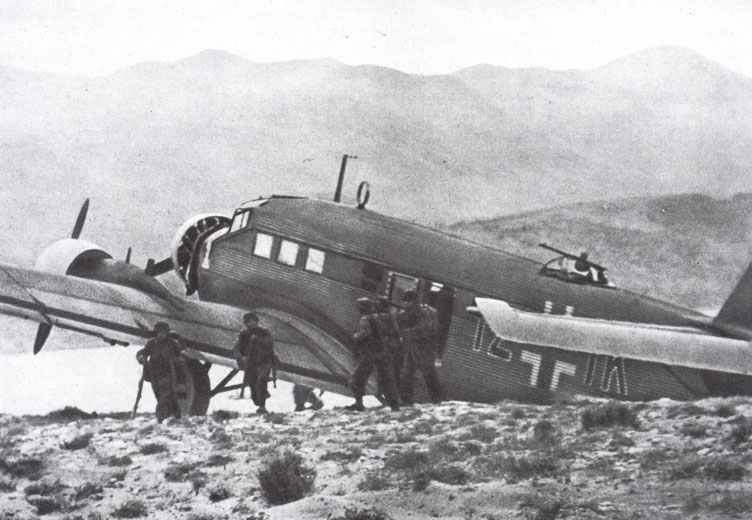
LieutGen Freyberg might have been obstinate and stubborn, but he knew exactly what the J-52s landing like clockwork on the evening of the 21st meant. He didn’t believe Andrew’s Brigade (Bde) Cdr’s suggestion that the “parachutists were being evacuated” or that the situation at Maleme was “satisfactory”. Freyberg was just convinced an amphibious invasion was imminent, and that evening he received what he thought was a confirmation: an Orange Leonard communique reporting the departure of the “naval supporting landing” (The Lupo and 22 caiques). Nevertheless, he couldn’t allow the Germans to resupply through Maleme so he ordered a counterattack. Freyberg still had seven unengaged battalions (bn), three of whom were of the fully equipped, fully manned British garrison brigade, but they would be needed to counterattack the sea landing. So it would be just a limited counterattack by the 5th NZ Bde.

The 5th NZ Bde (of which Andrew’s Bn was a part) was “holding” the line outside of Pirgos and the ridge two km east of Hill 107 with the reinforced 21st NZ Bn (with a company from now disbanded 22 NZ). The counterattack would consist of the 23rd Bn while the 28th covered the beaches east of Canea. The Bde Cdr protested and requested another Bn. Freyburg granted it, the 20th from east of Canea, but only after it was replaced by the a bn from the “corps” reserve at Georgioupolis 29km away (lots of reserves on the island). The order went out at 1900 on the 21st. The Australians from Georgioupolis didn’t arrived in Canea until 2300. The 20th took three hours to make the march to the start line. The attack commenced at 0330.

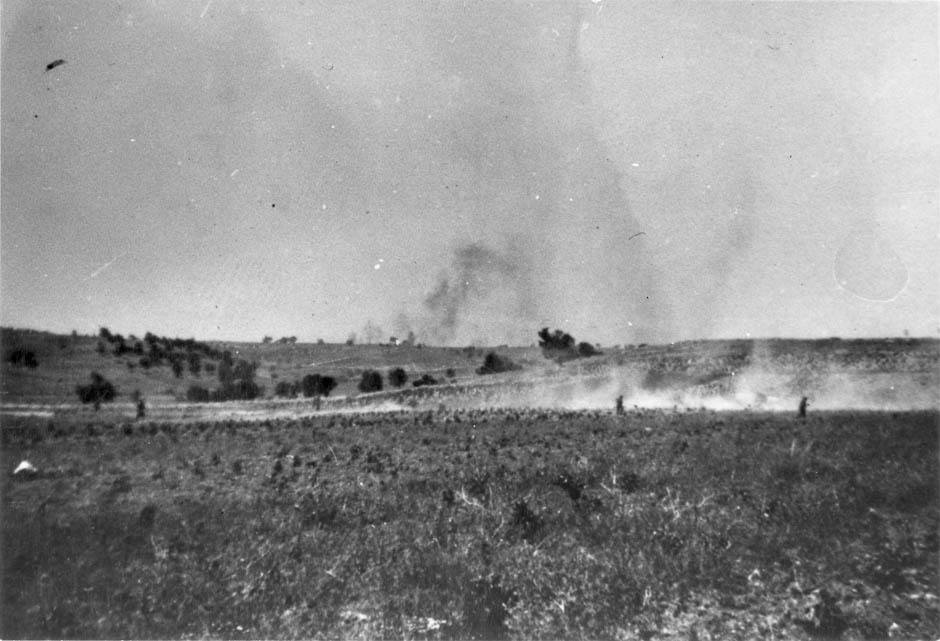
Despite confusion at the line of departure, a fresh German mountain bn, and reinforced FJ in the way, the Kiwis made good progress. One group of about 15 led by a hard charging 33 year old lieutenant even made it onto the airfield. But it was the high water mark of the attack. The 21st and 28th Bns were eventually committed, but they were uncoordinated and piecemeal. The sun rose at 0601. German pilots in Greece took off in the dark and circled the airfield waiting for light (which was dangerous as hell, and I’m sure they got a safety brief when the returned…). As soon as they could, the Stukas and Messerschmitts pounced on the attackers. By 0800, the attacked had failed.

To add insult to injury, the FJ in the prison valley struck north at the seam between the 5th NZ Bde and the 10th Bde at Canea, and reached the coast. It was only symbolic but it panicked the Allied command, and the remains of the 5th NZ Bde drifted east to “break out”.

The Germans would land three more bns, light artillery, and supplies from the 5th Mountain Division that day. Freyberg would never have another chance to take Maleme.

The Battle for Crete was over. The Germans won. The Battle for the Evacuation of Crete began.

The Naval Battle of Crete

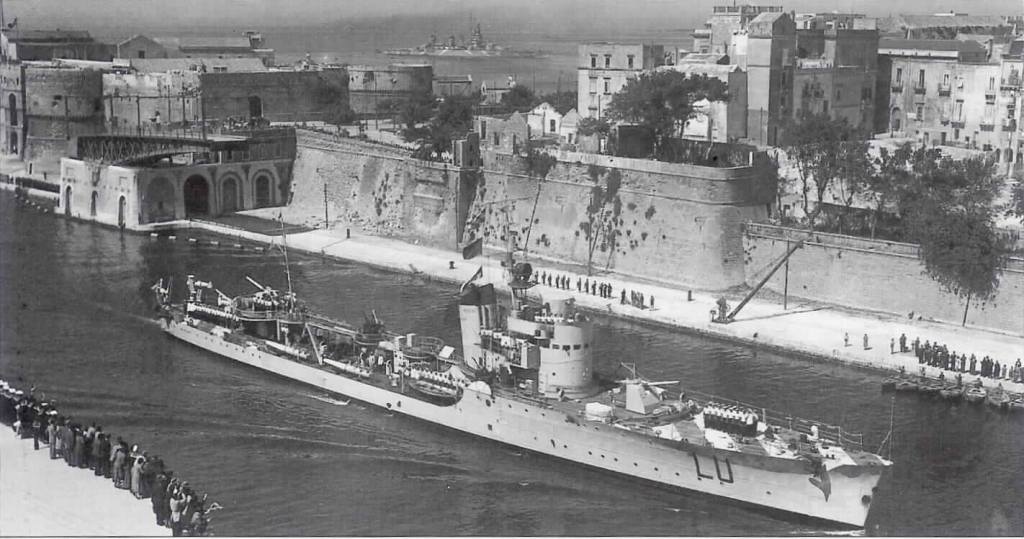
Lupo

The Aegean Sea belonged to the Luftwaffe by day, but the nights to the Royal Navy. Admiral Cunningham had two battleships, and three cruiser squadrons and two independent destroyer squadrons (about 40 warships) prowling the seas around Crete. They were searching for the dreaded German invasion fleet. On the night of 21/22 May 1941, they found it.


Just after midnight, Force D of three light cruisers and four destroyers engaged 23 ships just north of Crete. They were expecting Italian battleships, heavy cruisers, destroyers, and assault landings ships. What they found were 22 Greek caiques, the ubiquitous Aegean fishing trawlers, escorted by a single Italian destroyer. The convoy was packed with two battalions of German mountain troops, six light tanks, some heavy engineering equipment, and ammunition.


13 caiques were sunk, but the rest were saved by one of the unsung heroic naval stories of the war when the escort, the Italian destroyer Lupo, attacked the British force. She didn’t do any damage, but did cause a friendly fire incident and her action (she survived) allowed the rest to escape. One caique actually made it Crete, and landed her troops at Kastelli Kissamos, about ten kms west of Maleme.


Freyberg’s much feared invasion consisted of just 110 German soldiers and three sailors.

The Battle of Crete: The Landings

The reports that arrived at General Student’s 11th Air Corps HQ in Greece on the first night of the invasion of Crete painted a grim picture: Most battalions were at 60% casualties and two failed report at all (they were both effectively destroyed). One battalion vicinity of the Tavroniti bridge on the west side of the Maleme airfield had just 57 effectives. The 7th Fallschirmjaeger Division commander was missing (his glider crashed into the sea). The senior surviving officer in the division was a major. Most battalion commanders were now captains (and in one case a lieutenant), and one battalion commander was the former medical officer. None of the first day’s objectives were taken. The Cretan population was not friendly despite what the intelligence officers briefed. Ammunition was low, medical supplies nonexistent, and there was “a most distressing” lack of water. Commanders all reported that they were just waiting for the inevitable counterattack to sweep them from the island. The attack was doomed, and everyone wanted to cut losses.

Everyone, except Generalleutnant Kurt Student. As Germany’s, if not the world’s, foremost advocate for airborne warfare, he did not want the first divisional airborne assault in history labeled a failure. Against the recommendations of his staff, the requests of his subordinates, the advice of his peers, and even the orders of his superiors (General List told him to begin planning an evacuation), Student decided to continue attacking for one more day. If by dusk on the 21st he could not land a Ju-52 safely on an airfield, he would evacuate the island with the small flotilla of Greek and Italian merchant ships at his disposal.

The dawn capture of Hill 107 and the Maleme airfield electrified Student’s HQ. The fighting around Pirgos and the east end of the airfield was fierce (Andrew’s Bde Cdr sent up a Maori company from the 28th BN that night. They only made it to the town) but Student hoped at least the western runway was clear of direct fire. There was only one way to find out. He summoned a captain on his staff, one of the best young pilots in the Luftwaffe, and told him to fly to Crete, land, and personally report back. If he received any effective direct fire, the air landing of the 5th Mountain Division would be called off, and the 7th FJ evacuated.

The young pilot did so. Although the strip was mess, and he received scattered fire on the approach and artillery fire as he landed, there was no rifle or machine gun fire affecting the west end of Maleme airfield. The intrepid captain loaded some wounded and took back off. Student decided to continue the fight. Because of transport losses, he had a single battalion that was left behind from the day before and ordered them to drop on the airfield to secure it.

There was no Allied counterattack that day. By the afternoon, the Germans established a perimeter. At 1702, the first Ju-52 from Greece carrying 5th Mountain Division touched down on the west runway of Maleme airfield.

Despite heavy damage to the transports, twelve more fresh heavily armed men would arrive on the airfield every six and a half minutes, as long as there was daylight.

The Battle of Crete: The Fall of Hill 107

Due to various leadership, staff, and equipment problems, communications on the island of Crete were abysmal. The Germans actually achieved tactical surprise twice in the initial invasion of Crete: once when Freyberg didn’t tell anyone about the new invasion d-day and h-hour, and a second time later that afternoon when the second wave of Fallschirmjaeger landed around Rethymnon and Heraklion, whose garrisons no one thought to inform of the fighting around Maleme and Chania. Nonetheless, both landings in the East were contained due to unexpected steadfastness from Greek gendarmes and recruits, solid Australian blocking positions and massed counterattacks, a complete civilian “mobilization” led by “Pendlebury’s Thugs”, and quick decision making by Brigadier Chappell, the commander of the 14th Inf Brigade at Heraklion whom Freyberg reinforced because he thought him incompetent. But those troops in Heraklion were desperately needed around Maleme and Canea. Freyberg’s disposition and orders changes to face a still as yet unmaterialized seaborne invasion was deeply affected by bad communications at all levels so most units just executed Freyberg’s last orders and intent. This left nine (!) Allied battalions unengaged on the critical first day and the ones that were nearly overwhelmed.

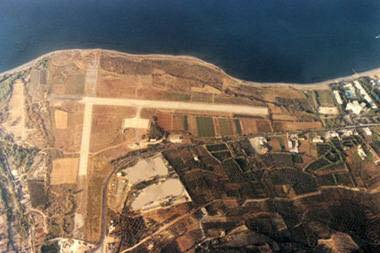
This was certainly the case for LieutCol Andrew’s 22 New Zealand Battalion holding Maleme airfield, its key terrain of Hill 107, and the town of Pirgos. Freyberg’s changes left the north end of the Tavroniti’s dry riverbed uncovered and this provided the Germans a perfect assembly area to consolidate after the disorganized landings. By 1000 on the 20th, all of his companies were heavily engaged by strong German attacks: C Coy on the airfield, D Coy on the front slope of Hill 107, A Coy and HQ on the back slope, and B Coy in Pirgos. But they held all day. He received unexpected assistance from the Cretan hamlets around the hill (led by their priest), and although the companies took considerable casualties they were holding their own. The problem was Andrew and his company commanders didn’t know they doing as well as they were. Andrew’s increasingly desperate calls for help to Bde HQ went unanswered. His one radio was spotty, land lines were cut, signal flares unseen, and he had to stop sending runners because they never returned. Furthermore he was trapped on the back side of the Hill in his command post out of contact with three of his companies, all of whom he assumed were overrun.

Each company, and some platoons, were fighting isolated actions uncoordinated with the rest of the battalion. On the airfield, C coy had the worst of it, they were the most exposed to Luftwaffe attacks, and faced the most organized attacks due to the riverbed. The commander took it upon himself to launch the bn reserve: two Matilda tanks and one of his infantry platoons. (One tank broke down, and one was stuck on a rock “like a turtle” in the riverbed and abandoned.) The situation was no different for D and A coys.

That night, after 18 hours of hand to hand combat, three of the four isolated commanders, Andrew on the back slope, C Coy on the airfield, and D Coy on the front slope, all came to the same conclusion: they had to withdraw before the Luftwaffe returned in the morning. They were low on ammunition, and each believed they were all that was left of the battalion, with no prospects of reinforcement.

So they all withdrew east to either B Coy in Pirgos or to the 21st Bn.

As the sun rose on 21 May, 1941, the Luftwaffe bombed empty trenches and surprised Fallschirmjaeger occupied an abandoned Hill 107. Maleme airfield, the key to resupply and reinforcement for the FJ, was in German hands. The slaughter and the successes on the rest of the island no longer mattered.

The Invasion of Crete

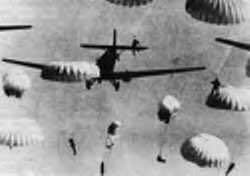
The Daily Hate by the Luftwaffe arrived with Teutonic precision at 0730, just as it did everyday for the last two weeks. The men of the 22nd New Zealand Battalion and the left behind RAF ground personnel defending Hill 107 and Maleme airfield smoked in their slit trenches, and when the Germans departed, trudged over to their company messes whose cooks prepared breakfast during the bombardment. But at 0800, as most were standing in line for their bully beef and olive stew, orange slices, and biscuits, a larger, heavier sound echoed from the north. Men scrambled back to their trenches as an impossible number of large twin engine bombers, Stuka dive bombers, and Messerschmitt fighters screaming in at treetop level concentrated on the Royal Marine anti aircraft battery on the airfield. Following closely behind this second attack, which had never happened before, came the rhythmic heavy beating on triple engine JU-52 troop transports. They were accompanied by the “tearing whoosh” of wooden gliders crashing on the headquarters company outside of the coastal town of Pirgos, and in the dry Tavronitis river bed on the west end of the airfield.

20 kilometers away, in a quarry on the Akrotiri peninsula, Lieutenant General Freyberg looked up at the the sound of the lumbering transports, commented, “right on time”, and went back to eating his breakfast. His surprised staff had no idea their commander knew the exact time of the attack, but they sat silently like their beloved commander and quietly ate. Freyberg’s very British tendencies of indifference and aplomb in the face of danger served well during the retreat in Greece, but seemed strangely out of place at the beginning of an airborne attack when audacity, initiative, and decisive action in the first 24 hours usually decided the battle. It was even more so when the distinctive crash of a glider was heard less than a quarter of a mile away.

Nonetheless, the first day was an unmitigated disaster for the Germans, the Allied junior officers and NCOs didn’t share their superiors’ lethargy and they slaughtered Germans wholesale. But it didn’t matter. Most of the troops were stuck in defensive positions facing the sea for the expected amphibious assault. Consequently, for every helpless, disorganized, and most likely unarmed German paratrooper killed on that first morning by a Cretan butcher knife, Greek bayonet, Kiwi rifle, Aussie machine gun, or British tank, there were three more organizing in obvious and neglected assembly areas like the Tavroniti river bed. In a few days, there were over 100,000 troops engaged in the battle, but the next chapter in the story of Crete is defined by a single battalion at the far west of the island: the 752 hungry men, mostly from Wellington, of the 22nd New Zealand Infantry Battalion, defending the Maleme airfield and led by Lieutenant Colonel Leslie Andrew, a Victoria Cross recipient from a war twenty years before.

The Chase Is On

On the afternoon of 20 May, 1941, the Swedish seaplane cruiser Gotland spotted the German warships Bismark and Prinz Eugen in the Kattegat between Denmark and Sweden. This information was passed on to the British naval attaché in Stockhlom, who then passed it to the British Admiralty.

The Admiralty was not oblivious to Raeder’s plan to unite the the German surface fleet in the Atlantic. In fact it was thier worst case scenario verbatim. With Bismarck’s sighting, requests went immediately to bomber command to sink or disable the Scharnhorst and Gneisenau in Brest, and track the Bismarck. the next day, plans were put into action to recall every available warship in the Atlantic and Indian Oceans.

The Mounted Riflemen

In 1845, the expansionist minded President Polk easily convinced Congress to authorize the annexation of Texas, and soon approve the Oregon Treaty which divided Pacific coast Northwest along the 49th parallel. To protect the thousands of settlers moving west in the spirit of Manifest Destiny, President Polk signed the formation of “a regiment of mounted riflemen” into law on 19 May 1846.

The Mounted Riflemen, armed with the Model 1841 Mississippi rifle, would be a separate and distinct branch from the musket armed infantrymen and the carbine armed dragoons (All American cavalry at this point were technically dragoons; hussars, lancers, and cuirassiers were too limited by their battlefield roles and fell out of favor after the War of 1812). They were recruited from across the US, and formed at Jefferson Barracks, Missouri under Colonel Persifor Fraser Smith. Smith’s men rode to battle but fought on foot, and the “The Regiment of Mounted Riflemen” was charged with protecting the settlers on the Oregon Trail.

However, they wouldn’t execute that mission for several years. In early May 1846, Mexican army incursions across the Rio Grande initiated the Mexican American War, and the Regiment was called upon to participate in Gen Winfield Scott’s invasion of Mexico at Vera Cruz in 1847. They lost their horses in the transit and fought on foot for the entire campaign which was actually beneficial as it allowed them to distinguish themselves in battles, as opposed to guarding supply trains and hunting bandits.

On 20 August 1847 after the Battle of Contreras, General Scott addressed the men of the regiment, “Brave Rifles, Veterans – you have been baptized in fire and blood and come out steel. Where bloody work was to be done, “the Rifles” was the cry, and there they were…”

The Regiment of Mounted Riflemen, forever known as the Brave Rifles, would eventually be re-designated to what we know them as today: the 3rd Cavalry Regiment.

AI-EE-YAH!

The Battle of Crete: The SOE and Cretan Andartes

For thousands of years, the three rich but disparate ecologies of the strategically placed Aegean island of Crete formed a population consisting of fishermen and city dwellers along the coasts, orchard growers and townsmen of the highlands, and shepherds and bandits from the mountains, usually with foreign occupiers attempting to rule over them all. From the Minoan civilization at the height of the Bronze Age, the historic cycle of conquest, repression, animosity, and revolt between these four groups formed the Cretan character: freedom loving, independent, warlike, loyal, generous, frugal, and unforgiving to a fault.

Prior to the Second World War, the Cretans despised the heavy handed and overbearing policies of the Metaxas regime, and for the sins of not toeing the party line, Metaxas had the unruly inhabitants of the island disarmed. But the vendetta cycle must continue, so the Cretans did what they always did: they either made guns, stole them, smuggled them, or joined the army and borrowed them. The Greek Army’s 5th Cretan Division was a disciplinarian’s nightmare (or paradise, depending on the perspective) but its men forged a reputation for tenacity and belligerence that it would serve it well against the Italians in Albania. The departure of the Cretan Division for Albania in 1940 created a void on Crete that was only partially filled by the British garrison in 1941. The Cretans needed “their” army, and British Special Operations Executive was keen to help them fill the void.

The SOE was a covert British organization tasked with conducting sabotage, espionage and organizing resistance movements across occupied Europe. And nowhere was there a more eclectic group of operatives than in the Aegean, where the SOE recruits tended to be university dons, classicists, “businessmen”, archaeologists, and professors, united in their knowledge of the Greek language. The Aegean was an adventurer’s fantasyland and the exploits of the SOE operatives there read like James Bond novels. (Needless to say where Ian Fleming served…) On Crete, they formed their own clandestine pirate navy and set about organizing the civilian population with eventual goal of replacing the Cretan Division.

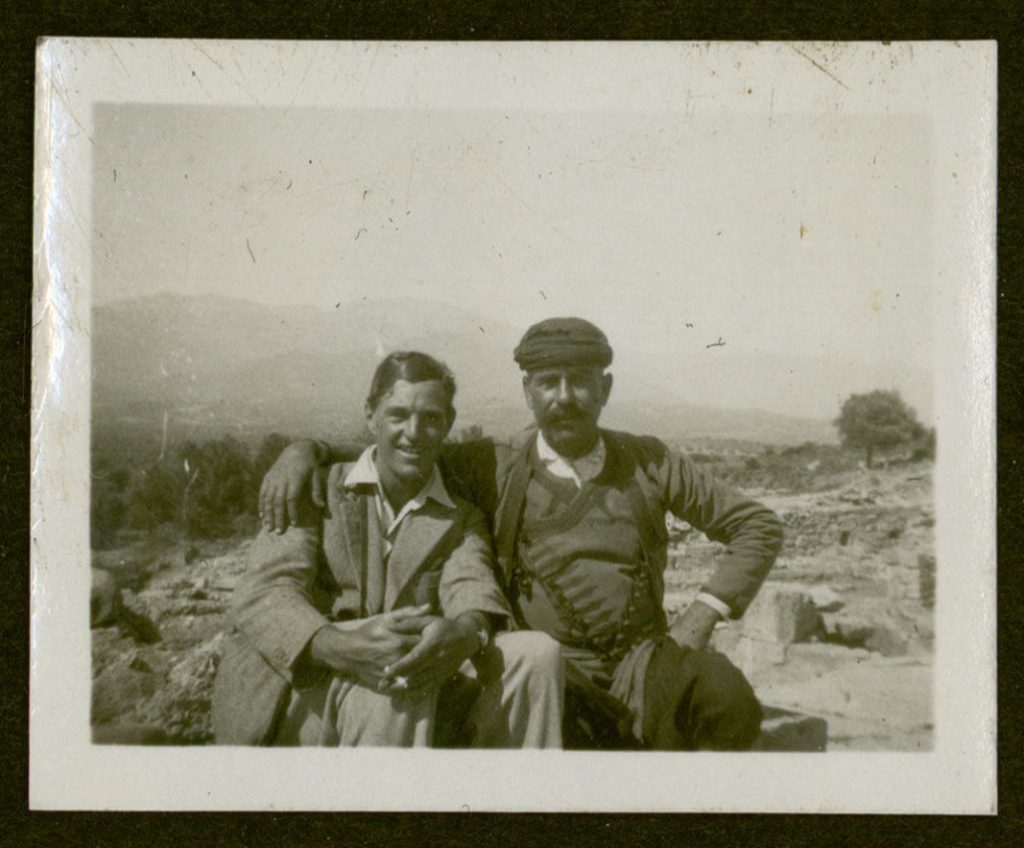
John Pendlebury and Yannis Markakis, 1933

One of the most famous operatives was the former curator of Knossos, Dr. John Pendlebury. An archaeologist, rugby enthusiast, and international high jumper before the war, Pendlebury knew every inch of the island and returned undercover as the Foreign Ministry’s vice consul. In order to let his friends know he was up in the hills reforming the guerilla bands that fought against the Turks the generation before, Pendlebury would place is glass eye on his desk as a signal to his friends. He had spent years on the island, and he Cretans considered him one of their own. All of the great Cretan guerilla captains for the rest of the war tied back to him.

On 19 May 1941, Pendlebury returned from the mountains where he meeting with the most famous of the Cretan “andartes kapitan”, “Satanas”. Satanas, Greek for “Satan” because the locals believed only the devil could survive so many vendetta dagger and bullet wounds, was just one of many andartes kapitans living in the mountains. Satanas and Pendlebury planned a resistance stronghold in the caves southwest of Heraklion where local legend claimed the titan Rhea birthed Zeus. But Satanas had one problem: he needed more weapons to properly defend it. Pendlebury could provide much assistance to the andartes, but proper military equipment was scarce in the Eastern Mediterranean in the Spring of 1941.

Little did Satanas and Pendlebury know, equipment would drop from the sky, like mana from heaven, the next day.

The East African (Abyssinian) Campaign

Despite tenacious Italian resistance in the spring of 1941, swiftness of action, solid logistical planning, unconventional solutions, and engaged leadership allowed ad hoc and diverse Allied forces to reverse all of the Italian gains from the year before.

In the north, a large conventional invasion of Eritrea took place from the Sudan in November of 1940 led by the “Gazelle Force”, a mobile column used to conduct reconnaissance, raid, and screen the two division invasion force…kind of like an armored cavalry regiment. It took six months of hard fighting, and not a few setbacks, including a defeat or two, through well-fortified Italian positions before the Italians were routed at the Battle of Keren in late March. (Brig William Slim was wounded by a strafing Italian fighter during this advance).

In the east, Sikhs, Punjabis, Baluchs, and Somali commandos of the 5th Indian Division landed at Berbera in March to recapture British Somaliland. It was the first Allied amphibious assault of the war. Berbera significantly cut down on supply difficulties of supporting from Kenya. After quickly defeating the surprised Italians, they reformed the Somali Camel Corps, and moved inland to meet the Africans moving up from Italian Somaliland.

In the south from his base in Kenya, Lieut Gen Cunningham, (Adm Cunningham’s little brother, funny “Howe” the Brits do that… I fukin kill me) split his command and invaded both Italian Somaliland and southern Ethiopia. Somaliland was seized thru a surprise joint and combined amphibious and land invasion into the teeth of an Italian defense that was expecting them. In the space of five months, the 11th (East) African Division, and the 12th (West) African Div, consisting of units from 14 different nations, arrived, organized, resourced, trained, planned, prepared, rehearsed, staged, and then coordinated a two prong attack into Italian Somaliland. (What can we do in five months?) They seized Mogadishu on 1 March and turned north into Ethiopia.

Cunningham’s other attack was a logistical nightmare across the barren and dry Chelbi Desert by the South African and Rhodesians, in coordination with the separate 8000 man Belgian “Force Publique” from the Congo. This attack went from the trackless desert of Chelbi to the jungles of the Ethiopian highlands at the height of the monsoon. Cunningham hoped to instigate an uprising, but southwest Ethiopia consisted of Ras (kingdoms) that were loyal to the Italians. This attack ended up fighting a brutal counterinsurgency as they moved toward Addis Ababa.

In the fight for Addis Ababa, the successes of Major Orde Wingate’s “Gideon Force” caused Ethiopian “Patriot” units to materialize all across the central, western, and northern parts of the country. The Italians, tied to their bases in the midst of a hostile population, had great difficulty massing on the Patriot units, and when they did, they were ambushed by the Gideon Force. The Italian commander of East Africa, the Duke of Aosta, feared the slaughter of Italian civilians in the capital, and retreated from the city in April.

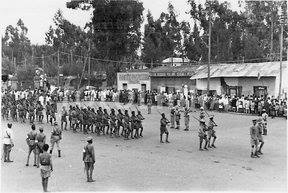
On 5 May 1941, Emperor Haile Selassie, the Ras Tafari and Lion of Judah, made a triumphant entry into Addis Ababa exactly five years after he was forced into exile by the Italians. He was escorted by his Patriots, and Orde Wingate and the Gideon Force. The Duke of Aosta retreated to Amba Algi but was encircled by Lieut Gen Platt (and Slim) from the north, and Cunningham from the south and east. Aosta would surrender 18 May.

Isolated Italian units would resist for another five months and a vicious insurgency would go on for years, but with the Italian defeat, five divisions of troops became available for operations elsewhere: Rommel was pushing on Egypt, the Australians were hard pressed holding Tobruk, Iraq was declaring war, Persia was leaning towards Germany, and the Japanese were threatening to occupy French Indochina, which threatened Burma, Malaya, Singapore, and India. The victory in Ethiopia was none too soon.

The successful East African campaign was the first victorious Allied land campaign of the war. The first Allied amphibious invasion of the war. And the first Axis territory liberated by the Allies in the war.