
Category: History
Fletcher Departs
Vice Admiral Fletcher, the Operation Watchtower expedition commander and overall commander of Task Force 61, which included the all important aircraft carriers, was operating on Nimitz’ principle of “calculated risk”, “which you shall interpret to mean the avoidance of exposure of your force to attack by superior enemy forces without good prospect of inflicting, as a result of such exposure, greater damage on the enemy”. And Fletcher’s carriers, at the time America’s most precious military capability, were dangerously exposed in the waters off Guadalcanal.
From an intelligence point of view, Operation Watchtower was “a stab in the dark”, and the Allies had no real idea what was waiting for them in the Solomons. If the remaining Japanese carriers were at Rabaul when the landings began, their planes could appear at anytime from any direction beginning on the 9th of August 1942. And it wasn’t like the Saratoga, Wasp, and Enterprise could hide: the Japanese knew exactly where they were.Two weeks previously, off Fiji on the Saratoga at the final commander’s conference prior to Operation Watchtower, Fletcher announced that the carriers would only remain off Guadalcanal until the 9th, and this infuriated both RearAdm Kelly Turner, the commander of the invasion force, and MajGen Vandegrift, the commander of the 1st Marine Division. The gentlemanly southerner Vandegrift almost lost his cool as he calmly explained that they would need more than two days to unload the transports, especially since there were no docks or port facilities available. Everything would have be manhandled over the beaches. Turner, a protege of the gruff Adm King who was no fan of Fletcher, did lose his cool as he complained the Watchtower timeline left him no chance to reconfigure the transports from a commerce load, i.e. packed for efficiency, to a combat load where the critical items e.g. food and ammunition, can be off loaded first. In a conversation in a passageway during a break, Turner was overheard calling his nominal superior “yellow” if the carriers departed before the 11th of August.
But Fletcher had fuel on his mind among many other things. There weren’t enough oil tankers in theater and America couldn’t produce them fast enough. None of the resurrected battlewagons damaged on 7 December were in the South Pacific precisely because they hogged the available fuel. Furthermore the US Navy’s proficiency in underway replenishment was poor at best and operationally detrimental at worst. The Watchtower task forces might as well have been tied to a post like a dog. That post was Noumea, Caledonia, and the chain only extended as far as Guadalcanal, and then only for a few days.
On 8 August, 1942, Fletcher’s carriers had five days of fuel left at cruising speed (15kts) or two at battle speed (25 kts). The fast battleship North Carolina, which was of the newest class and much more fuel efficient that her predecessors, had less than that, due to an unfortunate staff error involving a chart with an incorrect marking for the Intl Date Line, which forced the North Carolina to be late to the rendezvous and unable to top off.
But it wasn’t just fuel, in defending against the Japanese air attacks over the past two days, Fletcher’s carriers had lost nearly 20% of their planes, and they hadn’t even come across any Japanese carrier borne aircraft yet. Fletcher had two carriers sunk from underneath him previously, the Lady Lex in the Coral Sea in May, and the Yorktown at Midway in June. He was tired of getting his feet wet and the losses were fueling rumors that he was senile and incompetent. He wasn’t going to stick around for a third time. He only had two days of fuel for battle then he’d be forced to retire in any case. If the Japanese did show up on the 9th or 10th, he’d rather engage them on the 11th with a full belly. The Japanese carriers weren’t going anywhere once they were off Guadalcanal. This wouldn’t endear him to the Marines taking the brunt of the air attacks, especially after the Navy abandoned Wake Island in similar circumstances earlier in the war. Marines have long memories.
In the end Fletcher’s departure on the 9th was probably for the best. Any Marine casualties on Guadalcanal due to the air attacks would be a tragedy, but a local one. The loss of the carriers would be a national tragedy. In the cold logic of war, there were more Marines in training and in the pipeline to the South Pacific. This was not true for aircraft carriers. The next American carrier scheduled to come out of a shipyard wouldn’t be ready for another six months at best (the USS Essex would be commissioned in December 1942 and then the Bonhomme Richard in April, 43). Until then, Fletcher’s carriers were the only thing standing between Japan and wherever they decided to strike next.
Fletcher made his final decision on the night of the 8th to depart Guadalcanal the next morning, despite vehement protests by Turner and Vandegrift. The transports weren’t even close to being unloaded, though there is some evidence that the unorganized Marines on the beach were just as much to blame. Nevertheless, with heavy carrier fighter losses beating back the numerous Japanese land based planes, low fuel, and his escort ships clearly out fought in night surface actions, Fletcher took his ships, and by default Turner’s, out of the confining straits off of Guadalcanal and into the open ocean where they could be more easily defended and refueled.
The Marines securing the beachhead and airfield on Guadalcanal were on their own.
The First Battle of Savo Island
With rare exceptions, the Japanese were surprised but completely unconcerned with the American landings in the Solomons. When Emperor Hirohito inquired, he was told that it was “nothing worthy of your majesty’s attention”. The thinking went that once Port Moresby and Papua/New Guinea were captured, which seemed inevitable in early August 1942, the Japanese could retake the southern Solomons at their leisure. The one exception to the blasé Japanese attitude to the landings was the newly appointed commander of the 8th Fleet at Rabaul, Vice Admiral Gunichi Mikawa.
Mikawa was Japan’s premier surface warfare officer, but in the 30s, he was quick to recognize the primacy of naval air power. He concluded that future surface warfare would be conducted when and where carrier air power would be limited: at night, in bad weather, and in confined waters. For a decade, he promoted and demanded Japanese perfection in navigation, surface torpedo operations, and most importantly, night gunnery. His efforts would pay off in the early morning hours of 9 August 1942.
Unlike his peers and superiors, Mikawa was gravely concerned with the American landings. On first report from the garrison on Tulagi, Mikawa gathered every surface combatant available, and within hours, his ad hoc squadron was refueled and headed down the St George Sound (soon to be nicknamed “The Slot”) to engage the vulnerable transports unloading onto Guadalcanal from the Savo Sound. Mikawa had only five heavy cruisers, two light cruisers, and a single destroyer to attack the vast Allied armada in the area, but an attempt had to be tried: once the transports were unloaded, the Americans would be exponentially harder to dislodge. There were reports of an American battleship in the area (the new and fast USS North Carolina) but Mikawa was more concerned with the carriers. He needed to quickly strike at night and be back up the Slot out of range of their aircraft before dawn.
Mikawa’s ships were almost immediately spotted speeding down The Slot by a Kiwi search plane from New Guinea. Unfortunately, the young pilot mistook the two largest cruisers as seaplane tenders, and Fletcher’s analysts, when they received the report many many hours later, assumed the Japanese were attempting to replace the seaplane base destroyed at Gavutu with another farther up the island chain. They dismissed the report. About 0130 on 9 August 1942, Mikawa skillfully approached Savo Island unhindered and undetected by the Allies.
The evening before, Adm Turner’s escorts of eight American and Australian heavy cruisers and eight destroyers under Australian Rear Admiral Victor Crutchley were deployed in three groups to protect the vulnerable transports. One each east, north, and south of Savo Island with a two destroyer radar picket northwest of the island. About midnight, Crutchley was called to confer with a furious Turner, after Turner and Vandegrift had been informed that Fletcher planned to depart the Guadalcanal area with the carriers and the North Carolina to refuel. With Crutchley’s departure to confer with Turner, command of the escorts fell to Capt Howard Bode of the Chicago in the southern group. However, he didn’t tell the other groups.
(The reasons for Fletcher’s departure is another entire post. However, one point needs to be brought up – In one of those quirks of fate, the North Carolina, the most powerful surface vessel in the South Pacific at that moment, should not have needed to refuel and should have been present for the upcoming fight. However two weeks before, Fletcher’s tactical commander, in direct command of the carriers and battleship, arrived at Fiji a day late because his chart had an incorrect location for the Intl Date Line. This meant the thirsty North Carolina had to spend one less day in port and couldn’t fully refuel. By 8 Aug, she was running on the capital ship equivalent of fumes, and had to depart the area, thereby missing the battle. Whether or not that chart cost a lot of lives is a matter of speculation, but “The Showboat’s” nine 16″ guns, 20 5″ guns, and more importantly her powerful search radar, were almost certainly missed that night.)
Capt. Bode at the time was more concerned with a submarine threat in the confined waters of the Savo Sound. Furthermore, like everyone else in the task force and on Fletcher’s staff, he didn’t take into consideration Mikawa’s initiative and audacity, and assumed that any Japanese surface response would require at least another day. Moreover, he was an old school surface warrior, and like most American senior naval officers at the time, didn’t really understand the capabilities and limitations of the new fangled radar systems recently installed on their ships. Bode assumed that radar would give away his position (he was right, but years too early as the technology to do so hadn’t matured yet) so he forbade the use of the search radar, and allowed only a single sweep of the fire control radar, which missed the Japanese. He relied on the picket destroyers’ radar to give early warning, but their radars were seriously degraded by echoes from the nearby islands and had but 1/4 the range briefed by the manufacturer. Even so, the southern picket came within 2km of Mikawa’s force and failed to sight them. The much more vigilant northern picket spotted them at 0143, but by that time Mikawa’s torpedoes were already in the water. Minutes later, his cruisers’ big guns were raking Bode’s southern group.
The watch officers of the HMAS Canberra and USS Chicago in the southern group barely had a chance to sound general quarters. Lookouts spotted flashes in the distance that they thought were lightning or fires on Savo Island. A few seconds after the northern picket reported “strange ships” – Mikawa’s float planes dropped flares, powerful search lights illuminated the two ships, and ranging shots and torpedoes littered the water around them.
Almost immediately the Canberra was dead in the water and burning, and the Chicago was holed below the water line, battered up top, and steaming west out of the fight. Neither fired their weapons, nor even reported contact. Mikawa then turned on the unsuspecting northern group.
“Unsuspecting” may be the wrong word: There were certainly indications of what was going on to the south. “Disbelieving” may be better. The northern picket’s warning of “strange ships” was missed amongst the “administrivia” chatter of the midship watch. The sounds of gunfire was dismissed as fire support for the Marines. The light show and flares were assumed to be star shells fired by destroyers, fires on the beaches, or lightning. The sound of planes overhead were believed to be non threatening. One radar operator, convinced he was seeing Japanese in his scope, was relieved and threatened with a stay in the brig for falsely reporting “echoes” on his scope. Together the clues paint a picture of incompetence, but after 48 hours of constant battle stations and air attack, there was just enough possibility for a benign explanation of each isolated report that the exhausted crews could excuse them away, especially since surface contact wasn’t expected til the next evening. The only ship in the northern group at general quarters was the Astoria, and then only because a defiant young lieutenant pulled the alarm lever in front of his incredulous captain. The young man was still standing tall getting his ass chewed by his furious superior when the first Japanese shells slammed amidships. His “mutinous actions” saved more than a few lives that night.
American crew battle drills at this point in the war were still rooted in peace time operations, in particular the move to general quarters. It was akin to a massive “game of musical chairs”. Each crew member had a watch station for normal cruising, and a battle station in the event of general quarters. Since battle stations required positions for the entire crew, chances were likely that these positions were different because the senior crew member always occupied the important positions during battle stations. If during the watch a junior crew member occupied a position, say navigation for example, during battle stations he would be replaced by a more experienced crew member. This requires a quick “change over” brief to pass the position’s responsibilities, then the junior crew member would go to his own assigned position, where it was very likely he’d be senior to the person already there, which would require another brief. This process of moving from normal watch stations to battle stations could take several minutes in the best of circumstances. In peacetime this was acceptable; in wartime when seconds mattered and the first combatant to put steel on target usually won, this was a death sentence.
Mikawa would say later that he was impressed with the tenacity and potential firepower of the northern group, especially the Astoria, and had the Americans had any warning the battle would have been much different. But the Japanese surprise was effectively complete and they were simply quicker to put ordnance on target. It didn’t help that American fire prevention and damage control were non-existent or woefully antiquated. By 0215, all three cruisers of the northern group, the Vincennes, Quincy, and Astoria, were on fire and sinking.
In less than 35 minutes, one Australian and three American capital ships were out of action, the rest scattered, more than a thousand sailors were killed, and thousands more wounded and floating in the shark infested waters. The rout of the invasion force’s escort task force was complete. Adm King in Washington would call the Battle of Savo Island “the blackest day of the war” for the US Navy. Only two American cruisers remained: the anti aircraft cruiser Juneau in the eastern group, who had no gun larger than 5″, and Crutchley’s HMAS Australia which was intermingled with Turner’s transports. The Japanese suffered only two hits and a few dozen casualties.
But most disconcertingly, Turner’s transports lay naked and exposed under the harsh phosphorescent glare of the flares dropped by Mikawa’s scout planes. They were at the mercy of the Japanese.
Of the two hits suffered by the Japanese, one struck Mikawa’s flagship, the Chokai, and nearly killed him and his staff. In the confusion of that hit from the Astoria, Mikawa assumed the rest of his ships were suffering as badly. This however was not the case. Furthermore, Mikawa commanded escorts at Pearl Harbor, Coral Sea, and Midway, and had a very healthy respect for naval air power. He did not want to be caught in range at first light. He calculated that he needed to commence the engagement of the transports no later than 0130 in order to be safely away by dawn. It was almost an hour later and he was still twenty miles from them and getting father away by the minute. Finally, he had no idea of the disposition of the remaining escorts, including the battleship and the carrier escorts. He felt he couldn’t risk almost certain destruction of the only Japanese fighting ships in the Solomons. So he continued back up the Slot.
The battered and confused Americans were astonished when it became clear that Mikawa was continuing north, away from the vital transports.
Turner’s transports were saved, but they wouldn’t do Vandegrift’s Marines any good, at least in the short term. Unbeknownst to Mikawa, Fletcher’s carriers were already headed in the opposite direction to refuel. With no air cover, and most of his escorts sunk, Turner had to follow.
As the sun rose, the Marines on Guadalcanal gazed out into what the Navy was now calling “Iron Bottom Sound”, they saw empty ocean.
The 1st Marine Division was all alone.
Operation Watchtower: the Invasions of the Florida Islands, Tulagi, and Guadalcanal
In mid July, Admiral Frank Fletcher’s Task Force’s 61 and Rear Admiral Kelly Turner’s Task Force 62 began sailing for the Solomon Islands. Task Force 61 consisted the American aircraft carriers USS Wasp, Enterprise and Saratoga and Task Force 62 consisted of the transports carrying the invasion force. By the end of the month, the 75 ships of both Task Forces finally finished picking up the scattered Marine garrisons sent to the islands of the South Pacific to defend against the threatened Japanese invasions of New Zealand, Australia, and American Pacific possessions such as Samoa and Fiji; the threat of which ended with the Japanese loss at Midway.
On 31 July 1942, off the island of Fiji, both Task Forces did a full dress rehearsal of the future landings in the Solomons. Radio traffic for the rehearsal was picked up by Japanese signal’s intelligence. However, the Japanese assumed the Americans were going to reinforce the Australians in New Guinea, who were hard pressed defending against the recent offensive along the Kokoda track leading to Port Moresby. The rehearsal was absolute chaos, so much so that the Marines never actually landed on the beach.Nonetheless on 1 August 1942, the ships carrying Maj General Alexander Vandegrift’s 1st Marine Division left Fiji for their objectives of the Florida islands and the islands of Tulagi and Guadalcanal.
On 7 August, 1942, 2/5 Marines and the 2nd Raider Battalion splashed ashore unopposed on the island of Tulagi. The island was the Japanese administrative center for their forces in the area, and the Marines occupied the northwest half of the island as the surprised Japanese withdrew to the hills and caves of the southeast. With darkness approaching, the Marines settled in to wait for the morning to continue the assault. The admin personnel of the Yokohama Air Group, reinforced by a detachment from the elite Japanese Special Naval Landing Force didn’t wait.
Starting around 2230, five successive banzai charges hammered the Marine lines, breaking through twice, and infiltrators spread out behind the Marines’ main line of resistance. The Raider battalion’s headquarters saw significant hand to hand combat throughout the night. However, the Japanese took massive casualties, and after landing a third battalion on the island, Tulagi was secured by the night of the 8th. The Marines got their first taste of what was to come over the next year. A short distance away in the Florida Islands, they’d get a taste of what to come for the rest of the war.
Gavutu and Tanambogo were two islets in the Florida Islands connected by a causeway and located about three miles east of Tulagi. These two mutually supporting islets contained a seaplane base and were heavily defended by the bulk of the Yokohama Air Group personnel and Special Naval Landing Force. But unlike Tulagi, there was no room for banzai charges and infiltration tactics on what was essentially two giant mounds of coral. So the Japanese blasted deep bunkers in depth that covered every possible landing approach, from which they were determined to die in place inflicting as many casualties as possible.
U.S. Navy cruisers and destroyers really worked over the seaplane base, but in their zeal destroyed the only covered landing zone, the supply pier, which was shielded from interlocking Japanese fields of fire by buildings. The Marines would have to approach and land on the exposed beaches.
At noon on the 7th, the the 1st Marine Parachute Battalion, in landing craft, assaulted into the teeth of the alert and awaiting Japanese. The paratroopers (Parachutists? Paramarines?) were massacred as they assaulted the beaches of Gavutu. Barely establishing a beachhead, what followed was a day long knife fight involving flamethrowers and satchel charges with every single covered and concealed Japanese machine gun as they advanced south to capture the island, all the while receiving accurate fire to their rear from Tanambogo.
Vandegrift ordered a company sized landing on Tanambogo that evening to clear the machine guns, but there were 600 Japanese packed on the tiny islet. The Marine company was slaughtered. Only 12, including the company commander, managed to even set foot on the islet. When darkness fell they were sure to be killed. Recognizing his dilemma, the captain led his men in a mad sprint in the twilight down the causeway to Gavutu. The astonished Japanese never fired on them.
The next day Vandegrift ordered his reserve battalion to Tanambogo, and the fighting mimicked Gavutu. However, with the threat to their rear distracted, the Parachute Battalion was able to reorganize and systematically reduce the remaining defenders. Tanambogo fell shortly thereafter.
Compared to Tulagi, Gavutu, and Tanambogo, the main landings by the 1st Marine Division on Guadalcanal were easy. The Japanese construction battalion that was slowly building an airfield there (the soon-to-be renamed Henderson Field) abandoned their equipment and supplies, and fled into the jungle. They left engines running, teapots boiling, and food on the tables, such was their haste. The Marines pushed inland and were greeted by a joyous former British colonial official and a Melanesian Sergeant Major who both worked for the Australian Coast Watchers. A defensive perimeter was established and Turner brought his transports closer in to expedite unloading.
The successful American landings in the Solomon islands were a strategic, operational, and tactical surprise to the Japanese. To their credit they responded immediately. The first Japanese air attacks from bases farther up the Solomons arrived on the evening of the 7th. However they were uncoordinated, spotted early by coast watchers, and easily defeated by the anti aircraft fire from the escorting cruisers and destroyers. It was a far cry from the Japanese destruction of Prince of Wales and Repulse under similar circumstances earlier in the war.
The Americans around Guadalcanal had fought a tough battle in trying circumstances against a determined and spirited enemy and had come out on top, with all objectives secured. Fletcher was feeling pretty confident as American forces settled in on the night 8 August 1942.
Vice Admiral Gunichi Mikawa (We will hear his name again) would shorty disabuse him of that notion.
The Battle of Bennington

In mid August, 1777, British General John Burgoyne’s plan to capture Albany and the Hudson River valley, which would separate New England from the Middle and Southern colonies, began to suffer from logistical problems. In addition to a shortage of gunpowder and food, his army was in desperate need of horses. To remedy this, he dispatched LieutCol Frederich Baum and 800 Hessians, mostly dismounted dragoons, to the town of Bennington, Vermont. He expected the town to be defended by no more than the remnants of Seth Warner’s brigade of Green Mountain Boys, at most 400 men.
Unfortunately for the Hessians, John Stark was commissioned by the state of New Hampshire to raise a force of militia to protect the area. John Stark was a former lieutenant in Roger’s Rangers, a former Continental Army Colonel (he resigned and returned to New Hampshire after being passed over for brigadier general), and Hero of the Battle of Bunker Hill, where his men defeated a flanking attack across the Mystic River beach (which forced the costly frontal attacks) and then led the rear guard as the Americans withdrew. Stark had an uncanny ability to predict his foe’s maneuvers. He would do the same again against Baum.
Stark had twice as many men as Baum, nearly 1600, and moved on the Hessian column upon discovering it. Both sides received militia and Indian reinforcements but Baum didn’t know the area and moved into a defensive position on a hill to await more reinforcements from Burgoyne. Stark’s militia immediately surrounded the position.
On the morning of 16 August 1777, John Stark addressed his troops, “Yonder are the Hessians. They were bought for seven pounds and tenpence a man. Are you worth more? Prove it. Tonight the American flag floats from yonder hill or Molly Stark sleeps a widow!”
Molly Stark did not sleep a widow that night.
Unlike American militia in most Revolutionary War battles, Stark’s men from Vermont and New Hampshire fought as well as any regular from the Continental Line, and engaged the Hessians, Loyalists, and Indians at bayonet and saber point all afternoon. Just after the mortally wounded Baum surrendered, Hessian reinforcements from Burgoyne arrived, and they too were savaged, escaping only because night fell.
At Bennington, Burgoyne lost over a thousand men. Even worse, the remainder of his expedition was cut off from any forage and isolated in the wilderness of Northern New York. Burgoyne had no choice but to move on Albany as fast as possible, lest his men starve, or freeze to death later in the year from a lack of winter quarters.
Major General Lafayette and (soon to be) Major General DeKalb
In 1776 and early 1777, the US Ambassador to France, Silas Deane, was handing out promises of commission to any man with military experience who was willing to travel to America to join Washington’s Continental Army, which was in desperate need of trained and experienced officers. Unfortunately, most were long on resume and short on actual experience. However, in April 1777, two officers ran the British blockade in a private ship and arrived in Charlestown, South Carolina in late June.
The first was a giant bear of a man, the 56 year old Johann von Robais de Kalb, better known as Baron DeKalb. DeKalb was the son of a Bavarian shoemaker and a career soldier. At 16, he left home to join a German regiment in the French Army and served with distinction in the War of Austrian Succession and the Seven Years War, rising to the rank of lieutenant colonel and made a noble for his exploits. After 30 years of service, he retired in 1764, but found that civilian life in a small estate outside Versailles with his rich French wife didn’t suit him. In 1767, he traveled to America as part of a clandestine French mission to assess the possibility of the thirteen North American colonies rebelling against Great Britain. He was so impressed with the American people that he decided he would join their inevitable revolution. He got his chance in 1777, when he met a young man of similar ambitions — Marie Joseph Paul Yves Roche Gilbert du Motier, the Marquis de Lafayette.Lafayette was DeKalb’s opposite in every way. The slight Lafayette was just 18 in 1777. At the age of 14, just four years previously, he married a relative of the King of France, and was commissioned a sous-lieutenant in the King’s Musketeers, and soon a lieutenant in the dragoons. He was as deficient in military matters as DeKalb was experienced. But he was as dedicated to the American cause as DeKalb after a dinner party in which the disgruntled Duke of Gloucester, King George III’s brother, expressed support for the rebellion. However France was actively trying to stay out of the American Revolution and as a relative of the French king was forbidden to depart. So the extraordinarily wealthy teenage Lafayette just went to Spain with DeKalb and several other officers destined for service in America, and bought a ship.
The “Victorie” took the men across the Atlantic and Lafayette bought coaches to take them to Philadelphia, where they planned to collect Silas’ promised commissions as major generals. But Washington had been burned by adventurers with imaginary exploits who convinced Deane they were something they weren’t, and Continental Congress couldn’t afford to pay a general’s salary to someone who wasn’t. They refused to honor Deane’s promises.
The rich Lafayette offered to serve for no pay. This, and the timely intercession of Ben Franklin by correspondence, won over the Continental Congress, who was still debating the merits of turning away so well connected a Frenchman. On 31 July 1777, the 19 year old Marquis de Lafayette became the youngest major general in the history of the US Army, an accomplishment that still holds today. He received his commission exactly 18 years after his father, a colonel of grenadiers, was killed at the Battle of Minden fighting the Prussians in the Seven Years War. Lafayette departed to assume a position on Washington’s staff shortly thereafter.
Lafayette’s commission infuriated DeKalb. The proud and quiet, but equally competent German was much more qualified for a commission as a major general than the young Lafayette (and all of the Continental generals, and even Washington for that matter…) He had grown fond of the Frenchman, who looked to DeKalb as a mentor and great friend, but the slight couldn’t stand. He lobbied for a commission for a month before the large and thoroughly exasperated German burst into Congress and demanded his commission, laying out his extensive military career to the aghast assembly. Still they refused. The resigned DeKalb finally requested payment to return to France, which he implied was the least bit of recompense for a breach of trust between himself and the fledgling nation. On 17 September 1777, the ashamed Congress relented, and the next day, DeKalb left for Washington’s staff to eventually take command of two Massachusetts’ brigades on the left of the Continental Line.
MG DeKalb added much needed professionalism to the Continental Army. When Washington ordered the army into winter quarters at Valley Forge later that year, DeKalb was instrumental in the training and discipline of the Continental Army. Unfortunately, history would award his fellow German, Baron Von Steuben, the lion’s share of the credit for the professionalization of the Continental Army at Valley Forge, but it couldn’t have been done without DeKalb.
For the next two years DeKalb would be Washington’s most trusted and stalwart division commander, and always in the thick of the fighting. DeKalb was tragically killed during the disaster at Camden in 1780, fighting to the last with his regulars, as Horacio Gates’ militia fled the British and Tory bayonets.
MG Lafayette would follow a different course. Lafayette had come to America “not to teach, but to learn” and this greatly impressed Washington. He inserted himself wherever he was needed. The young man would become the son Washington never had. Despite his youth, Washington trusted Lafayette with his most difficult and sensitive commands and missions. For example, Washington entrusted the young 19 year old with an invasion of Canada in 1778, which was cancelled at Lafayette’s request due to lack of supplies and men. However, “The Fearsome Horseman” as he was known among the native tribes, brought the Oneida nation over to the American cause, whose support would be much needed in Sullivan’s Iroquois campaign the next year. Lafayette would be hugely influential in the delicate negotiations with France to coordinate a common strategy after France’s entry into the war. Lafayette would fight for America wherever and whenever needed for the rest of the war, and it was his independent command that maneuvered Cornwallis into a box at Yorktown.
After the war, Lafayette would return to France and continue his service in the name of Liberty. He would be one of the few nobles not exiled, or executed by the guillotine during the French Revolution. He stood firm for a representative government in France, and was one of Napoleon’s few political enemies after his rise to emperor. Lafayette continued his quest after the restoration of the Bourbon monarchy. It was a 70 year old Lafayette at the barricades as head of the National Guard during the Revolution of 1830. Afterwards, he turned down an offer as dictator after the royalist troops were routed.
Lafayette died in 1834 a hero to both America and France. He was buried in a French cemetery, but underneath soil taken by his son, Georges Washington, from Bunker Hill, whose memorial Lafayette dedicated.
At a eulogy in America, former president John Quincy Adams said of Lafayette, he was, “high on the list of the pure and disinterested benefactors of mankind”
The Third Battle of Ypres, aka the Battle of Passchendaele
Despite local successes such as the Battle of Messines and the Canadian victory at the Battle of Vimy Ridge, 1917 was a disastrous year for the Allies. The Provisional Russian govt was in chaos, and the Russian Army was worse: most units were in the hands of all-powerful “soldiers’ committees” who refused to fight. In July, Russia’s last gasp in the First World War, the Kerensky Offensive, collapsed and the Russians retreated so far and fast that the Germans and Austrians couldn’t logistically advance any further to catch them. The failure of the Nivelle Offensive directly led to widespread mutinies among French units, with entire divisions refusing to attack. Furthermore, although Unrestricted Submarine Warfare brought America into the war, it had also brought Britain to its knees. In June, Prime Minister Lloyd George informed Sir Douglas Haig, the commander of the British Expeditionary Force on the Western Front, that unless something changed, Great Britain could not continue the war in 1918.
Haig wanted to conduct further offensives in Flanders in 1916 and early 1917, but the battles of the Somme and Arras (in support of Verdun and the French Nivelle Offensive respectively) always took priority. However, in June of 1917, he could do so. First, he could ostensibly claim clearing the U-boat pens in the Belgian ports on the North Sea as an objective. Also, he could capitalize on the capture of the Messines Ridge the previous month. There would be no time to dig further mines, but Haig felt that the German Army was at the breaking point, and one more big push was all that was needed. Haig could not have been more wrong. German morale was as high in July of 1917 as it ever would be in the First World War. The Germans broke the Russian Army, or at least they thought so. (Bolshevism did actually and the Germans capitalized on it, but in the end it doesn’t matter because that’s what they believed.) They thrashed the Romanians, were on their way south to do the same to the Italians, and had given better than they got despite everything the British and French had thrown at them. They suffered massive casualties, but the Allies more so. America’s entry in the war was problematic, but even the densest and most myopic feldwebel in the German Army understood that the victorious troops on the Eastern Front would reinforce the Western Front and defeat the British and French before America doughboys could arrive in force.
Haig’s thoughts on the state of the German Army were rooted in the belief that he won every battle so far in the war. He did this by “moving the goal posts” during each battle, i.e. changing the conditions by which he could claim victory. Each offensive’s final objective started out as a breakthrough and destruction of the German Army. When that didn’t happen, he narrowed the focus for victory, almost always to a tactically important piece of terrain, that only had strategic significance because he said so. Then he threw more and more troops into battle to achieve what eventually amounted to a face saving “victory” for the newspapers. He would continue an offensive despite the casualties until he felt he could claim victory. For example, his latest claim to a meaningless victory was the Nivelle Offensive, where he claimed victory after the Canadians captured Vimy Ridge despite the lack of a breakthrough and complete and bloody failure everywhere else. In essence he sacrificed long term success for short term headlines, even though the millions of British and Commonwealth casualties and near static trench lines since 1914 would have had anyone else fired long before.
At the end of July 1917, Haig was going to do it again.
On 31 July 1917, twelve British, Australian, Kiwi, and French divisions, nearly 150,000 men, went over the top in the already tortured, blood soaked, and pock marked moonscape of Flanders around the Ypres (pronounced “E-priss”) Salient.
The hard learned reforms by the Canadians proven on Vimy Ridge had not reached the rest of the force, and the Third bloody Battle of Ypres began after a massive week long area artillery barrage. Surprise was lost, and the barrage just enlightened the prepared Germans as to where to place their reserves. The Allies made almost no gains (they captured only a small portion of the hard fought Plickim Ridge) and incurred massive casualties on themselves.
True to form, Haig reinforced the offensive and ordered it continued. But even Haig had no control over the weather, and unseasonal rains flooded the area. The heaviest rainfall in August in Flanders in 30 years turned the battlefield into a swampy morass. That the bombardment ruined what was left of the any drainage systems didn’t help. Tanks were stuck, supply lories immobilized, and men lived and fought in a sea of mud, which was a ghastly stew of earth, the abandoned or discarded accoutrements of war, and the remains of tens of thousands unburied casualties from the previous two Battles of Ypres. Nonetheless, Haig continued the battle into August and September to little gain.
In mid-September, Haig replaced the local British commander, and the new commander, Gen. Herbert Plumer, understood his superior. He pushed for small, local, intermittent gains; just enough for Haig to signify progress. But by October, Plumer’s gains were not enough and his men were worn out. Plumer stalled in the face of Passchendaele (pronounced “Pa-shin-dolly”) Ridge.
Haig brought up his only troops proven to be able crack a strong German position: the Canadian Corps. LieutGen Currie, the brains and drive behind the success at Vimy Ridge and now the commander of the Canadian Corps, demanded time to prepare the assault. With Plumer’s backing, (Plumer was one of only a few British commanders Currie trusted), Haig relented.
Currie didn’t have the time to dig saps and assault bunkers, but he was permitted to employ his other reforms, namely the planning and preparation down to platoon level and the creeping barrage. With Plumer’s encouragement, Currie began a series of “bite and hold” operations that slowly but consitently devoured Passchendaele Ridge.
However, time was working against Currie and the Canadians. Haig was forced to send badly needed men and material to Italy after the Italian Army’s collapse at the Battle of Camporetto, aka the Twelfth Battle of Isonzo. Moreover, German troops were released from the Eastern Front after the October Bolshevik Revolution and they went directly into the line opposite the Canadians. The German counterattacks grew more fierce and several employed mustard gas, whose burns were much more efficient than the chlorine gas used previously. Still, the Canadians held their hard won gains.
But Haig needed a victory before the onset of winter and ordered the Canadians to attack and seize the ridge. There was no time for any further extensive life saving preparations. The Canadian Corps went over the top and into the teeth of the German machine guns and artillery fire. After three bloody direct assaults, British and Canadian troops seized Passchendaele Ridge on 6 November 1917. Haig ended the battle shortly thereafter, and claimed victory.
The Allies gained just nine miles at the cost of 450,000 casualties.
The Canadians, whose soldiers’ exploits months before brought together a country, suffered their first national disaster. The cream of the Canadian youth lay dead on “The Passchendaele”. Because of the their sacrifice and face saving limited victory, the Third Battle of Ypres is more commonly known today as The Battle of Passchendaele, despite Passchendaele Ridge comprising only a small part of the fighting from July to November. But all of the propaganda couldn’t cover up the loss of so many for so little gain. The Battle of Passchendaele was the last and most iconic of the great attrition battles of the First World War. Even more than the Somme, “Passchendaele” became a watchword for a great expenditure of men and material in the name of pride.
For the next thirty years “Passchendaele” would be invoked to stop the senseless slaughter of an entire generation of men in a vain attempt at victory.
Operation Dynamo: The Miracle of Dunkirk
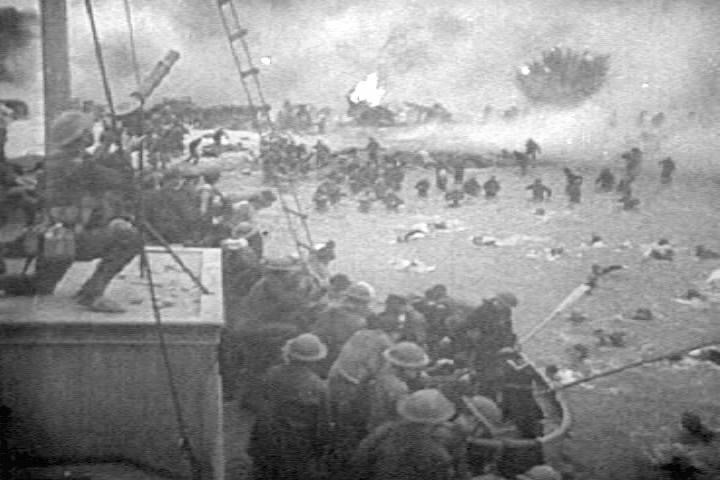 In late May 1940, German panzers unexpectedly broke through, and even though the British and French armies gave a good account of themselves when they had the opportunity to fight, they were cut off in Belgium and northern France. When the Germans reached the channel coast, Allied command and control had completely broken down and widespread panic infected every command echelon above division. Reacting to French chaotic political leadership, the new British Prime Minister Winston Churchill ordered the British Expeditionary Force to fall back to the port of Dunkirk, even though only about 40% had actually come into contact with the Germans. The British withdrawal completely unhinged what was left of the Allied line and would force the surrender of the Belgian Army to the north (something the Belgians still haven’t forgiven them for). The troops were needed to defend against any German invasion of the British Isles.
After their lightning quick advance across France, the German panzers needed time to resupply and reorganize, so Hitler stopped them and turned the destruction of the BEF at Dunkirk over to the Luftwaffe. This fateful decision gave the British and French much needed time to organize a defense of the port by sixteen British infantry battalions, which they defended with a tenacity and aggressiveness they had not exhibited so far in the campaign. Furthermore, this time allowed them to coordinate doomed last stands by outliers, such as the defenders at Calais and the French First Army at Lille, that could buy the Royal Navy time to evacuate the 400,000 troops that packed the area around Dunkirk. The British, French, and Belgian soldiers maintained their discipline for the most part. They calmly, if resignedly, sat in formation on the beach waiting for The Word on whether they would be rescued or ordered to surrender. Though there was a cloud of about 35,000 stragglers, mostly in the town where fires raged out of control. Nonetheless, that many troops in so small an area with little food, water, or medical care made the sandy Dunkirk beaches on the 25 and 26th of May crowded and chaotic. Additionally, a choking pall of smoke blanketed the area from a nearby burning oil refinery. This made life uncomfortable, but helped with the daylight air attacks on the exposed men on the beaches. However, it did not prevent them. Most disconcertingly though, the port was wrecked from Luftwaffe bombing and its docks and quays in shambles. Churchill ordered the men evacuated, but the Royal Navy estimated they would only be able to get 40,000 off the beaches, just 10% of the troops waiting at Dunkirk.
On 26 May, 1940, the Royal Navy and Air Force launched Operation DYNAMO to evacuate as many troops as possible from the port and off the beaches around Dunkirk. That afternoon, Capt. Bill Tennant landed with 16 officers and 160 sailors to organize the evacuation on the beach. To do this they had to coordinate the troops on the shore with over 150 ships packed into the harbor. However, the drafts of most of the ships were too deep to get close to the beach. To mitigate this, the Royal Navy confiscated or requisitioned every small boat on the Thames and on the southeast coast of England. The 700 “Little Ships of Dunkirk” were yachts, fishing boats, lifeboats (British for coast guard cutters), trawlers, tugboats, ferries, paddle steamers, and shipping steamers, and mostly crewed by naval personnel but many by civilian owners and their crews. The smallest was the Tamzine, a 15 ft fishing boat that brought off over 100 soldiers (it’s in the Imperial War Museum in London). Over nine days the Little Ships brought the soldiers off the beach and ferried them to the larger ships off shore, while the bigger ships rotated past the East Mole.
To Tennant’s surprise, he discovered the East Mole still intact later that night. The East Mole was a breakwater for the harbor, and extended nearly a mile into the Channel. It should say something about the state of confusion on the beach that it took him nearly seven hours to discover a mile long breakwater that could be used as dock. Nevertheless, with the East Mole available, ships could be loaded directly. There was a glimmer of hope for remainder that the Royal Navy didn’t plan to evacuate.
Under constant air attack, about 250 of the 900 ships that took part in “The Miracle at Dunkirk” were sunk. Furthermore, German shore batteries up the coast forced the remaining ships and boats to take a much longer bypass that circumvented the fire. Despite these obstacles, between 27 May and 3 June 1940, the Royal Navy rescued 330,000 much needed troops so they could fight again another day.
After the horrible news of the last three weeks, the British population was jubilant at the unexpected success of the evacuation. “The Spirit of Dunkirk” still refers to the idea of British courage, solidarity, and triumph in the face of overwhelming odds and adversity.
But amidst all of the celebration, Winston Churchill, ever the pragmatist, would remind the country, “We must be very careful not to assign to this deliverance the attributes of a victory. Wars are not won by evacuations.”
The First Battle of Sackets Harbor
Maroubra Force
The Battle of the Coral Sea temporarily checked a direct seaborne invasion of Port Moresby on the southeastern coast of Papua. The Battle of Midway, whose magnitude of defeat the Japanese Imperial General Staff only publicly acknowledged in the beginning of July, made any seaborne threat to Port Moresby highly unlikely. With no air cover from the remaining Japanese carriers (the Zuikaku and Shokaku were still in port until mid-July, 1942), any invasion force would be at the mercy of land based bombers. Moreover, it was obvious MacArthur would attempt to build airfields on the north coast of Papua to extend their reach (He would. However, the never fully realized Operation Providence didn’t get out of the reconnaissance and security phase). For Lieut Gen Harukichi Hyakutake (we will hear his name again) the commander of the Japanese 17th Army in Rabaul, New Guinea and Papua needed to be secured by any means possible.
The Japanese decided to assess the feasibility of seizing Port Moresby by land. A Japanese reconnaissance pilot detected what he thought was a road connecting Port Moresby in the south with Buna on the north coast of Papua. However, the Kokoda Track was nothing but a slippery and sodden 60 mile trail that turned into a morass of deep mud whenever it rained, which was often. To complicate matters further, the Kokoda Track snaked over the Owen Stanley Range. The Owen Stanley Range is some of the harshest and most forbidding terrain on the planet: steep and tall mountains with jagged cliffs covered in dense jungle and moss covered upland swamps. Furthermore, he reported the Track as much wider than the overblown hiking trail it was. The staff of the Japanese 17th Army in Rabaul was skeptical of its the actual size, but there were no other options: the Japanese needed to secure Port Moresby as part of their outer perimeter. So Hyakutake requested the Japanese 4th Fleet land troops on northeastern Papua at Buna and Gona to secure a beachhead and recce the “road”.The defense of Port Moresby was the only reason preventing a Japanese invasion of northern Australia. And that the Kokoda Track was the only remaining way to get there was not lost on the Australians. This made Buna the next obvious Japanese target.
On 25 June 1942, the newly formed Australian New Guinea Force launched Operation Maroubra (named after a Sydney suburb) to defend Buna, and prevent the Japanese from seizing the village of Kokoda and its airfield in the northern foothills of the Owen Stanley Range.
On 12 July, the Australian 39th Battalion of the 30th Brigade, a militia unit formed just after Pearl Harbor that so far spent the war as Port Moresby’s garrison, arrived in Kokoda after a grueling, if uncontested, two week march on the trail. With the Papuan Infantry Battalion at Buna, another militia unit with native Papuans and Australian officers, the 39th Battalion was referred to as the ad hoc “Maroubra Force” to distinguish them from other 30th Brigade units on the southern side of the Owen Stanley Range. They arrived none too soon.
On 21 July 1942, the Japanese launched Operation Ri, and landed the South Seas Force at Buna. The South Seas Force was a brigade sized naval landing force consisting of an infantry battalion, elite marine company, and an independent engineer regiment with native laborers from Rabaul. The Japanese commander, a well-connected lieutenant colonel, appropriated the engineers to act as infantry. Together, they quickly overwhelmed the reinforced Papuan battalion at Buna, and on the 25th broke through the 39th‘s defenses at the entrance to the Kokoda Track. Despite their men being used as infantry, the engineer officers surmised that it would take six porters to supply every soldier on the track. This was a ludicrous requirement even by the shoestring standards of Japanese logistics.in response, the aggressive and proud commander just had the engineers augment the native porters, and attacked south, determined to take Port Moresby.
With the loss of Buna and Kokoda, the Maroubra Force was not off to an auspicious start. But they came into their own in their dogged delaying actions and fierce counterattacks at bayonet point back down the Kokoda Track. The diggers made the Japanese pay dearly for every ridge and every blood soaked meter of trail. On 8 August, the 39th actually retook Kokoda briefly, and even buried their commander, who had been killed there the week before. When the Japanese landed, the rest of 30th Brigade began the march up the track and reinforced the 39th and the remaining Papuans. But the casualties were heavy, and the supplies over the track only came in trickles. The brigade commander was killed and the Maroubra Force fought on under the newly arrived but indomitable commander of the 39th, LieutCol Ralph Honner, with the other battalion also under their own junior officers. For over a month, the Japanese continually smashed into them with successive banzai charges, slowly pushing the Australians back. But the Japanese were suffering horrendous casualties, and in order to save face, Hyakutake was required to continually feed troops into the Kokoda Track. These troops were much needed on Guadalcanal where American Marines had landed on 7 August.
About the time the Marines were hanging on to Henderson Field by their fingernails, the Australian 21st Brigade of the veteran 7th Division arrived and its commander, Brigadier Arnold Potts, assumed command of the Maroubra Force and the remnants of 30th Brigade. The 21st was a regular formation with extensive experience in the Western Desert and fighting in Syria and Lebanon. They had no jungle training or experience, but they quickly learned from the 30th Brigade troops – grizzled veterans after a month on the Track.
In punishing conditions that Allied medical professionals would study to determine how long a human being can survive on the line in the jungle before they’re permanently broken (three months), Potts and the Maroubra Force slowly fell back and bled the Japanese. For another month, the Japanese threw troops down the Kokoda Trail in an ever lengthening supply line and sledgehammered the Australian positions. However, as Japanese strength grew, these banzai charges were just fixing attacks that supported flanking columns which attempted to “trail block” the Australians until they withdrew. (The same technique worked very well against the British in Burma). But the Japanese focus on getting combat troops into the fight on the Kokoda Track meant there was little throughput for logistics. For example, the Japanese engineers were thrown into the fight as infantry before they could actually do what they were meant to do, turn Buna and Gona into a proper port and improve the Track. Many Japanese units were unsupported and withering away.
The Japanese were literally sacrificing the lives of their soldiers by assaulting the Australian positions before they starved to death. The problem for Brigadier Potts was it was actually working.
Maroubra Force was in close contact with the Japanese for all of August and most of September. At no point in time were the nearest Japanese farther than 30 meters from the Potts’ main line of resistance. There was at least a platoon passage of lines to the rear under heavy pressure every day. To exasperate the Japanese supply situation, Potts’ established “Chaforce” and “ Honnerforce”, both about 400 man ad hoc task forces, to raid the Kokoda Track to the north. Nonetheless, the Japanese still came on.
MacArthur and some armchair strategists in Australia were concerned with the Japanese advance, and several Australian officers were sacked, fueled by wild tales of panicked abandon of positions. But they failed to grasp the extreme conditions on the Kokoda Trail: the heat, humidity, the thickness of the vegetation, disease, even the cold at the higher elevations. Furthermore, they failed to even acknowledge the lengths the Japanese were willing to go to maintain an overwhelming superiority in numbers, which never dropped below four to one.
While the Japanese advance continued, the Australian buildup at Port Moresby was slowly gaining momentum. The rest of the Australian 7th Division arrived, and on 7 September the indefatigable 39th Battalion was withdrawn from the line. Of the 800 men that started up the trail two months before, just 30 remained.
But what cannot continue indefinitely, eventually will not. Just as the fighting on the Kokoda Track relieved pressure on the US Marines on Guadalcanal, the reverse was true in September: The losses suffered by the Japanese in the Solomon’s forced Hyakutake to suspend operations on New Guinea until “the Guadalcanal matter was resolved”.
Maroubra Force held, despite the Japanese within sight of Port Moresby.
In mid-September, Potts turned over the Maroubra Force to the commander of the recently arrived 25th Brigade, who withdrew to Imita Ridge, the last effective natural barrier before Port Moresby. Despite Hyakutake’s orders, the Japanese tried one last push before they moved into defensive positions. They failed.
After a brief respite, it was time to do it all over again, but this time in reverse. In late September, after it was obvious the Japanese suspended the offensive, the Australians began attacking back up the Kokoda Track. For the first time in the Pacific War, the Japanese were on the operational defensive.
The Japanese would prove as tenacious in the defense, as they were aggressive and courageous on the attack.
The Blackout of 1977
The late 70s were a dismal time for most Americans. President Carter described it as a “crisis of confidence” in his famous “Malaise speech” in 1979. The darkest moment in this dark time, both figuratively and literally, was the blackout of New York City in the sweltering summer of 1977.
The summer of 1977 was a miserable time for New York. The Yankee’s hadn’t won a World Series in 13 years. The apocalyptic and imminent global cooling promised by activists at the First Earth Day in 1970 had failed to materialize and the high temperatures routinely broke records that July. Crime also reached new record highs that wouldn’t be broken until the crack epidemic in the 80s, as gangs took over portions of the city. (When “The Warriors” was filmed the next year, a near-futuristic dystopian modern take on the Anabasis where gangs tried to take over the city, New Yorkers weren’t sure if it was fantasy, fiction, or a documentary.) The pervasive sense of fear was palatable: that summer, the Son of Sam went about murdering random New Yorkers with a .44 cal revolver. No one felt safe. The overworked New York City police were powerless in the face of this wave of crime. Police officers were routinely targeted for assassination which greatly reduced their effectiveness. Furthermore, New York was in the midst of a financial and budget crisis which led to pay freezes and layoffs in the police and city administrations, and spread the already small NYPD even thinner. City services were curtailed, and city maintenance was neglected.
Around 8:30 pm on 13 July 1977, a lightning strike hit a power line which overloaded the large Ravenswood’s generator, and a faulty circuit breaker prevented it from shutting down. This overloaded the Consolidated Edison Indian Point Water Power Plant which did shut down. Further lightning strikes cut powerlines to other generators and power stations. In less than 30 minutes, 90% of the five boroughs, over 7,000,000 people, were without power, just as the sun dipped below the horizon. It was the sixth inning between the Mets and the Cubs when the lights went out.
Then the chaos began.
Hundreds were stuck in elevators and tens of thousands were stuck in traffic or on the subway, both of which came to an immediate standstill. 911 emergency lines were swamped with almost 20 million phone calls (!) that night, despite radio stations broadcasting desperate pleas from city officials to only make calls in life or death circumstances. However, most calls were less about the electricity and more about their fellow New Yorkers taking advantage of the darkness.
The only lights in New York City after 9pm were car headlights and fires. The New York Fire Department responded to over 1100 cases of arson that night, and hundreds more false alarms, including many ambushes by gang members. Most of Broadway was on fire. The next morning, one city paper ran the headline, “Ladies and Gentlemen, The Bronx Is Burning.” The city was lit by an eerie orange and purple glow of flashing lights and raging fires among its homes and businesses. But for all the fire damage to the city, the looters and vandals were worse.
The 2500 NYPD cops on the ground were quickly overwhelmed with the sheer scale of violence, destruction, and looting that began in the twilight of the setting sun. Before it got so dark on that moonless night that you could barely see the hand in front of your face, all 12,000 on and off duty police were on the streets.
Home invasions were common but the looting of the closed businesses easier. On the night of 13-14 July 1977, New York City was sacked. The massive wave of looters took everything that wasn’t nailed down. One looter was heard yelling through the streets, “It’s Christmas time!” Few businesses in the city escaped damage. One car dealership lost 57 cars stolen off the lot. TV crews were usually attacked as their recording cameras were evidence, but one crew was offered stolen jewelry for cheap while broadcasting live. Many neighborhood blocks barricaded themselves in and shot at anyone they didn’t recognize, so the more industrious of criminals just mugged the looters. It was safer.
In the frenzy, the looters took anything, if they didn’t need or want it, they could sell it or give it away. The police arrested one looter with a bag of clothes pins; and another with bags of macaroni. 3700 suspected looters were arrested that night: The largest mass arrest in New York history.
What separates the Blackout of 1977 and the ones of 1965 and 2003 was the chaos continued in the daylight. The power finally came back on 25 hours later. $300,000,000 in damage was done to the city. The damage was almost as bad as the New York Draft Riots 114 years previously, when Union warships had to bombard the city. The New York State Power Authority canvassed all the best trade schools and hired and trained the best electrical students to work in the power plants, replacing the city run Consolidated Edison employees that were found negligent in causing the Blackout. Mayor Abe Beame would eventually lose the Democratic primary, and the mayor’s office, to challenger Ed Koch the next election.
For New Yorkers it was a day akin to 9/11, the Challenger explosion, or the death of John F. Kennedy.
 Buk's Historical Ad Hockery
You must be logged in to post a comment.