
Category: History
The Second Battle of El Alamein: Operation Lightfoot
Ever since Rommel arrived in North Africa in Feb 1941, he used virtually the same tactic to defeat the British: He would make a wide sweeping movement with his tanks in the open desert around the flank of the British line which would inevitably obligate every British tank to counterattack in a grand charge to defeat the German maneuver. Rommel would then ambush and destroy the British force with his long range and very destructive 88mm anti aircraft guns. The only thing left was to pursue the routed and flanked British force.
In mid Sep, 1942, Rommel sought to do this again but the British 8th Army’s new commander, General Bernard Law Montgomery, had other ideas. Instead of gallantly charging into the teeth of German firepower, he let the Germans turn the flank and ambushed them behind the British lines at Alam Halfa Ridge. All of the British armour was dug into defensive positions along the ridge, effectively turning the tables on the German maneuver. The Battle of Alam Halfa was Erwin Rommel’s first serious defeat.
The Panzer Armee Afrika retreated to their former positions and awaited the expected British counter attack. But it never came. Gen Montgomery knew that in order decisively defeat Rommel he had build up an overwhelming superiority in men, weapons and equipment. An immediate counterattack would initially be successful but it would eventually run out of supplies as the British pushed Rommel back towards his own supply bases in Libya. If that happened the see saw campaign in North Africa would continue. So Montgomery used the time after Alam Halfa, when he was still close to his supply dumps in Cairo and Alexandria, to build up an overwhelming superiority in combat power while Rommel was still stuck in Egypt and a thousand miles from his supplies.
On 23 October 1942, just when Rommel was on sick leave in Germany, Montgomery’s Eighth Army launched Operation Lightfoot, named for the infantrymen and engineers who had to clear the anti tank mines but were too light to set them off when they stepped on them. Operation Lightfoot initiated the Second Battle of El Alamein and by 2 November 1942, Montgomery defeated Rommel, and the Axis forces would be in full retreat back to Libya against Hitler’s specific orders to stand and die. Unlike previous withdrawals, Rommel would never recover the lost ground.
The Battle of Coutras
1587 was a critical year in the Counter Reformation. Protestant Queen Elizabeth I of England was funding and supporting the Dutch revolt against the Catholic Spanish in Eighty Years War in Flanders and the Spanish Netherlands. When Elizabeth beheaded Mary Stuart in February, it deprived English Catholics of a leader to rally around, and Phillip II of Spain decided that the only way England could be brought back into the Catholic fold was to invade. Phillip authorized “the Enterprise”, the Spanish Armada, to invade England that summer. The plan was for the Armada to defeat the English at sea, then convoy the Duke of Parma’s army, then in Flanders, to seize London, with the support of England’s beleaguered Catholics. Upon the news, Elizabeth’s most devoted champion, Francis Drake, immediately put to sea, and raided the Spanish anchorage of Cadiz. He destroyed thirty Spanish ships destined for the Armada, including the Marquis of Santa Cruz’ flagship. As devastating as this was, it paled to Drake’s subsequent raids off of Portuagal’s Cape St Vincent where Drake destroyed nearly a year’s production of barrel staves, without which the Armada was delayed a year. But before these consequences were realized, the Duke of Parma masterfully seized the port of Sluys on the North Sea for an embarkation point. But Sluys was suboptimal, what would be even better was a French port on the English Channel.
France was caught in the middle of the Anglo-Spanish War and the Counter Reformation in general. France’s Catholics were fighting the Protestant Huguenots in France’s “Wars of Religion” but in reality the conflict was a complicated three sided civil war known as the “War of the Three Henrys”. The first Henry was Henry De Guise, an influential French noble and an ardent Catholic. He was France’s most vocal member of the Holy League who took his instructions more from Spain and the Pope than the French monarch. The next was the last of the House of Valois and current French King, Henry III. Henry III was Catholic, and former King of Poland-Lithuania (long story), and a French nationalist. However, he was opposed to Habsburg hegemony through Spain and the Holy Roman Empire, and secretly thought that an alliance with England was the best way to prevent this. However, as a Catholic he had to officially oppose the third Henry, Henry of Navarre, the leader of Huguenot resistance in France. Henry, the King of Navarre, was next in line for the throne, but was a Protestant. In 1587, on behalf of France’s semi-independent Protestant nobles, he fought both Henry III’s ideas of a centralized monarchy and De Guise’s militant Catholicism. On the morning of 20 October 1587, the normally very competent and professional Henry of Navarre found himself surprised by a Catholic army under one of Henry III’s dandies, Anne de Joyeuse.
But Joyeuse wasn’t any ordinary courtier of the French king. Though an amateur, Joyeuse threw himself into warfare with as much enthusiasm as he did court politics. Joyeeuse’s superior force stole a night march on Henry and cornered him at the village of Coutras. The village was in a cul de sac between two rivers and Henry planned only to stay long enough to water his horses and rest for the night. However, he misjudged how far Joyneuse’s army was away, and was surprised to hear his pickets firing on the morning of 20 October 1587. Henry’s first thought was escape as a pitched battle would risk the entirety of the Huguenot leadership. And the village was a decidedly bad place to defend. However, he could possibly get away with the leadership and the cavalry, but the bulk of the army would have to be sacrificed. All he had was his reputation as a leader of men, and if he abandoned his army, that would never survive.
Henry began organizing his men in the field outside the town when Joyeuse’s army broke through the woods into the clearing opposite him. Fortunately both sides were equally disorganized, as the night march wreaked havoc on Joyeuse’s formation. By what seemed mutual agreement, both sides spent the next two hours forming battle lines. Joyeuses’ army was larger and better equipped. She had the crème of Catholic French nobility, the Gendarme, and the best troops De Guise’s money could buy. But Henry’s men were solid professionals and veterans of a hundred skirmishes and battles.
On the left, Henry’s cannon, masked by a marsh, were in place first and savaged the Catholic formation, forcing Joyeuse into a premature attack. Though on Henry’s right the tired light cavalry fell back, any Catholic advance was stopped amidst bitter fighting in the town. On the far right, Henry’s arquebusiers held strong along a shallow ravine. But these didn’t matter, the battle was decided in the center.
A thousand Catholic armoured knights in full plate and mail began at a walk, then a trot, then about a third of the way across the field, at a charge. It was too soon. The timing of a charge is a delicate matter: too late, and the knights were not at full speed, too soon, and the formation was ragged as the lesser horses couldn’t keep up. There was no such problem among Henry’s veteran heavy cavalry. They smashed the Catholic charge with a well-timed counter charge of their own. A massacre ensued. Joyeuse surrendered and offered a hundred thousand gold pieces in ransom, but was summarily shot though the head seconds later.
In 1587, there was no love lost between Catholic and Protestant in France. The Catholic French nobility was slaughtered, and the power of De Guise was diminished. More important, there would be no French Catholic support for a Spanish invasion of England. But Henry was also a nationalist, and didn’t want to see a weak French monarchy at the mercy of powerful French dukes. The slaughter of the radical French Catholics at Coutras directly led to the rise of nationalism at the expense of religion in France during the Thirty Years War (See Cardinal Richelieu). The Battle of Coutras kept France out of the Anglo-Spanish War, and two years later Henry III was assassinated by a Dominican monk who thought Henry III was not doing enough against the Huguenots. By Salic law, Henry of Navarre was crowned King of France, the first of the Bourbon line.
Chuikov and Khruschev Hold Stalingrad
In September 1942, the Rattenkrieg, or War of the Rats, in Stalingrad had reached a fever pitch. For almost a month, German General Frederich Paulus’ Sixth Army and Gen. Herman Hoth’s Fourth Panzer Army fought LtGen. Vasily Chuilov’s Soviet 62nd Army in the rubble of the industrial city of Stalingrad. Chuikov instituted a policy of “hugging the enemy” to neutralize the Germans’ superior firepower. In effect, the Germans had to fight for every street, every block, every building, every floor, and every room. Germans complained of seizing “the kitchen” only to be “stopped at the living room”. Entire companies fought pitched battles through holes in the floor or ceiling, or in the sewers beneath the city.
But the Soviets weren’t passive. They were constantly attacking the northern flank of the Paulus’ drive at Kotluban to ease pressure on the city. After Stalin’s “Not one step back” order, more than 15,000 Soviet soldiers and civilians were killed by the NKVD trying to cross the Volga to safety, but it forced the remaining civilian population to join the fight against the Germans, and stiffened the flagging resolve of Chuikov’s troops in the city. Despite horrific losses, the Soviets continued to poor troops into the city by ferrying them across the Volga, which was under constant bombardment by German artillery and the Luftwaffe.
By the second week of October, Paulus and Hoth had for the most part cleared the southern and central portions of Stalingrad, with the exception of a small beachhead in the center, and could place direct fire on the crossing sites in the north, reducing Soviet reinforcement to nighttime operations only. In the north of the city, the Soviets were anchored on three massive industrial complexes, the Red October Steel Works, the Barrikady Ordnance Factory, and the Stalingrad Tractor Factory. Until recently, the Tractor Factory continued to produce T-34 tanks whose issue were fed directly into the fight, sometimes within minutes of leaving the complex. The T-34s had no sights, so the adhoc crews, mostly civilians, had to aim down the empty barrel, then load and fire the main gun. On the 11th and 12th, the Germans ceased major assaults. It was just the calm before the storm.
At dawn, Paulus assaulted the factory complexes with 90,000 men, 300 tanks, 2000 guns, and waves of Stuka dive bombers and Heinkel level bombers, against Chuikov’s 30,000 men and 80 tanks. The German force was not so much a bludgeon as a giant scalpel carving up the city. German radio direction finders pinpointed Soviet headquarters and blasted them, and then turned to Soviet strongpoints, such as Pavlov’s house, many of which had been a thorn in the German side for over a month (Pavlov’s House held out for 58 days defended by single platoon under the command of Lt Ivan Avanaslev and Sgt Yakov Pavlov). But the initial focus on Soviet headquarters had the detrimental effect of allowing the strongholds to prepare and weather the bombardment. Most Soviet units were out of contact with their commands anyway, and the initial Germans assaults were repulsed. However, the surprised Germans regrouped and seized their initial objectives. (Never trust and artilleryman or air force officer who says, “No one can live through that.”)
The fighting dragged for two days as the panzers prowled the factory floors, assault pioneers reduced Soviet strongpoints with explosives and flamethrowers, followed by intense close combat by what remained of the infantry. The Barrikady Ordanace Factory fell on the 13th and the Red October Steel Works on the 14th. That night the entire elite 37th Guards Division died to a man in the Tractor Factory. Chuikov’s army was split in two, and his headquarters was just 800 yards from the Volga. 3500 seriously wounded men were evacuated across the Volga that night alone.
About 2200 on the 15th, Chuikov, “the Stone of Stalingrad”, requested permission to withdraw. His commissar, Nikita Khruschev, demanded he rescind the request and even had him fired later that night. Chuikov was reinstated, but having won his power struggle with Khruschev asked again. However, Khruschev again protested but contacted STAVKA directly. And this time Stalin came down hard on Chuikov’s immediate superior, Gen. Yeryomenko, to provide Stalingrad with more support (Yeryomenko was hoarding troops on the far side of the river for the planned counterattack). On the night of the 15th, the 138th Rifle Division crossed the Volga and reinforced Chuikov’s battered and broken defenses, sometimes within the sight of the river.
By the night of the 16th, the Germans were spent. It says a lot about the state of the fighting that a single understrength and poorly trained, but fresh unit, could turn the tide of a battle. However, four days of no sleep and constant fighting is about all a human being can handle. The factories of Stalingrad for the most part were taken, but Chuikov and the 62nd Army still held on to a small sliver of the city along the river.
Halsey Takes Command
 Allied morale in the South Pacific had reached its lowest point on the night of the 16 October 1942, and had the Japanese attacked the Marine perimeter on Guadalcanal at Lunga Point on the 16th or 17th, the fight would have been much chancier than it turned out to be. But the Japanese were having their own problems. They were having issues getting into position. Japanese engineers had hacked only one small trail out of the jungle from the landing areas on the southwest of the island, where the Tokyo Express hastily unloaded, to the assault positions south of the airfield. Even worse, the Japanese were chronically short of food, and even Hyakutake’s newest troops were starving. The Tokyo Express gave priority to men and ammunition during their runs. Moreover, food required transports and docks to unload, and was space prohibitive on the fast destroyers that constituted most of the runs down the Slot. Because the Tokyo Express had to be out of range of Henderson Field by dawn, small boats quickly ferried troops from the destroyers, and supplies were placed in drums and pushed over the side for the tide to take in. Bulk food, especially rice which salt water contaminated, could not be unloaded in this manner. Also, what food did land usually never made it up the trail. Hyakutake had the same problem with food that Rommel had with fuel: the supply line was consuming the bulk of it before it reached the front line troops. Hyakutake told his men to tighten their belts, and in any case, banzai charges usually lessened the Japanese supply burden. However, the starving troops were taking too long to get into position, and the final assault on Henderson Field was continuously pushed back, first to the 21st, then the 23rd.
These delays were critical. On the morning of 17 October 1942, Vice Admiral Ghormley, the American commander in the Southern Pacific, sent a doom filled message to Nimitz that ended, “My forces totally inadequate (to) meet situation. Urgently request all aviation reinforcement possible”. Ghormley was prone to request forces that Nimitz didn’t have and routinely predicted “or else” if he didn’t get them, but this message was the first time that he expected defeat. And Nimitz didn’t have anything more to give without uncovering Pearl Harbor. Ghormley had every operational aircraft carrier remaining, two fast battleships and their escorts, and more Army air assets than were stationed in Great Britain (Remember Germany First?), not to mention those that MacArthur controlled. Ghormley complained that he couldn’t risk his ships in the confined waters of the Slot, but the Japanese had no such problems doing the same thing. And Scott’s Task Force 64 proved they could at the Battle of Cape Esperance a few days before. Even MacArthur commented that Guadalcanal would fall, “unless the Navy accepts successfully the challenge of the enemy surface fleet.” The job had to get done with what was on hand. The only thing that could change was the leadership.
Nimitz said this was one of the toughest decisions he had ever had to make. Ghormley was a good friend to Nimitz’ for his entire career. Their wives played bridge together. No one less than FDR recommended him to lead America’s first counteroffensive of the war. FDR and Ghormley went back to FDR’s Secretary of the Navy days, and “Ghorm” was the senior American military representative to Great Britain in the dark days of 1940 and 41. Ghormley was an administrator and diplomat, and that might have been what was needed in the early summer to deal with the French, Australians, British, and MacArthur, but that was not what was needed in September and October to deal with the Japanese. He was a product of a peacetime Navy where he spent too much time on special assignments and working the system by himself. Now he was trying to do the same at Noumea, and running himself into the ground. Ghormley is Exhibit A of a career officer who micromanaged his career, and couldn’t make the transition to war, when you couldn’t micromanage anything as a flag officer. Late on the night of the 16th, Nimitz’ staff had an intervention with him about Ghormley, “that bordered on insubordination”. The stately Nimitz in his pajamas told the animated officers whom crowded into his room that he understood. Whether he made the decision or not at that point is unknown, but Ghormley’s message the next morning certainly forced the issue.
Vice Admiral William “Bull” Halsey was already enroute to the South Pacific on the 17th. His aircraft carrier Enterprise was fully repaired after the Battle of the Eastern Solomons in September, and was much needed to assist the Hornet, already in theater. (Two carriers were four times more effective than one carrier. If a single carrier had to do combat air patrol and reconnaissance, it could only put up a strike of two dozen or so planes if a target was located. Also, the transition from “duty” ops, to “strike” ops was time consuming. Two carriers allowed one for duty ops, and one for strike ops. A second carrier allowed the first carrier to execute duty ops more effectively and efficiently, while maintaining its entire complement of 90 planes for an immediate strike.) Halsey flew ahead, and when he landed in Noumea’s harbor, one of Ghormley’s aides handed him a message from Nimitz that simply stated, “You will take command of the South Pacific Area and the South Pacific Forces immediately”. The completely surprised Halsey exclaimed, “This is the hottest potato they ever handed me!”
Halsey was Ghormley’s opposite in almost every way. Halsey had a reputation for straight talk and believed naval combat came down to one thing: putting ordnance on target, something he passed on to other fighting admirals, like Norman Scott. His mission orders contrasted sharply with Ghormley’s administrivia. Even before his transition with Ghormley was complete, which it would be by sun down(!), Halsey ordered Scott back into the Slot.
The next day, Halsey realized Ghormley’s predicament. There was simply too much work for a single man to do. He’d have to delegate most of the work to his staff. And Halsey sure as shit wasn’t going to have them do it from the dank recesses of Ghormley’s headquarters ship, the USS Argonne. Halsey was protective of his staff – he overworked them mercilessly when they were on duty, and for that reason he took care them when they were off duty. That morning he sent his chief of staff to speak with the French about administrative space on the island. The French dismissed him. At lunch, Halsey and his Marine security platoon planted the American colors in the French colonial administrative building. They threw out anyone who spoke French as a first language. By that evening, the colonial governor’s gardens were bulldozed for a new recreation center. The French protested to De Gaulle, but he was busy at the moment (See Operation Torch).
The news of the new commander spread like wildfire throughout the South Pacific, and was a “shot of adrenaline” to the soldiers and Marines on Guadalcanal. All of the diary entries, field reports, and recorded conversations of that day agree on only one thing: the tenor of the entire theater changed with Halsey’s assumption of command. There was no more talk of evacuation. The Marines were going to win or go down swinging. More concrete assistance came that night when the cruiser USS Atlanta sat off the coast, and with Marine fire support officers ferried out to the ship, blasted Japanese troop concentrations for eight hours, until the sun came up. The Atlanta was detached from TF 64, which was prowling the Savo Sound. Scott threw a gauntlet down for the Japanese. However, a Japanese I boat spotted Scott’s two battleships, and Yamamoto cancelled the Tokyo Express run for the night.
Nothing had changed but the leadership.
The Americans in the South Pacific did have some fight left in them. That realization came none too soon.
Learning from Our Military History The United States Army, Operation Iraqi Freedom, and the Potential for Operational Art and Thinking
“The Army University Press is pleased to publish “Learning From Our Military History: The United States Army, Operation Iraqi Freedom, and the Potential for Operational Art and Thinking”, another book in The Art of War Series.
LTC Aaron Kaufman examines how the US Army was successful in Operation Iraqi Freedom. He notes that some tactical organizations, companies included, learned and adapted, whereas others accomplished little and made the environment worse.
The interviews conducted and personal reflections
confirmed that a deeper and more historical understanding is required. He concludes that OIF demonstrated the need for operational art and thinking, particularly in commanders of relatively junior rank. This work offers an explanation on how we learned and adapted in OIF, not for the purposes of a definitive military history, but only as an intellectual way point that may lead us to useful military history for the future of the Army.”
The Low Point
All Hell’s Eve
Despite the losses to the Japanese bombardment group off of Cape Esperance, the transport group managed to safely unload its troops and heavy cargo onto Guadalcanal. Yamamoto ordered another run to build up an overwhelming superiority of troops on the island. He assembled another transport group to deliver two more regiments of infantry, with a company of tanks, and two batteries of heavy artillery to Guadalcanal. Since the Japanese had not encountered any American battleships, he concluded that he could risk some of his to escort the convoy, sweep away any remaining American cruisers and destroyers, and then smash Henderson Field with their big 14”guns. This should prevent the Cactus Air Force from attacking the slow convoy as it made its way down the Slot.
On 13 October, the two fast battlecruisers, IJS Haruna and IJS Kongo, sprinted down the Slot ahead of the transport group accompanied by just one cruiser and a few destroyers. They encountered no opposition from Rear Adm Scott’s Task Force 64 which was refueling far to the south at Espirtu Santo, the main American naval base in the South Pacific.
At 0133, on 14 October, 1942, the Kongo and Haruna opened up with their combined sixteen 14” guns, and 32 6” guns from just 16,000 yards off shore. (To put this into perspective, a 14” shell is 356mm, and a 6” shell is 152mm. Most mortars flung at FOBs in Iraq and Afghanistan were 82mm, and the vast majority of the rockets were 107mm or 122mm. The “Big One” that landed outside the dining facility on Camp Victory in 2007 was a 203mm.) For 90 minutes, the Kongo and Haruna fired 973 14” high explosive shells and an untold number of 6” HE shells at the Marine and Army perimeter on Guadalcanal, most of which fell on the small space occupied by Henderson Field. That’s one massive shell every six seconds, and making a conservative estimate that the 6” guns fired three times as fast, that’s one smaller, but still pretty big, shell landing every two seconds; for an hour and a half. It was the heaviest and most concentrated shelling Americans experienced since World War One 25 years before.
The attack caught the entire airfield by surprise. Most Marines casually disregarded the inaccurate Japanese artillery fire or the nightly bombing raids by the notorious “Washing Machine Charley”, who did little but keep everyone from getting any sleep. Vandergrift’s intelligence officer briefed a “shoes off night” because of the victory at Cape Esperance. The concussion from the first shells physically threw everyone out of their bunks. In seconds, 1200 US Army, Navy and Marine Corps personnel sprinted to their trenches, while being thrown about by the explosions. Each shell took a truckload of dirt out of the island and flung it into the air, along with anything else nearby. The ground heaved as if it was an earthquake. One Marine ammo handler said it took him over two minutes to reach a trench a hundred yards away because he would get up, take six or seven steps and be tossed to the side by the next shell, and dazedly repeat the process until he reached the woodline. He was one of the lucky ones.
After “The Bombardment” stopped, and everyone dug themselves out of their foxholes, they found the airfield ablaze and wrecked seemingly beyond repair. The airfield personnel suffered 41 killed and about 200 wounded. 48 of the 90 aircraft of the Cactus Air Force were destroyed, and the rest damaged to some degree. The airfield facilities were flattened including the repair and parts huts, the maintenance area, and the makeshift tower. Vandergrift’s Headquarters took a direct hit, and so did his tent. The runway was cratered and unusable without significant reconstruction. Most of the shell holes were “deep enough to hide a jeep”. The most damaging though was the fate of the stockpile of aviation gas. It was completely destroyed. As far as the Marines knew, there wasn’t a gallon of avgas on Guadalcanal that wasn’t already in an aircraft’s tank. Even if the Cactus Air Force had the aircraft to stop impending the convoy, it didn’t have the fuel to keep them in the air.
The night of 13 to 14 October 1942 would go down in Marine lore as “The Night”, or “All Hell’s Eve”.
The Japanese bombardment group sprinted back up the Slot. And the transport group would continue on, safe in the knowledge that the Cactus Air Force wouldn’t come for them when the sun rose.
Friday the Thirteenth
The Battle of Tours
The Battle of Cape Esperance
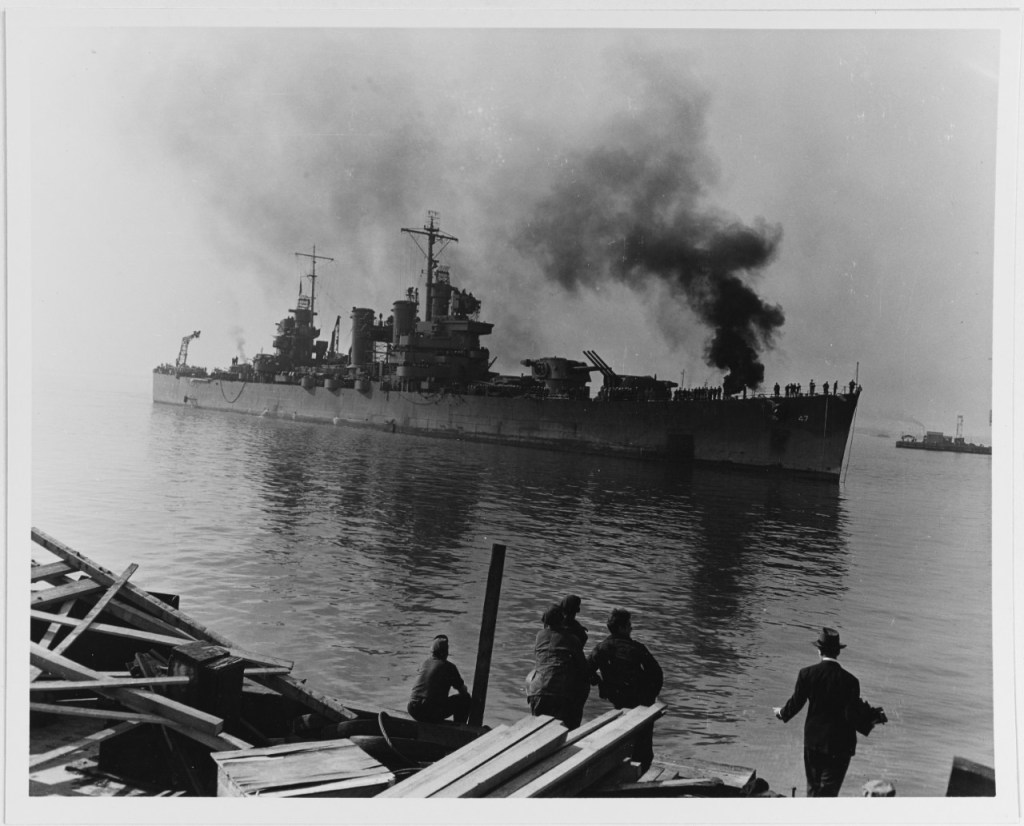
Just like Nimitz, Yamamoto’s biggest issue in the South Pacific was fuel. Tokyo is actually farther from the Guadalcanal than Pearl Harbor, and like the Americans, the Japanese lacked sufficient tanker capacity. But by October 1942, the Japanese had finally committed to destroying the Americans on Guadalcanal, and enough fuel was allocated for Yamamoto’s big battleships to operate from their anchorage at Truk. For lack of fuel, they had been sitting there for months, derisively referred to by the overworked destroyer and cruiser sailors as “Hotel Yamato” and “Hotel Musashi”.
After the battles at Coral Sea, Midway, and the Eastern Solomon’s, Yamamoto had a healthy respect for American airpower, and Henderson Field was an unsinkable aircraft carrier from which the Cactus Air Force sank everything that came down the Slot in daylight. The only option to neutralize Henderson Field was a run down the Slot at night by fast battleships which could pummel the airstrip. Then, sufficient troops and heavy equipment to secure the island could be landed on Guadalcanal from the big slow transports that Japanese couldn’t use as long as the Cactus Air Force roamed the Slot. Thereafter, Japanese troops on the island would be of sufficient quantity to be able to penetrate the Marine perimeter, and overrun the airfield. With the airfield out of action, Yamamoto could then send the Combined Fleet, spearheaded by the mighty Yamato and Musashi down the Slot without fear of air attack from Guadalcanal, and decisively defeat the American Fleet. The fast battleship run was scheduled for the night of 15 October. Until then, the Tokyo Express would put every ship it had into reinforcing Guadalcanal, and bombarding the airfield in preparation.Throughout September and October, Maj Gen Vandergrift’s Marines on Guadalcanal defeated everything the Japanese had thrown at them, but the Tokyo Express continually poured fresh troops onto Guadalcanal. Even U.S. Marines can’t hold out indefinitely. Additionally, the poor rations, constant fighting and the debilitating effects of living in the jungle were taking their toll on the Americans. Though they would never admit it, the Marines needed help. That help came in the form of the US Army 164th Inf Regt, from the Americal Division which was formed from the AMERIcan defenders of New CALedonia. The convoy from New Caledonia was escorted by cruisers and destroyers of Task Force 64, led by Rear Admiral Norman Scott.
When Scott took command of the American escort force, he was keenly aware of the sorry state of American surface forces. He was not about to repeat the same mistakes as his predecessor, who had been ignominiously defeated at The Battle of Savo Island in August, known amongst the crews as “The Battle of Five Sitting Ducks.” To Scott, night surface action was about one thing, and one thing only: “the first effective salvo, though the second and third didn’t hurt the cause either.”
To this end, Scott instituted a night gunnery training program that had his crews at general quarters every evening and early morning conducting gunnery excercises. He designated areas of the sea and squared his captains off against each other. During these gunnery drills the turrets were offset several degrees so the shells safely landed behind the target. But the big splash to the stern let the opposing crew know without a doubt when they were “hit”. And everyone had friends on the Vincennes, Quincy, and Astoria, resting below in “Ironbottom Sound”. Battle Drills became second nature. Moreover, Scott changed the culture of his surface ships. He lobbied to have his cruisers operate independently of Adm Turner’s transports when they weren’t directly involved in actual escort missions. After Nimitz’ visit to the South Pacific in early September, Scott was granted his wish. His command was elevated to a separate Task Force, Task Force 64, on par with Turner’s transports and Fletcher’s carriers. Scott changed his mission from escort to “screening and attack”, and let his captains know that he intended to take the fight to the Japanese. The Tokyo Express had to be in and out of the waters around Guadalcanal before the sun rose. That made them predictable. Scott planned to exploit that.
Scott got his chance on the night of 11-12 Oct 1942. Rear Admiral Aritomo Goto was escorting a massive Tokyo Express Run of almost 11,000 Japanese troops, and included two sea plane tenders that carried much needed heavy equipment such as trucks and artillery pieces. Goto’s run was divided into two groups, a transport group, with a bombardment group in the lead. As Scott’s task force was escorting the 164th to Guadalcanal, coastwatchers and reconnaissance planes spotted Goto. Scott sent the transports safely away with a few destroyers, and moved to ambush the Japanese north of Guadalcanal’s Cape Esperance. Just before midnight, the Japanese bombardment group, consisting of three cruisers and two destroyers, was picked up on radar and Scott ordered his column of five destroyers, and three heavy and two light cruisers, to change course in order to cross the Japanese T. Goto’s ships relied on flares and visual identification and had no reason to expect cruisers in the area from the so far passive Americans. He had no idea what was about to hit him.
Unfortunately for Scott, the watch officer of the lead cruiser, the San Francisco, didn’t turn where the lead destroyers turned, and instead turned simultaneously with the lead destroyer as soon as the order was given. In Army terms, he executed a “Left Flank, March”, instead of a “Column Left, March”. The rest of the formation followed. This put the lead three destroyers out of position, and even worse, in between the Americans cruisers and the Japanese.
For several critical minutes, confusment reigned in the American formation as Scott and his captains attempted to ascertain the exact location of the destroyers in order to prevent fratricide. All the while, the Japanese closed the distance, to the point where they became visible in the darkness. One exasperated gunner complained, “What are we doing? Waiting to see ‘the whites of their eyes’?” The captain of the new light cruiser USS Boise finally said, “I know what I’m shooting at”, and opened fire. Everyone else followed suit.
American naval doctrine at the time said that distances less than 17,000 yards were “close contact”. Off Cape Esperance, they were less than 4000, and closing rapidly. At this distance, it wasn’t the big manually controlled 8” guns of the heavy cruisers that would be responsible for the bulk of the damage, but the radar controlled rapid fire 6″ guns of the American light cruisers, the Boise and Helena. The Japanese complained they fired “like machine guns”, and at a distance where it was impossible to miss. It also didn’t help that the Japanese ships were initially loaded with high explosive rounds to bombard Henderson, not ship killing armor piercing rounds. The two American light cruisers savaged the two lead Japanese cruisers.
However, not everything worked in Scott’s favor. In the confusion, fire control was lacking and the task force’s fire was not distributed properly. The lead Japanese cruiser, the Aoba, took the bulk of the fire while the rear most Japanese cruiser was initially not fired upon at all. And the Kinugasa made the Boise pay for firing first. Even worse, the American heavy cruisers lacked the new fire control radars of their little brothers, and inadvertently fired upon the wayward destroyer squadron, sinking one and damaging another. In less than 30 minutes, one Japanese cruiser and one destroyer were sunk, with the rest badly damaged, at the cost of two American cruisers and one destroyer damaged and another sunk by friendly fire.
The Battle of Cape Esperance was the first time the US Navy defeated the Japanese in a surface action in World War Two. It provided a much needed morale boost to the Allied destroyer and cruiser crews, who up to this point were consistently outperformed, out-maneuvered and out-gunned by their Japanese counterparts. However, the confusion caused by the San Francisco cost the Americans dearly. In addition to the ships damaged, and sailors killed and wounded in battle, the Japanese managed to unload all of their reinforcements on Guadalcanal. Many Marines and soldiers (The US Army’s 164th Regt would land a day later on the 13th) would pay a heavy price for Goto’s successful Tokyo Express run, even if he didn’t survive to see it
The attritional battle for Guadalcanal would continue.
 Buk's Historical Ad Hockery
You must be logged in to post a comment.