
Category: History
The Naval Battle of Guadalcanal: The Battle of the Dead and the Cactus Air Force
When the Japanese Bombardment Group and Task Force 67.4 mutually broke contact in the early morning hours of 13 November 1942, the Naval Battle of Guadalcanal was far from over. As soon as the American ships cleared the Sealark Channel, the PT boats of Motor Torpedo Boat Squadron Three screamed into the Savo Sound to go hunting. The PT Boat skippers, driving the smallest warships (warboats?) in the fleet, had a Napoleonic complex, and tended to shoot first and ask questions about target identity later, especially since they were quickly sunk if spotted. So when the task forces were in the area, they were kept dockside. PT boats were still a novelty in 1942, and coordination measures with the task forces were still being worked out. No coordination existed except to check in with “Cactus Control” on Guadalcanal, which MTBRON Three dutifully did. However Cactus Control didn’t know that the Portland was still trying to limp out of Savo Sound with a damaged rudder and unable to break 10 knots. The PT boats attacked the crippled ship, and fortunately missed. They wouldn’t miss the next time though. It was found that the torpedoes were launched on the wrong bearing: the thirty odd steel hulled ships sunk in battle over the last two months messed with the compasses in the wooden boats. “Ironbottom Sound” truly was.
When the sun rose that morning, the Savo Sound was a holocaust of debris, bodies, oil slicks, and burning wreckage. Several ships were adrift and on fire, and the stranded Japanese were fighting to the death. The Portland was forced to engage sailors on a wrecked Japanese destroyer firing at them as they crawled out of the Sound. The burning Hiei did the same to an American destroyer whose crew correctly surmised the Japanese weren’t taking prisoners. Two burning and slowly sinking destroyers sat the night out a few hundred yards from each other: only to continue fighting at first light when they recognized the enemy. There are several reports of survivors fighting in the water, and even Japanese killing their to own to prevent surrender. Neither side had yet to conduct any search and rescue, everything was needed for the coming day. Until the battle ended, the exhausted, and most likely wounded, survivors were written off, so the morning became known as “The Battle of the Dead”. The only consolation was for the American survivors, who could signal the Cactus Air Force as they went about the grim and coldly efficient business of sinking the remaining hulks, including the seemingly unsinkable Hiei, and attacking Tanaka’s Transport Group still coming down the Slot.
The Marines, Navy, and the Army flyers of the Cactus Air Force took to the task with a vengeance. First they swept the Savo Sound of any remaining Japanese ships, including the Hiei, which absorbed a silly amount of bombs and torpedoes before she finally sank later that night. Then they turned on Tanaka and the destroyers and freighters of his Transport Group as it slowly made its way to Guadalcanal. Every ship that unloaded on Guadalcanal meant a tougher fight for Vandegrift’s exhausted 1st Marine Division. The attacks were relentless.
On Henderson Field, the ground crews were augmented by cooks from the mess tents, headquarters staff, and even rescued sailors from the previous night’s fight that managed to make it to shore: all in the name of servicing the aircraft quicker. Some pilots did 4, 5, even 7 sorties that day. Vandegrift requested more planes, and Halsey delivered. He ordered the Enterprise to send all of her torpedo and dive bombers to operate out of Henderson Field, and she would return to port. When the carrier planes arrived, Cactus Control wasn’t expecting them, and they were initially thought to be a Japanese strike. When they were recognized, one ground controller likened them to “descending from above like angels from heaven.”
Tanaka lost a destroyer and seven transports packed with men and equipment. However, many of the troops were transferred off the sinking ships onto the escorting destroyers, but the losses in the supplies were painful. The Japanese troops on Guadalcanal were starving, and Tanaka was their only hope.
That night, the four remaining transports beached on Guadalcanal. They would never survive another day in the Slot during daylight. Tanaka managed to land 7000 more troops on the island but not nearly enough food. The commander of the Japanese forces on the island, Maj Gen Hyakutake, called it “chickenfeed”. One of his regimental commanders was reporting 70% of his men were ineffective due to hunger. The 7000 new troops made Hyakutake’s logistics’ situation even worse. The key was Henderson Field: transports couldn’t make it down the Slot as long as it was operational. Yamamoto decided to try again.
Yamamoto sent a few cruisers down the Slot that night, and Halsey got word, but Task Force 67.4 was spent. The only ships he had left were the Enterprise’s escorts, the battleships Washington and South Dakota. He sent them north. However, after unloading all of her bombers to Henderson Field, the Enterprise steamed further south to get closer to port. When the battleships got word to be in Savo Sound by midnight, Rear Admiral Willis “Ching Chong” Lee replied, “Does he think we have wings?”
The cruisers bombarded Henderson Field, and destroyed some planes, but after All Hell’s Eve it wasn’t too concerning. In fact, when Lee’s battleships couldn’t make it in time, Cactus Control unleashed MTBRON Three. The plucky little PT boats put three torpedoes into the Japanese ships and chased them off, cutting their bombardment short. In any case, only the big guns on the battleships could suppress Henderson Field long enough for Japanese transports to make it to Guadalcanal. And at that moment, there was one steaming north away from the fight, the Kirishima.
The furious Yamamoto fired the disgraced Abe and gave command of the Bombardment Force to his right hand man, Adm Nobutake Kondo. Kondo was on his way from Truk with the cruisers Atago, Sendai and Takao to reinforce Abe when he was ordered to rendezvous with the Kirishima and Nagara and go back down the Slot. Kondo was to destroy Henderson Field the next night, that of the 14th.
The prewar battleship admirals would finally get their showdown with the Japanese.
The Naval Battle of Guadalcanal: Friday the Thirteenth
When ViceAdm Halsey told MajGen Vandegrift that he would get him help, Vandergrift took him at his word. So much so that on 31 October 1942, Vandergrift significantly weakened the perimeter of Henderson Field to mass troops so the Marines could take the battle to the Japanese. For over a week, Vandergrift’s men mauled concentrations of stunned Japanese and pushed them back away from the perimeter. But even combined with the horrible losses taken in the Battles for Henderson Field and off the Santa Cruz Islands in late October, Yamamoto was not willing to give up Guadalcanal.
On 12 November, the tenacious Tanaka put together another Tokyo Express run with transports that departed for Guadalcanal carrying 7000 more troops and enough supplies to last 30,000 men a full month. Steaming ahead was Vice Adm Hiraki Abe’s Bombardment Group consisting of the fast battleships Hiei and Kirishima, the cruiser Nagara, and eleven destroyers. Abe was to sweep the Savo Sound of any Allied ships that night, then plaster Henderson Field.
American Naval Intelligence was reading the Japanese mail again and Halsey knew all about the plan. But knowing about the plan and having the resources to do anything about it were two different things. Halsey wasn’t completely sure it was accurate: the Japanese didn’t include any aircraft carriers. He assumed Yamamoto still had at least three carriers left (He did, just without planes and pilots). American Intelligence didn’t know that the Japanese had little naval airpower remaining after the grievous losses off the Santa Cruz Islands. All Halsey had were the Cactus Air Force and the carrier Enterprise. And he wouldn’t have the CAF if Abe got through with his Bombardment Group. But he also couldn’t risk the Enterprise.
Still at this point in the Pacific War, the score between the Americans and Japanese was kept by the number of aircraft carriers each possessed, and the Americans were losing. Yamamoto had three, Halsey just one. The loss of the Enterprise would be a blow that Halsey might not be able to recover from, if only from a propaganda stand point. (This is actually kind of bullshit: Nimitz himself was quoted saying, “I wish we had as many carriers as the Japanese say they sunk.” No one believed the Japanese broadcasts anymore. However, losing the last one would still be pretty bad.) So Halsey needed to protect the Enterprise, if only to maintain some flexibility when dealing with the Yamamoto’s moves on Guadalcanal. So when the half repaired Enterprise sortied from Noumea, it was accompanied by the only two battleships Halsey possessed, the South Carolina and Washington, for anti-aircraft protection. Abe battleships would have to be taken care of by Norman Scott’s cruisers.
On 11 November, Halsey’s promise to Vandergrift was being delivered in the form of the remainder of New Caledonia’s garrison, the US Army’s 187th Infantry Regiment. Their transports’ escorts were rolled into Scott’s Task Force 64 in order to put as many ships as possible in Abe’s path. However, the escorts were commanded by Rear Adm Dan Callaghan, Halsey’s predecessor’s chief of staff who needed a job after his boss was relieved. Unfortunately for Scott, Callaghan outranked him by 14 days. So instead of Norman Scott, the only surface warfare admiral in any Allied navy with a victory over the Japanese, command of the warships that had to stop Abe fell to Callaghan.
Task Force 64 was renamed Task Force 67.4, to show Callaghan was still subordinate to Task Force 67, Halsey’s transports, and sent into the Savo Sound to find and destroy Abe’s Bombardment Group. A month before, it would have been an impressive force: two heavy cruisers, three light cruisers, and eight destroyers, but against Abe’s massive battleships, it was “a death sentence”. Just the Hiei itself had almost as much raw firepower as Callaghan’s entire command. Callaghan thought he was being sacrificed, and this sense of doom permeated throughout the entire task force.
It didn’t help that the next day was Friday the Thirteenth, the unluckiest day of the year.
Just after midnight, on 13 November 1942, Task Force 67.4 made radar contact with Abe’s Bombardment Group steaming towards Guadalcanal in a ragged formation. To get out of a rain squall, Abe reversed course and then reversed again. The maneuver threw his formation into chaos, but he needed out of the rain in order to use his flares and searchlights. The American cruiser Helena picked up the Japanese with its powerful radar, and Callaghan ordered the task force directly at them. Abe was in two columns, and Callaghan drove his ships in a single file line right between them – like a lance into Abe’s gut.
Any advantage the Americans had from early radar contact was wasted by Callaghan, who didn’t trust the new technology. So the two forces closed with each other on the starless and moonless night: one out of ignorance, and one out of incredulity.
At 0130, Callaghan’s destroyer vanguard had to make emergency turns to avoid ramming the Japanese ships, which broke the American formation. The battle finally started a minute later when a powerful searchlight from the Nagara lit up Callaghan’s flagship, the San Francisco. Callaghan ordered the peacetime protocol, “Counter-illuminate”, but the San Francisco’s gunnery officer, a veteran of several battles in Ironbottom Sound, replied “Fuck that”, and yelled, “Open fire” into his mic.
What followed was, “a bar brawl where someone turned out the lights, and everyone started swinging.” The American ships were amongst the Japanese, and the last order Callaghan gave was “Odd ships fire to starboard, even number to port” but by then it was too late. Every ship was fighting its own battle with whatever ship it could see among the flickering light from flares, searchlights, and burning ships.
Abe was taken completely by surprise. His battleships were loaded to fire high explosive incendiaries at Henderson Field, and initially their shells didn’t pierce the American armor but it did set fire to anything exposed. And at knife fighting ranges his big 14” guns weren’t nearly as effective as Callaghan’s 8” guns on the heavy cruisers, or even the Helena’s 6” guns. No feasible amount of armor could stop the San Francisco or Portland’s shells fired in a flat trajectory at those velocities at point blank range. Within minutes, the Hiei was on fire from stem to stern, and the rest of Abe’s ships were not much better.
The Japanese surprise didn’t last long though. For the next 40 minutes, cruisers dueled with battleships, destroyers dueled with cruisers, and battleships dueled with destroyers, as the little ships darted in and out of the fight while launching ship killing torpedoes in all directions. Marines watching from shore described the exploding ships as “the opening and closing of the doors to Hell.” Visual identification was difficult, and more than a few friendly fire incidents occurred. At one point, Callaghan’s San Francisco fired at the Hiei through Norman Scott’s Atlanta, killing Scott and everyone on the bridge. Callaghan himself was killed when the battleship’s massive guns tore apart the San Francisco’s superstructure.
The battle was decided by a lowly destroyer, the Sterett. Late in the battle, she made a gun run on the Hiei and put 36 5” rounds into the bridge (She was too close for torpedoes to arm), which severely wounded Abe. At this critical juncture, the Kirishima was finally making her presence felt on the leaderless American ships. But the terribly wounded Abe thought the battle was lost and ordered a withdrawal. The Kirishima and the remaining Japanese ships turned north. Once again, the Japanese penchant for centralized command and control saved the Americans.
“Friday the Thirteenth’s Cruiser Action” left the Americans crippled. The skipper of the Helena, Captain Gilbert Hoover took command and shepherded as many of the surviving ships away from the Japanese as he could. The heavy cruiser Portland was sailing in circles desperately trying to repair a damaged rudder and engine, and the San Francisco had 26 holes in her, most 14” wide. The light cruisers Atlanta and Juneau were sunk along with four destroyers. On board the Juneau were the Sullivans – five brothers who joined the Navy together, none of whom survived the battle. The Juneau exploded in a thunderclap from a Japanese I-boat torpedo, and Hoover didn’t want to risk the remaining ships in a fruitless search for survivors. (100 men did survive the explosion, including a Sullivan. However, only ten would survive the next eight days of exposure, dehydration and shark attacks until they were belatedly rescued. The remaining Sullivan brother was not among them.) Only the Helena and one destroyer were fit to fight the next day.
But the Hiei was drifting and on fire, and the Kirishima was headed back north. The Japanese battleships didn’t get a chance to fire on Henderson Field that night. When the sun came up, what remained of Abe’s Bombardment Group and Tanaka’s transports felt the full fury of the Cactus Air Force.
And the Cactus Air Force neither could, nor felt like, taking prisoners.
The Bolshevik Revolution: Red October
On 25 October 1917, (7 November according to the Gregorian calendar) radical socialists called Bolsheviks, led by Vladimir Lenin, Josef Stalin, and Leon Trotsky hijacked and precluded a wider socialist rebellion against the Russian Provisional republic led by Alexander Kerensky.
In February 1917, Tsar Nicholas II abdicated after the massive casualties sustained on the Eastern Front, mostly during the failed Brusilov Offensive in late 1916, and the resultant second and third order effects back home. A Provisional Government was formed, but to coordinate action of the middle and far left in the Provisional Government, a separate Petrograd Soviet, or worker’s council, was formed and chaired by Leon Trotsky. The Petrograd Soviet was based on other soviets that ruled locally in many parts of Russia. Petrograd, modern St. Petersburg and the capital of Russia at the time, was one of Russia’s most important cities, along with Moscow, and its soviet, and by default Trotsky, wielded outsized influence.
During the summer, the Provisional Government weathered several rebellions but in September and October 1917, Russia was wracked by massive strikes. On 23 October 1917, the Bolshevik Central Committee of the 2nd Congress of Soviets, which was meeting in Petrograd, resolved that the time was ripe for revolution, which was planned for two days later to coincide with the arrival of a flotilla of destroyers crewed by pro-Bolshevik sailors and marines.
On 25 October, Red Guards, specially formed paramilitaries consisting of armed factory workers, peasants, and deserters from the army and navy, seized strategic locations throughout the city in a near bloodless coup, as most of the Petrograd garrison joined the insurrection. That evening they seized an abandoned Winter Palace, the symbol of Russian Imperial rule. Kerensky fled earlier in the day to find military forces loyal to the Provisional Government specifically Cossack units outside the city. But since the Red Guards controlled the railroads, telegraphs, and the chokepoints around the city, Kerensky ended up borrowing a car from the American Embassy to flee. He managed to make his situation worse when some soldiers loyal to him fired on a unit that could have been persuaded to join his cause, and this act made him seem very Tsar-like in the eyes of many.
The next day, the Bolsheviks announced to the 2nd Congress of Soviets they had seized Petrograd and the Winter Palace. But instead of immediately forming a Constituent Assembly for a new constitution, the Bolsheviks announced that rule of Russia would be immediately given to the deputies of the local soviets. The Mensheviks and most of the Socialist Revolutionary Party walked out in protest, but Trotsky taunted them on the way out, “You are pitiful isolated individuals; you are bankrupts; your role is played out. Go where you belong from now on — into the dustbin of history!” But Trotsky was right, they were used, and when they were no longer needed, discarded. As many groups found out later much to their detriment (Lenin famously referred to them as “useful idiots”).
A new Constituent Assembly was elected from the Bolsheviks, the remaining Socialist Revolutionaries, and their allies, but even that was quickly disbanded when it proposed reforms that took power away from the soviets. Within a month, private property was confiscated, wages were fixed, and all forms of social hierarchy that didn’t stem from the barrel of a gun were abolished, such as military rank and noble or educational titles, the first secret police, the Cheka, were established, and the “hammer and sickle”, a proposed symbol unity between the worker and peasant, was adopted. The Bolsheviks would immediately seek terms with Imperial Germany, resulting with the Treaty of Brest-Litovsk, which ended Soviet Russia’s participation in the First World War, and began the Russian Civil War.
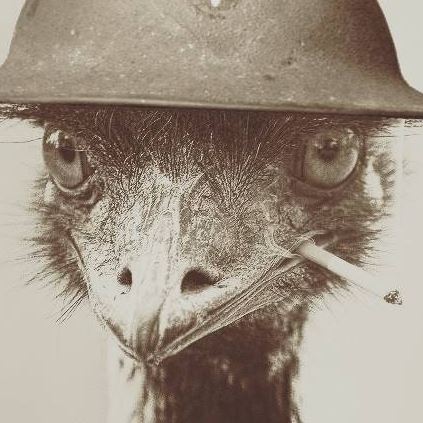
The Great Emu War
The Second Battle of El Alamein: Operation Supercharge
For a week, the battle between Field Marshal Erwin Rommel’s Panzer Armee Afrika and Lt Gen Bernard Montgomery’s Eighth Army raged around an obscure railroad terminal in Egypt at El Alamein. In the previous weeks, both sides dug in and laid extensive minefields all the way from the coast to the impassable Qatarra Depression in the south. So far, the Second Battle of El Alamein was a constant cut, parry, and riposte by both sides, as the Eighth Army sought weak points in the German defenses, and slowly ground down Rommel’s forces. From Enigma intercepts, Montgomery knew of Rommel’s supply difficulties; it was only a matter of time before the Axis lines broke.
On 1 November 1942, Montgomery found his weak spot just above the Miteirya and Kidney Ridges in the north of the battlefield. There, dismounted engineers (the “light feet” of Operation Lightfoot, since they wouldn’t set off the anti-tank mines if they stepped on them) had cleared several passages through the German and Italian minefields. That evening, Montgomery reshuffled his forces and formed a composite division under the redoubtable Bernard Freyberg (Crete notwithstanding, Freyberg was still the best division commander the British had) and what remained of his 2nd New Zealand Division.
Just after 0100 that night, Freyberg launched Operation Supercharge to crack the German lines and pass the 1st and 10th Armoured Divisions through so they could engage and destroy the remainder of Rommel’s ever dwindling supply of panzers. After a furious four hour bombardment, the Kiwi and British infantry forced the ridges doggedly defended by dug in Italian infantry, but expended themselves doing so. The only remaining static Axis defense was an anti-tank screen along the Rahman track. Freyberg had no infantry left to clear it, but with the breakout so close, a good old fashioned cavalry charge, Light Brigade-style, had to be tried.
The job fell to Brigadier Currie’s 9th Armoured Brigade, initially attached to Freyberg to fix Rommel’s inevitable counterattack after the infantry pierced the line. Now they were attacking directly into the teeth of German anti-tank guns. Just after dawn with the sun at their backs the British tankers rolled forward desperately trying to close the distance before the dreaded 88s shot them to pieces. But attacks that were suicide earlier in the year were merely exceptionally dangerous now. Thanks to Roosevelt’s stripping of tanks from America’s first armored division and sending them to the Middle East after the Fall of Tobruk, the thin skinned and light gunned Honeys, Cruisers, and Crusaders had been replaced by heavier and newer Churchill, Grant, and Sherman tanks, with thicker armour and longer ranged guns. For 30 intense minutes, Currie’s tanks dueled with Rommel’s guns. He didn’t break through, but there were few anti guns remaining. Rommel reinforced the line. However, only a counter attack could prevent the Eighth Army, a formation that Auchinlek and Montgomery spent months painstakingly building up, from breaking through and cutting the all-important coast road.
About an hour later, a Kiwi brigadier was wondering why the 9th Arm Brigade wasn’t supporting the defense. He found Currie dozing on a stretcher. “Sorry to wake you, John, but where are your regiments?” Currie waved to the half dozen tanks laagered around him. “Not your headquarters, your regiments?” Channeling Picket at Gettysburg, Currie groggily replied, “These are my regiments, Bill.”
Fortunately for Currie, Freyberg, and Montgomery, Rommel had little fuel and few tanks left to effect a counterattack. That afternoon, he threw the Littorio Armored Division and the 15th and 21st Panzer Divisions at the gap, where they were stopped cold by British and Kiwi anti-tank guns and artillery, supported by waves of RAF air support, who by this point in the battle had near complete control of the air. The Germans and Italians lost nearly 100 tanks in what became known as “The Hammering of the Panzers”. It was about the same number of losses as the British, but Rommel had no replacements. He had just 35 tanks remaining, little fuel, and there was a British armoured car squadron rampaging through his rear areas who had slipped through in the confusion. Rommel knew the battle was lost.
However, Rommel was determined to save as much of his command as possible. That night he radioed Hitler directly for permission to withdraw, which Hitler replied the next day that Rommel needed to stand his ground, and ended his message with, “you can show them no other road than that to victory or death.” Rommel decided to compromise, but waiting on Hitler’s reply cost him dearly. He planned on withdrawing six miles, but never had the chance. During the night Montgomery again reorganized his forces and launched three infantry brigades at what was left of Rommel’s defenses along the Rahman Track, and broke through. Only the determined and stalwart defense by several Italian units prevented the PanzerArmee’s complete destruction, as Rommel waited on Hitler’s response. The elite Folgore Parachute Division, which spent most of its existence preparing for an airborne assault on Malta, was encircled and destroyed. They literally fought until the last bullet was expended. The Afrika Korps’ longest serving Italian allies, the Ariete and Littorio Armored Divisions and the Trieste Motorized Division, were also destroyed in desperate rear guard actions to buy Rommel time for the rest to withdraw.
By the morning of the 4th, the situation was hopeless, and Rommel abandoned the line to fall back to Fuka, 50 miles west. But he couldn’t even stop there. Montgomery’s armoured divisions dogged him the entire way, and by the 11th, Rommel was thrown out of Egypt. Rommel deemed Cyrenacia untenable with what remained of his once feared PanzerArmee Afrika, and by 23 November was back at El Algheila, where he started nearly eleven months before. Despite Hitler’s order to stand and die, Rommel’s compromise to withdraw just six miles at the end of the 2nd Battle of El Alamein, turned into a retreat of over 650 miles. He would never return.
After the Second Battle of El Alamein, Churchill noted, “We can almost say that before Alamein, we never had a victory. After Alamein we never had a defeat”.
Martin Luther and the Protestant Reformation
On All Hallow’s Eve, 1517, local teacher, professor of theology, and Augustinian monk, Martin Luther posted a proposal for a public debate on the door of Wittenberg castle’s church regarding the sale of indulgences by traveling Dominican friars. In 1517, indulgences were certificates guaranteed by the Pope that the bearer would not have to spend time in Purgatory for their earthly sins. Luther had drawn up a list of 95 theses which were his concerns, not specifically against indulgences themselves, but with their sale without any true contrition. He wanted to provoke debate, something he was very good at, and reform the Church, not break with it.
There is no evidence of Luther actually “nailing his theses to the door”. However, that day Luther did send copies of his 95 theses to Albrecht the archbishop of Mainz and Jerome the Bishop of Brandenburg, who forwarded them to the Pope. The bishops then let the matter drop. Stymied by his chain of command’s inaction, Luther sent his 95 theses to several friends throughout Germany. These friends promptly had many more copies made on one of the newest inventions of the Renaissance, the printing press. Luther gained a following and the Dominicans’ revenue from indulgences dropped. At the powerful Dominican order’s request, Pope Leo X issued a decree demanding the following of the Dominican practice of indulgences, which Luther and his adherents ignored. He wouldn’t give in without his debate.
Prominent German theologian John Eck took up Luther’s gauntlet. In July 1519, the two debated in Leipzig. Eck got the best of Luther, but only because Eck slandered him by pointing out that a century before, Jan Hus also thought indulgences were sacrilegious. This bit of sophistry horrified Luther, who had accepted Jan Hus and his failed Hussite rebellion in Bohemia in 1414, as the height of heresy. There were quicker ways to get burnt at the stake than by being called a “Hussite”, but not many.
Luther dug into Hus’ teachings to refute Eck. However, he found that he was actually fully in agreement with Hus, and speaking to his followers, said, “We are all Hussites without realizing it.” Luther began a proper campaign of book and pamphlet writing espousing and clarifying his thoughts on the Church, which due to the printing press, spread rapidly throughout Europe. It was at this point that Luther began calling for a break with the Church of Rome.
At several points in those formative years of the Protestant churches, Luther could have easily been declared heretical and burned at the stake. However, Luther had a powerful benefactor, the Elector Frederick of Saxony, who did not want his star orator and teacher, and Saxony’s most famous subject, harmed. When Luther was summoned to Rome to explain his views (where he would have almost certainly been killed), Frederick convinced the Holy Roman Emperor, Maximillian, to allow Luther to debate the Dominicans in Augsburg. The ailing Maximillian, who needed Frederick’s vote to get his grandson Charles elected as the next Emperor, was only too glad to accommodate Luther.
After Charles was elected Emperor, the politics of the Holy Roman Empire continued to be more important than the “Monk’s Quarrel”. Under Frederick’s protection, “Lutheranism” spread throughout Europe. In 1521, Luther was at the height of his popularity, and Charles requested that he explain himself at the Diet of Worms, fully expecting Luther to recant. But Luther did no such thing, and many of the members of the Diet called for his immediate execution. However, Charles honored his promise of Luther’s safe conduct. The Diet was called because Charles needed funds to fight the Turks, who had just recently captured Belgrade, which opened up the Hungarian Plain to Turkish raids and incursions. Frederick was by far the richest elector in the Empire, and Charles needed his support.
After securing Frederick’s support, Charles did outlaw Lutheranism, but by then it was too late. Luther translated the New Testament from Latin to German, so that “every man can be his own priest”, which broke the power of the clergy and “democratized salvation”. Due to Luther’s superior rhetorical skills, prolific book writing and pamphleteering, which was compounded by the printing press, Lutheranism could no longer be contained. It had spread throughout Germany, France, the Low Countries, and even England.
The Protestant Reformation would eventually set Europe on fire. It would take over a hundred years of bitter and bloody internecine warfare before most Catholics and Protestants realized religion wasn’t worth killing each other over.
The Battle of Milvian Bridge
For various reasons, there was no clear successor to the Roman Empire after the death of Emperor Constantius in 306 CE. In the following years, two clear candidates emerged: Maxentius, who held Rome and made himself emperor, and his brother in law Constantius’ son Constantine who was in Britain at the time. In 312, Constantine gathered his legions and marched to the Italian peninsula to challenge the usurper.
On the night of 27 October, Constantine said he had a vision (some accounts say his legions saw it also) of a symbol, and heard the words “Under this sign you shall conquer”. Although commonly thought to be the cross, the symbol was the early Christian Chi Rho (P with an X in the stem) made of the first two letters of the word “Christ”. That night Constantine had the symbol painted on his legion’s shields, helmets, and banners.
The next morning, Constantine’s legionnaires met Maxentius at Milivian Bridge over the River Tiber on the Via Flaminia. Constantine decisively defeated Maxentius, and killed most of his troops, including the usurper himself, as they tried to flee across the bridge or swim the river. Constantine claimed divine intervention of the Christian God as the reason for his victory.
Constantine was not a Christian himself. Like most Roman soldier-emperors he worshipped Sol Invictus and Mithras, but saw the Christian god as one of many, and for the rest of his reign he ended the persecution of Christians. Emperor Constantine I did much to promote and protect Christianity across the Empire and was baptized a Christian on his deathbed. Constantine is arguably the single most important secular reason for Christianity rising from a mostly Eastern slave, outcast, and women’s cult, to the state religion of both the Western and Eastern Roman Empires.
 Buk's Historical Ad Hockery
You must be logged in to post a comment.