
Category: History
The Fourth Battle of Monte Cassino: Unexpected Breakthroughs
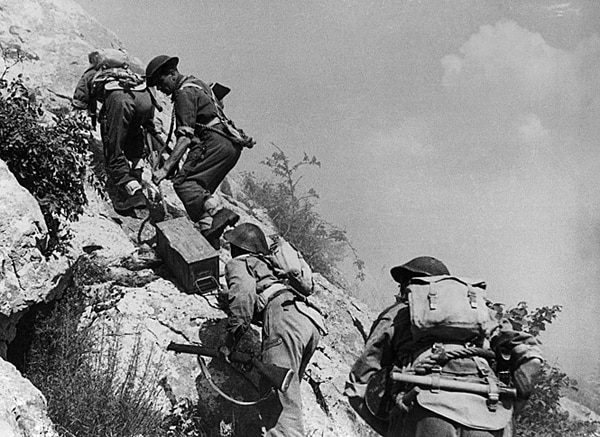
The Germans were caught completely by surprise with Operation Diadem. They believed the Allies were going to make an amphibious landing north of Rome, and they positioned their reserves accordingly. Subsequently, many key commanders and staff officers from units on the Gustav Line were in Rome on pass. Both Gens. Vietengoff and Senger, the repective German army and corps commanders at Cassino, were receiving medals from Hitler when the battle started. In fact, all of the German preparations on the Italian peninsula were in accordance with Allied intentions, as per their deception plan, Operation Nonton. Even worse, German planners made a critical assumption that turned out to be grossly naive: that if the Allies attacked the Gustav Line, they would only attack at Monte Cassino. Much to their later consternation, the Germans reinforced the area around the Monastety at the expense of the rest of the front.
That one bad assumption played right into the strengths of the various national armies. Along the coast, American tenacity and firepower, in the form of massed artillery, close air support, and naval gunfire, steadily reduced the strongpoints blocking their way. In the Auruncii Mountains, mountain expertise and espirit de corps allowed the Frenchmen, in particular the Goumiers, to negotiate terrain that no German ever considered passable. Entire platoons of Goumiers free climbed cliffs, draws, and stream banks, and they did it with 25kg packs. German positions were consistently outflanked and French troops seemed materialize out of the ground.
Along the Rapido River, the British penchant for preparation and organization to be “just so” was exactly what was needed for that most demanding and exacting of offensive operations: contested river crossings. By the night of 13 May, the 8th Indian Division had a solid bridgehead across the Rapido at San Angelo, in almost the exact same spot where the Texans of the US 36th Division were massacred four months before. That night they would pass a Canadian armored brigade over the river. It would soon push into the Liri Valley: treading where no Ally had treaded before.
Along Snakeshead Ridge, the Poles took horrendous casualties attacking the prepared and reinforced Fallschirmjaeger positions. They recklessly threw themselves into “the amphitheater” formed by the imposing heights that formed its rim: Point 593, Albaneta Farm and the Monastery. Despite neither cover nor concealment, they made great gains, on both slopes of Monstery Hill. They captured Cassino town and almost reached the Liri Valley north of the Abbey. The 3rd Carpathian Division even captured Pt 593, several times. However, most Polish maneuver battalions were at 50% strength by the end of the second day of fighting. Pt 593 needed to be consolidated to prevent its recapture, but unfortunately, the Green Devils immediately recognized the nature and importance of the Poles’ main objective and continued to feed its defense. A desperate final counterattack on the night of 13 May of just 14 remaining able bodied troops, led by the remaining instructors from the German parachute school, regained the crucial objective from its final seven Polish defenders.
The battle was coming down to whose mules could feed the battalions in the assault zones the fastest. The critical logistics calculus was changed not by the Poles, but by the British advance. Their bridgehead across the Rapido and into the Liri Valley allowed artillery to fire onto the hitherto protected German assembly areas and “forming up points” on the reverse slopes of the Albaneta Massif and Monte Calvario. For the first time in the battle, the Germans on Monte Cassino were receiving fire from directions and in areas they had not previously experienced. The limited German reserves were thrown at the Canadians and Indians pushing up the Liri Valley to fix their fires and protect their concentrations.
But the Germans also knew they would not hold Point 593 for long if the Poles held the gains they made. The Polish assault battalions were within meters of cutting off the star fort. They were temporarily spent and their gains exposed, but the Polish sense of duty and resilience would see them through. They burrowed into the shattered terrain and four months of dead bodies and awaited their mules and comrades. Gen Anders himself went to his support units for volunteers. Thousands put down their wrenches, typewriters, and ladles, picked up their rifles, and headed up the mountain. Even Private First Class Wotjek, the ursine ammo handler of 22 Artillery Company and II Polish Corps’ mascot, followed his comrades up the hill after they volunteered to fight as infantry. One way or another, the next attack would be the last.
The Fourth Battle of Monte Cassino: Operation Diadem
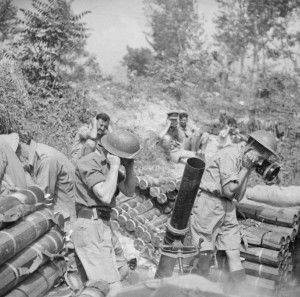
At 2230 on 11 May 1944, 1667 artillery pieces opened fire on German positions along a 20 mile front stretching from the Tyrrhenian Sea to the Abbey at Monte Cassino. The Germans were shocked and did not suspect an Allied attack, much less the largest offensive by the Western Allies so far in the Second World War. Thirty miles to the north, the Brits, Canadians, and Americans of the US 5th Army began near suicidal fixing attacks to tie down German troops at the Anzio/Nettuno beachhead. More night attacks all along the Gustav line followed immediately behind the two hour artillery barrage. The National Guardsmen of the US II Corps attacked across the open fields of the Tyrrhenian coastal plain. The British XIII Corps began a series on contested river crossings over the Rapido and its tributaries. In the Aurunnci Mountains, Moroccan goumiers and Tunisian tirailleurs pushed up narrow passes, or used grappling hooks, ladders, and free climbed their way up and forward into the German defenses.
All of these attacks were expected to fail.
But even in failure, they would accomplish their mission in drawing German reinforcements away from the decisive operation: the Polish II Corps’ assault into the minefields, barbed wire and devastated terrain of Monastery Hill, Cassino town and, most importantly, over Snakeshead Ridge at Monte Calvario, better known to Allied planners as Point 593.
Beethoven’s Ninth Symphony
On 7 May, 1824 Ludvig Van Beethoven’s Symphony No. 9 in D minor, Opus 125 was performed for the first time in Vienna, Austria. Beethoven’s Ninth Symphony was his last full symphony and is the first example of a symphony that uses a chorus and vocalists. The Symphony used Frederich Schiller’s poem “Ode to Joy” as the basis for the vocal and choral presentations in the final movement. Beethoven’s Ninth was popularized for modern audiences as a Christmas song in America (by its inclusion as the basis of the score for the Greatest Christmas Movie of All Time, Die Hard?) and was coopted by the European Union for its anthem.
The Kosovo War: NATO Bombs the Chinese Embassy
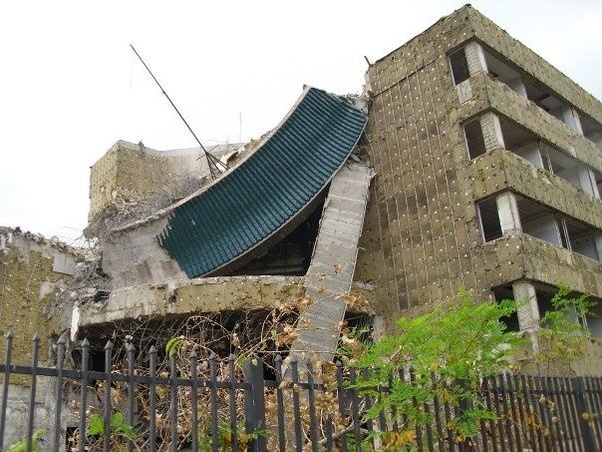
In the spring of 1999, NATO began the first combat operations since its formation in 1949 by conducting an air campaign against Serbian militias and Federal Republic of Yugoslavia (FRY) troops in Kosovo in order to try and stop the ethnic cleansing of Muslims and Albanians there. After weeks of fruitless bombing in uncontested air space, the Milosevic regime refused to come to the negotiating table, and even accelerated their program of ethnic cleansing.
Despite being another historical example of air power failing to win a war by itself, NATO doubled down on failure and expanded their air campaign to include targets inside Serbia and Montenegro. On 7 May 1999, while attacking infrastructure targets in Belgrade, NATO accidently bombed the Chinese Embassy, killing three Chinese diplomatic workers, wounding 30 more, and created a massive international incident. In June, only the threat of NATO land power brought the Slobodan Milosevic and the FRY govt to the negotiating table after his Russian backers offered no counter. In June, the UN authorized peacekeepers to the region, to include Russian and NATO troops, to stop the ethnic cleansing and allow the return of refugees.
The Bishkek Protocol
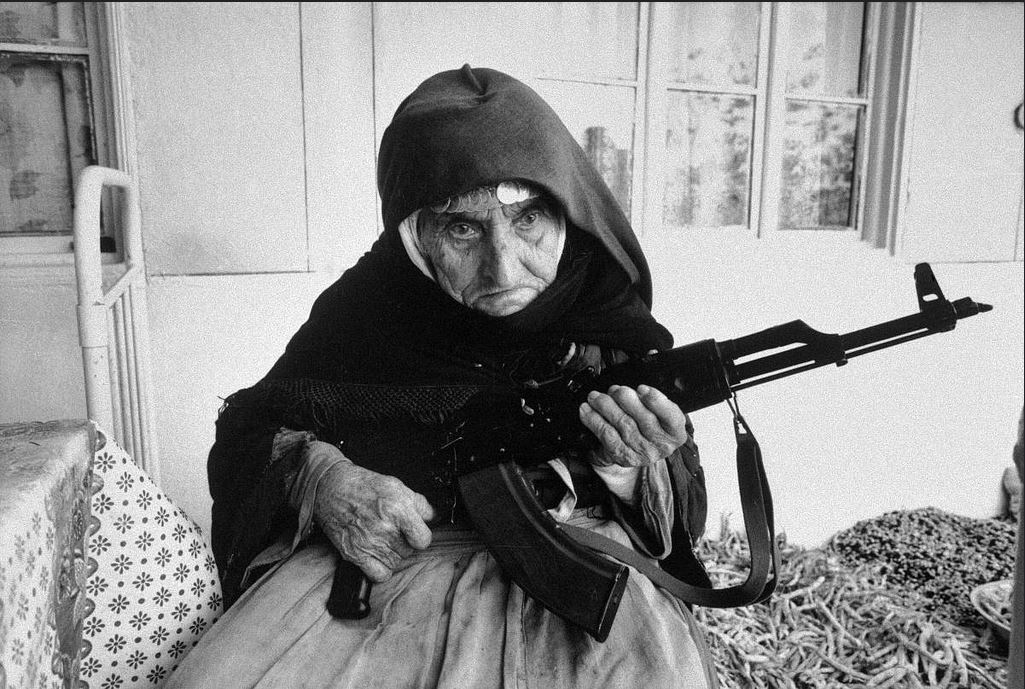
Armineh Johannes)
Since 1988, two former Soviet Republics, Armenia and Azerbaijan fought over the Nagorno-Karabakh region in the Lesser Caucuses Mountains after the Armenian population voted to secede from Azerbaijan and join Armenia. The Nagorno-Karabakh War was fought through the fall of the Soviet Union in 1991. On 5 May 1994, Armenia and Azerbaijan signed a cease fire agreement in Bishkek, the capital of Kyrgyzstan, temporarily halting their destructive war. The agreement left the unrecognized Republic of Artsakh as the defacto ruling government of the area as neither Armenia could annex the region nor Azerbaijan control it.
The Fourth Battle of Monte Cassino: The French Reenter the Line
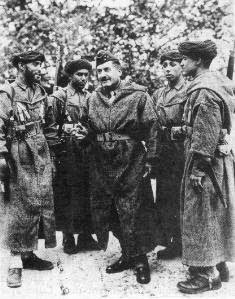
During the First Battle of Monte Cassino in January, the French Expeditionary Corps (FEC) was undoubtedly the most successful unit in that battle, despite advancing over the worst terrain. The Corps’ commander, Gen Alphonso “No Mules, No Maneuver” Juin, felt betrayed by Gen Mark Clark for his refusal to reinforce the French during the battle. Juin felt that one more regiment, even an American one, would have allowed him to break through to the Liri Valley behind Monte Cassino and avoid the last three months of bloodshed.
To add insult to injury, in April, 1944, the FEC was pulled out of the area that they had fought so hard to capture in January. Juin was outraged: the blood of France was on the slopes of Monte Belvedere and the Colle Abate. The FEC was sent to the near impassable Aurunci Mountains on the southern wall of the Liri valley. Juin suspected (accurately, but only partially) that his soldiers were being sent into the Aurunci mountains because they could do less damage to Italian civilians there. His colonial troops, in particular the Goumiers from Morrocco, saw the infidel Italian civilians and their property as spoils of war, and their French officers either could not control them or encouraged the depredations. There were hundreds of reports of Italian women being raped, and anything valuable or useful stolen. The Allied Italian government routinely complained that his soldiers were driving the Italians back to the Germans. Although the French had ravaged the Italian peninsula for centuries, Juin knew modern warfare necessitated the humane treatment of civilians. He sent a strongly worded letter to his division commanders to control their men, summarily executing them if need be.
To Juin, those issues were deplorable and regrettable because they stained the image of France. However, he also thought that he had more important matters to worry about. He was told (also accurately) that the defenses in the Aurunci Mountains could only be breached by his soldiers, easily the best mountain fighters in the Allied army. But even with his troops, the Aurunci Mountains were a formidable obstacle. There were only two small mountain paths suitable for mule trains and none for vehicles. Those two trails could barely support one regiment in the attack and there was nearly two thirds of a German division defending the area. But he had been hoarding his mules, supplies, and equipment, and his troops had been in no significant offensive action against the Germans in months. With proper planning, complete surprise, colonial toughness, and French élan, he would succeed where the British and Americans expected failure. On 6 May 1944, the last units of the French Expeditionary Corps entered the line just south of the Liri Valley.
Impassable or not, Juin was determined to break through the Aurrucci Mountains: the honor of France demanded it.
The Iron Curtain Parts

Throughout the late 80s, Communism’s inherent flaws and fundamental inconsistencies could no longer be covered up with propaganda by state controlled media or coercion and terror waged by internal security forces. This was especially true in the more liberal (relative to the Soviet Union) states of the Warsaw Pact: Poland, Czechoslovakia, and Hungary. Some political and economic concessions had already been made, but their people clamored for more. When this happened in previous decades, the Soviet Union responded with force. But in 1988 and 1989, the Soviet Union had just withdrawn in defeat from Afghanistan and the Red Army was paralyzed from corruption and the need for its soldiers to participate in the spring planting, lest they starve. Furthermore, the Soviet Union was going through an economic crisis that was 40 years in the making. Soviet Russia could only look on.
Events came to a head in the spring of 1989. Two symbolic events in April 1989 stood out. First, the Solidarity movement in Poland gained a crucial victory when it secured permission to participate in parliamentary elections in June. (They would go on to win 90% of the seats.) But it was the second that was most distressing to the Soviets at the time because they relied on the false perception that Communism was for “the people”. In a reaction to Solidarity’s victory, the Hungarian parliament, who saw the writing on the wall, unanimously voted to change the official name of the country from “The People’s Republic of Hungary” to “The Republic of Hungary” which was more in line with the names of Western governments. This removed the farcical “People’s” from the name. By the late 80s, it was obvious Communism only served a totalitarian, oligarchic, and bureaucratic elite in the name of the “Greater Good”. Still, the name change was only a symbolic gesture, but the reformers in the Hungarian Parliament, who were the sons and daughters of those curb stomped by the Soviets in 1956, knew it was an important one.
On 2 May 1989, that symbolic gesture had substantial consequences. On that day, the Hungarian Border Police, following the lead of their Parliament’s vote, began removing the border fence with Austria, to kick start improved economic ties with the West. Although there were hundreds of small symbolic acts of defiance against the Soviets that spring, the dismantling of the Hungarian border fence was the first concrete act by a Warsaw Pact government toward a peaceful end to the Cold War.
As a popular tourist destination for Warsaw Pact subjects, Hungary was relatively easy for East German, Czech, and Polish families to obtain travel papers. Tens of thousands of “holdiaymakers” fled their countries for the West by ostensibly going to Hungary for vacation. The summer of 1989 was the most successful tourist season in Hungary’s history.
Leonard Dawe, MI5, and the Daily Telegraph Crossword Puzzles
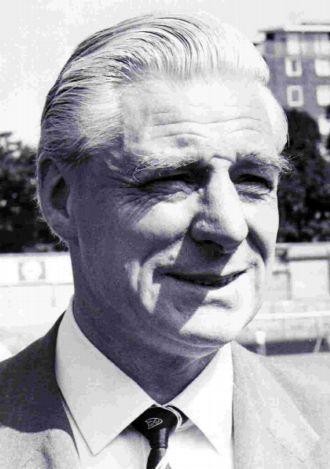
In the 2 May 1944 morning edition of London’s Daily Telegraph, the British Secret Service, MI5, saw “Utah” in the answers for the daily crossword puzzle. This was only days after the disaster at Slapton Sands, and troops killed there were slated for “Utah”, the secret code name for their landing zone on the Cotentin Peninsula in Normandy. In April, other secret landing zone code names, “sword”, “gold”, and “juno” (the British and Canadian beaches), had also appeared in Daily Telegraph crossword puzzles, but they were common puzzle words and deemed coincidences. But the word “utah”, coming so close after the Slapton Sands incident, surely could not be a coincidence. MI5 immediately placed Leonard Dawe, the paper’s crossword puzzle creator under surveillance. Dawe was headmaster at a prestigious English public (read: private) school. He did the puzzles for the paper on the side as an intellectual exercise for himself and his students, and then gave the puzzles to the Telegraph. MI5 considered bringing him in but decided to wait.
During the war, MI5 had an extraordinary amount of success in finding, capturing, and turning German agents in Great Britain. Virtually all the information the Abwehr, the German intelligence agency, was receiving from the British Isles was planted by MI5. They planned to continue this with Dawe.
But for the next month, they could find nothing sinister about Dawe. This was despite more secret code words appearing in the puzzles: On 22 May, “omaha” appeared, the beach on which the US 1st and 29th Infantry Divisions were supposed to land. On 27 May, “overlord” appeared, the code name for the invasion of France. On 30 May, it was “mulberry “, the code name for the artificial harbors that were developed in great secrecy to supply the Allied armies over the beaches. And on 1 June, 15 down “god of the sea (7)” was “neptune”, the naval operations in support of Overlord. In spite of constant surveillance, MI5 had no idea how Dawe was receiving his information. With the invasion scheduled for 5 June, a mere four days away, they decided to dispense with the subtleties.
MI5 arrested Dawe, and ransacked his home and office. They found nothing incriminating. Needing evidence, they then forcefully interrogated him, and still the headmaster kept professing his innocence. MI5 still didn’t believe him but he refused to change his story. As a precaution, MI5 kept him in isolation until well after the invasion began even with the school wondering where he went.
Eventually Dawe was deemed innocent and released, and only years later, were the reasons discovered for the coincidences. In creating the crossword puzzles, Dawe only came up with half of each puzzle. He asked his students to come up with words to fit the rest. Once he had the words complete, he would then write the clues and submit it to the paper. The code words were appearing because the children frequently interacted with the soldiers and listened in on their conversations while they were on leave in London. Although the specific location and timings of the landings were not common knowledge among the soldiers and sailors, the code names themselves were. The students heard the soldiers talk about “Sword”, “Gold”, or “Omaha”, and if they fit, incorporated those fascinating words into Dawe’s puzzles.
Exercise Tiger
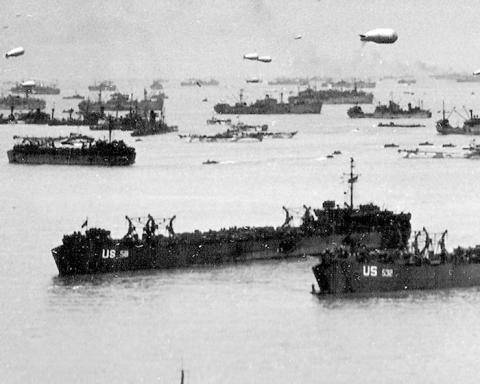
By late April 1944, over one million men and women from 14 Allied countries were massed on the southern coast of Great Britain in preparation for Operation Overlord, the Invasion of France. Shipping requirements reigned supreme on Allied staffs and was by far the most important constraint to Allied operations. In May, the Allied General Staffs had to face the fact there simply wasn’t enough to go around and hard choices had to be made. Operation Neptune, the actual invasion of Normandy, was postponed to June. Operation Dragoon, the invasion of Southern France was postponed to August. All reinforcement to the Anzio lodgment in Italy was cancelled. And finally, all further landings in the Mediterranean were postponed indefinitely. This situation was primarily due to the shortages in two critical ship types: the small wooden LCVP, Landing Craft Vehicle Personnel aka “Higgins Boat”, and the large 4000 ton LST, or Landing Ship Tank, which could carry 300 troops and 30 vehicles. The LST had a draft shallow enough to disgorge its charges directly onto the beach. The LST was so important to Allied operations that an officer in Eisenhower’s headquarters was dedicated to knowing the status and location of every LST on the planet.
On 27 April 1944, the Allies were finishing up Exercise Tiger off the south coast of Great Britain. The previous morning, the sea sick soldiers of the 1st Engineer Brigade landed on the beaches of Slapton Sands, England which was painstakingly made to look like Utah beach, their invasion beach in France. It was a disaster. The British cruiser assigned to simulate the pre invasion bombardment actually caused real friendly fire casualties. And the chaos on and just off the beach needed no simulation, it was real also. That evening, the weary engineers loaded back up to do it again. The slow convoy took a long circuitous route to accurately simulate the travel time across the Channel to Normandy.
In Lyme Bay in the early morning hours of 28 April 1944, the convoy of 8 LSTs, escorted by a single small Royal Navy corvette, began its final approach to the beach. They never made it there. Nine German E-Boats, slightly larger versions of the famous American PT Boat, snuck out of their harbor at Cherbourg in Normandy to raid Allied ships in the Channel. They avoided Royal Navy and RAF patrols and minefields, and under cover of darkness, attacked the convoy. The E-Boats sank two LSTs and damaged two others before getting away unharmed. Over a thousand American soldiers and sailors died or were missing. Ten of the missing had clearances high enough that they knew the details of Operation Neptune, and Overlord was almost cancelled until their bodies were recovered and identified.
Unfortunately, the great loss of life was the least of the Allies’ problems. Adm Ramsay, who was only promoted to Eisenhower’s Chief of Naval Forces the day before, now only had the exact, and minimum, number of LSTs needed for the Normandy Landings. The loss of one more to any cause: enemy action, maintenance, accidents, whatever for any reason, would require Operation Neptune, and thereby Operation Overlord, to be delayed until July.
The First ANZAC Day

On 25 April 1916, the first anniversary of the Battle of Gallipoli, the British Commonwealth commemorated the Australian and New Zealand troops that fought and died on the Gallipoli peninsula in Turkey during the First World War. The original commemoration set the format that we still follow today: the day’s activities started off with a dawn parade (to signify the traditional time of the landing) and sunrise mass, followed by a boozie coffee breakfast, a mid morning non-denominational service with a two minute moment of silence, with sports, a bit of gambling, and a march in the afternoon.
 Buk's Historical Ad Hockery
You must be logged in to post a comment.