
Category: History
The Battle of the Bulge
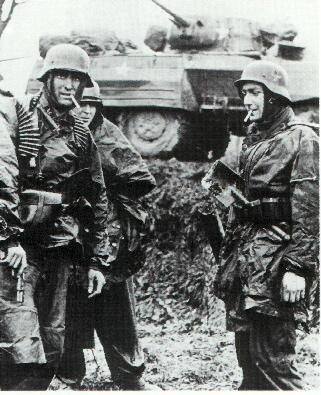
On 16 December, 1944 Hitler launched a surprise attack into the lightly defended Ardennes Forest in order to split the American and British armies, capture their main port of supply, Antwerp, and force the Western Allies to a negotiated peace. With only two minor exceptions, no one expected the Germans to attack. German Gen Walter Model’s thirty divisions in three armies, the 6th SS Panzer, 5th Panzer, and the American’s old nemesis from Normandy – the 7th, crashed into LTG Troy Middleton’s VIII Corps of four divisions from the 1st US Army: two were brand new, the 106th and 99th, and two were bloodied and mauled in the Hurtgen Forest, the 4th and 28th.
The American commanders dismissed the initial reports as spoiling attacks intended to prevent the US V Corps from seizing the Roer river dams, or Patton from seizing the Saar River industrial region (north and south of the Hitler’s offensive respectfully). So sure that the Germans were defeated, all of the important Allied commanders were disconnected from the soldiers they commanded that day: Bradley went far behind the lines to Versailles, Eisenhower attended the wedding of his driver, and British Field Marshal Montgomery golfed.
The surprise was complete. Total chaos reigned along the American lines in the Ardennes on 16 December. Model had every reason to believe his troops would be on schedule and make the Meuse River in three days, just as they had done to the French four years before in 1940 (which forced the French to surrender). But the Germans only had enough fuel and supplies for three days full assault. They had to reach the Meuse River in that time. After that, the American’s considerable flexibility, not to mention air power, would be brought to bear. The first few days were decisive.
On 16 December 1944, the 99th was penetrated, and most of its troops broke, and the 106th was crushed and bypassed. The 28th’s initial defensive positions were overrun and the 4th fell back. By all contemporary metrics the American’s were defeated.
But although the majority of the American units in the Ardennes collapsed, some did not, despite the German’s best efforts. Those platoons and squads, led by sergeants and young lieutenants and captains, that didn’t break bought the time necessary for the Allies to seal off the “Bulge” created by the German offensive. By the end of the 16th, 80,000 Allied soldiers were enroute to the battle, 250,000 more would follow over the next week. By the end of the day the Germans strict timetable was already irreparably upset, although this was unknown to the Allies at the time. By the 18th the northern and southern shoulders of the bulge were solidly in the hands of the Allies, and Model’s main effort was switched to the center of his increasingly narrow penetration.
It is said that generals and politicians win wars, but sergeants, lieutenants and captains win battles. This was no truer than in the snowy hills of the Ardennes Forest on 16 December 1944.
Germans in the Ardennes

On the northern edge of the Ardennes Forest on 13 December 1944, the 2nd Infantry Division, supported by several battalions of the 99th Division, both of the US 1st Army, attacked into the Siegfried Line hoping to break through and seize the Roer River Dams. The dams were one of the objectives the Americans failed to seize during the Hurtgen Forest offensive the previous months.
As part of a British delegation to observe the attack, Hollywood actor-turned-British Army Lieutenant Colonel David Niven (He would be the last to lose to Sean Connery for the role of James Bond a decade later) visited an old friend in the Belgian resort town of Spa on 15 December 1944. Captain Bob Lowe was a former reporter for Time, and an intelligence officer and assistant G2 in the U.S. 1st Army’s Headquarters. After the normal chit chat, Niven asked his friend what was going on in the sector, Lowe pointed east out of the window and responded,
“See that hill with the trees on top? On the other side is a forest. In that forest is the entire Sixth SS Panzer Army. Any day now they’re going to roll right through this room, cross the Meuse, turn right and seize Antwerp.”
Niven laughed and asked if he told anyone. Lowe dejectedly replied, “Everyday. The generals know better though.”
Five miles away in that same forest, SS Panzer General Sepp Dietrich was dressed as a Wehrmacht infantry colonel debriefing returning patrols incognito. Dietrich was a former butcher, close friend of Hitler, and one of the original “Beer Hall Putsch” Nazis. But he was also the exception to the rule that politically appointed generals were incompetent. He was pleased to find out the “the Amis” still considered the Ardennes a rest area, and pulled their outposts in at night to keep warm. Dietrich and his Sixth Panzer Army, Erich Von Manteuffel’s 5th Panzer Army, and Erich Brandenburger’s 7th Army would make them pay for those mistakes the next morning
The Greek Civil War and the Beginning of the Cold War

In the late summer of 1944, Hitler pulled all Wehrmacht troops out of the Balkans to help stop the Soviets and the Allies as they raced towards Germany. Hitler’s Balkan allies, Romania and Bulgaria, sought an accommodation with the Soviet Union and switch sides. In Yugoslavia, Josef Tito’s highly organized communist partisans filled the vacuum left by the retreating Germans and successfully stiff armed “liberating” Soviet troops. In Greece however, the partisans were generally divided into two camps that were hostile to each other. The first were the various factions supported by Tito’s Partisans and the Soviet Union, the National Liberation Front (EAM), and the other was composed of the various groups and reformed army units supporting the Greek Government in Exile, backed by Great Britain.
Winston Churchill foresaw the coming post war conflict with Communism and vowed Stalin would not have direct access to a port on the Mediterranean. All through 1944, the British made a point of securing German occupied islands in the Eastern Mediterranean and Aegean Seas. The stage set, Winston Churchill quietly pulled British units out of Italy and the Middle East to accompany the return of the Greek Government in Exile after the Germans departed. On 3 October, British and Greek units occupied Athens and began funneling supplies to allied militias and disarming the EAM and the Greek Communist Party.
The EAM organized a general strike and on 3 December staged a massive protest in Athens to stop the complete erosion of communist power in Greece. The protest degenerated into a riot and eventually into open street fighting by the EAM against Greek soldiers, police and militias and their British backers. On 12 December, the tough 4th Indian Division, veterans of the 2nd Battle of Monte Cassino, arrived from Italy and this turned the tide against the Communists. By late January, the EAM was defeated. In February the various parties signed a ceasefire, supported by the US, Great Britain and even the Soviet Union. Stalin knew he could then use Churchill’s intervention in Greece as a pretext to openly do in Bulgaria, Romania, Poland, and Hungary what he was already doing in secret.
The Greek Civil War began in earnest in March 1946 when the Yugoslav and Soviet backed Democratic Army of Greece (DSE) attacked Greek policemen across the country (the DSE was formed from the remnants of the EAM). Great Britain was bankrupt from six years of war and asked for the United States to take their place as the Greek government’s patron.
In 1945, President Truman recognized America’s new found leadership role in the Free World, and with Secretary of State George C Marshall developed and adopted the “Truman Doctrine”, which vowed America would stop the spread of Communism, starting with Greece.
The Winter War

In September 1939, de facto allies Soviet Russia and National Socialist Germany conquered Poland and as part of the Molotov-Ribbentrop Pact, the Soviet Union then invaded Estonia, Lithuania, Latvia, and the Bessarabian region of Romania without fear of German interference. In late November 1939, Josef Stalin, the leader of the Soviet Union, set his sights on the next target: Finland.
On 26 November, the Soviets staged a false flag incident to justify the war. Four days later, 1,000,000 Soviet troops with 3,000 tanks poured across the border against 250,000 Finns and volunteers from other Scandinavian countries.
The Finns and their allies massacred the Soviet troops.
The Red Army was a ghost of its former revolutionary self in late 1939. In 1937 and 1938, Stalin’s purges killed off 90% of the Red Army’s officer corps. Only blind, dogmatic, and politically correct loyalty to Socialism and Stalin was the criteria for being a good officer. Furthermore, Stalin and his party apparatus murdered over 30 million people in those years. In this monstrous number included most non-Russian communists, including all Finnish communists who thought they were safe in their Russian exile. When the Soviets invaded Finland, former lieutenants were leading divisions, former sergeants: brigades and former privates: battalions, and no one was familiar with the terrain because any Finnish sympathizers were in mass graves.
The Finns and their allies were initially very successful. The Soviets were limited to attacking along unpaved roads on the mostly impassable Finnish frontier where they were endlessly ambushed by bands of Finnish ski troops. Or the Soviets had to frontally assault heavily fortified defensive belts on the Mannerheim Line, named after the Finns’ extremely competent and resourceful commander in chief, Field Marshal Gustaf Mannerheim. The Soviets suffered tens of thousands of casualties for no appreciable gain.
No amount of propaganda could cover up the grievous Soviet defeats. In January of 1940, Stalin had the Soviet commander killed. The new commander, General Seymon Timoshenko was one of the tiny number of senior commanders to survive the purges. He instituted the first of the Red Army’s much needed reforms. The reforms were basic and really only solidified and concentrated on the single Soviet tactic of the day, the frontal assault, but it was enough.
In late January 1940, the Finns were running out of ammunition and the Soviets were grinding through the Mannerheim Line. The British and French began supplying ammunition and supplies to the beleaguered Finns. Also, in one of the great “what if?” questions of the century, they planned on intervening directly with an expeditionary corps in March (though it was mostly meant to secure Swedish iron ore from the Germans). But it was too late. The Soviets broke through in late February and the Finns signed a peace treaty with the Soviet Union on 12 March.
Americans in the Ardennes

On 6 December 1944, in the Ritz Hotel in Paris, Marlene Dietrich’s manager finished planning their USO troupe’s next trip to the front. The German born Hollywood starlet was one of the USO’s most active shows. She had a reputation for going as far forward as possible to visit units, even to places where it wasn’t prudent for Marlene to slip out of her tailored uniform and into her sleek black evening gown to perform her signature song “Lil Marlene”. Her USO troupe planned on visiting the American units in the quiet Ardennes Forest over the next 12 days.
There was one division the blonde bombshell would not visit in the Ardennes because it wasn’t there yet. The US 106th Infantry Division was just getting off the troopships in LeHavre harbor. The 106th was Eisenhower’s newest division both literally and figuratively: America was reaching the bottom of its manpower pool in late 1944, and the 106th was the first division formed from almost all 18 year old draftees, including a young Pvt Kurt Vonnegut who would use his experiences over the next months to write “Slaughterhouse-Five”. Whereas the average age of soldiers in other divisions was 26, it was 19 in the 106th.
The 106th was destined to replace the veteran 2nd Infantry Division on the Schnee Eifel in the Ardennes Forest, where it was said they would be able to get some experience in the quiet sector. The US 2nd Infantry Division was assigned to the Ardennes after a bloody mauling in the vicious street fighting in the German city of Aachen in September and October. After several weeks of receiving replacements, training and planning, the 2nd was destined to move to the northern shoulder of the Ardennes. From there, they would assault east into the teeth of the German Siegfried Line to hopefully capture the Roer River dams. They were just waiting on the 106th to get off the boat and take their positions.
To keep the timetable on track, the US 28th Infantry Division of Pennsylvania Army National Guardsmen extended their line to a ludicrous distance in order to allow the 2nd to make the move before the 106th could take over. Also on 6 December 1944, the US 1st Infantry Division, the “Big Red One”, arrived to the north of the 28th. Both divisions were chewed to a bloody pulp in the recent campaign around the city of Aachen. The “Red” in the Big Red One and the red keystone of the 28th’s division patch, aka “the Bloody Bucket”, took on a new meaning after the brutal fighting in the Hurtgen Forest. Both divisions were looking forward to some quiet recovery, refit and reorganization time in the Ardennes.
The Big Red One moved in to the south of another green division who, like the 106th, had only just arrived in Europe. However the US 99th “Checkerboard” Infantry Division had been there a week and had taken to digging defensive positions in order to keep warm in the snow and freezing temperatures. The 99th was assigned to protect the 2nd Division in its attack, and to do that it had a front five times the doctrinal length. On its far right the division had a single intelligence and reconnaissance platoon to tie into the battered Big Red One. The 22 men of the 394th Regt’s I&R platoon were solely responsible for six miles of the 99th’s front line.
Once the 106th arrived in a few days, LTG Troy Middleton’s VIII Corps would have four divisions on the line in the Ardennes: the 99th, the 1st, the 106th and the 28th, with the 2nd just to the north preparing to move to their assault positions. From the sleepy Belgian town of Bastogne, Middleton commanded 80,000 men spread out over 90 miles. His lines were impossibly thin but it was thought it was an acceptable risk because he was assured that the Germans would never attack into the broken terrain of the Ardennes in winter. Besides, just about every commander and intelligence officer in the European Theatre of Operations thought the war would be over by Christmas.
Unbeknownst to the Allies, Hitler had assembled in complete secrecy 300,000 men, 1600 tanks and 2500 artillery pieces opposite the VIII Corps’ lines. The Germans planned on attacking ten days later on 16 December, the same day Marlene Dietrich was scheduled to perform at the 99th’s Division Headquarters in the tiny Belgian town of Krinkelt.
Sullivan’s Expedition

In 1713 at the end of Queen Anne’s War in which the Five Nations of the Iroquois Confederacy stayed neutral at the request of France, the British and their Cherokee allies evicted the Tuscarora Indians from present day North Carolina. The Iroquois Confederacy accepted the now vehemently anti-British Tuscarora refugees as the Sixth Nation of the Confederacy. The Tuscarora settled on their southern lands to prevent settlers out of New York and Pennsylvania from encroaching on Confederacy lands and hunting grounds. For the next sixty years the Confederacy maintained a delicate balance of aggressive neutrality between the empires of Great Britain and France in order secure cheap, but superior, British trade goods from the colonies, while preventing France’s First Nation allies from raiding their lands and hunting grounds.
In 1778, the Iroquois could no longer maintain their neutrality between Britain and France’s ally, the United States of America. Since 1775, the elders at the Council Fire at Onondaga avoided war by simultaneously pledging fealty to their “Great Father” George II and claiming they could not wage war against their “brothers” in the colonies. (This was a diplomatic coup for the Americans, had the Iroquois thrown in with the British against the Americans in the militarily disastrous year of 1776, the war would have been drastically different for the fledgling American nation.) After the winter of 1776/7, colonial trade goods were scarce, upon which the Iroquois, with no manufacturing capability of their own, were completely dependent as their old ways were forgotten, and forced the Iroquois to choose sides. The British promised to supply them from Fort Niagara, and if they won, enforce the Proclamation of 1763, which limited colonial settlers to land east of the Appalachians. The British negotiators, whose most effective advocate was Molly Brant, the common law wife of British Chief of Indian Affairs Sir William Johnson and brother to Mohawk war chief Joseph Brant, brought the Mohawk, Onondaga, Cayuga and Seneca nations to the British. Under the influence of half black-half Abenaki, French Catholic, adopted Mohawk, Oneida war chief Joseph Louis Cook (get all that) and Presbyterian minister Samuel Kirkland , two of the frontier fixers and traders that dominated American colonial diplomacy with Indian nations in the 18th century, the Oneida and Tuscarora sided with the Americans. Thus began the Iroquois civil war.
1777 and 1778 were disastrous years for the Oneida, Tuscarora and settlers on the American frontier. The Battle of Oriskany showed the dubious value of militia used as line infantry against Indian and Loyalist irregulars. Only the successful American counterattack from Fort Stanwix, by its regular garrison which lifted its siege, prevented Barry St Leger from invading New York through the Mohawk Valley in support of Burgoyne. The Oneida and Tuscarora homelands were overrun and occupied, and the New York and Pennsylvania frontiers were set ablaze. Hundreds of homesteads were raided, and the Cherry Valley and Wyoming Valley massacres made international headlines.
The Continental Congress authorized an expedition in the spring of 1778 against the Iroquois but it was too late in the season to muster the supplies necessary for a campaign in the frontier wilderness. Any large body of troops would starve, and any small body would be destroyed by the Iroquois. Furthermore, Washington’s regulars were fresh from Valley Forge and chased Sir Henry Clinton’s redcoats back to New York. Every Continental was needed for a showdown with Clinton if he sortied from New York and sought battle. Limited raids against Iroquois towns with militia were all that could be managed. As any settler could tell you, counterattack was the only viable option for defense on the frontier; sitting and waiting out an Indian raid in a stout farmstead, blockhouse, or fort provided only temporary reprieve if, and only if, and relief force was immediately dispatched. In any case, passive defense did nothing to prevent its reoccurrence. Since the Onondaga were the “Keepers of the Council Fire”, the Americans invaded their homeland in 1778 and fired their “castle” or fortified village, where for centuries the chiefs of the five nations met. The Iroquois elders just moved to Genesee, the primary Seneca castle. Furthermore, the raid just rallied the remainder of the four nations of the Iroquois Confederacy against the Americans. Any invasion of the Iroquois homeland had to break the Seneca, the largest and most militant of the Six Nations, whose warriors comprised nearly 2/3’s of Iroquois’ military might.
George Washington was keen on an invasion of the Iroquois Confederacy, particularly Seneca lands, to relieve the pressure on his precarious logistical situation. The productive farms on the frontier couldn’t feed the Continental Army if they were under constant assault. The army had to be seen doing something about the Iroquois and “asway public outrage” over the raids and depredations. The biggest problem was the Seneca villages were the farthest away from any potential Continental Army assembly areas in Pennsylvania and New York. In late 1778 and early 1779, Washington turned to his most experienced frontier commander, Major General Philip Schuyler and he devised a plan. Then Washington’s most trusted subordinate, Nathaniel Greene approved and modified it. The campaign would be one of logistics and Greene as the Continental Army’s Quartermaster General would have to supply it. In order to have adequate troops to defeat the Iroquois, Loyalists and British, any invading army must carry the majority of their provisions with them. Every previous Indian expedition failed because it was either too small to do any good or the army melted away when the supplies ran out. Schuyler and Greene eventually recommended a three prong invasion with the main effort up the Susquehanna Valley with supporting efforts up the Allegheny Valley from Fort Pitt and another from the Mohawk Valley in the east then south through the Susquehanna Valley. Instead of multiple small forts connected by wagon roads protecting the lines of communication, as was standard during the French and Indian War, Pontiac’s War and Lord Dunmore’s War, the expedition would build just a single defensible depot deep in Iroquois territory and carry most of their supplies on pack horses. This reduced the amount of troops siphoned off the main attack, sped up the main column since they couldn’t have to build roads, and allowed “flying columns” to raid Iroquois villages not along the main route of advance. The idea was to overwhelm the Iroquois by attacking in force at multiple points. (If this sounds like Napoleon’s Corps system, you wouldn’t be wrong.) Finally the regulars from the Continental Army itself would conduct the campaign and the unreliable militia would guard the frontier.
In early 1779, Washington’s spies learned that Clinton was going to invade Connecticut to try and lure Washington into a battle, bait for a trap he wasn’t going to take. Clinton’s Connecticut foray however did provide the opportunity to release a few brigades for operations against the Iroquois. Washington took it one step further – almost one third of the Continental Army was tasked to the invasion of the Iroquois Confederacy. Initially, command of the invasion was offered to the victor of Saratoga, Horatio Gates, but he begged off ostensibly for health reasons, much to Washington’s relief. Washington then offered the command to John Sullivan, who reluctantly accepted.
Sullivan had a mixed record so far in the war and is the prime example of American generals having to learn their profession the hard way. As one of Washington’s division commanders, he did well at Trenton, Princeton, and Long Island, where he was captured and then paroled, and at Brandywine. But Sullivan was surprised at Germantown, led an unsuccessful raid on Staten Island, and damn near severed the Franco-American alliance after its first battle. Sullivan and French Admiral Comte d’Estang led a joint operation against Newport, Rhode Island, but a storm scattered the French fleet which then retired to Boston. This left Sullivan’s army vulnerable and had to retreat after the British garrison sortied. Sullivan accused the French of cowardice. Sullivan was a solid commander and tactician but had problems managing and coordinating with his peers. An independent command was perfect, but not one that most thought destined to fail.
Sullivan also knew this was his last shot as one of Washington’s trusted subordinates. The Continental hard core that emerged from Valley Forge demanded competent and aggressive commanders. This wasn’t 1776 when Washington relied on anyone with any military experience to command. This was 1779 when the cream had already floated to the top, the likes of Schuyler, Greene, Knox, Wayne, Stark, Morgan and amazingly competent foreigners like Von Steuben, Lafayette, Pulaski, de Kalb and Kościuszko all wanted a piece of Washington’s time in 1779. Problematic leaders such as Charles Lee, Israel Putnam, Horatio Gates and others were all marginalized by Washington by 1779; Sullivan was dangerously close to being part of the latter group. The Iroquois expedition was Sullivan’s last chance.
Sullivan wasn’t going to waste it, much to Greene and Washington’s frustration. When Sullivan arrived at Easton, Pennsylvania in early spring to take command, he found the troops woefully undersupplied. Furthermore, the rangers, guides, and “go-betweens” promised by the Pennsylvania legislature were nowhere to be found. If the expedition departed when Washington demanded, no later than 1 May, the expedition was doomed to failure. 1779 was the culmination of the Continental Army’s systemic supply inefficiencies and difficulties, and Greene was doing the best he could, but it wasn’t enough for Sullivan and his priority campaign.
Sullivan began a vicious writing campaign to Washington, Greene, the Pennsylvania legislature and eventually the Continental Congress about the perceived lack of support, mostly in vain. New roads were cut to the Wyoming Valley, 1500 pack saddles manufactured, tents sewn to equip the whole expedition, and enough bateaux built and competent bateaux men hired to accompany the expedition along the rivers. Still, the difficulties persisted. Greene, to his credit, managed to supply enough to begin the campaign, with promises of continual supply throughout the summer until the expedition’s completion. Sullivan departed Easton on 18 June for the Wyoming Valley where he stayed for the next month amassing supplies and men. Though 5000 troops were allocated by Washington, Sullivan was never in direct command of more than 4000 or so due to expiring enlistments and other requirements by Washington. Sullivan considered it barely enough to contend with the Iroquois.
In 1779, the remaining Four Nations of the Iroquois Confederacy had a combined population of just 13,000, or less than half the population of Philadelphia at the time. (In today’s terms the entirety of the Iroquois population was just a bit more than the population of the neighborhood I grew up in, Carrick in Pittsburgh.) Theoretically, of those 13,000, the Four Nations could put about 3,000 warriors into the field against Sullivan augmented by about 300 loyalists. Brant and Butler also knew that their men were much better fighters in the forests than the Americans, and routinely outfought twice their number of American militia. However the size and composition of Sullivan’s expedition convinced many warriors to evacuate their families to Fort Niagara ahead of the invasion. Unlike the Continental Army, Brant’s warriors’ option to stay were strictly voluntary. His warriors could come and go as they pleased. Thousands departed to pack up their villages and escort their families to Fort Niagara. Brant and Butler had but 1000 Iroquois warriors and 250 loyalist rangers to oppose Sullivan. All the British and Iroquois could do was launch counter raids to distract from the massive build up. Sullivan wasn’t going to get his climactic big battle with the Iroquois that Washington wanted, and he was going to find empty villages.
Every measure was taken to keep the build up a secret, but the immensity of the expedition precluded any such possibility. The British, loyalists and Iroquois knew of the buildup. However, Joseph Brant, a Mohawk Pine Tree war chief, but generally accepted leader of the Iroquois warriors (a “Pine Tree” war chief was an elected position because according to Iroquois law, only Seneca could be formal war chiefs of intertribal war bands) and John Butler, command of the loyalist Butler’s Rangers who have been harassing the American frontier for two years, could do little about it. The British governor of Quebec was convinced of an American invasion of Canada in 1779 and no British regulars were spared for the defense of the Iroquois homeland or Fort Niagara. Even worse, the sheer size of Sullivan’s Expedition, 3000 in the Wyoming Valley, 1500 in the Mohawk Valley, and 1000 in the Allegheny Valley, convinced many Iroquois that the homeland must be evacuated.
Schuyler and Greene might have written the plan, but Washington had some very specific commander’s intent and guidance. In May, Washington reiterated the plan and emphasized the objectives to Sullivan. There could be no mistake since they were in the very first paragraph of the letter,
“Sir,
The expedition you are appointed to command is to be directed against the hostile tribes of the six nations of Indians, with their associates and adherents. The immediate objects are the total destruction and devastation of their settlements and the capture of as many prisoners of every age and sex as possible. It will be essential to ruin their crops now in the ground and prevent their planting more…”
Washington and Sullivan needed those villages captured intact with their inhabitants. Hostages were needed for prisoner exchanges and to ensure any Iroquois compliance with a peace treaty. (On the 18th century frontier, any treaty with an Indian tribe that did not involve hostages was unenforceable due to the relationship between individual warriors and the personal leadership of their chief) Sullivan was not authorized to conclude a peace treaty, only the Continental Congress could do that, he was allowed to suspend operations if the Iroquois handed over Butler, Brant and several other chiefs and warriors involved in the frontier raiding. The only caveat was that Sullivan could only do so after “the total ruin of their settlements is effected”. The expedition’s objective was to break the Iroquois with the added effect of forcing them to seek support from the British and overburdening the British supply system in Canada. There would be no peace with the Iroquois until their homeland was “not merely overrun, but destroyed”.
On 31 July 1779, the Continental brigades of Enoch Poor, William Maxwell, and Edward Hand with his Light Corps in the lead departed Fort Wyoming to cannon salutes of its remaining garrison. The expedition had encamped among the charred ruins of the Wyoming Valley settlements which was a daily reminder of the reason for the campaign. The two miles long column had rotating advanced, flank, and rear guards with rangers, Oneida and Stockbridge Indians, and former Iroquois captives as scouts ahead. The column also contained 1500 packhorses, 800 head of cattle, a mobile blacksmith shop, and 200 “artificers” to repair equipment along the way. 200 boats and bateaux accompanied the column along the river and carried the majority of the expedition’s supplies. The eighty mile march to Tioga, at the confluence of the Chemung and Susquehanna rivers, was mostly without incident. The enormity of Sullivan’s command caused Butler and Brant to withdraw and issue desperate pleas to Niagara and local bands of Indians to concentrate deeper in the Confederacy interior.
Sullivan reached former Oneida, now abandoned Cayuga, castle at Tioga on 11 August where he was to meet James Clinton’s Continental Brigade (no relation to the British Commander in Chief in North America) coming down the Susquehanna from Canjoharie on Otsego Lake in the Mohawk Valley. Clinton’s 150 mile march was also surprisingly unimpeded. Clinton torched several former Tuscarora, now abandoned Onondaga and Mohawk towns, on the march. On 19 August, Sullivan sent Poor’s brigade out to meet Clinton as Butler and Brant finally began harassing the expedition and Sullivan was concerned that Butler was trying to defeat him in detail. Clinton linked up with Sullivan at Tioga on the 22th.
Sullivan wasn’t idle at Tioga while waiting on Clinton. Tioga was to be the logistics hub for the entire expedition. Though it wasn’t in the center of the Confederacy as Washington suggested, it was on the southern border of the Confederacy homeland and the perfect place to transfer supplies from boats, and eventually wagons once the road completed, to the pack horses necessary for an expeditious movement into the heart of the Iroquois homeland. “Fort Sullivan” was constructed upon the ruins of the Oneida castle on the Tioga peninsula. Three days after Clinton arrived, the entire army but a 300 man garrison of Fort Sullivan departed for the interior of the Iroquois Confederacy.
For the last few weeks, Butler and Brant were content to ambush and harass Sullivan’s massive force, but the Seneca war chiefs demanded Sullivan be stopped before his army reached the prosperous interior villages. Sullivan more than doubled Butler and Brant’s force, but they planned on ambushing the Americans as they had so effectively at the Battle of Oriskany two years before. The place they chose was the hill at Newtown which controlled the trails and Chemung River that served as the gateway to the Cayuga heartland. Butler and Brant’s 1200 loyalists and warriors built camouflaged earthworks on the southeast corner of the hill directly over the path of Sullivan’s approaching force. The position covered the fords near the confluence of Baldwin Creek and the Chemung River which ran north and south of the hill respectively. There they waited in ambush.
Unfortunately for the British and Iroquois, what worked two years prior against militiamen, did not work against trained and veteran Continental troops. The advanced guard consisted of three companies from Dan Morgan’s Provisional Rifle Corps, and they spotted the ambush immediately. Morgan quickly brought up the rest of Hand’s Light Corps and Sullivan’s artillery to fix Butler and Brant in the earthworks. In a battle drill that Sullivan’s formations had been practicing for months, Maxwell’s New Jersey brigade flanked right along the east bank of the Chemung while Poor’s New Hampshire and Clinton’s New York brigades did the same over the swampy “morass” along Baldwin’s Creek on the left. Hand’s brigade began its assault on the earthworks when Morgan observed Butler and Brant had already begun withdrawing from the untenable position, astonished by the rapidity and agility of the Continental attack. The Iroquois and loyalist force ran a gauntlet of fire from Poor’s and Clinton’s men in a running battle as they retreated. The only thing preventing a complete rout and encirclement of the Iroquois force was a counterattack by Brant on the far end of Poor’s brigade. Brant was eventually driven off by another quick and coordinated attack by nearby Continental regiments.
British Lt-Col John Butler and Chief Joseph Brant’s army disintegrated. The warriors who were convinced the Americans did not possess the capability and will to break into the Cayuga homeland, now had to face the inevitability of an American assault on the Seneca homeland. The Seneca were the “Keepers of the Western Door” of the Iroquois but there was nothing geographically preventing an attacker from laying waste to the Seneca from the east. For that, the Seneca relied on the other five nations. Though not very bloody in terms of casualties, less than a hundred on both sides, the Battle of Newtown was decisive. Sullivan’s victory laid bare the Iroquois heartland, and the entirety of the remaining Four Nations of the Iroquois Confederacy fled east to suckle at the British bosom around Fort Niagara for the winter. Brant and Butler continued to agitate Iroquois chiefs and the British commander at Fort Niagara for men. However after Newtown, the primary British concern was the continued occupation and successful defense of Fort Niagara, not the Iroquois homeland, and the Iroquois warriors were too concerned about feeding their families through the winter than fighting Sullivan’s massive army.
The only significant engagement for the rest of Sullivan’s Expedition was an ambush on 13 September of a 30 man patrol under Lt Thomas Boyd by Seneca chief Little Beard. Boyd and several of his men were captured, tortured and executed in retribution for the destruction caused by Sullivan’s army. As recorded by the British, Boyd was killed when he was tied to tree by his own intestines then forced to run around it until he died. Sullivan eventually burned down Little Beard’s village too.
With virtually no further resistance by Butler and Brant after Newtown, Sullivan’s army went about the grim business of eliminating the Iroquois’ ability to sustain themselves. As Sullivan pushed deeper into the Confederacy, battalion and brigade sized Continental “flying columns” struck out against remote Iroquois villages. American soldiers marveled at the size and prosperity of the long houses and cabins. Many had glass windows and were “larger and more elegant” than their colonial equivalent. Most of the villages rivaled their own villages in the east, and were more prosperous than many. In the Iroquois fields, the “Three Sisters”, corn, beans and squash, were ripe and ready to be eaten. Too green for the Iroquois women and children to pick and take with them to Fort Niagara in July and August, they provided vital sustenance for Sullivan’s columns. Despite all of the logistical preparation done by Greene the previous spring and summer, Sullivan was still forced to forage to keep up his momentum. Much to Washington and Greene’s chagrin, that Sullivan started so late actually significantly contributed to the successful conclusion of the campaign. What food not on the packhorses was provided by the Iroquois fields and what they couldn’t eat, was destroyed.
On 15 September 1779, Sullivan’s Expedition reached Little Beard’s Seneca castle at Genesee. It was abandoned like the rest of the Iroquois villages previously encountered. There they found Boyd’s tortured body around the tree and the rest of the captives mutilated nearby. Sullivan turned out the entire army to extinguish Genesee and its fields teeming with corn, beans, and squash. With the westernmost village of the Seneca destroyed, Sullivan did not have any plans to press on and capture Fort Niagara. There were no fat fields to forage off of in the eighty miles of untouched wilderness between Genesee and Fort Niagara (This area was a Seneca hunting ground). His men had marched hundreds of circuitous miles in the last few months, and still had to be back in winter quarters in New Jersey before the first major snowfall. There would be no mad snowy dash forward to capture British fort by surprise, as Montgomery and Arnold attempted at Quebec in 1775. His primary objectives mostly accomplished, though he had almost prisoners. Nonetheless, Sullivan turned his army around and returned to Tioga, and destroyed any villages he bypassed on his 136 mile trek through the Iroquois heartland.
In total, Sullivan’s expedition destroyed 40 Iroquois villages and approximately 160,000 bushels of food. This isn’t including Col David Brodhead’s expedition up the Allegheny River from Fort Pitt. His expedition destroyed a further “ten towns, 165 houses, 500 acres of corn, and $30,000 worth of produce”. Brodhead’s combined Delaware and Continental force (The Delaware were allies of the United States against the Iroquois and British since the Treaty of Fort Pitt in September 1778, America’s first foreign treaty) centered on the 14th Pennsylvania Regt but only carried 30 days’ worth of supplies. Brodhead departed Fort Pitt on 14 August and was back by late September, burning abandoned Seneca villages at the headwaters of the Allegheny River. Despite his orders to do so, Brodhead never came close to linking up with Sullivan.
The devastated lands of the former Four Nations were informally given over to the Oneida and Tuscarora nations. By mid-October, Fort Sullivan and Tioga were abandoned, and Sullivan’s brigades were marching back east. Hand’s New Yorkers unfortunately continued the devastation of the Iroquois homeland by arresting bands of friendly Mohawk in the lower Mohawk Valley on the way back. Since these Mohawk stayed neutral in the conflict, and didn’t assist the Sullivan Expedition, Hand turned their homes over to New York settlers. These incidents greatly soured the Oneida and Tuscarora on the United States and threatened to undo any goodwill between the nations and country.
In the west, Sullivan’s expedition strengthened the Delaware-American alliance, but not enough to prevent it from falling apart when the Americans demanded too much from the Delaware for the campaign against Detroit. George Rogers Clark did manage to secure treaties at Vincennes with the Shawnee and Wyandot after word reached of Sullivan’s success.
As for the Seneca, Cayuga, Onondaga and Mohawk, their land was destroyed, and they would never be able to challenge the United States again. Sullivan’s expedition did not put an end to the British and Iroquois raiding, and hundreds of loyalists and rangers descended on the American frontier with fury and vengeance in 1780. But they had to travel further and couldn’t stay as long. Furthermore, they had to travel through hostile Oneida and Tuscarora lands, increasingly stiffened by settlers who took land that the small Oneida and Tuscarora nations couldn’t possibly fully occupy.
Most of the refugee Iroquois settled on British reservations in Ontario where they stayed. At the end of the American Revolution, the British abandoned the Iroquois and they weren’t even mentioned in the Treaty of Paris in 1783. Some of the refugee Iroquois attempted to return to their devastated former homeland, only to find their lands occupied by Oneida, Tuscarora and American settlers. The fighting between them brought about the Treaty of Fort Stanwix in 1784. At Fort Stanwix that October, Seneca and Mohawk chiefs ceded most of the Iroquois land west of the Susquehanna, including all of the Allegheny Valley and all of the Ohio Country which the Iroquois still saw as their land by right of conquest during the Beaver Wars in the 17th century. The remaining Iroquois elders of the reestablished Council Fire at Buffalo Creek (present day Buffalo, NY) rejected the treaty as did the Western Confederation in the Ohio Country, whose former Iroquois subject nations bristled at the thought that they were still ruled by the Six Nations. But the influence wielded by the elders of the Iroquois Council Fire was a pale shadow of what it was five years before. For almost two centuries the Five, then Six Nations of the Iroquois Confederacy lived by the right of conquest, and in American eyes in 1784, the Six Nations of the Iroquois Confederacy died by the right of conquest.
The Iroquois Confederacy, once the arbiter of all Indian affairs for 200 years between the Atlantic and Mississippi, and the Great Lakes and the Ohio River was reduced to a few small disparate patches of land supposedly still under British protection.
“When your army entered the country of the Six Nations, we called you ‘Town Destroyer’: and to this day when that name is heard our women look behind them and turn pale, and our children cling close to the necks of their mothers. Our counsellors and warriors are men, and cannot be afraid; but their hearts are grieved with the fears of our women and children, and desire that it may be buried so deep as to be heard no more.” – Seneca Chief Cornplanter to President George Washington. 1790
Sherman’s March to the Sea

In September 1864, MG William Tecumseh Sherman defeated Confederate MG John Bell Hood and captured Atlanta. Hood and his army escaped but Atlanta was the industrial capital of the South. It was also a major railroad hub. With its loss, supplies from the Deep South for Lee in Virginia had to take a circuitous route up the Atlantic coast through the unoccupied portions of Georgia.
Robert E Lee wasn’t too worried about Sherman threatening his remaining supply lines though. Lee believed that he could advance no further with Hood’s intact army behind him. Hood threatened Sherman’s exposed railroads that extended all the way back to Kentucky.
So Sherman cut his own supply lines, and marched on Savannah.
Over September and October, Sherman culled his army of any soldier who could not make the grueling 250 mile march from Atlanta to Savannah by Christmas. Those who could not make the march were placed under the capable command of MG George Thomas “The Rock of Chickamauga” who would fall back to Nashville and defend against Hood. Sherman trimmed his army to its “fighting strength” – the original “hardcore”. The only camp followers he permitted were freed slaves they picked up on the route, and then he would feed only those who were of use to the army. For his Savannah campaign, Sherman expected his soldiers to march at least 15 miles a day with 55 lb packs. 20 days of supplies would be carried on their backs, and the rest would be foraged from the Georgia countryside until they could be supplied by the Union Navy blockading Savannah.
The foraging would not only feed his army, but it would also “make Georgia howl”. Sherman had spent most of his prewar military career in the South and he had a great affection for the Southern culture but he knew the only way to defeat them was to destroy their will and ability to carry on the fight. There were no Confederate formations between him and Savannah, and his men would have free rein to destroy the South’s physical and psychological ability to carry on the war. On 13 November 1864, Sherman expelled all citizens from Atlanta and then he put anything of military value to the torch. Factories, government buildings, warehouses, plantations, the only buildings he spared were Catholic churches because he didn’t want his Irish regiments to mutiny. The fires eventually spread to the rest of the city. Sherman didn’t care: elections have consequences. As his army marched out of the burning city, Sherman commented that he had “never heard ‘The Battle Hymn of the Republic’ sung with more spirit and harmony”.
On the march, all foodstuffs were confiscated and any that could not be carried were destroyed. Unneeded livestock were shot. Anything deemed of military value was put to the torch, in particular plantations. Lee’s vital railroads were tore up, and the rails were heated and then bent around trees, in what his soldiers called “Sherman’s Neckties”. Food stores and farm implements, with the reason that they’ll be used to feed the Confederate armies were confiscated or destroyed. Georgia had to figure out how to feed its population over the winter. The troops were rough but disciplined, and shared their commander’s single minded purpose in ending the war. 155 years of research by revisionist Southern historians have failed to find a single instance of rape, massacre, or wanton pillage that wasn’t dealt with immediately and judiciously. Sherman made Georgia “howl”.
Sherman captured Savannah on 21 December and offered it to Lincoln as a Christmas present. His “March to the Sea” cut a 250 mile long and thirty mile wide swath of destruction across Georgia. He caused $100,000,000 worth of damage ($1.5 billion, with a “b”, today). He cut off Lee’s Army of Virginia and forced it to starve over the winter. Sherman eventually turned his march into South Carolina where he continued to punish the South for bringing about the war. The March to the Sea undeniably shortened the most devastating war to America in its history. Lee’s ragged and famished army surrendered to Grant the next April.
The Fall of the Berlin Wall
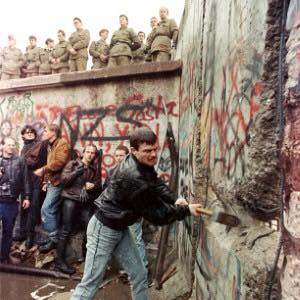
In the autumn of 1989, the people of Eastern Europe had had enough of Socialism. In Poland in September, Lech Walesa and Solidarity formed the first non-Communist government in a Warsaw Pact nation. In Czechoslovakia, Vaclav Havel was organizing the Velvet Revolution from his prison cell, and thousands of East Germans were openly using the West German Embassy in Prague to escape their Stasi-controlled socialist paradise. In Hungary, the border was effectively open and tens of thousands of Eastern European “tourists” were flooding Austria, never to return.
In East Germany, and Berlin in particular, massive but peaceful protests rocked the Communist government. In early November, the protesters stopped chanting “We want out!” and began chanting “We are staying!”. The new East German leader, Egon Krenz, recognized that he would not be in power for long if some changes were not made. On 9 November 1989, he and his advisors finished reviewing the new rules which greatly lessened the restrictions on travel and the burdensome bureaucratic process needed to obtain approval, but it did not open the border.
A note about the new regulations was passed to his spokesman, Gunter Schabowski, who was having a press conference that evening. Schabowski told reporters that there would be changes to the regulations, but not the details since he didn’t have them. When asked, Schabowski assumed they would also include Berlin and that they were effective immediately. The reporters then assumed the changes would open the border as it was in Hungary, and ran with it. This was most definitely not the case, but within the hour, it was broadcast around the world that the inter-German border was open.
Thousands descended upon the gates in the Berlin Wall demanding that they be allowed to cross into West Berlin, because “Schabowski said we could”. East German Stasi Lieutenant Colonel Harald Jager of the Bornholmer Street Gate made repeated calls to his superiors asking for clarification. His superiors mocked him and told him to use force to clear the protesters since they knew nothing of the new regulations, despite it being all over the news. Jager refused and let the East Berliners through. They were met by celebrating West Berliners. Within days all of the gates in the Berlin Wall were open and several new ones were established when jubilant Berliners smashed through with pick axes and bulldozers.
The Cold War was over.
Gojira!

On 3 November 1954, the first and greatest of all Godzilla movies, “Gojira!”, was released in Japan and launched the “Kaiju” or great monster genre in movies. (Stop! I know! But that’s a good enough translation for a silly FB post.) “Gojira” is the combination of two Japanese words: “gorira”, which means gorilla and “kujira”, whale.
Unlike its 29 sequels, Gojira! didn’t focus on the monster fighting another monster, or Gojira stomping on Tokyo. Gojira! was a much darker and more serious movie than its successors. It is actually one of the few Kaiju movies where Gojira was the bad guy, and for good reason.
In the movie, Gojira was released from the depths of the ocean due to American atomic weapons testing and the monster is an obvious metaphor for atomic weapons. In 1954, the atomic destruction of Hiroshima and Nagasaki, and the non-atomic destruction of nearly every other Japanese city during World War Two, were fresh in Japanese minds. Also, in early 1954, the Japanese fishing trawler “Lucky Dragon #5” had then recently strayed too close to an American atomic test in the Pacific and most of the crew died horribly from radiation poisoning. This event is a direct parallel to Gojira destroying the fishing trawler in the opening minutes of the movie. So unlike most of its sequels, the film had a story that took precedence over the monster stomping on the city, and it is much better for it. The Japanese flocked to see Gojira!, and it was an instant critical and financial success.
Two years later, Gojira! was released in the United States as “Godzilla, King of the Monsters”, but it was heavily edited. It starred Raymond Burr as a reporter in Tokyo and his bits were spliced into Gojira!. This forced some of the Japanese story to be edited out in favor of the monster stomping on Tokyo. Finally, because Gojira! was such a success in Japan, every effort was made to get it right in America. For example, the English voice overs in GKoM were done with care, something that wasn’t carried forward in the next decades.
If you can find a copy of the Criterion Collection Gojira! with English subtitles (far superior than any other version, and there are many) it’s worth a bowl of popcorn and a bottle of sake.
Gojira!
The Battle of Leyte Gulf: Epilogue, the Battle of Cape Engano
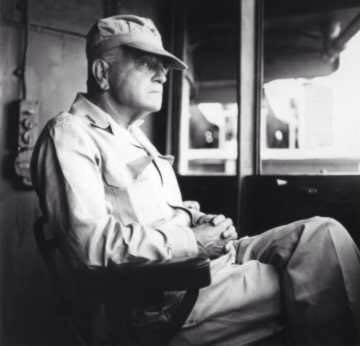
After hours of increasingly frantic messages from Adm Kinkaid’s 7th Fleet asking for assistance from Halsey’s 3rd Fleet, in particular Halsey’s fast battleships of TF 34, Admiral Nimitz in Hawaii got involved. Both Nimitz and Kinkaid assumed TF 34 was guarding the San Bernardino Strait, but Halsey took them north in search of his elusive carrier kills. The exasperated Nimitz finally sent the following message to Halsey:
“–Turkey trots to water where is TF 34 the world wonders—“
The first four words and the last three words were buffer phrases meant to confuse Japanese cryptanalysists. (The last three words were ironically a reference to Alfred, Lord Tennyson’s poem “The Charge of the Light Brigade” an event that happened exactly 90 years before the Battle of Leyte Gulf.) But when the message made it to Halsey, it read, “Where is TF 34, the world wonders?” Halsey flew into a rage and began throwing things about the wardroom on the battleship New Jersey. He continued until his chief of staff admonished him and told him “to snap out of it”. Halsey eventually calmed down and sent his six battleships south to assist Taffy 3, but they were too late: Taffy 3 won the Battle off Samar and saved MacArthur’s invasion fleet without them.
Halsey took his frustration out on Ozawa’s decoy Northern Force which he cornered off of Cape Egnano. TF 38, i.e. all of the fleet carriers of the 3rd Fleet, pounded the Northern Force for two days on 25 and 26 October 1944. As almost an afterthought, Halsey mauled the force and sank all four of Ozawa’s carriers, including the Zuikaku, which was the last Japanese carrier still afloat that took part in the attack on Pearl Harbor three years before.
The Battle of Leyte Gulf was over. It was the largest battle in naval history. The Allies lost one light carrier, two jeep carriers, two destroyers, and one destroyer escort. The Japanese lost four carriers, four battleships, eleven cruisers, and eleven destroyers. In America, an escort carrier was coming out of the shipyards at the rate of one every two weeks, a destroyer: one a week. The Japanese losses could not be replaced. Even if they could have been, MacArthur’s campaign in the Philippines cut Japanese fuel supplies from the Dutch East Indies. The Imperial Japanese Navy, once the Scourge of the Pacific, would be a non-factor for the rest of the war.
The Battle of Leyte Gulf wasn’t over for Halsey though. He knew he f****d up and so did everyone else. Adm Ernest King recalled Halsey to Washington DC just for an epic hour long ass chewing that was heard by everyone on the floor outside King’s office. Halsey spent the rest of his life trying to justify his actions from 24-26 October 1944.
 Buk's Historical Ad Hockery
You must be logged in to post a comment.