
Category: History
The Iraqi Invasion of Kuwait
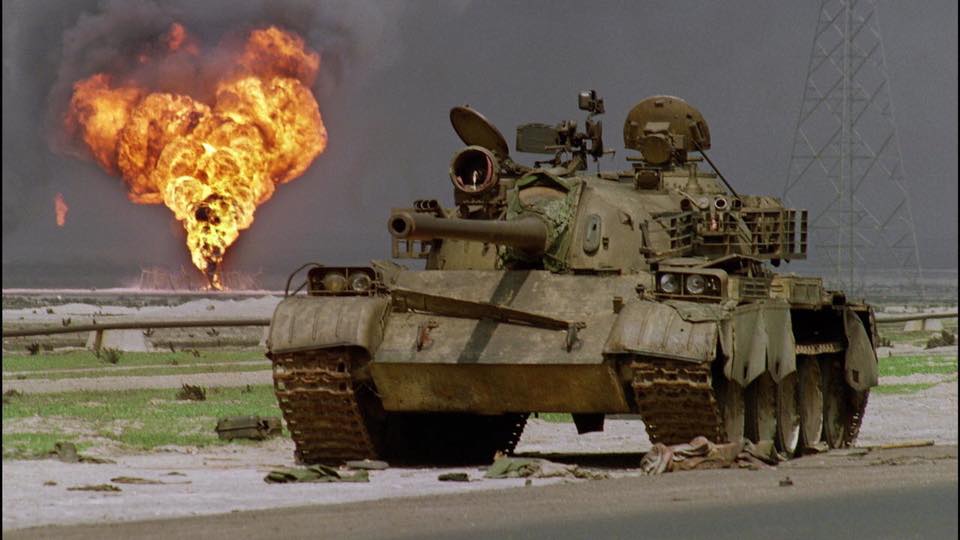
On 2 August 1990, four divisions of Saddam Hussein’s Iraqi Republican Guard along with the entirety of the Iraqi Special Forces invaded the Emirate of Kuwait.
The reasons for the invasion were many. Between 1980 and 1988, Iraq and Iran fought the devastating and costly Iran-Iraq War, in which neither side could claim victory, but both did. Despite Iraq actually starting the war, it felt that it was defending the Sunni Arabic States against Shia Persian domination. Iraq racked up significant debt to Kuwait, Saudi Arabia, and the Gulf States; debt that Iraq could not pay back because its economy was wrecked after the war. Moreover, Saddam accused the Gulf States of keeping the price of oil artificially low (Saddam wanted $25 a barrel when it was $7 a barrel) in order to prevent the rise of Iraq, a relatively secular socialist rival to the religious Sunni Wahhabist state of Saudi Arabia. Furthermore, Saddam felt that if it wasn’t for British meddling in 1913, Kuwait would have been part of the Hashemite Kingdom of Iraq when it was formed in 1920 out of the British protectorate of Mesopotamia. Ottoman Mesopotamia consisted of four provinces: Mosul, Baghdad, Basra and Kuwait, the first three of which became Iraq. Finally, despite all of this Saddam had little intention of actually invading, he was just posturing for debt forgiveness and concessions. That is until the American ambassador to Iraq, Amb. Abigail Glaspie, told Saddam that America had “no opinion on Arab vs Arab conflict” and did not wish to go to war with Iraq. Saddam took this as a green light by America to invade Kuwait.
Although Kuwait had a modern military of three brigades with a respectably sized air force, the very experienced Iraqi Republican Guard surprised and overwhelmed Kuwait’s small army. Kuwait City, all of its oil fields, all of its military bases, and the Emir’s Palace were occupied by the next day. 400,000 Kuwaitis and 120,000 foreign nationals (mostly Indians) fled the country to Saudi Arabia.
As Saddam Hussein consolidated his hold on Kuwait, Saudi Arabia requested UN assistance because it believed it was Saddam’s next target. On 3 August, the UN Security Council passed a near unanimous resolution condemning the invasion, which surprisingly included France and the Soviet Union, Iraq’s traditional benefactors, and the vote was abstained only by Yemen.
The resolution shocked Saddam Hussein, who didn’t think anyone would care.
The Capture of Thicketty Fort

After Lord Cornwallis’ captured Charleston in May 1780, the Patriot defense of the Carolinas and Georgia fell to partisans and militia until the new commander of the Southern Department, Major General Horatio Gates, arrived with an army from the main encampment in New Jersey. The massacre of Americans after the Battle of Waxhaws turned much of the countryside against the British, but not all. Loyalists recognized that the American Revolution was now a full blown civil war in the south, and everyone needed to pick a side. Emblematic of the situation was the Battle of Ramseur’s Mill in June, where dozens of North Carolinian families had members who fought on both sides.
British Major Patrick Ferguson was tasked by Cornwallis to organize loyalist militia and prevent the fiercely patriotic American “overmountain men” i.e. those frontiersmen from west of the Blue Ridge Mountains, from moving east. One of the loyalist training camps Ferguson established was at Fort Anderson at the rocky ford over Groucher Creek, in upper South Carolina.
Fort Anderson, better known as “Thicketty Fort” for the ever present thickets that dominated the area, was built in the 1760s during the Cherokee War. Thicketty Fort was under loyalist militia Captain Patrick Moore, a Scot-Irish mountain of a man with a fierce loyalty to the Crown. Along with a British regular sergeant major, Moore was training 93 Carolina loyalists to take part in Ferguson’s plan to break up the overmountain men’s mustering camps, such as those at Abingdon, Virginia and Sycamore Shoals, now in Tennessee.
Because of the Battle of Waxhaws, volunteers flooded into American patriots’ camps, not just those from “over the mountains”. In July, North Carolina Colonel Joseph McDowell saw a chance to strike at Ferguson’s camps before he could mass their troops. Col Isaac Shelby, the future first governor of Kentucky, was dispatched with a few hundred militia to take Thicketty Fort. The fort was stout, well maintained, and well supplied. It had to be taken by surprise or subterfuge: any siege would just invite Ferguson’s main body and Chickamauga Cherokee war chief Dragging Canoe’s warriors to smash the besiegers.
Fortunately for Shelby, word got out that he was on his way to whack some loyalists, and every militiaman in the area wanted to get in on the action. Shelby’s force gathered men along the way and was nearly 600 strong by the time he arrived outside the fort on 30 July 1780. It still wasn’t enough though, six hundred regulars might have been able to take Thicketty Fort by storm with heavy casualties, but six hundred militia could not. And surprise was lost, the same word that substantially increased Shelby’s force, also alerted Moore to the danger.
When called upon to surrender, the fierce and intimidatingly massive 6’ 7” tall Moore confidently stated he’d fight to the death before surrendering, especially so with the British sergeant major hurling insults from the second floor of the blockhouse.
Out of sight of the fort, Shelby spent the next hour or so organizing his men. In a grand show of force, Shelby marched his men out of the woods and they formed up in battle lines just outside musket range, shouting Indian war cries from their ranks at the fort. The militia marched as if they were regulars, mostly due to the fact that the 18 separate militia companies were quite small, and officer and NCO heavy due to the circumstances of the force’s creation. The demonstration made an impression.
Against this intimidating backdrop, Shelby again demanded Moore’s surrender, and if he didn’t, the result would be Tarleton’s Quarter when the patriots inevitably overwhelmed the fort. If he surrendered, they’d be protected. This was no idle threat: the aftermath of Ramseur’s Mill saw blood raged patriots tomahawk and scalp their own wounded brothers and cousins. The powerful display and the threat of massacre broke Moore, whose great frame no longer seemed so intimidating.
Despite the protestations of the British sergeant major, Moore surrendered the fort. Shelby captured all 93 of the garrison, and another 250 loaded muskets, most stacked by the loop holes of the blockhouse ready to fire. Had Shelby attacked, his men would have assaulted into a meat grinder, and his militia would have melted away. This is no doubt something the British sergeant major would have surely pointed out. Furthermore, they had ample ammunition to defeat a force twice Shelby’s size. If blood would have been shed at any point, there was no way Shelby could have won the battle. But, none was. Shelby took his prisoners and captured provisions, and triumphantly marched backed to McDowell’s Camp at Cherokee Ford.
The bloodless victory was celebrated by the Americans throughout the South. Like Doolittle’s Raid 162 years later, the capture of Thicketty Fort had effect completely out of proportion to the numbers involved. The victory convinced McDowell, Shelby and other patriot leaders, such as Thomas Sumter, to begin a campaign focusing on the vulnerable loyalist training camps and isolated outposts that dotted the South, further separating the population from the British. The fall of Thicketty Fort shocked Ferguson and Cornwallis and confirmed that the patriots would overwhelm the loyalists unless Ferguson secured the back country soon. Rumor had an American army heading south under Horatio Gates. Cornwallis needed his flank secure from the pesky American partisans if he was going to defeat the victor of Saratoga. They accelerated Ferguson’s timeline against the overmountain men and the southern patriot militia massing in the mountains.
The USS Indianapolis
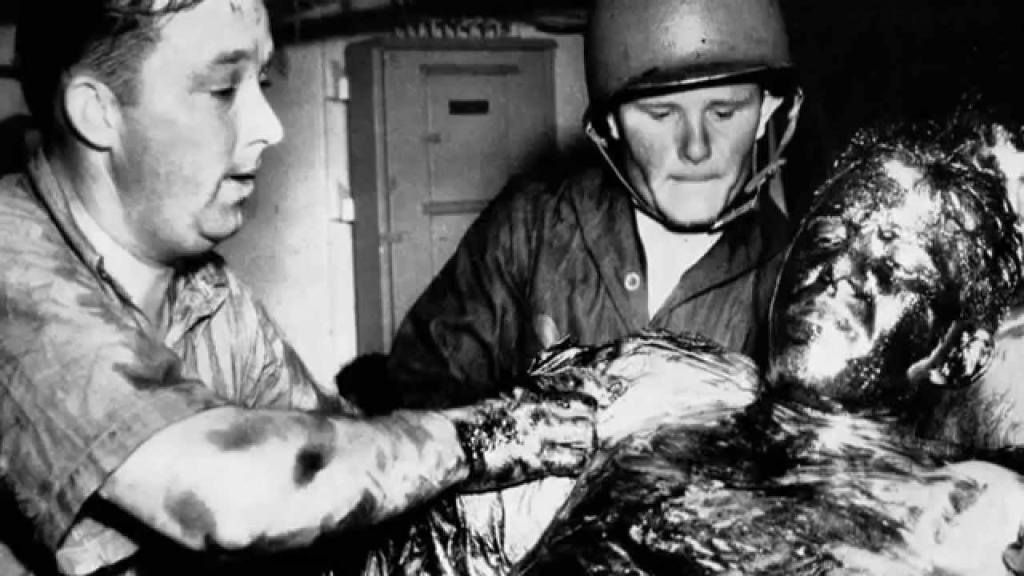
On 16 July 1945, the Portland class heavy cruiser CA-35, the USS Indianapolis, departed San Francisco for the island of Tinian to deliver parts for the first atomic bomb to be dropped on Japan. After successfully delivering the parts, the Indianapolis set off for the Philippines to participate in exercises for the upcoming planned invasion of Japan. Because of her secret mission, neither the 3rd nor the 5th Fleet were tracking her. Furthermore, she set off alone because naval intelligence deemed the waters between the Marianna’s and the Philippines safe.
On 30 July 1945, the USS Indianapolis was struck by a torpedo fired by Japanese submarine I-58. 300 of the 1200 crewmembers died in the initial attack and 900 abandoned ship into the oil slick and shark infested waters. A distress call was sent but none of the three stations that heard it acted on it. For four days and three nights, the survivors endured dehydration, saltwater and oil poisoning, hallucinations and madness, hypothermia, and numerous shark attacks.
On 2 August, a PV-1 Ventura spotted the survivors when the bombardier was rubbing his stiff neck (from changing an aerial) and glanced in their direction. They called it in and soon a PBY Catalina dropped rubber life rafts, water, and lifejackets to the remaining survivors. The pilot violated his patrol orders and landed to pick up stragglers after he watched in horror a shark attack consume one of the Indianapolis’ crew. Several hours later the destroyer escort USS Cecil J Doyle arrived on her captain’s own authority after hearing the PBYs desperate calls for assistance.
Only 317 of the Indianapolis’ 1197 crew members survived.
The Battle of Maiwand
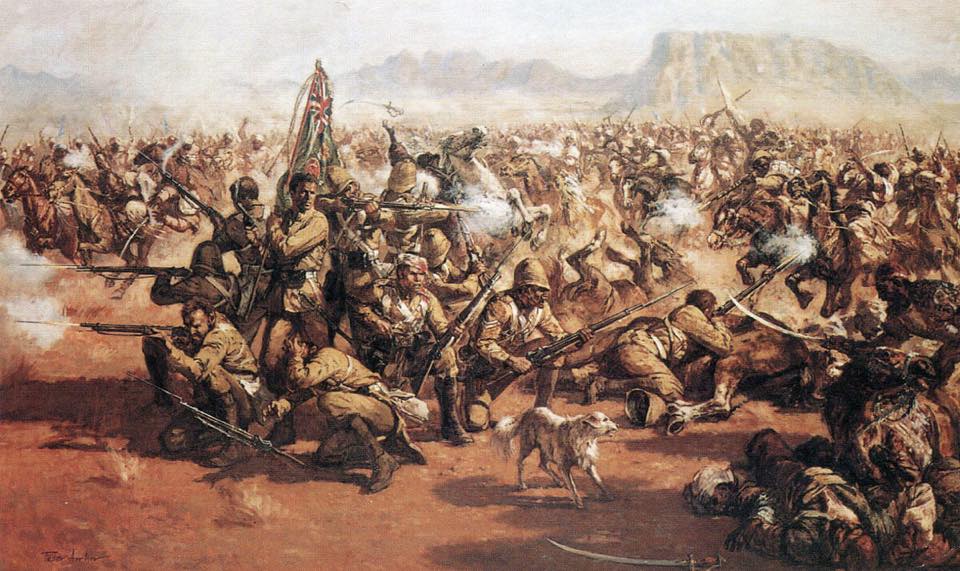
In 1879, the British invaded Afghanistan after the slaughter of their diplomatic mission in Kabul in October. They quickly occupied Kabul, Jalabad, Khost (eastern Afghanistan) and Kandahar (southern Afghanistan). They selected Abdur Rahman Khan as Amir, but in the cutthroat tribal politics of the Victorian era Great Game in Afghanistan, his cousin Ayab Khan rose in revolt.
Ayab Khan was the Governor of Herat (western Afghanistan) and marched on Kandahar, the key to southern Afghanistan, with an army of about 15,000. The British responded by sending an 8,500 strong army to intercept them that included British and Indian troop under British command and Afghan troops under Ayab Khan’s father Sher Ali (Abdur Rahman Khan’s uncle). As Ayab Khan approached, most of Sher Ali’s troops deserted to Ayab Khan and the two armies blundered into each other in the Maiwand Pass, the strategically important connection between the provinces of Kandahar and Helmand. The British commander, Brigadier General George Burrows, though now heavily outnumbered, could not retreat because he would face accusations of cowardice, so he attacked.
The 2700 British, Indians and remaining Afghans were more disciplined, better trained, and with certain exceptions, namely artillery, better equipped but were still thoroughly thrashed by Ayab Khan. The attacks quickly turned into desperate defenses against overwhelming odds. The positions were exposed and the British army took a terrible pounding. Ayab Khan’s army was a mix of disciplined Herati and Kabuli regiments, extremely effective modern breech loading artillery, irregular cavalry, and thousands of tribal ghazis armed with swords, spears, and ancient jezails or Afghan muskets. The British were completely outmaneuvered, out fought, and despite their extremely effective Martini-Henry rifles, outgunned. By 1300, the British force was nearly out of ammunition, and their rifles overheated. They broke, and on the 50 mile retreat back to Kandahar, thousands were massacred.
The only bright spot in the battle for the British was the withdrawal of the 66th Regiment of Foot. The remaining 400 men withdrew in good order and covered the retreat for two hours, firing and withdrawing. Their disciplined formation soon caught the attention of the victorious Afghans, who stopped pursuing the routed individuals, and swarmed around the recalcitrant 66th. Around 3 pm, the remnants withdrew into the village of Khig.
According to one of Ayab Khan’s captains, about 200 survivors of the 66th withdrew into Khig. At their first stand in its walled gardens, the 66th inflicted hundreds of casualties, but lost 40 men. Of the 160 who fell back to the next walled garden, 84 died. 56 men made a third stand further back in the village. The final stand was made by just eleven men, calmly firing and reloading. Surrounded by thousands of Afghans, the final eleven “charged out of the garden, and died with their faces to the foe, fighting to the death… The conduct of those men was the admiration of all that witnessed it.”
The 66th’s last stand at Khig allowed hundreds to escape and reach Kandahar. Burrows lost over a thousand with another few hundred wounded who managed to stagger back into Kandahar. It seemed a repeat of the disastrous retreat from Kabul 40 years before.
Ayab Khan couldn’t translate his tactical victory into any advantage because it took him eight days to reorganize his army and march the 45 miles to Kandahar. By then, the British were prepared for a siege. A relief force would smash Ayab Khan’s army on 1 September. Nonetheless, the Battle of Maiwand was a shock to Victorian Great Britain, particularly coming so close on the heels of the loss against the Zulus at Isandlwana the year before. The Battle of Maiwand is the equivalent of the America’s Battle of the Little Big Horn.
The Battle of Maiwand was immortalized in the British consciousness most famously by Rudyard Kipling and Sir Arthur Conan Doyle, whose fictitious Dr Watson was wounded in the battle.
The Swiss Defy Germany
After the invasion of Poland, Switzerland mobilized its full army of 850,000 to defend their country. After the fall of France the Swiss learned of “Case Tannenbaum” or “Operation Christmas Tree” the Invasion of Switzerland for the autumn of 1940.
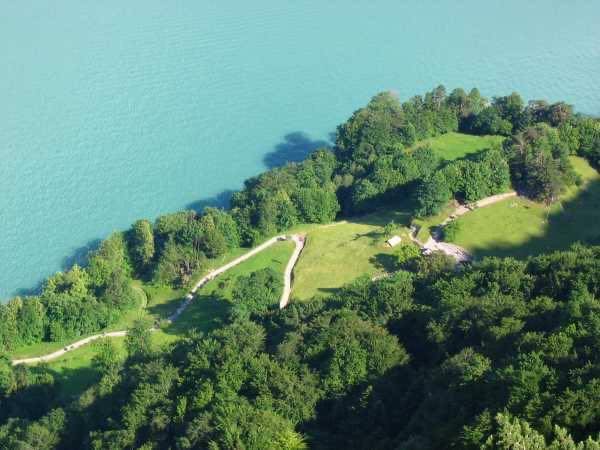
In 1291, the original eight Swiss cantons rallied with Swiss patriot William Tell (you know: the guy the Lone Ranger theme is named after), and declared the Rutlischwur or Rutli Oath in a meadow off Lake Lucerne. The Rutlischwur established the Swiss Confederacy which remains in place to this day.
On the same meadow, seven hundred years later on 25 July 1940, Gen Henri Guisan announced to the Swiss officer corps that they would not submit to Germany. He reminded them of the Battle of Morgarten where 1400 Swiss peasants defeated 20,000 Austrian knights and that the Swiss National Redoubt had never been conquered. He also reiterated that in accordance with their federalized constitution any surrender announcement by the decentralized Swiss government only applied to that official and those individual civilians who support them. And since the Army will never surrender they would resist to the last drop of their blood.
Hitler despised the Swiss but recognized that conquering Switzerland would be time consuming and difficult. Besides the obvious terrain issues, the Swiss army comprised 20% of the population and an additional 40% were armed in some fashion. In late 1940, Hitler delayed Case Tannebaum until after the Battle of Britain then again until after the invasion of the Soviet Union, and only finally cancelled it after the Allied landings in Normandy in 1944. From 1940 to 1944 Switzerland remained one of the few countries on continental Europe not under National Socialist domination.
The Great Revolt and the Destruction of Jerusalem
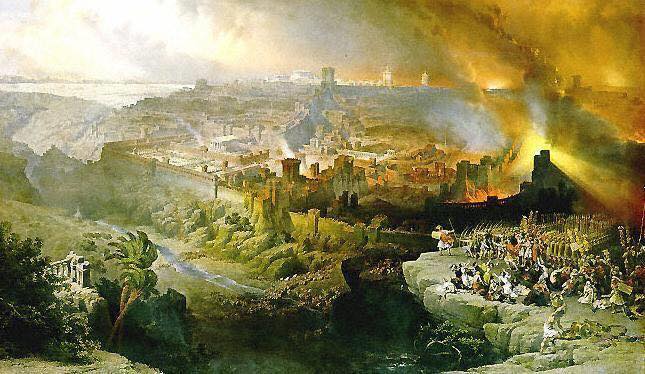
In 66 CE, the Jewish people revolted in the Roman province of Judea due to heavy handed Roman taxes. Until Nero’s reign, all taxes not used in the maintenance of the Roman garrison were sent to Rome which enabled local rule and provided little incentive to overtax. Nero changed the tax code to a large flat sum based on each province. But what was worse, anything collected over that could be kept by the garrison. This provided the perfect excuse for the greedy legate of Judea to create new taxes just to enrich the garrison and himself specifically. The Romans already had a dim view of Judaism because they would not accept the supposed divinity of the Caesars (Caligula specifically) and the silver in the Temple was too tempting a target. After seizing it, the Jews resisted and the legate slaughtered 6000. The Jews then slaughtered the garrison, and subsequently destroyed the Roman Syrian Army at the Battle of Beth Horon.
This shocked the Romans and in 67 they dispatched their best general, Vespasian, and his son Titus, with four legions, including the elite Tenth Legion. (The X Legion was “Julius Caesar’s Own”, and the one he decimated i.e. killed 10%, for cowardice in 60 BCE. He then renamed them the Tenth Legion to remind them of the price for cowardice. They never forgot.) For a year, Vespasian reduced the Jewish garrisons in countryside. In 69, Vespasian returned to Rome to proclaim himself Caesar and Titus began the siege of Jerusalem. Titus broke through the first two rings of walls but the Jews were firmly entrenched behind the third with years of food on hand.
Unfortunately for the Jews, there were two factions vying for power inside the city. The Sadducees and Pharisees wanted religious freedom and return to local rule within the Roman province of Judea. The other faction, the Zealots, wanted their own Jewish state outside of the Roman Empire among other demands. Open fighting between both factions occurred regularly. The Zealots thought that the others were not dedicated enough in the conflict with the Romans. So in early 70, they burned the food stores of Jerusalem to galvanize resistance, much to Titus’ satisfaction.
On 21 July 70, the Romans stormed the city and overwhelmed the starving defenders. In retribution, Titus ordered the slaughter of most of the city and destroyed the Temple. Tens of thousands of Jews fled Judea. The Great Revolt began the 1878 years of Jewish exile from Judea and is mostly responsible for the Jewish diaspora.
The Franco-Prussian War
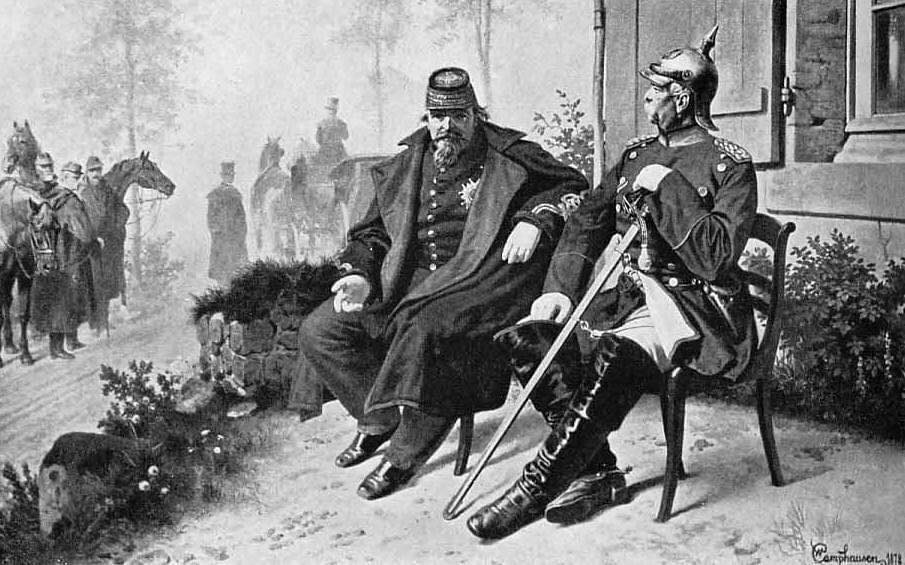
In the 1860s, the Chancellor of Prussia and master diplomat Otto Von Bismarck provoked short wars with Austria and Denmark in order bind the lesser northern German states to Prussia instead of its rival Austria as the leader of the German people. In July 1870, he engineered a deliberate insult to France, knowing that the proud French would declare war. This war would force the remaining southern German states, such as Bavaria, Hesse, Baden, and Wuertemburg, to honor their treaty obligations and go to war against France under Prussian leadership. A successful conclusion of the war would be the perfect opportunity to unite the German states into an empire under the Prussian King Wilhelm I. On 20 July 1870, Napoleon III, Emperor of France declared War on Prussia, and the German states dutifully declared war on France in turn, just as Bismarck expected.
Bismarck made sure the deck was stacked against the French from the very beginning. Not only did the Germans raise twice as many troops, but they also did it twice as fast due to the efficiency, organization, and planning of Helmuth Von Moltke’s (the Elder) superior General Staff. Von Moltke expanded the concept of mission tactics that placed great faith in junior leaders accomplishing their missions without the pain of micromanagement, and German units consistently out fought and out maneuvered larger French formations. The French relied on a 60 year old Napoleonic reputation for fighting prowess, so inevitably they were outclassed in almost all respects. Over the next seven months the Germans kicked the shit out of the French. They trapped most of the French army in Metz in September, captured Emperor Napoleon III at Sedan in October, and occupied Paris in January. In the jubilation of victory, Bismarck wasted no time and convinced the separate German states to willingly unite with Prussia. King Wilhelm I of Prussia was crowned Emperor Wilhelm I of Germany in the Versailles Palace on 18 January 1871.
The German Empire, or Second Reich (Charlemagne’s was the First Reich) completely upset the balance of power in Europe that had generally kept the peace since Napoleon’s fall in 1815. This led directly to the First World War. (Which of course would lead directly to Hitler’s Third Reich and the Second World War.)
The Battle of Allia
In 390 (or 387) BCE, Rome was just another city state vying for dominance on the Italian peninsula with the Etruscans, Samnites, Latins, Greeks, and Gauls, the Roman name for Celts. In July, a large Gallic warband rapidly descended on the near defenseless city of Rome. Previously, whenever the Gauls struck they looted on their way and this gave time to raise the legions, which at this time were only used for specific campaigns then disbanded. (Also, the Severian Wall which ringed Rome at its height wouldn’t be built for another hundred years.) However this time, the Gauls did not loot and drove straight to the city. The Romans couldn’t raise and train the legions, but every citizen was part of the militia, and expected to arm and armour themselves.
On 18 July, 390 BCE, 25,000 Roman citizens lined up against 15,000 Gauls at Allia outside of Rome. In this period of Roman history, the Romans were armed and organized in the Greek hoplite style (a phalanx of spears and shields) with the richest citizens (and thus best equipped) in the center, and the poorer and less well equipped to the flanks. Phalanxes are devastatingly powerful to the front but are not very maneuverable, and furthermore, vulnerable to the side. The Gauls ignored the center and chose to attack the less well equipped phalanxes on the flanks. The fast moving sword and shield equipped Gauls quickly defeated both sides before the center could react. This broke the Roman army. What was left of it retreated to the nearby walled town of Veii, recently captured from the Etruscans, while the Gauls sacked Rome for a week or so. A small Roman army that was on campaign against the Latins to the south eventually forced the Gauls, heavily laden with slaves and loot and unwilling to fight another battle, back north.
The Battle of Allia forced a decision upon the Romans: should they move their capital to Veii, with its walls, and adopt a generally defensive posture in central Italy? Or should they reform their army and go on the offensive to protect their city? Livy suggests that the Veii option was the favorite, and had they taken it there would have been no Roman conquests as we know them.
Instead, the Romans reformed their army, and made the first steps toward the legionary system we are familiar with today. First, they professionalized part of their army and maintained it throughout the year. Also, the remaining hoplite armed legionnaires formed the reserve, which allowed them time to maneuver into position to use their stabbing spears to great effect. These were the usually the richest and oldest citizens and eventually became the “triarii”. The rest of the army over time adopted the Gallic sword and shield to fight with, increasing their maneuverability, and eventually used their spears to throw. Inevitably, the younger and keener citizens moved to the front and the older and wiser ones to the rear, but this wasn’t formalized into the “hastatii” and “princips” until the First Samnite War thirty years later. The three lines of the hastatii, princips, and triarii formed the basis of the manipular legions with which the Roman Republic conquered most of the Mediterranean basin. The manipular legion was the standard Roman formation until the Marian Reforms 300 years later.
Rome wasn’t sacked again for another 800 years (until 410 CE by the Visigoths under Alaric).
The Srebrenica Genocide

After the breakup of Yugoslavia in 1991 at the end of the Cold War, ethnic wars broke out between Roman Catholic Croatia, Orthodox Christian Serbia, and Bosnian Muslims over the status of the various minorities in each country. State control of the media, which pitted the ethnicities against each other, propagated extremism on all sides, par for the course for identity politics. This was particularly true in the largest of the Yugoslav rump states, Serbia. Serbian president Slobadan Milosevic waged a vicious propaganda campaign via Serbian TV and radio that led directly to ethnic violence against Croats and Bosnians across the former Yugoslavia.
In an area wracked by ethnically fueled rage, the most vicious fighting was during the Bosnian War. In addition to the bitter fighting, militias waged a brutal campaign of ethnic cleansing against the civilian population that frequently involved mass executions, forced migration, and systematic mass rape. In April 1993, the UN “Protection Force” (UNPROFOR) declared “safe zones” across Bosnia, one of which was the town of Srebrenica outside of the Bosnian capital of Sarajevo.
The Srebrenica safe zone was garrisoned a 400 strong battalion of Dutch peacekeepers but they only had authority to use force in self-defense, and not to protect civilians. Moreover, they were woefully under equipped, and had no heavy weapons and limited ammunition. Convoys destined fro Srebrenica were stopped and hijacked by Serb militias. Fewer and fewer UN convoys made it to Srebrencia for both the Dutch peacekeepers and the predominantly Bosniak population of the city. (“Bosniak” refers specifically to Bosnian Muslims, as opposed to the catch-all term “Bosnian” who is someone who lives in Bosnia.)
On 10 July 1995, Gen. Radko Mladic’s Serbian paramilitaries and interior police captured the town after a vicious battle with the Bosnian militia, as the Dutch peacekeepers looked on. The next day, the victorious Serbs rounded up 2,000 Bosniak boys and men and executed them. Any Bosniaks who sought refuge in the “Dutchbat” (Dutch battalion) compound were expelled and left to the non-existent mercy of the Bosnian Serbs. Over the next week they detained and killed another 6,000 Bosniaks as they fled the city. 25-30,000 Bosniak women and children were forcibly relocated by the Serbs from around Srebrenica. Thousands were raped in the process.
The Srebrenica Massacre, as it was known then, was the first event over the summer of 1995 that finally convinced US President Bill Clinton, an ardent supporter of the UN Mission, of the impotence of UNPROFOR, and UN missions in general. With little expanded military recourses at the UN to stop the fighting, Clinton turned to NATO to take action. In September 1995, NATO launched Operation Deliberate Force which targeted Serbian forces and compelled them to the negotiating table. The Dayton Peace Accords were signed in December which stopped the majority of the large scale fighting. IFOR, the NATO Implementation Forcecrossed into Bosnia that Christmas, and SFOR, the NATO Stabilization Force, headed to Bosnia later in 1996.
Live Aid

In 1974, the Soviet backed Provisional Military Government of Socialist Ethiopia, more commonly known as “The Derg”, overthrew Emperor Haile Selassie establishing Ethiopia as a Marxist-Leninist Communist state on the Horn of Africa. The coup and subsequent heavy handed socialist policies expanded the Ethiopian Civil War from just Eritean separatists to include groups of separatists from across the country, including Tigrayan, Amhara and Oromo peoples, among many others. In 1983, the constant warfare, Ethiopian Red Terror (exactly what it sounds like), land redistribution, forced migration, corruption, deliberate starvation, and a drought led to a widespread famine across Ethiopia. Between 1983 and 1985, the famine and human rights abuses killed 1.2 million Ethiopians, nearly 500,000 refugees fled the country, and 2.5 million people were internally displaced.
In November 1984, a BBC news documentary on the Ethiopian famine shocked the world. The international community leapt to respond, but none so much as the British and American music industries. Irish musician Robert Geldof formed the super group “Band-Aid” who raised funds for the victims. Band-Aid’s single “Do They Know It’s Christmas?” raised nearly $10 million, despite being culturally inappropriate for the predominantly Christian country of Ethiopia. In March 1985, American super group “USA for Africa” released “We Are the World” raising further funds for Ethiopia.
The funds by the charity singles were still well below what international organizations thought was needed to combat the famine. Along with Geldof, Scottish musician Midge Ure organized a day of worldwide benefit concerts, billed a “global jukebox”, that would raise awareness and funds for Ethiopia. On 13 July 1985 simultaneous concerts were held in Austria, Australia, Canada, Great Britain, Japan, the Soviet Union, the United States, West Germany, and Yugoslavia. The two largest benefit concerts, dubbed “Live Aid”, were simultaneous showings at Wembley Stadium in London and JFK stadium in Philadelphia on 13 July 1985.
Both concerts were seen at each stadium on huge screens via near real time satellite transmission. According to the organizers, Live Aid showed that “humanitarian concern is now at the center of foreign policy”, and a new era of humanitarian cooperation would replace the Cold War. The line ups for both Live Aid concerts consisted of the “Who’s who” of Rock and Roll Aristocracy. At Wembley stadium, U2, David Bowie, Queen, the Who, Elvis Costello, Paul McCartney, George Michael, and Dire Straits headlined. In America, the JFK Live Aid concert was dubbed, “This Generation’s Woodstock”. Bob Dylan, Tom Petty, Black Sabbath, the Rolling Stones, Tina Turner, the Beach Boys, Phil Collins, Brian Adams, Judas Priest, Simple Minds, Eric Clapton, and Duran Duran, among others, played twenty minutes sets. The JFK Live Aid concert even included the first on stage performance by Led Zeppelin since the death of their drummer, John Bonham in 1980 (Phil Collins drummed in his stead at the Live Aid concert). 160,000 people attended the concerts live. The combined Live Aid televised broadcast had an estimated 1.9 billion (with a “b”) viewers. 40% of the world’s population tuned in.
The Live Aid concerts are mostly remembered today for their technical difficulties, both on and off stage. Led Zeppelin’s songs sounded terrible. The group hadn’t rehearsed, Robert Plant sounded like shit, Jimmy Page’s guitar was not tuned, and Phil Collins didn’t know the songs. Tina Turner had wardrobe malfunction which almost got the plug pulled on the whole thing by the FCC. Bryan Adams couldn’t be heard in London due to a buzzing sound. And Paul McCartney’s version of Let It Be was silent for the first two minutes. Donations to Live Aid for the first seven hours amounted to a paltry $1.7 million, considering the star power assembled in support. The numbers went up considerably after Geldof got on the BBC radio and shouted, “Give us your focking money!.” Despite the problems, Live Aid raised at least $127,000,000 for the victims of the Ethiopian famine.
That $127,000,000 brought nothing but greater levels of death and destruction to Ethiopia.
The victims of the Ethiopian famine saw little if any of that money, and even the money raised previously by the charity singles, “Do they Know It’s Christmas” and “We Are the World”. Geldof ignored warnings from the NGO (non governmental organization) Doctors Without Borders, that the aid money was being funneled by the Ethiopian government for nefarious purposes. Geldof worked with Derg leader Mengistu Haile Mariam personally, and most of the Live Aid money went to fund arms and military equipment purchases from the Soviet Union. Geldof was instrumental in getting Doctors Without Borders expelled from Ethiopia, removing medical care for countless Ethiopians. As a response, future funds from sales of the Live Aid recordings went to several NGOs instead of the Ethiopian government. The NGOs turned out to be front organizations for the various rebel movements in the country. After the allegations of Live Aid mismanagement and corruption proved true, many artists admitted they were shamed and browbeaten by Geldoff to perform at the charity concerts.
Live Aid made a lot of rich people feel good about themselves, but Live Aid did little if anything good for the Ethiopian people. Ethiopia would have been much better off without Live Aid. Live Aid can accurately be described as having funded all sides of the Ethiopian Civil War. Live Aid funds directly resulted in escalations to the Ethiopian Civil War, and its donations tied directly to human rights abuses and war crimes. The Live Aid funded Ethiopian Civil War spilled over into neighboring Somalia and further destabilized that country, resulting in United Nations’ intervention in 1992. The Ethiopian Civil War continued until 1991 when Soviet backing for the Derg regime and its successor, The People’s Democratic Republic of Ethiopia, ended. That year, Eritea won its independence, and Ethiopia transitioned to a US backed ethnic federation.
There is no question about the damage Live Aid’s funds did to the people and stability of the Horn of Africa. The only question is whether the Live Aid organizers were deliberately funding the Derg regime, or were willfully ignorant to the realities of the Ethiopian Civil War.
In either case, the road to Hell is paved with good intentions.
Cool concerts though, I guess.
 Buk's Historical Ad Hockery
You must be logged in to post a comment.